
The world’s largest free audio library for everyday wellbeing
Real people. Real life. Real time.
Retreat categories
All RetreatsYoga RetreatsWellness RetreatsMeditation RetreatsYoga Teacher TrainingWomen's RetreatsYoga Retreats in BaliYoga Retreats in United KingdomYoga Retreats in AustraliaYoga Retreats in ItalyFind Your Perfect Retreat
Discover transformative Retreats led by Insight Timer's best teachers.Reconnect, recharge, and return renewed.
The world’s largest free audio library for everyday wellbeing
Blog categories
Mental Health and WellbeingTips and GuidesScience and ResearchTraditionSpiritualityAt WorkTop Articles
How to Meditate
Meditation is something everyone can do. Practicing can help improve your health and wellbeing.
Explore MeditationMeditation Timer
Free meditation timer with customizable intervals, bells, and ambient sounds.
Meditation Timer OnlineHow to Meditate: Beginner Guide to Make A Meditation Habit
In this guide, we’ll be looking at the benefits of meditation, sharing advice on how to build a regular meditation practice, answering questions that beginners often have—and more! We’ll also be recommending a range of beginner meditations for you to try.
How to start meditating? Change starts here!
You may have already heard about the benefits of meditation from friends, coworkers or from the internet and wider world. Perhaps you’ve already been thinking about how to incorporate meditation into your day but haven’t quite got round to it yet. Or perhaps meditation is all completely new to you! Whatever your starting position, it’s great that you are here.
The many benefits of meditation
Endless studies have added to the list of proven benefits of meditation for mental and physical health:
A calmer, more stable and focused mind
Improved sleep quality
Reduced stress and tension
Equanimity
Enhanced self-awareness and improved self-image
Increased feelings of love, gratitude and compassion
Decreased levels of anxiety, depression and pain
Enhanced emotional stability
Increased confidence and motivation
Physical health benefits, such as decreased blood pressure, improved immune health and reduced inflammation
The list goes on…and you don’t need to pick just one benefit. A regular practice may eventually impact all aspects of your mental, physical and emotional health for the better.
While you might already start experiencing some benefits in the early days of practicing, meditation isn’t a ‘quick fix’. Consistency is key. With every day you decide to meditate, you get closer to a happier life. The longer you wait to build new healthy lifestyle habits, the longer you miss out on living more fulfilled.
So today is the day. Decide to put your wellbeing first. Set a reminder for your next mediation: right here, right now. You’ll be joining millions of others from around the world, all using Insight Timer to support them on their own meditation journeys.
Simple practices to become present






Your meditation questions answered
There is so much information about meditation out there! And so many different (and sometimes conflicting) pieces of advice, that sometimes it’s hard to know where to begin. That’s why we’re going to tackle some of the most frequently-asked questions that we get at Insight Timer on how to meditate, which will hopefully help to get you started.
How long should I meditate for?
Making meditation a regular part of your week is actually more important than how long you meditate for. For that reason, it’s best not to get too hung up on a specific duration. It should simply work for you. While research suggests that the effects of meditation kick in from around the ten-minute mark, if you’re a beginner you can start with five minutes a day until you become familiar with the practice. Once it becomes a core part of your routine, you can slowly increase the time you spend meditating.
What is the best time of day to meditate?
The short answer is that you need to find the time of day that works for you, and that doesn't feel forced. Most people prefer to practice in the morning after waking, but think of your existing daily routines–where could meditation be a great fit to your day? Consider these common times for meditation:
-
Morning: By making meditation part of your morning routine–either in bed upon waking, or right after an existing morning habit like cleaning your teeth or taking a shower–you are much more likely to get it done (and for some it’s too much of a challenge to meditate once the busy buzz of the day has begun).
-
Midday: By noon you have got some of our immediate tasks out of the way, and you can stop and slow down and create space between the pace of the world outside and the pace of your world within. Schedule your meditation as you would for any meeting.
-
Afternoon slump: Do you often find yourself sleepy, fatigued or moody in the afternoon? This dip in energy is usually caused by your body’s circadian rhythm. Meditating during this energy low point is reported to improve brain function and energy levels, leaving you more focused and awake to go on strong with the rest of your day.
-
Evening: Sometimes it can feel tough to take a break in the middle of the day. Evening time can be a good moment to pause and reflect. Our day is done, we are winding down. Meditation can help to create a transitional space between the activity of the day and the quiet of the evening, and to improve sleep.
-
Going to sleep: Sometimes a soft and gentle voice is what we need to get to sleep. Meditation can help to signal the body to let go of stress and tension and relax or distract our attention from worrying and anxious thoughts.






Should I follow a guided meditation?
Meditation is a skill that needs to be learned and practiced. Most people benefit from guidance and instruction. Often when we meditate, we notice our busy minds, and a meditation teacher can help to anchor us—guiding us step by step through the process and reassuring us that we are ‘doing it right’. We will explore the role of the meditation teachers more in-depth in the next email.
Do I have to sit cross-legged?
No! Simply find a position that is comfortable for you, but not a slouchy posture which may cause discomfort and pain in your body that can end up distracting you. You can of course sit cross-legged, but sitting on a chair with a straight back or lying down can also work.
How should I breathe?
Unless your teacher tells you otherwise, it’s best to breathe in and out through your nose as nasal breathing helps you to take fuller, deeper and slower breaths that will calm your nervous system and reduce stress. Longer exhales signal the body to relax.
What should I focus on?
Any focal point that helps to keep the mind in the present moment will generally work. Exactly what you focus on will depend on the meditation style you practice. Your teacher will instruct on the focal point during a guided meditation, however the most common focal points are:
-
The breath
-
Specific body parts
-
Sound or music
-
A specific feeling, like gratitude or compassion
-
Silently repeating a sound or word in your mind, like a mantra
-
An affirmation
-
A candle, picture or flower
Know that it is completely normal to lose focus when meditating. It happens to everyone. Just gently bring your attention back to your present moment anchor.
How do I best prepare for meditation?
We recommend you reduce any distractions as much as possible; switch your phone to ‘Do not disturb’ mode, make sure the TV is turned off and use soft lighting in your meditation space. Perhaps you can also let people around you know that you are about to meditate. Avoid having heavy meals or consuming caffeine or alcohol before practicing. And allow yourself to find a comfortable position first, and a moment to transition from eyes opened to closed.
What if I don’t have somewhere quiet to meditate?
One of the best things about meditation is that it is a flexible practice. If it is not possible for you to meditate at home, you can also practice in common day-to-day moments that offer time to check in with yourself, for example, when waiting in line somewhere, on the bus or train, or at work. You can also meditate with your eyes open if it is easier to anchor yourself in the space you're in.
Popular courses for meditation beginners







How teachers can transform your journey
For many, a lack of guidance or feelings of uncertainty can be what stands in the way of developing a regular meditation practice. And often what is needed is simply a good meditation teacher! A teacher directs the process of learning meditation, helping to educate and inspire while sharing from their own personal practice with things that you can relate to.
Teaching style, phrasing, voice and tone (even accent!) can all play a role in helping beginners to feel comfortable and well-guided—and can be the make or break as to whether you return to the next session.
Insight Timer is home to over 10,000 teachers from all over the world, giving you access to the largest network of profound knowledge around meditation and self-care.
Finding the right meditation technique for you
You might have already tried a meditation technique by now on Insight Timer. If you found the instructions clear to follow, we would recommend that you stick to that type of meditation for a week and see how you get on.
Perhaps you tried meditation elsewhere before but felt like it is just not working for you. This may have been because you weren’t taught the right type of meditation for your unique needs.
If you haven’t tried any meditation before, Insight Timer offers the widest range of different meditation techniques anywhere in the world. Not all practices have the same effect, so you may want to choose a technique based on the current state of your body and mind. Do you wish to improve your focus? Develop feelings of love and compassion to yourself or others? Reduce anxiety, worry or pain? The list below will give you an idea where to begin.
Some of our favourites






There are hundreds of different meditation practice types on Insight Timer. They can be roughly grouped into 7 different categories:
Mindfulness practices anchor you in the present moment and allow you to notice feelings and thoughts as they come and go, without any judgement. Good for: when you are stressed, lost in thought or feel overwhelmed.
Concentration meditation focuses on something physical and material, such as your breath or body, to distract the mind from thought. Good for: calming the mind, relaxing the body and bringing peace to the heart.
Visualization or intention-based practices involve imagining a specific experience (often to relax) or cultivating feelings such as gratitude, compassion, loving-kindness and forgiveness. Good for: when you feel trapped in negative thought patterns or want to improve communication skills.
Self-observation practices use reflective questions to peel back the layers which may hide your essential nature. Good for: advanced practitioners who wish to take their meditation to the next level.
Sound meditation practices use sound currents and frequencies to calm brain waves and alter your mindset. Good for: when you have difficulty focusing your attention on bodily sensations, like your breath.
Gentle Repetition refers to meditative practices that use repeating sounds or a sequence of words to help clear the mind. Mantra meditations can also help people to hold concentration. Good for: stress relief, minimizing intrusive thoughts and calming the monkey mind.
Movement practices energize the body and mind through calm and purposeful breathing or movement and let us experience the sensations within the body: Good for: when you find it hard to sit still.
Try to stay open-minded and curious—not simply opting for the techniques that appeal to you when you read about them in theory, but that actually offer you the most impactful experience in practice. You might be surprised!
Building your meditation practice
You’re here! Simply by finding out more about meditation you’re already well on your way to developing a regular meditation practice. Now that you have found out about the benefits of meditation and the different types of practices, the next question is:
How can I successfully create a meditation habit?
There is a simple answer to this question.
Find a prompt for your meditation, and then…STICK TO IT!
How to stick to your habit
Build meditation into your existing routine. It’s helpful to know that 45% of everyday behaviors are repeated in the same location every day. So if you can, try to build meditation into a part of your routine that you know will happen every day—for example, straight after your alarm goes off, after brushing your teeth in the morning, or after taking a shower in the evening. Use this existing habit as a signal for your new habit.
(Try to) be consistent with where you meditate. It may not seem like a big deal, but at the beginning of your journey, being consistent with the place to meditate can really help too. Research shows that the more often a behaviour occurs within a certain location, the stronger the habit can become. Choose a place that is quiet, pleasant and where you won’t be disturbed.
Plan ahead. For example, if you are going to meditate in the morning before going to work, perhaps you need to set your alarm 10 or 15 minutes earlier.
Be realistic. Perhaps it’s only feasible for you to meditate three or four times a week instead of daily. Or perhaps you feel you can only manage five minutes a day instead of 15. That’s ok! Small changes can lead to big results, so don’t be discouraged. The key thing is that it needs to work for you. Once you’ve built up momentum and are feeling the benefits you may feel it easier to expand your meditation practice.
Your meditation commitment
Now it’s time to commit! Once you’ve got clear on the points above, research shows that it helps to write your commitment down. By writing it down you signal your brain that it is of big importance. See it as a kind of mini contract with yourself!
After you have written it down, place this somewhere you can see it! This will act as a reminder or cue whilst you are still developing the habit, and help to reinforce the importance of it in your brain.
Habits are formed when commitments are made. Getting into a new habit will not happen overnight and adapting to it can be incremental (more on that tomorrow!) But stick to it, and it’ll become easier and easier every day, and soon you will be reaping all the rewards of having a regular meditation practice.
In the meantime: here are some more beginner meditations to choose from today!




What’s the big deal about a commitment?
Kudos to you if you made a meditation commitment yesterday, wrote it down and stuck it somewhere visible. Now you’ve probably got your ‘what’ (meditation) ‘when’ (after brushing your teeth) and ‘where’ (in the bedroom) nailed down. And maybe you’re also wondering what the big deal is about having made this commitment to yourself! That’s where the ‘why’ comes in...
Why are you here?
Recognizing why you are interested in meditation is an important step of making it part of your life. There is a reason that you want to find out more about meditation and are committed to giving it a go. Perhaps you’re keen to find more focus, or you want to manage your stress better. Perhaps you’re looking to improve your feelings of wellbeing, or want to find more gratitude and peace in your day-to-day life.
This is where the distinction between goals and intentions becomes important. The first stage of deciding what you want to achieve helps you to define your goal, for example: "I wish to feel less stressed". But the more important step—which puts the control into your hands—is to become clear on your intention and to voice it, for example: "I intend to be mindful of my thought patterns in stressful situations so that I can respond in healthier ways."
When setting a new habit, it’s helpful to keep a clear sight of the intention behind it, which prevents you from getting distracted (the common reason why New Years’ resolutions fail!) By remembering your intention, you can keep a firm sight of why you are meditating.
When will I see the results of my new habit?
This one isn’t so easy to answer! All meditation journeys are unique, and consequently it will take different lengths of time for people to notice the results. An easier question to answer is perhaps ‘How long does it take to make meditation a habit?’
Forming a habit and changing behavior don’t happen overnight. There’s the deciding you’re going to do something new (initiation) and then there’s the actually doing it (habit forming). Although we ALL have the ability to initiate behavior change, where many of us struggle is to maintain it over time, as we lapse back into old patterns.
The Science Bit: How habits form
Habit formation in general takes on average about 10 weeks. Sounds like a long time? Not when you think about it in the context of the grand scheme of your life. And the sooner you get started, the sooner you’ll get there!
Research shows that when it comes to habit development, the initial repetitions that we do have the greatest impact. In other words, it’s the early days that count. Keep reminding yourself of your intention and motivation to meditate over the next two to three months. You will notice that coming to your practice feels less and less like a task. Once your new habit has peaked and becomes like second nature, maintaining it will be a lot easier.
As both a resource and a community, Insight Timer supports you along the way to making meditation a regular part of your life that you won’t want to miss! We believe in your capacity to keep up this habit and to experience the many benefits of meditation long into the future. You’ve got this :)
Overcoming obstacles on the road
There are still so many thoughts in my mind during meditation. Am I doing it right?
Having thoughts during practice is an entirely normal part of meditation. So every time that you notice you have drifted off into thought, gently and compassionately pull yourself back to your focus (whether it’s to your breath, a mantra, or a visualisation you are listening to). No matter how long you are lost in thought, the second you notice you are lost, you become found. And that’s the real essence of meditation.
If you continue to notice your mind buzzing busily away while meditating, here are a few things you can try:
-
Stuck in ruminating thoughts about the past or worries about the future? Catch them. Label your past-oriented thoughts as ‘What Was’ and your future-oriented thoughts as ‘What If’. Then gently bring your attention to the ‘What IS’. Your present moment reality.
-
Imagine your mind is a radio, then visualize yourself changing the channel or frequency to the ‘now’ station.
I can't meditate at home
There is no right picture of how and where to meditate. Think of the many moments that invite you to practice a few minutes of present moment awareness:
-
While waiting: We can spend a lot of our time waiting. It’s one of the rare opportunities in our busy days that we have to just do nothing. So resist the temptation to mindlessly scroll through your phone or to get frustrated because things are taking too long—instead, take this moment as an invitation to become present, practice acceptance and observe the thoughts that are trying to lure you into impatience and frustration!
-
When commuting (though not while driving!): The great advantage of a meditation app is that you have access to guided practices on the go. Use travel time to listen to a meditation on Insight Timer—or simply notice what’s going on around and inside you.
-
During lunch breaks: Allow yourself a real time-out from work to recharge for the rest of the day. Maybe try eating your lunch or going for a walk mindfully. We’ve got you covered!
-
At work (or at the home office!): If you’re looking at screens all day, make some time to step away from the laptop to not only give your eyes an important rest but also to give yourself a few moments of present moment awareness. Scan your body for 20 seconds, take a few deep breaths and check in with your mental and emotional state to discharge stress.





I get sleepy during meditation. What can I do?
-
If you meditate lying down, try sitting up. If you meditate sitting down, try a moving meditation. You can also try meditating with your eyes open, by holding a soft gaze on an object such as a candle, flower or picture.
-
Consider changing the time of the meditation. Pick the time in the day when you feel most awake, e.g. meditate first thing in the morning when you are most alert.
-
If you currently meditate in your bed or bedroom, move it to another place that you don’t associate with sleep.
If, after trying the above, you still find yourself falling asleep during meditation, it might mean that:
-
You aren’t getting enough sleep at night. Ensure that you are getting enough hours (7-9) and that the quality of your sleep is sufficient by being consistent with your bedtime, making sure your room is quiet, dark and cool, avoiding caffeine and alcohol before bedtime, and getting some exercise such as yoga. You can also try some of our sleep resources here.
-
You aren’t getting enough relaxation time during the day. Make sure you take moments through the day to check in with yourself and relax.
When I meditate, my body hurts. What should I do?
Cross-legged meditation in particular requires great strength to maintain a healthy posture, which means that discomfort can be fairly common during meditation. The first step is simply to remember that soreness during meditation isn’t usually an indication of anything serious within the body but simply your body acknowledging an unfamiliar posture. The simple act of acknowledging this can usually alleviate some of the little aches. If discomfort turns into pain you might want to consider changing your meditation posture:
-
If you experience back pain, try placing several supportive pillows behind your back.
-
If the soreness in your back is more moderate , you can sit against a wall with a pillow in your lower back or, if you want to sit cross-legged, on a cushion to alleviate your hips.
-
To alleviate knee pain, sit against a wall with your legs out straight.
-
If you notice your neck getting sore during seated meditation, draw your chin back over your collar bones.
Help! I don’t have any motivation to meditate
If reminding yourself of the commitment and your intention to practice meditation isn’t enough, you might want to reduce the duration of the meditation, even if you only practice for 2-3 minutes. Remember: consistency in your practice outweighs the quantity.






Meditation, done. What now?
You may feel that when your meditation is over, it’s time to jump straight back into the busy whirlwind of the day! But by doing so, it’s all too easy to lose the calm and focused state of mind that you have created during meditation. Take a few moments to:
Congratulate yourself
When starting out with meditation it can be beneficial to take a few moments afterwards to enjoy and/or reflect on what you have just accomplished. Give yourself appreciation for having stuck to your practice! If you can cultivate positive feelings about yourself after a meditation session, you’re much more likely to do it again. Learn to congratulate yourself, even after those meditation sessions that feel challenging or when your mind has felt super busy.
Recognize the state and quality of your mind
Note how you feel, physically and mentally, after your meditation. Then make a conscious effort to carry this quality ‘off the cushion’, and revisit it throughout the day. Because you don’t want the calm, focused and peaceful effects of meditation to simply be limited to the time you’re meditating—you want these qualities to become a part of your daily life.
Prolong the magic
If at all possible, try to engage in an activity that prolongs the effect of meditation on you, for example journalling and reflecting on what has come up for you during the meditation, or any insights you have had. When you do go back to your day-to-day activities, starting with some gentle chores or a short walk can help to integrate and prolong your experience.
Find your tribe and build a meditation community
When starting out on your meditation journey, it can be easy to get trapped in old patterns, lose motivation or feel like you’re the only one having difficulties. And that’s where your fellow meditators come in! It’s helpful to share and encourage each other along the way. The concept of community is an important foundation on Insight Timer, because a community (of like-minded meditators and teachers) can gently and gradually encourage us to see meditation less as personal pursuit, and more as a collective mission.
Accountability and action!
Remember our tips for forming new habits? Your new community on Insight Timer can add a new level of accountability to the commitment you’ve made to yourself. Research shows that people are more likely to stick to their commitments if they
-
told somebody about it, and
-
shared their weekly progress with that person.
Use Insight Timer Circles to check-in with friends, family members and other people on similar journeys to yours and share your habit progress. Recommend your favourite content within the Circle and join group meditations for a sense of togetherness. You can also connect with and learn from meditation teachers in real-time through live events.
Get by with a little help from your friends…
Building a new healthy habit has to start with you, but when your personal commitment and motivation are bolstered by a community that offers support to each other, it helps to uplift you beyond what you are able to do alone.
The ripple effects of meditation
You might have already started noticing the different ways meditation can help you to create a calmer and more present state of mind. As you go on with your journey, you will become more and more able to cultivate this quality throughout your day. From there, new levels of attention will unfold that help overcome the challenges of modern-day living.
Staying calm, no matter the challenge



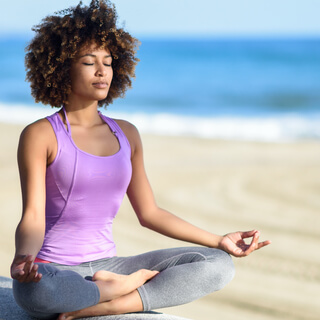
Letting go of habits that no longer serve you
We have already shared tips and exercises for making meditation a habit to stick with. And as you keep practicing, you’ll find that your new skills of being able to stay present will help to guide you more broadly in day-to-day life. You learn to recognize other habits that may no longer serve you and choose a different way to approach things and situations that may have previously wobbled you.
Checking in with yourself
In our busy lives it’s all too easy to become distracted by the outer world that we forget to check in with ourselves. We often end up acting on autopilot, unaware of behavioral patterns and hidden biases that keep us trapped in stress, anxiety and doubt. Meditation not only creates a break whenever you practice, it also equips you with the tools you need to create some breathing space when you encounter difficult situations—enabling you to respond with more integrity, equanimity and compassion towards yourself and others.
Insight Timer: Meditation that works for YOU!
Research has shown that the type of meditation you choose matters! As we have seen, different styles of meditation can have different effects on your mental and emotional state. Mindfulness meditation reduces rumination, open awareness practices cultivate equanimity, concentration practices improve your focus, while loving-kindness, gratitude and compassion meditations boost those associated feelings.
With Insight Timer you have access to the world’s largest (and free!) collection of meditation styles—not narrowed down to one specific category or one specific outcome. Because both how you are and how you intend to feel matter to us. And it’s our promise that you will always be able to find a meditation practice that suits you, whatever your state of mind.
Too many thoughts? You are doing it right!







How yoga can complement your practice
Most people know about the physical benefits of yoga, such as improved fitness, muscle health, body flow and flexibility. But alongside the benefits for your body, yoga also offers an array of benefits for your mental and emotional health.
How yoga transforms your stress response
Yoga has the ability to change not only your perception of stress, but also how you respond.
For example, in Hatha and Vinyasa style yoga classes, certain poses will physically challenge you and ask you to push beyond your comfort zones, mirroring the challenges of day-to-day life. Although other exercises may also push you to your limits, the difference with yoga is that it incorporates two game-changing components: deep breathing and mindfulness.
The combination of movement, steady breathing and open, curious and compassionate mind can help to transform your response to day-to-day stresses in a number of ways:
Yoga improves your ability to stay calm and present in challenging situations.
Yoga teaches you to observe your mind and let go of self-critical thinking.
If you tend to withdraw when things get stressful, yoga empowers you to become actively engaged and energized.
Yoga improves your ability to accept stressors without feeling overwhelmed or controlled by them, helping to balance your fight-or-flight response with your relaxation response
Yoga helps you to increase your natural sleep drive for better sleep at night.
By always finishing a class in the final resting pose savasana, yoga helps you to learn to let go of a challenge once it is done, and allow yourself to rest.
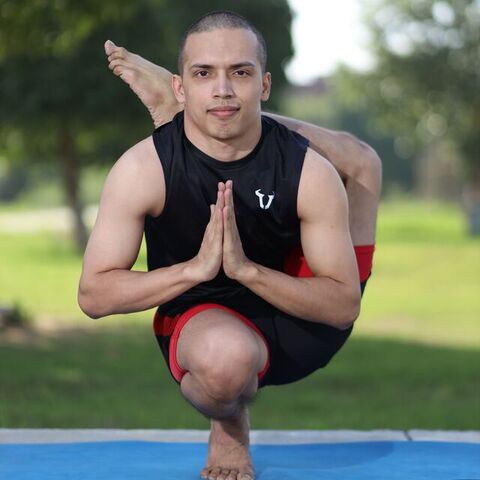
Tune into body and mind with these dynamic yoga classes










How yin yoga can improve your sleep
If you spend the majority of your day sitting, you might experience restlessness in your muscles or aches and pains that could keep you awake at night. Doing yin yoga in the evening offers relieving stretches for your hips, back, neck and shoulders that can help to lengthen your body’s muscles and tissues and alleviate both restlessness and pain.
During yin yoga classes, you are not only stretching the tissue itself—you’re also stretching the mind in its ability to cultivate patience and be still. The long and slow holds of yin yoga poses, sometimes accompanied by a guided contemplation, can also bring up difficult emotions you would usually avoid or bury deep within you. By slowing down and resting you can recognize emotions, and then let go of them! That’s why we recommend incorporating yin yoga into your evening routine as it prepares both body and mind for restful sleep. Try our free yin yoga classes and see how you get on.
Get ready for a restful night with yin yoga
We are so happy that you stuck around. We hope we have provided you with all the tools that you need to develop new healthy self-care practices—and that you’ll be reaping the rewards for years to come!
Related Topics


