Hi,
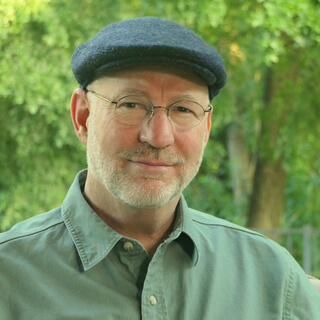
I'm Brian Lowell French.
In this meditation,
We focus on finding a feeling of calm.
To welcome us into this time of meditation,
I'll play a chord on the piano,
Inviting us to listen intently as it fades,
And then we'll begin.
Calm is a state of mind.
Calm is a state of time.
And by focusing on this moment in time,
We can find calm.
To begin,
Find a comfortable position where you are sitting,
Standing,
Or laying down,
Whatever is most comfortable,
And allow the body to soften,
To really soften,
To fully soften.
For this meditation,
It can help to have our hands folded or sitting one on top of the other on our lap.
To start the process,
Let's focus on the breath.
Breathing deeply.
As we do this,
Let's count the seconds of time that it takes for the inhalation,
And try to make the exhalation last just a little bit longer.
Let's do this again,
Extending the exhalation out as far as comfortable.
This extension of the exhalation can lower the heart rate and help to calm the body and the mind.
Now we can settle into a normal breathing pattern as we continue with the meditation.
Calm is a state of mind.
Calm is a state of time.
To be calm,
Our bodies need to fully soften by releasing all of the tension and nervous energy that is built up.
We will locate the flexing of muscles and the stretching of tendon,
And then invite them to soften and just be.
Let's place our focus on the crown of the head and sense if there is any tension in the scalp area and soften it.
Now we sense around the eyes and the areas of the temples,
Softening any amount of strain.
Next,
Sensing the jaw,
A common place that we hold tension and strain,
Letting the jaw become loose,
Perhaps even opening the mouth to let the jaw drop even further.
Moving next to the shoulders,
Another very common place where stress manifests itself in the body.
Let's sense where the shoulders are located and let them drop,
Fully drop,
Fully release,
And consider how far they moved as a way of recognizing just how much tension we've been holding onto.
Now considering the hands on the lap and whether there is any amount of tension in them or in the arms,
Releasing it fully to just let the hands rest in the lap.
This is a good time for us to take another long,
Deep breath as we can envision the tension that was just released as leaving the body through the out-breath.
Continuing now on the body scan,
Sensing the torso,
Both the front chest area and the back,
While maintaining just enough flexing to stay upright,
But softening the muscles as much as possible.
Now the abdomen,
Another place where we tend to hold much of our tension.
The knots in our stomach are felt both under the surface of our skin and deeper internally.
Sense both the muscles and the internal areas of the stomach and concentrating on releasing the strain,
On letting the butterflies out.
Next concentrating on our gluteal muscles surrounding our sit bones that are often tensed when we feel nervous or ill at ease.
So releasing them as we sink further into the seat.
We complete our scan with the legs,
Releasing any amount of strain in the thighs,
The knees,
The calves,
And the feet.
Keeping the legs to just be,
Holding on just enough to remain stable in our position.
Our body should now be fully relaxed,
Fully calm.
But let's do another quick scan to ensure that no tension has come back in any of the areas.
Rechecking the head.
The shoulders.
Arms.
Torso.
Abdomen.
Around the sit bones.
And the legs.
If any tension has returned,
Releasing it now.
And as we now return to our breath,
Taking three deep breaths.
Imagining the in-breaths bringing calmness into the body and the out-breaths taking the tension out of the body.
For calm is a state of mind.
And calm is a state of time.
We can take time each day to soften the body and use the mind to find calm.
As we end our time of meditation,
Listen again to the piano as our invitation to refocus back on the day.
We will.