
Basic Focusing Practice
This is a basic Focusing practice. Focusing is similar to mindfulness meditation, in that we notice our thoughts and physical sensations. But rather than letting them go, as we typically do in meditation, we stay with them. We ask the physical sensations, emotions and thoughts, which collectively are called the felt sense, what they want us to know and what they need. The answer is our body's wisdom. Focusing was created by Eugene Gendlin.
Transcript
Hello,
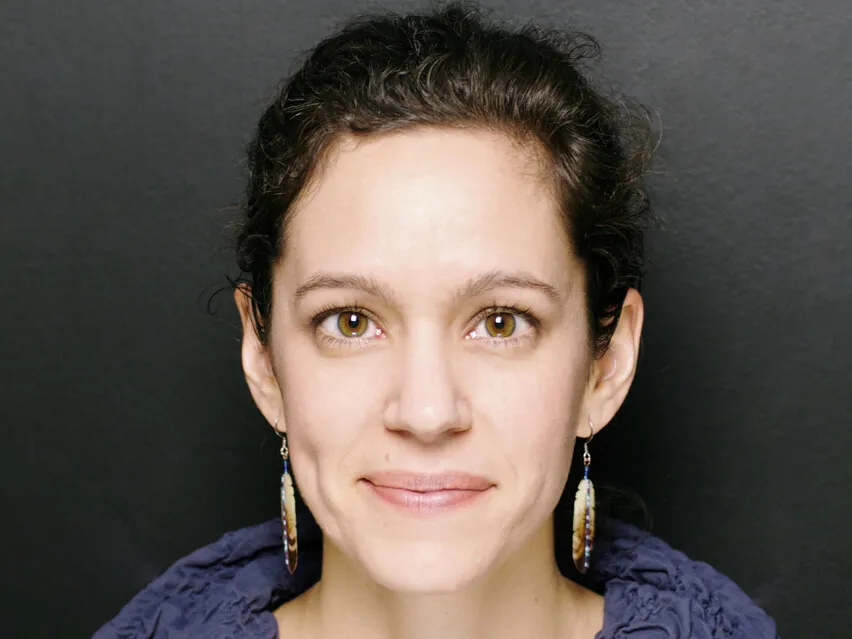
My name is Annette Spry and I am a focusing teacher.
This is my first insight timer recording.
You may not have heard about focusing yet.
It's quite similar to mindfulness meditation in that we gain awareness of our thoughts and our feelings in the body.
However,
It's different in that in meditation we usually let go of whatever comes.
We notice it,
We're aware and we let it go.
And in focusing what we do is we stay with.
We ask our body what wants our attention right now and then we just stay with it and notice it.
Notice really subtle sensations,
Notice how they change and with those changes wisdom comes,
Insights come and in the process our process carries forward.
So I'm going to lead us in a small focusing session and you'll notice the first bit is very similar to other practices.
That'll just be a process to get in the body and I'll be doing a four seven eight breath as part of that practice which involves holding your breath a little bit.
So if that's uncomfortable for you please just extend your exhales and breathe at your own pace.
But if it's okay you can go ahead and do the four seven eight breath with me and then we'll get into some focusing practice.
So I'll invite you to close your eyes or lower your gaze or whatever is comfortable and then feel your feet on the floor and the floor pushing back onto your feet and notice your sit bones making contact with the chair or the bed or the couch and any other place that makes contact your arms,
Your hands,
Your lower back.
Now notice the support of that chair or surface and so we'll now begin with the deep breathing.
Four seven eight breath so we'll breathe in for four hold for seven and out through the mouth for eight.
So breathing in,
Hold,
And out through the mouth.
Breathe in,
Hold,
And out.
One more in,
Hold,
And out.
Now I'll invite you to just notice your space.
You might notice the sounds,
There may be smells.
You might feel the air moving on your skin,
On your face,
On your hands.
Now we'll sink more into the body.
Doing a bit of a body scan starting with the feet.
Noticing your toes and the arches of your feet and moving into the ankles and then up the calves and into the knees and then noticing the thighs and then moving up into the hips and the pelvis area.
Maybe you want to shift the way you're sitting.
Then we'll bring our attention to the back,
The spine.
Lengthening the spine maybe sitting taller,
Twisting,
And then bringing your attention to the muscles and the sides of your back.
The back,
Lower back,
Mid back,
And coming to the upper back.
Now we'll say hello to the shoulders.
You can bring your shoulders up to your ears and release.
Give them a few rolls.
Then the lateral tension,
Go down our arms,
Into the elbows,
The forearms,
And into the palms of your hands.
And finally out the fingers.
And then we're going to come back to the belly,
The front of the body.
If there's a little bit of nervousness there you can say hello to it,
Especially if this is your first time to do a focusing practice.
And with that I'll just say if any instruction doesn't feel right to you just let it go.
Just ignore it.
Stay safe for yourself.
And then we'll move up into the chest and the heart.
Welcoming the focusing attitude which is an attitude of non-judgment.
Just knowing that anything your body shares with you,
There's a reason for it.
Welcoming that wisdom.
And then we'll bring our attention up into our neck.
And our throat.
You might want to twist the neck,
Stretch it a little.
And then we'll come into the jaw.
You might want to yawn or loosen the jaw.
And then we'll come up to the eyes,
Softening the eyes and softening the cheeks and all of the muscles in the face.
And then we'll come up to the forehead.
And then finally we'll bring our attention to the back of the head and the top of the head.
And now we will begin.
So the question we'll pose to the body is what wants my attention right now?
And we're looking for the answer to come from the body.
So we'll invite you to just pause and notice how your body answers you physically.
What physical sensation comes when we ask what wants my attention?
You might have more than one.
And if that's the case,
Just noticing each one a little bit and then noticing which one is most strong.
Which one most wants your attention?
And so I invite you to go to the one that's strongest and to really notice physically what those sensations are.
You might notice the location in the body.
If you know your anatomy,
You might notice the location in the body.
If you know your anatomy,
You can name the part.
You can notice the shape of the sensation and how big it is.
You can name the part.
You can notice the shape of the sensation and how big it is.
You can notice if there's a movement or a texture in the sensation.
And whether it has a color or a sound.
And as you sit with these physical sensations,
This is the beginning of the felt sense.
The felt sense is the way our body talks to us in focusing.
And it's more than physical sensations.
So now we're going to ask the body,
Is there an emotional quality in this felt sense?
And just noticing what's there,
What it speaks to.
There may be more than one emotion present.
And then we'll notice some thoughts.
You can ask the body,
What's this all about?
And just notice what comes.
Noticing what thoughts are repetitive that you already know.
Noticing what thoughts want to come or are coming that are new.
How is being with this issue or felt sense bringing a new perspective?
Bringing a new perspective.
The next step is to find a word or a phrase to kind of summarize what all of this information,
The physical sensations,
The emotions,
The thoughts.
What is this felt sense all about?
So it might be a word,
It might be a phrase.
It could also be an image.
It might be having a visual metaphor or some other visual element that's coming to you.
It could also be a gesture or even a movement,
A body movement.
Just asking the body,
What's the handle?
That's the word we use to summarize.
What's the handle for this felt sense?
And you might be getting more than one possibility.
And if that's the case,
I invite you to really go back to the physical and then try on the word.
And notice how it resonates,
How well it fits.
And then go to your other word or phrase and see how well it fits.
And just go back and forth until you find just the right words.
The next piece is where we get to ask the body some questions.
So a lovely question to ask is what do you need in this situation?
What does your felt sense want you to know about it?
And again,
Just really notice how you physically respond first.
Small shifts in the body.
Noticing what else comes when we ask what it needs.
Is there an emotional shift?
Are there new thoughts that come from this deep embodied place?
And then we'll ask another question.
We'll ask what would be a right next step with this issue?
What could you either ask of yourself or of another?
Maybe there's an action step or a way of being.
Again,
Noticing how the body answers.
And we can ask now,
Is there anything else that we need to know at this point about this issue?
And finally,
We take a moment to welcome what came and to thank our body,
Thank ourselves for taking this time to be with this felt sense,
To be with this issue.
And thank the body for whatever wisdom it brought you.
And when you're ready,
You can stretch and open your eyes and come back to yourself and your room.
And you might want to take some notes.
It's encouraged to take notes because sometimes what comes when we're in that space doesn't stay with us in our memory.
It's a bit dreamy.
So you can take some notes if you had a lot of good things come so that you can remember later.
And I encourage you to check back here again as I'll be making other videos.
I do work with memories a lot.
I do work with memories of positive emotions to resource ourselves.
And we also do work with negative memories,
Trauma memories,
And things that are,
You know,
Getting in the way of what we want to be doing so we can go back and visit an issue and see why it was hard for us and let it carry forward and show us a new way of being.
And so I hope to see you again soon.
Thanks.
Take care.
Bye bye.
Meet your Teacher

4.7 (213)
Recent Reviews
Julian
June 7, 2025
Really interesting exploration. I’ll be back for more.
Karin
August 5, 2024
Very pleasant short yet deep practice that gave me a beautiful insight. Thank you!
Spackmann
July 19, 2024
🙏🏼
Margaret
April 18, 2024
This was my introduction to focusing some time ago, and I return to this guided focusing session frequently. Thank you for taking time to put this modality out there on this meditation app! I’ve bought Gendlin’s book and am reading it now. I was also pleased to see that Peter Levine incorporates this method into his work summarized in “Waking The Tiger”. All this I have found all because of your putting this session on Insight Timer! Thank you!
Charity
March 14, 2024
Very clear and helpful guidance through the body and it's knowing, I will come back and do again
Amy
June 27, 2023
Beautiful. I miss focusing. Hard to find practitioners who take insurance and work in this modslity so thank you! I would LOVE a recorded talk on focusing… how to apply it in day to day living, how it differs from EMDR in healing trauma, how and why we use it to access positive memories, how to use it at home with a partner (versus a clinician), perhaps how to integrate writing/movement, and the relationship or role that breathwork/mindfulness/qi gong etc…plays while using focusing as a primary resource to heal ourselves. Finally, application to living with long term, “incurable” chronic illness in order to bring appreciation and draw innate wisdom from the body no matter what state it’s currently in. Namaste🙏🏼🧘🏻♀️🙏🏽🧘🏽♀️ Amy
Meshel
June 1, 2023
So calming, it was really a treat to listen to my body
Marie
April 12, 2023
What I needed
Anthea
March 27, 2023
Thank you so much for recording this practise. I learnt focusing many many years ago and I've always believe it is such a good tool. I am so happy to have found this track.
Laura
February 1, 2023
Wonderful! Thank you.
More from Annette Dubreuil
Related Meditations

Related Teachers
Trusted by 35 million people. It's free.

Get the app