The world’s largest free audio library for everyday wellbeing
Altered-State & Depth
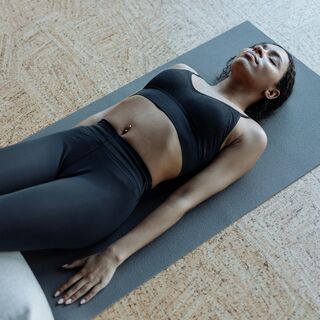
Yoga Nidra is a guided, lying-down meditation that leads the practitioner into deep relaxation while awareness stays present, moving attention through body, breath, and imagery toward the threshold of sleep (Pandi-Perumal et al., 2022).
Last Updated
2 Jul 2026
We are still reviewing this page. Our research team checks every technique page for accuracy and evidence quality before final release. Details may change as that review completes. The evidence badge shows our current reading of the published research.
How hard is Yoga Nidra?
Lying down, you let a voice move your attention through the body, breath, and images while you rest at the edge of sleep; nothing to perform.
2
Mental Effort
3 / 4
▾Emotional Depth
2 / 4
▾Physical Intensity
3 / 4
▾Prior Knowledge
2 / 4
▾RECOMMENDED DOSE
Moszeik and colleagues (2022) found that a short 11-minute Yoga Nidra meditation, designed to fit a busy daily schedule, produced measurable improvements in stress, sleep, and well-being in a large sample. A short session length is therefore an achievable, evidence-backed entry point; the suggested weekly frequency is an editorial starting point, as the study did not test a specific number of sessions per week.
Varma and colleagues (2018) delivered 30-minute Yoga Nidra sessions three days per week for one month and reported improvements in happiness, perceived stress, and quality of life. Both the session length and weekly frequency at this stage come directly from that protocol.
Kim (2019) used one-hour Yoga Nidra sessions twice weekly over eight weeks, reducing life stress and improving self-esteem in university students, while Gulia and Sreedharan (2022) documented sustained practice over 24 weeks with improved sleep and well-being. The longer session length is trial-tested; the frequency range blends the twice-weekly trial protocol with the principle of maintaining practice over time.
Session length
Session length: 10–15 minutes
10
MIN
How long each individual practice session should last from start to finish.
Frequency
Frequency: 3–5 days
3
DAYS
The number of days per week to fit a session into your routine.
Session length
Session length: 30 minutes
30
MIN
How long each individual practice session should last from start to finish.
Frequency
Frequency: 3 days
3
DAYS
The number of days per week to fit a session into your routine.
Session length
Session length: 45–60 minutes
45
MIN
How long each individual practice session should last from start to finish.
Frequency
Frequency: 2–4 days
2
DAYS
The number of days per week to fit a session into your routine.
About this card. Dose ranges are drawn from small published Yoga Nidra studies and supplemented with general practice conventions where trial data on frequency was not specified. These recommendations are not a substitute for personalised guidance from a qualified practitioner.
Quick answers to what people most often ask. Each card links to the deeper section below.
evidence
A 2026 meta-analysis of 73 studies and 5,201 adults found Yoga Nidra produces large reductions in stress and anxiety and a moderate reduction in depression versus active comparators. Separate meta-analyses link it with lower blood pressure in hypertension, and a randomized insomnia trial improved deep sleep and lowered cortisol. Many trials remain small.
Read moregood for
Yoga Nidra suits adults facing everyday stress, anxious restlessness, broken or shallow sleep, or elevated blood pressure, and it has been studied in students, healthcare workers, and people with chronic insomnia or hypertension. Done lying down with a guiding voice, it stays accessible when seated or movement-based practices feel difficult. It complements care for severe conditions.
Read moresafety
Most healthy adults can practise Yoga Nidra safely, since it involves lying still and following a voice with no physical exertion. People with a trauma history, PTSD, or a tendency to dissociate should ease in slowly with an experienced teacher, as the drift toward sleep can bring a floaty, detached feeling. Return to sitting slowly afterward.
Read morehow it works
Yoga Nidra guides attention steadily inward while the body stays still, which brain imaging links to quieter activity in networks tied to self-focused thinking and lower overall arousal. As sensory attention withdraws and breathing slows, the parasympathetic branch, the body's rest-and-recovery system, takes the lead. Heart rate and blood pressure fall, and cortisol drops after practice.
Read moreExplore guided sessions to deepen your Yoga Nidra technique.
A guided practice done lying down that leads you into deep physical relaxation while awareness stays present, moving attention through the body, breath, and imagery toward the edge of sleep.
The practitioner lies still and follows a teacher's voice through a staged sequence: settling inward, setting an intention (sankalpa), rotating awareness around the body, following the breath, holding pairs of opposite sensations such as heat and cold, then visualization and a gentle return. The distinctive feature is being guided to descend toward sleep-threshold consciousness while staying quietly, inwardly aware.
Yoga Nidra is not ordinary sleep and not a physical yoga class; you stay lying down and mentally aware rather than asleep or moving through postures. It differs from a plain body scan in that the state navigation itself, descending toward sleep while staying aware, is the main practice rather than somatic scanning alone. It is a guided relaxation and rest practice, not a treatment that replaces medical or mental-health care.
Not to be confused with
Ordinary sleep or a nap
Yoga Nidra aims for an aware, deeply relaxed state rather than falling asleep; EEG work found no sleep spindles or K-complexes and a distinct altered-state quality, so it is not the same as napping (Zaccaro et al., 2021).
Yoga Nidra (body-scan / rotation-of-consciousness form)
The same tradition also appears as a somatic practice where body awareness is the primary vehicle; here the primary vehicle is state navigation, being guided to descend through consciousness while holding witnessing awareness.
Hypnosis or guided hypnotherapy
Both can involve deep absorption and reduced self-monitoring, but hypnotherapy typically works toward specific therapeutic suggestions, while Yoga Nidra follows a fixed relaxation and awareness protocol without a symptom-targeted suggestion agenda.
Non-Sleep Deep Rest (NSDR)
NSDR is a modern secular label for guided deep-rest practices that draw heavily on Yoga Nidra; it shares the arousal-lowering, absorption-based approach but usually drops the yogic framing, intention-setting, and kosha model.
Yoga Nidra appears to work by guiding attention steadily inward while the body stays still, which brain imaging links to quieter activity in networks tied to self-focused thinking and to lower overall arousal, the wired, on-alert state that can linger even when you are tired (Fialoke et al., 2024). As sensory attention withdraws and the breath slows, more of the lead passes to the parasympathetic branch, the body's rest-and-recovery system, a shift reflected in heart-rate variability during practice (Markil et al., 2012). Practitioners often notice this as mental chatter fading while a quiet watchfulness remains.
Feeling wired and on alert even when you are tired can begin to ease as the practice draws attention inward and the body stays still. Brain-imaging research links Yoga Nidra to quieter activity in networks tied to self-focused thinking, an early clue to how it may lower the nervous system's overall arousal, the keyed-up state that lingers even when you are worn out (Fialoke et al., 2024).
Swinging between wired and worn out, with no steady middle gear, is the state autonomic balancing works on. During Yoga Nidra, heart-rate variability shifts toward the body's rest-and-recovery branch, which practitioners often feel as being able to settle without forcing it (Markil et al., 2012), (Ghai & Ghai, 2025).
When you feel wired and tense, rest can seem out of reach. As Yoga Nidra keeps you still and guides attention through the body and away from outside noise, the parasympathetic system, the body's rest-and-recovery branch, takes the lead, and many people feel breathing slow, tension loosen, and the urge to do anything fade, a shift reflected in heart-rate variability during practice (Markil et al., 2012).
As the guided sequence draws attention inward, the mind's habit of watching and judging its own thoughts starts to loosen, and many people describe feeling deeply absorbed, as if the line between waking and sleep has softened. Brain-imaging work suggests Yoga Nidra shifts activity in networks tied to self-focused thinking, especially in experienced practitioners (Fialoke et al., 2024).
That strange sense of knowing you are in a deeply relaxed, dreamlike state while still quietly watching it happen is what practitioners call witnessing awareness. Brain imaging suggests Yoga Nidra can shift activity in networks tied to self-focused thinking, an effect seen most clearly in experienced meditators (Fialoke et al., 2024).
The heavier, settled feeling that can arrive during Yoga Nidra may trace partly to the vagus nerve, the main line of the body's rest-and-recovery system. Small studies link the practice with higher heart-rate variability, a sign of stronger vagal activity (Markil et al., 2012), though one sleep-lab study found no clear change (Sharpe et al., 2023).
As Yoga Nidra's guided rotation of attention travels through the body, it can become easier to notice the quiet signals inside you: breath moving, warmth, heaviness, small pockets of tension. This is interoceptive awareness, the sense of your own internal state, and brain-imaging work suggests the practice shifts activity in networks tied to body- and self-focused attention, most clearly in experienced practitioners (Fialoke et al., 2024).
Yoga Nidra measurably slows the body down: pooled cardiovascular trials show heart rate and blood pressure falling during and after practice, changes many people feel as a softer pulse and a sense of physical weight sinking into the floor (Ghai & Ghai, 2025). One sleep-lab study measured breathing slowing by roughly one to two breaths a minute, the breath growing quieter and more even without any effort to steady it (Sharpe et al., 2023). In a randomized trial of adults with chronic insomnia, salivary cortisol, the body's main stress hormone, dropped after a course of practice, and the same trial found sleep improving (DATTA et al., 2021). Heart-rate variability, the beat-to-beat variation that signals the nervous system leaning toward rest and recovery, shifted in that direction in one small lab study, though not every study has found the change (Markil et al., 2012), (Sharpe et al., 2023).
Many people feel the body loosen and the pulse soften during Yoga Nidra, as blood pressure, the force blood pushes against artery walls, tends to fall during and after practice (Ghai & Ghai, 2025). In adults with high blood pressure, that drop has been measured across several trials (Ahuja et al., 2024).
When stress leaves your pulse pounding, Yoga Nidra can help it settle: heart rate, the number of times your heart beats each minute, tends to fall during and after practice when cardiovascular trials are pooled (Ghai & Ghai, 2025). Many people feel this as the pulse slowing, the chest softening, and the body easing down into rest.
When you feel wired and unable to switch off at night, that keyed-up state is driven partly by cortisol, the body's main stress hormone. In a trial of adults with chronic insomnia, salivary cortisol dropped after a Yoga Nidra program, and practitioners often notice the on-guard feeling loosening as rest comes more easily (DATTA et al., 2021).
The breath slows and softens on its own during Yoga Nidra. In one sleep-lab study, respiratory rate, the number of breaths you take each minute, dropped by roughly 1 to 2 breaths a minute both during and after practice (Sharpe et al., 2023), a change many people feel as breathing becoming quieter and more even, without any effort to steady it.
Many practitioners feel the body settle, the breath slow on its own, and that braced, on-guard feeling ease. That maps to sympathovagal balance, the seesaw between your fight-or-flight and rest-and-recovery nerve branches, which has been measured tipping toward the recovery side during and after Yoga Nidra as a lower LF/HF heart-rate ratio (Ghai & Ghai, 2025), (Markil et al., 2012).
During Yoga Nidra, the running inner commentary about "me" can loosen its grip, so self-referential thoughts thin out and the usual mental chatter fades into the background. Brain imaging links this to reduced activity and connectivity in the default mode network, the system tied to self-focused thinking and mind-wandering, most clearly in experienced practitioners (Fialoke et al., 2024).
That drifting, half-dreaming feeling at the edge of sleep has a brain signature: theta waves, a slower rhythm that grows more prominent as alertness loosens. Early EEG work found theta activity rises during Yoga Nidra, alongside a distinctly aware, altered state that does not match the patterns of ordinary sleep (Zaccaro et al., 2021).
During Yoga Nidra, many people feel the body downshift, with shoulders loosening, the breath slowing, and the wired, on-alert feeling quietly fading. That shift reflects easing sympathetic tone, the body's fight-or-flight drive, and in one small study heart-rate variability moved toward the rest-and-recovery side during practice (Markil et al., 2012).
Moderate evidence to date supports Yoga Nidra for stress, anxiety, and low mood. A 2026 meta-analysis of 73 studies and 5,201 adults found a large reduction in stress against active comparators (Hedges' g = -0.80), meaning the average practitioner reports lower stress than roughly four out of five people in comparison groups, with comparable effects for anxiety and a more moderate reduction in depression symptoms (Ghai et al., 2026). Meta-analytic findings also point to lower blood pressure in adults with hypertension, best seen as a complement to medical care (Ahuja et al., 2024). A randomized trial suggests better sleep quality and deeper sleep in chronic insomnia (DATTA et al., 2021). What is not yet supported: relief of severe anxiety or depression, where a controlled study found no change in severe cases (Srivastava et al., 2012), and large long-term trials remain scarce.
The tight, wound-up feeling of a stressful day can start to loosen during Yoga Nidra, as the guided descent through progressively quieter states gives an over-busy mind a simple sequence to follow instead of a problem to solve. A meta-analysis pooling dozens of studies found consistent reductions in stress with regular practice (Ghai et al., 2026).
Racing, restless anxiety can quiet during Yoga Nidra as the guided sequence gives attention a simple path to follow through the body and breath, so rest feels less like something to force. A meta-analysis pooling dozens of trials found consistent reductions in anxiety (Ghai et al., 2026), with the clearest benefit for mild to moderate anxiety rather than severe symptoms (Srivastava et al., 2012).
Blood pressure tends to creep up when the body rarely gets to fully switch off. Practised alongside medical care, Yoga Nidra has been linked with meaningfully lower blood pressure readings in adults with hypertension (Ahuja et al., 2024), an effect people often notice as the whole system feeling less braced and more settled.
Nights that feel broken and shallow can start to knit back together with regular Yoga Nidra. In a randomized trial with adults who had chronic insomnia, the practice improved overall sleep quality and increased time in deep, restorative sleep (DATTA et al., 2021), and a separate study in new practitioners found less time lying awake after first falling asleep (Datta et al., 2023). Many people describe waking with a sense that the night finally gave them more real rest.
Deep, slow-wave sleep is the stage that leaves you feeling genuinely restored, and Yoga Nidra practice has been linked with more of it in people with chronic insomnia, along with less time lying awake after first drifting off (DATTA et al., 2021), (Datta et al., 2023). Many practitioners describe waking less through the night and feeling that sleep finally did its job.
Low mood can feel a little less heavy with regular Yoga Nidra practice. A large 2026 review that pooled dozens of trials linked the practice to meaningful reductions in depression symptoms, something people often describe as a bit more room to breathe and less weight pressing on the day (Ghai et al., 2026).
A 2026 meta-analysis of 73 studies and 5,201 adults found that Yoga Nidra produced large reductions in stress and anxiety and a more moderate reduction in depression against active comparators (Ghai et al., 2026). Separate meta-analyses link it with lower blood pressure in hypertension, and a randomized trial in chronic insomnia improved objective sleep and lowered cortisol (Ahuja et al., 2024), (DATTA et al., 2021). The main areas studied are stress and mood, sleep, and cardiovascular measures. Several limits remain: many trials are small and short, some combine Yoga Nidra with chanting or breathing so the practice cannot be isolated, and one careful sleep-lab study found slower breathing but no clear change in brainwaves or heart-rate variability (Sharpe et al., 2023), (Malviya et al., 2025).
3
Meta-analyses
4
RCTs
1
Systematic reviews
0
Observational
15
Pilot
Studied populations
Outcomes measured
| Outcome | Effect size | 95% CI | N | Comparator | Source |
|---|---|---|---|---|---|
| stress | Hedges' g = -0.8 | — | — | active comparator | Ghai et al., 2026 |
| anxiety | Hedges' g = -1.35 | — | — | active comparator | Ghai et al., 2026 |
| depression | Hedges' g = -0.69 | — | — | active comparator | Ghai et al., 2026 |
| systolic blood pressure | weighted mean difference (mm Hg) = 12.03 | 95% CI 7.12, 16.93 | — | control groups | Ahuja et al., 2024 |
| diastolic blood pressure | weighted mean difference (mm Hg) = 6.32 | 95% CI 3.53, 9.12 | — | control groups | Ahuja et al., 2024 |
| systolic blood pressure | Hedges' g = -1.65 | — | — | active control | Ghai & Ghai, 2025 |
| HRV indices (R-R, pNN50, LF, HF) | reported significant; p<0.001 to p=0.035 | — | — | — | Markil et al., 2012 |
| salivary cortisol | reported significant; p=0.041 | — | — | — | DATTA et al., 2021 |
| respiratory rate | reported significant; p=.03 | — | — | quiet rest control | Sharpe et al., 2023 |
| anxiety (HAM-A) | reported significant; P<0.003 | — | — | — | Srivastava et al., 2012 |
| altered state of consciousness / dissociative experience | reported significant; p=0.022-0.029 | — | — | — | Zaccaro et al., 2021 |
| well-being | reported significant; p=0.01 | — | — | body scan meditation | Gibbs et al., 2025 |
| depression (PHQ-9) | reported significant; p=0.002 | — | — | relaxation to music | Gunjiganvi et al., 2023 |
| wake after sleep onset | Cohen's d = 0.84 | 95% CI -35.78, -5.02 | — | — | Datta et al., 2023 |
| stress | reported significant; P<0.003 | — | — | — | Srivastava et al., 2012 |
| heart rate | reported significant; p<0.001 | — | — | — | Markil et al., 2012 |
| heart rate | reported significant; p=0.003 | — | 32 | — | Antony et al., 2025 |
| depression | reported significant; P<0.006 | — | 75 | — | Srivastava et al., 2011 |
| stress | Hedges' g = -0.8 | — | 5,201 | active comparator | Ghai et al., 2026 |
| blood pressure | reported significant; p<0.05 | — | — | — | Anjana et al., 2022 |
The main gaps are small sample sizes, short follow-up, and reliance on self-reported outcomes, with several trials combining Yoga Nidra with chanting or breathing so its specific contribution cannot be isolated (Malviya et al., 2025), (Rajagopalan et al., 2023). Some included studies carry a high risk of bias, and the strongest cardiovascular and mood effects come from trials whose authors describe the evidence as preliminary (Ghai et al., 2026).
Seithikurippu R. Pandi-Perumal, David Warren Spence, Neena Srivastava, Divya Kanchibhotla, Kamakhya Kumar, Gaurav Saurabh Sharma (2022). The Origin and Clinical Relevance of Yoga Nidra. https://doi.org/10.1007/s41782-022-00202-7
2022
Finding: This review traces Yoga Nidra, or "yogic sleep," as a guided lying-down practice that pairs mental imagery with step-by-step body and breath awareness to bring on deep relaxation while you stay aware of your surroundings, a modern form systematized in the 1960s by Swami Satyananda Saraswati from older tantric relaxation traditions. Drawing on a controlled trial in women with menstrual disorders, it reports that regular practice meaningfully reduced mild-to-moderate anxiety and low mood compared with those who did not practise. Notably, the same trial found no measurable benefit for people with severe anxiety or severe depression, so this practice looks best suited to easing everyday tension rather than serious symptoms, which need professional care.
See full citation in referencesSusan Musto, April Hazard Vallerand (2023). Exploring the uses of yoga nidra: An integrative review. https://doi.org/10.1111/jnu.12927
2023
Finding: This review gathered the studies that have used Yoga Nidra as an intervention and describes it as a guided relaxation practice, usually done lying down, that combines mental imagery and step-by-step body and breath awareness to reach a deeply relaxed state while you stay aware, without any physical postures. Across conditions like stress and mental health, it points to Yoga Nidra as a low-cost, easy-to-access option that most people can try. That said, the research it pulls together is still early and uneven in quality, with small groups of participants and studies that vary widely, so the results are best read as promising rather than settled.
See full citation in referencesMGWR Kumari, HKBS Karunaratne (2022). Therapeutic Effects of Yoga Nidra: A Review. https://doi.org/10.52403/ijhsr.20221224
2022
Finding: This review describes Yoga Nidra ("yogic sleep") as a guided relaxation practice done lying down in Shavasana, where spoken instructions walk you through mental imagery and step-by-step body and breath awareness to reach a deep state of rest while you stay aware of your surroundings. For someone considering it, that means you do not need any physical yoga postures or prior flexibility; the whole practice happens while resting on the floor. As a narrative overview rather than a controlled trial, it is best read as a clear description of what the practice involves rather than firm proof of specific health outcomes.
See full citation in referencesArchana Rajagopalan, Anjana Krishna, Joseph Kurian Mukkadan (2023). Effect of Om chanting and Yoga Nidra on depression anxiety stress, sleep quality and autonomic functions of hypertensive subjects – a randomized controlled trial. https://doi.org/10.1515/jbcpp-2022-0122
n = 80
Finding: In this randomised controlled trial with 80 adults living with high blood pressure, a program pairing Yoga Nidra with Om chanting produced clear improvements in depression, anxiety, stress, sleep quality, and measures of nervous-system balance. For someone managing hypertension, that points to a gentle, guided practice that may help ease daily tension and support more restful sleep alongside conventional care. One important caveat: because the practice was delivered together with Om chanting, these gains reflect the combination rather than Yoga Nidra on its own, so the specific contribution of Yoga Nidra alone can't be pinned down from this study.
reported significant; p<0.001
Neena Srivastava, Khushbu Rani, SC Tiwari, Uma Singh, Indrapal Singh (2012). Yoga Nidra as a complementary treatment of anxiety and depressive symptoms in patients with menstrual disorder. https://doi.org/10.4103/0973-6131.91715
2012
Finding: In this controlled trial with 126 women coping with menstrual disorders, those who practised Yoga Nidra saw clear reductions in mild to moderate anxiety and low mood compared with women who did not practise. If you are dealing with everyday tension or dips in mood alongside menstrual issues, this suggests regular Yoga Nidra may help take the edge off. Importantly, the practice made no measurable difference for women with severe anxiety or severe depression, so it is best seen as a gentle support rather than a treatment for serious symptoms, which call for professional care.
reported significant; P<0.003
Nina Markil, Michael Whitehurst, Patrick L. Jacobs, Robert F. Zoeller (2012). Yoga Nidra Relaxation Increases Heart Rate Variability and is Unaffected by a Prior Bout of Hatha Yoga. https://doi.org/10.1089/acm.2011.0331
n = 20
Finding: In this small lab study of 20 healthy adults, a single session of Yoga Nidra slowed the heart rate and shifted several measures of heart-rate variability, a marker of how flexibly the nervous system switches between alertness and rest, toward the calmer rest-and-digest side. The effect held up whether people did Yoga Nidra on its own or right after a session of Hatha yoga, suggesting the relaxation practice itself brings the body into a settled state fairly quickly. Because this was a brief, one-time measurement in a small group of healthy people, it points to how a session may feel in the moment rather than any lasting change in heart health.
reported significant; p<0.001 to p=0.035
Camila Ferreira-Vorkapic, ClaudioJoaquim Borba-Pinheiro, Murilo Marchioro, Daniel Santana (2018). The impact of yoga Nidra and seated meditation on the mental health of college professors. https://doi.org/10.4103/ijoy.ijoy_57_17
2018
Finding: This study looked at college professors, a group under steady occupational stress, and compared yoga Nidra (a guided lying-down relaxation practice) with seated meditation as ways to support mental health and ease anxiety and low mood. For someone weighing up these practices, it offers a practical signal: both are being studied as accessible, self-directed tools for people in demanding jobs, not just in clinical settings. Keep in mind the focus was a specific professional group rather than the general public, so the experience may differ depending on your own circumstances and how regularly you practise.
See full citation in referencesMallikarjun Gunjiganvi, Siddharth Rai, Rupali Awale, Prabhaker Mishra, Devendra Gupta, Mohan Gurjar (2023). Efficacy of Yoga Nidra on Depression, Anxiety, and Insomnia in Frontline COVID-19 Healthcare Workers: A Pilot Randomized Controlled Trial. https://doi.org/10.17761/2023-d-22-00011
n = 79
Finding: In this pilot trial, 79 frontline healthcare workers during the COVID-19 pandemic were split between practising Yoga Nidra and simply listening to relaxation music. Those who practised Yoga Nidra saw meaningful drops in their depression, anxiety, and insomnia scores, while the music-only group showed no significant change, hinting that the guided body-scan and relaxation of Yoga Nidra may do more for a stressed mind than passive listening alone. Because this was a small, short pilot in one high-stress group of workers, it points to promise rather than proof, and larger trials are needed before drawing firm conclusions.
reported significant; p=0.002
Andrea Zaccaro, André Riehl, Andrea Piarulli, Gaspare Alfì, Bruno Neri, Danilo Menicucci (2021). The Consciousness State of Traditional Nidrâ Yoga/Modern Yoga Nidra: Phenomenological Characterization and Preliminary Insights from an EEG Study. https://doi.org/10.17761/2021-d-20-00014
2021
Finding: Following six people through twelve guided Yoga Nidra sessions during a six-day retreat, researchers combined brain recordings with detailed self-reports and found that participants entered a distinctly altered state: they felt more detached from ordinary awareness, noticed shifts in how they sensed their own bodies, and let go of deliberate control over their thoughts. Crucially, their brain activity showed none of the usual fingerprints of sleep, which suggests Yoga Nidra is its own aware, dream-like state rather than simply drifting off. For someone practising it, this hints that the deep rest of Yoga Nidra is different from a nap, a kind of relaxed alertness. This was a very small study, though, and the detailed brain-wave analysis held up for only one participant, so these are early observations rather than firm conclusions about what is happening in the brain.
reported significant; p=0.022-0.029
Karuna Datta, Anna Bhutambare, Mamatha V. L., Yogita Narawa, Rajagopal Srinath, Madhuri Kanitkar (2023). Improved sleep, cognitive processing and enhanced learning and memory task accuracy with Yoga nidra practice in novices. https://doi.org/10.1371/journal.pone.0294678
n = 41
Finding: In this study, 41 adults new to Yoga Nidra had their sleep tracked with overnight brain and body monitoring and completed a set of memory and attention tests. After practising, they spent about 20 fewer minutes awake during the night, slept more efficiently, and reached deeper, slow-wave sleep, and they answered several cognitive tasks more accurately and quickly. For someone considering the practice, this hints that regular Yoga Nidra may support both sounder sleep and sharper daytime focus, not just a subjective sense of rest. Keep in mind this was a small trial without a comparison group, so the gains can't be fully separated from other factors, but the sleep changes were sizeable and measured with objective instruments.
Cohen's d = 0.84
Hitha Antony, Amal Ashok, Sunil Chouhan, Ruchi Singh, Santosh Wakode, Danish Javed (2025). Impact of Yoga Nidra on Heart Rate Variability in Coronary Artery Disease Patients Undergoing Coronary Artery Bypass Grafting: A Comparative Study. https://doi.org/10.7759/cureus.92668
n = 32
Finding: In this small study of 32 people recovering from coronary bypass surgery, adding Yoga Nidra during recovery produced a clear change in resting heart rate, a sign that the practice supported the nervous system as it rebalanced after a major operation. For someone facing heart surgery or a demanding recovery, this hints that a guided relaxation practice may help steady the body during a stressful healing period. Keep in mind the group was small and focused only on bypass patients, so the results speak to that specific recovery setting rather than everyday stress or general fitness.
reported significant; p=0.003
Neena Srivastava, Khushbu Rani, SC Tiwari, Uma Singh, GG Agrawal (2011). Six-month trial of Yoga Nidra in menstrual disorder patients: Effects on somatoform symptoms. https://doi.org/10.4103/0972-6748.102489
n = 75
Finding: In a six-month trial with 75 women being treated for menstrual disorders, those who practised Yoga Nidra showed a clear drop in depression compared to standard care alone, suggesting the practice may ease the low mood that can accompany physical symptoms. For someone dealing with stress-linked physical complaints, this points to Yoga Nidra as a supportive addition to regular treatment rather than a stand-in for it. Keep in mind the study was small and focused specifically on women with menstrual and somatoform symptoms, so the results may not carry over to everyone.
reported significant; P<0.006
Shashank Ghai, Pawel Odyniec, Ishan Ghai (2026). Effects of Yoga Nidra on Stress, Anxiety, and Depression: A Systematic Review and Meta‐Analysis. https://doi.org/10.1111/nyas.70149
n = 5,201
Finding: This review pooled 73 studies with 5,201 adults and found that Yoga Nidra was linked to meaningful reductions in stress, anxiety, and low mood, with the strongest effect on anxiety and moderate benefits for stress and depression compared with active alternatives. For someone considering the practice, that points to Yoga Nidra as a promising way to ease everyday tension and steady a low mood. The authors are careful to note, though, that many of the underlying studies were small and methodologically weak, so these benefits are likely overstated and should be seen as encouraging rather than firmly proven.
reported narratively
Suruchi Fialoke, Vaibhav Tripathi, Sonika Thakral, Anju Dhawan, Vidur Majahan, Rahul Garg (2024). Functional connectivity changes in meditators and novices during yoga nidra practice. https://doi.org/10.1038/s41598-024-63765-7
n = 61
Finding: In this brain-imaging study, 61 people (30 experienced meditators and 31 newcomers) were scanned during Yoga Nidra, and the experienced practitioners showed quieter connectivity in the default mode network, the circuitry tied to mind-wandering and self-referential thinking, an effect that grew stronger the more years of meditation and yoga someone had behind them. In practical terms, this hints at the "restful yet aware" quality practitioners describe, where the busy inner narrator settles while attention stays alert. It's worth noting the shift showed up mainly in seasoned practitioners rather than beginners, so this looks like something that deepens with steady practice rather than an instant switch. As a small brain-activity study, it points to a plausible mechanism rather than a proven health benefit.
reported narratively
KARUNA DATTA, MANJARI TRIPATHI, MANSI VERMA, DEEPIKA MASIWAL, HRUDA NANDA MALLICK (2021). <i>Yoga nidra</i> practice shows improvement in sleep in patients with chronic insomnia: A randomized controlled trial. https://doi.org/10.25259/nmji_63_19
n = 41
Finding: In this randomized trial, 41 adults with long-standing insomnia were assigned to either Yoga Nidra or the standard talk-based insomnia therapy (CBT-I), and both groups slept better, reporting improved sleep quality, longer total sleep, and less time lying awake after first drifting off. Sleep-lab monitoring showed that Yoga Nidra practitioners spent notably more time in deep, restorative sleep stages, and their levels of the stress hormone cortisol dropped measurably after practice. This is a small study, so it is best read as an encouraging early signal rather than proof that Yoga Nidra can replace established insomnia treatments; the researchers also recommend learning the technique through supervised sessions before practising on your own.
reported narratively
F. J Nuzhath, N. J Patil, S. R Sheela, G. N Manjunath (2024). A Randomized Controlled Trial on Pranayama and Yoga Nidra for Anxiety and Depression in Patients With Cervical Cancer Undergoing Standard of Care. https://doi.org/10.7759/cureus.55871
2024
Finding: This randomized trial tested Yoga Nidra alongside breathing practice (Pranayama) in women with cervical cancer who were going through standard treatment, looking at how the practices affected anxiety and depression. Because the two practices were taught together rather than separately, the study can't tell us how much of any change came from Yoga Nidra on its own versus the breathing work. If you're drawn to Yoga Nidra during a demanding treatment period, this trial supports pairing it with gentle breathing as a combined routine, while keeping in mind it was studied in a specific clinical group rather than the general public.
See full citation in referencesErica Sharpe, Matthew P. Butler, Jesse Clark-Stone, Ramin Soltanzadeh, Ripu Jindal, Douglas Hanes (2023). A closer look at yoga nidra- early randomized sleep lab investigations. https://doi.org/10.1016/j.jpsychores.2023.111169
2023
Finding: In a small sleep-lab trial with 22 adults who struggled with insomnia, a single guided Yoga Nidra session slowed breathing by roughly one to two breaths per minute compared with simply resting quietly, a shift toward the slower breathing pattern many people associate with deep relaxation. The practice did not clearly change brainwave activity, heart-rate variability, or how quickly people fell asleep, so the calming effect showed up mainly in breath rather than in the other measures. Participants found the practice easy to stick with and well-tolerated, but with so few people and only a single lab visit, these early results can't tell us whether regular practice improves sleep over time.
reported significant; p=.03
Shikha Malviya, Apar Avinash Saoji, B Pravalika (2025). Yoga nidra for mental health: A systematic review of current evidence. https://doi.org/10.1080/19349637.2023.2290249
2025
Finding: This review gathered 16 studies on Yoga Nidra and found that regular practice was linked to lower stress, depression, and anxiety, with early signals of benefit for other mental-health concerns too. For someone considering the practice, that points to Yoga Nidra as a promising way to wind down an overactive mind and settle the nervous system. That said, the studies were mostly small and varied widely in how they were run, so these results are best read as encouraging early evidence rather than a firm guarantee, and stronger trials are still needed to confirm how much it helps.
See full citation in referencesViolette Gibbs, William J. Hanney, Abigail W. Anderson (2025). Comparing the Effects of Yoga Nidra and Body Scan Meditation on Pain Outcomes. https://doi.org/10.4103/ijoy.ijoy_2_25
n = 23
Finding: In a small study of 23 adults living with chronic pain, both Yoga Nidra and body-scan meditation eased pain intensity and pain-related anxiety, with neither practice clearly beating the other on those measures. Where Yoga Nidra stood out was well-being: right after the sessions, participants reported a noticeably bigger lift in how they felt overall compared with body scan. For someone weighing the two, this suggests Yoga Nidra may offer a little extra emotional boost alongside pain relief, though with so few participants and no long-term follow-up, it's best read as an early, encouraging signal rather than proof that one approach outperforms the other.
reported significant; p=0.01
Shashank Ghai, Ishan Ghai (2025). Yoga Nidra for cardiovascular health: a systematic review and meta-analysis of between- and within-group effects. https://doi.org/10.1016/j.ctim.2025.103231
2025
Finding: This review pooled 28 studies and found that people who practised Yoga Nidra had healthier heart measures than those in comparison groups, with lower systolic and diastolic blood pressure, slower heart rate, and steadier heart-rate variability, a sign of a more flexible nervous system. The drop in systolic blood pressure was especially large, which points to the practice being a genuine way to support a calmer cardiovascular system rather than just a moment of relaxation. That said, most of the studies behind these numbers were small and had methodological weaknesses, so the results are best read as promising early signals rather than proof, and stronger trials are still needed to confirm how much the practice helps.
Hedges' g = -1.65
Navdeep Ahuja, Praag Bhardwaj, Monika Pathania, Dilasha Sethi, Arjun Kumar, Ashwin Parchani (2024). Yoga Nidra for hypertension: A systematic review and meta-analysis. https://doi.org/10.1016/j.jaim.2023.100882
n = 482
Finding: This review pooled eight trials with 482 adults who had high blood pressure and found that those practising Yoga Nidra lowered their upper (systolic) reading by about 12 points and their lower (diastolic) reading by about 6 points compared with people who did not practise. For someone managing hypertension, that points to Yoga Nidra as a useful complement to medical care rather than a substitute for prescribed treatment. Keep in mind that most of the included studies were small and had a high risk of bias, so the true effect may be more modest, and these results are best treated as promising rather than settled.
weighted mean difference (mm Hg) = 12.03
K. Anjana, R. Archana, J.K. Mukkadan (2022). Effect of om chanting and yoga nidra on blood pressure and lipid profile in hypertension – A randomized controlled trial. https://doi.org/10.1016/j.jaim.2022.100657
2022
Finding: In this randomised controlled trial with adults who had high blood pressure, a program pairing Om chanting with Yoga Nidra relaxation lowered blood pressure significantly over the course of the study, pointing to real value for people looking to support healthy blood pressure alongside standard care. Because the practice was delivered as a package of chanting plus guided relaxation, the improvement reflects the combination rather than Yoga Nidra on its own, so it's worth treating the two as a paired routine rather than assuming the relaxation alone did the work.
reported significant; p<0.05
Yoga Nidra traces to Tantric and Hatha yoga traditions and was systematized in the 1960s by Swami Satyananda Saraswati of the Bihar School of Yoga, who arranged it into a staged protocol moving through the body, breath, and imagery (Pandi-Perumal et al., 2022). These roots help explain the practice's form, its sequential placement of attention and its framing as aware "yogic sleep", rather than proving any clinical effect; some scholars argue Yoga Nidra is best understood as a state of mind that many techniques aim toward (Parker, 2023).
For most healthy adults, Yoga Nidra is low-risk: you lie still and follow a voice, with no physical exertion. A few situations still call for gentle care. The practice deliberately guides you into an altered, dreamlike state, and a small EEG study linked it with more dissociative-feeling perception and less control over thoughts (Zaccaro et al., 2021), so a brief sense of floating or feeling detached from your surroundings is possible. For people with a trauma history or a tendency to dissociate, that can feel unsettling, and easing in slowly is wise; this caution comes from practice experience rather than from safety trials. And because benefit for severe anxiety and low mood has not been shown, while deep relaxation can lower blood pressure, Yoga Nidra works best alongside, not instead of, care for severe symptoms or diagnosed hypertension (Srivastava et al., 2012), (Ahuja et al., 2024).
People with a trauma history, PTSD, or a tendency to dissociate should take particular care. The drift toward sleep-threshold awareness can surface unexpected feelings or a floaty, detached quality, so starting with an experienced teacher and shorter sessions is a sensible precaution drawn from practice experience (Zaccaro et al., 2021). Anyone managing severe anxiety, depression, or diagnosed high blood pressure should treat Yoga Nidra as a complement to medical or psychological care rather than a replacement, since the evidence does not support it as a stand-alone treatment for severe or diagnosed conditions (Srivastava et al., 2012), (Ahuja et al., 2024). People with very low blood pressure may feel light-headed if they sit up quickly after a long session, so a slow return helps.
Yoga Nidra deliberately guides you into an aware, dreamlike altered state, and a small EEG study linked it with more dissociative-feeling perception and less control over thoughts, so a brief sense of floating or feeling detached from your surroundings is possible. For people with a trauma history, PTSD, or a tendency to dissociate, that can feel unsettling. Ease in slowly with shorter sessions led by an experienced teacher, and if a detached or overwhelming feeling arises, open your eyes and feel the floor beneath you. This is a precaution drawn from practice experience rather than a safety trial, and Yoga Nidra should sit alongside qualified trauma care, not replace it (Zaccaro et al., 2021).
The evidence supports Yoga Nidra for everyday and mild-to-moderate stress, anxiety, and low mood, but a controlled study found no change in severe cases. Anyone managing severe anxiety or depression should treat the practice as a complement to medical or psychological care rather than a stand-alone treatment, and continue any prescribed care (Srivastava et al., 2012).
Deep relaxation can lower blood pressure, and meta-analytic findings point to reductions in adults with hypertension. Even so, Yoga Nidra works best alongside prescribed treatment for diagnosed high blood pressure rather than in place of it (Ahuja et al., 2024).
People with very low blood pressure may feel light-headed if they sit up quickly after a long, deeply relaxed session. Move from lying to sitting gradually so circulation has time to adjust before you stand. This is practical guidance drawn from practice experience.
Yoga Nidra is best approached lying down in a quiet, comfortable place where you will not need to drive or stay alert straight afterward, since it can leave you deeply relaxed and pleasantly drowsy. If you are new, or sensitive to trauma or dissociation, a shorter recording led by an experienced teacher is a gentle starting point you can extend once the state feels familiar. Keep it as a supportive addition to any care you are already receiving rather than a replacement.
Lie down somewhere quiet where you will not need to drive or operate machinery straight afterward, since the practice can leave you deeply relaxed and pleasantly drowsy.
If you are new, or sensitive to trauma or dissociation, begin with a shorter recording led by an experienced teacher, and extend the length only as the state starts to feel comfortable and familiar. Building up gradually is a practice-informed precaution.
The body cools as it settles into stillness, so use a blanket and place support under the knees or head to reduce restlessness.
If a floaty, detached, or disoriented feeling arises and becomes uncomfortable, gently open your eyes, feel the floor beneath you, or bring attention back to the breath until you feel steady again.
At the end, move from lying to sitting gradually, especially if your blood pressure runs low, so you avoid a moment of light-headedness as circulation adjusts.
Continue any prescribed treatment for severe anxiety, depression, or high blood pressure, and use Yoga Nidra as a supportive addition rather than a substitute.
This information is educational and is not medical advice. This practice is not a substitute for professional care and should not replace prescribed medication or treatment for any medical or mental-health condition. If you are managing a health condition or taking medication, talk with a qualified health professional before changing your practice. If you are in distress or crisis, seek professional support.
| Technique | Best for | Use with care | Evidence strength | Distinction |
|---|---|---|---|---|
| Body-scan meditation | Building steady, present-moment awareness of body sensation and managing chronic pain through focused somatic attention. | moderate EVIDENCE | Both practices lie you down and move attention through the body, but body-scan meditation keeps the goal on sustained, present-moment somatic attention, while Yoga Nidra uses that body rotation as one stage in a guided descent toward a sleep-threshold aware state, adding intention-setting, imagery, and pairs of opposites. The felt difference is staying alert and observing sensation versus being led progressively inward toward a dreamlike, deeply relaxed awareness. | |
| Cognitive behavioural therapy for insomnia (CBT-I) | Chronic insomnia where a structured, guideline-recommended first-line treatment is the goal. | For diagnosed chronic insomnia, CBT-I remains the established first-line option; Yoga Nidra is best seen as a complement. | strong EVIDENCE | CBT-I is a structured, first-line psychological treatment for chronic insomnia that reshapes sleep habits, thoughts, and schedules, whereas Yoga Nidra is a guided relaxation practice that eases the nervous system toward rest. CBT-I actively retrains sleep behaviour over weeks; Yoga Nidra offers a repeatable wind-down that many people find gentler to start, without homework or sleep restriction. |
| Listening to relaxation music | Quick, effortless calming when you want soothing background sound without following a guided sequence. | emerging EVIDENCE | Relaxation music offers passive, low-effort unwinding, while Yoga Nidra actively guides attention through a staged sequence that draws awareness inward. Both can feel soothing, but Yoga Nidra gives an over-busy mind a clear path to follow rather than a background sound to drift against. | |
| Seated meditation | Training alert, upright attentional focus and everyday mindfulness rather than deep physical wind-down. | moderate EVIDENCE | Seated meditation is practised upright and cultivates alert, focused or open attention, while Yoga Nidra is practised lying down and deliberately guides awareness toward a drowsy, sleep-threshold state. Sitting keeps you poised and wakeful; Yoga Nidra invites the body to settle fully while a thread of awareness stays present. |

No. Yoga Nidra is a guided practice that leads you into deep relaxation while awareness stays present, rather than switching off into sleep. A small EEG study found it lacks the sleep spindles and K-complexes of ordinary sleep, marking a distinct aware state (Zaccaro et al., 2021).
+
No. Yoga Nidra aims for an aware, sleep-like state of deep relaxation in which a quiet thread of awareness continues, which is what sets it apart from napping or drifting off (Pandi-Perumal et al., 2022). Early EEG work found it did not show the sleep spindles and K-complexes that mark ordinary sleep, pointing to a distinct altered state rather than sleep itself (Zaccaro et al., 2021). Some scholars describe it as a state of aware relaxation that many guided techniques try to reach, so it is best understood as its own borderland rather than a substitute for the sleep the body needs (Parker, 2023).
'Yogic sleep' is the aware, deeply relaxed state Yoga Nidra aims for: the body settles toward the threshold of sleep while a thread of witnessing awareness stays present. It differs from ordinary sleep because you remain lightly aware of your surroundings rather than switching off (Pandi-Perumal et al., 2022).
+
'Yogic sleep' names the state, not a technique in itself. In the yogic and tantric tradition from which Yoga Nidra draws, the practice guides attention inward through progressively subtler layers until the body rests as if asleep while a quiet, observing awareness remains (Pandi-Perumal et al., 2022). Some scholars argue Yoga Nidra is best understood as this state of mind that many guided methods aim toward, rather than a single fixed protocol. This describes what the practice reaches for; it is source-context, not a claim about clinical effect.
Yes, for everyday and mild-to-moderate stress and anxiety. A 2026 meta-analysis of 73 studies and 5,201 adults found large reductions in stress and anxiety versus active comparators, though the evidence is best read as promising rather than settled (Ghai et al., 2026).
+
Yes, for everyday and mild-to-moderate stress and anxiety, the research is encouraging: a 2026 meta-analysis of 73 studies and 5,201 adults reported large reductions in both stress and anxiety against active comparators (Ghai et al., 2026). That said, many trials are small, short, and rely on self-report, so the findings are suggestive rather than conclusive (Malviya et al., 2025). It is not a stand-alone treatment for severe anxiety, where a controlled study found no change, so use it as a complement to care for severe symptoms (Srivastava et al., 2012).
Possibly. In a randomized trial of adults with chronic insomnia, Yoga Nidra improved both measured and self-rated sleep, so some people may find they drift off and stay asleep more easily (DATTA et al., 2021). The evidence is encouraging but not yet settled, and it works best alongside care, not as a replacement.
+
Possibly. In a randomized trial of adults with chronic insomnia, Yoga Nidra improved sleep on both self-reports and objective measures, and a separate study in novices linked regular practice with better sleep quality, felt as calmer nights and fewer restless wake-ups (DATTA et al., 2021), (Datta et al., 2023). The support is real but not yet conclusive: one careful sleep-lab study found breathing slowed but saw no clear change in brainwave patterns or in heart-rate variability, the beat-to-beat rhythm shifts that track how settled the nervous system is (Sharpe et al., 2023). For diagnosed insomnia, CBT-I remains the first-line treatment, so Yoga Nidra works best as a gentle complement rather than a substitute for care.
By guiding attention inward while the body stays still, which appears to quiet brain networks tied to self-focused thinking and lower overall arousal, while slowed breathing and sensory withdrawal shift the body toward its parasympathetic rest-and-recovery mode (Fialoke et al., 2024), (Markil et al., 2012). These are observed mechanisms rather than proof, and findings are mixed.
+
Yoga Nidra seems to calm the nervous system through two linked routes. Brain imaging suggests that guided inward attention with physical stillness quiets networks tied to self-referential thinking, which maps onto lower arousal, the wired, on-alert quality that can linger even when you are tired (Fialoke et al., 2024). As sensory attention withdraws and breathing slows, the parasympathetic nervous system, which runs the body's rest-and-recovery functions, takes more of the lead, a shift you can see in heart-rate variability, the beat-to-beat variation that signals a calmer state (Markil et al., 2012). This is suggestive rather than settled: these are small studies, and one careful sleep-lab study found slower breathing but no clear change in brainwave patterns or heart-rate variability (Sharpe et al., 2023).
Likely, as a complement to medical care. Meta-analyses link Yoga Nidra with lower blood pressure and heart rate, especially in adults with hypertension (Ghai & Ghai, 2025), (Ahuja et al., 2024). It is best used alongside, not instead of, prescribed treatment.
+
Likely, as a complement to medical care. A cardiovascular meta-analysis found heart rate and blood pressure falling during and after practice (Ghai & Ghai, 2025), and a separate meta-analysis in adults with hypertension reported meaningful reductions in systolic and diastolic pressure (Ahuja et al., 2024). Read these effects as supported but not definitive: many of the underlying trials are small, short, and sometimes combine Yoga Nidra with chanting, so its specific contribution cannot be fully isolated (Ahuja et al., 2024). Use it alongside prescribed treatment, not in place of it.
Use care. Yoga Nidra is low-risk for most adults, but it produces an aware, dreamlike altered state that can feel floaty or detached, which may be unsettling if you have a trauma history or tend to dissociate. Ease in slowly with shorter, teacher-guided sessions and treat it as a complement to trauma care (Zaccaro et al., 2021).
+
Use care. This is a practice-informed precaution rather than a finding from a safety trial: a small EEG study found Yoga Nidra can produce a distinct altered state that some people experience as dissociative, a sense of floating or feeling detached from your surroundings, which can feel destabilising for those with a trauma history, PTSD, or a tendency to dissociate (Zaccaro et al., 2021). Start with shorter sessions led by an experienced teacher, and if a detached or overwhelming feeling arises, open your eyes and feel the floor beneath you. Yoga Nidra is not proven safe or therapeutic for trauma, so use it alongside qualified trauma care, not in place of it.
Start simply: lie down somewhere quiet where you won't need to drive afterward, use a short guided recording led by an experienced teacher, stay warm, and let awareness drift without forcing it. If a floaty or detached feeling arises, gently open your eyes and feel the floor, then rise slowly at the end (practice-informed guidance).
+
Begin with a short, guided session in a warm, undisturbed space, and build up the length only as the practice feels familiar. Because Yoga Nidra can produce a distinct, dreamlike altered state that differs from ordinary sleep, easing in slowly with a qualified teacher is wise, especially if you are new or sensitive to trauma or dissociation (Zaccaro et al., 2021). Keep it alongside, not instead of, care for severe anxiety, low mood, or diagnosed conditions, since the evidence does not support it as a stand-alone treatment for severe symptoms (Srivastava et al., 2012), (Pandi-Perumal et al., 2022).
Mostly the framing, not the core experience. NSDR, or Non-Sleep Deep Rest, is a modern, secular label for guided deep-rest practices drawn largely from Yoga Nidra; both lead you into aware, deep relaxation, but NSDR usually drops the yogic language, the intention-setting step known as sankalpa, and the traditional model of consciousness (Pandi-Perumal et al., 2022).
+
Mostly the framing, not the core experience. Yoga Nidra is a guided, lying-down practice systematized within a yogic and tantric tradition, moving attention through body, breath, and imagery toward the threshold of sleep while awareness stays present (Pandi-Perumal et al., 2022). NSDR is a recent secular relabelling of that same deep-rest approach, keeping the arousal-lowering, inward-absorption format while setting aside the intention-setting step known as sankalpa, the kosha layers, and the lineage language. No head-to-head study has compared the two, so this is a difference in framing and terminology rather than a claim that one works better than the other.
The aware, sleep-like state Yoga Nidra aims for, in which the body is deeply relaxed and awareness continues rather than switching off. It feels like resting at the edge of sleep while staying lightly present.
A short, positive intention or resolve set silently near the beginning and end of the practice. It is meant to plant a personally meaningful aim while the mind is settled and receptive.
In yogic philosophy, one of five nested 'sheaths' or layers of being, from the physical body through to a subtle bliss layer. Yoga Nidra is traditionally described as traversing these layers inward.
The yogic step of gradually withdrawing attention from outside sights and sounds and turning it inward. In practice it feels like the outer world receding as your focus moves into the body and breath.
Sensory withdrawal; the progressive disengagement of attention from external stimuli that reduces cortical arousal as the practice deepens.
A stage in which the guide names body parts in a set sequence and you briefly rest attention on each. It gives a busy mind a simple path to follow through physical sensation.
The drifting threshold between waking and sleep, where images and drowsiness arise but some awareness remains. Yoga Nidra deliberately lingers in this borderland instead of passing through it into sleep.
The transitional state between wakefulness and sleep onset, characterised by imagery, reduced volitional control, and a shift toward slower brain rhythms while some awareness persists.
Staying quietly aware that you are in a deeply relaxed, dreamlike state while it is happening, rather than losing yourself in it. It is the reflective, observing quality Yoga Nidra tries to sustain.
The maintenance of reflective self-awareness and prefrontal monitoring during a non-ordinary consciousness state, so the practitioner remains aware of the altered state while within it.
The natural beat-to-beat variation in your heart rate, used as a marker of how flexibly the nervous system shifts between activation and rest. Higher variability generally reflects a calmer, more recovery-oriented state.
The variation in time intervals between successive heartbeats, used as an index of autonomic nervous system balance and vagal (parasympathetic) tone.
The balance between the body's fight-or-flight branch and its rest-and-recovery branch, read from patterns in heart-rate variability. A shift toward the recovery side is felt as the body settling and breathing easing.
The relative contribution of sympathetic and parasympathetic activity to autonomic tone, commonly estimated from the ratio of low-frequency to high-frequency HRV power.
The set of brain regions most active during self-focused thought and mind-wandering. Quieter coordination in this network is linked to fewer self-referential thoughts and less mental chatter.
A set of interconnected brain regions active during rest and internally directed cognition, associated with self-referential processing and mind-wandering.
A slower brain rhythm that becomes more prominent as alertness fades toward drowsiness and light sleep. Its rise tends to accompany the drifting, dreamlike awareness of deep Yoga Nidra.
Neural oscillations in the roughly 4–8 Hz range that increase during drowsiness, early sleep, and deep meditative states.
The body's main stress hormone, which typically falls as the system steps down from an alert, keyed-up state. Lower levels often track with feeling less wired and more able to rest.
A glucocorticoid hormone released by the adrenal cortex as part of the HPA-axis stress response, often measured in saliva as a marker of physiological stress.
Seithikurippu R. Pandi-Perumal, David Warren Spence, Neena Srivastava, Divya Kanchibhotla, Kamakhya Kumar, Gaurav Saurabh Sharma (2022). The Origin and Clinical Relevance of Yoga Nidra. https://doi.org/10.1007/s41782-022-00202-7
Cited in: Benefits, Faq, Research, Roots and tradition, What it is
Susan Musto, April Hazard Vallerand (2023). Exploring the uses of yoga nidra: An integrative review. https://doi.org/10.1111/jnu.12927
Cited in: Research, Roots and tradition, What it is
MGWR Kumari, HKBS Karunaratne (2022). Therapeutic Effects of Yoga Nidra: A Review. https://doi.org/10.52403/ijhsr.20221224
Cited in: What it is
Archana Rajagopalan, Anjana Krishna, Joseph Kurian Mukkadan (2023). Effect of Om chanting and Yoga Nidra on depression anxiety stress, sleep quality and autonomic functions of hypertensive subjects – a randomized controlled trial. https://doi.org/10.1515/jbcpp-2022-0122
Cited in: Research
Neena Srivastava, Khushbu Rani, SC Tiwari, Uma Singh, Indrapal Singh (2012). Yoga Nidra as a complementary treatment of anxiety and depressive symptoms in patients with menstrual disorder. https://doi.org/10.4103/0973-6131.91715
Cited in: Benefits, Faq, Research, Use with care, Who should use care
Nina Markil, Michael Whitehurst, Patrick L. Jacobs, Robert F. Zoeller (2012). Yoga Nidra Relaxation Increases Heart Rate Variability and is Unaffected by a Prior Bout of Hatha Yoga. https://doi.org/10.1089/acm.2011.0331
Cited in: Faq, How it works, Research, What happens in the body
Camila Ferreira-Vorkapic, ClaudioJoaquim Borba-Pinheiro, Murilo Marchioro, Daniel Santana (2018). The impact of yoga Nidra and seated meditation on the mental health of college professors. https://doi.org/10.4103/ijoy.ijoy_57_17
Cited in: Comparison
Mallikarjun Gunjiganvi, Siddharth Rai, Rupali Awale, Prabhaker Mishra, Devendra Gupta, Mohan Gurjar (2023). Efficacy of Yoga Nidra on Depression, Anxiety, and Insomnia in Frontline COVID-19 Healthcare Workers: A Pilot Randomized Controlled Trial. https://doi.org/10.17761/2023-d-22-00011
Cited in: Comparison, Research
Andrea Zaccaro, André Riehl, Andrea Piarulli, Gaspare Alfì, Bruno Neri, Danilo Menicucci (2021). The Consciousness State of Traditional Nidrâ Yoga/Modern Yoga Nidra: Phenomenological Characterization and Preliminary Insights from an EEG Study. https://doi.org/10.17761/2021-d-20-00014
Cited in: Comparison, Faq, Research, Use with care, What happens in the body, Who should use care
Karuna Datta, Anna Bhutambare, Mamatha V. L., Yogita Narawa, Rajagopal Srinath, Madhuri Kanitkar (2023). Improved sleep, cognitive processing and enhanced learning and memory task accuracy with Yoga nidra practice in novices. https://doi.org/10.1371/journal.pone.0294678
Hitha Antony, Amal Ashok, Sunil Chouhan, Ruchi Singh, Santosh Wakode, Danish Javed (2025). Impact of Yoga Nidra on Heart Rate Variability in Coronary Artery Disease Patients Undergoing Coronary Artery Bypass Grafting: A Comparative Study. https://doi.org/10.7759/cureus.92668
Cited in: Research
Neena Srivastava, Khushbu Rani, SC Tiwari, Uma Singh, GG Agrawal (2011). Six-month trial of Yoga Nidra in menstrual disorder patients: Effects on somatoform symptoms. https://doi.org/10.4103/0972-6748.102489
Cited in: Research
Shashank Ghai, Pawel Odyniec, Ishan Ghai (2026). Effects of Yoga Nidra on Stress, Anxiety, and Depression: A Systematic Review and Meta‐Analysis. https://doi.org/10.1111/nyas.70149
Suruchi Fialoke, Vaibhav Tripathi, Sonika Thakral, Anju Dhawan, Vidur Majahan, Rahul Garg (2024). Functional connectivity changes in meditators and novices during yoga nidra practice. https://doi.org/10.1038/s41598-024-63765-7
Cited in: Faq, How it works, Research, What happens in the body
KARUNA DATTA, MANJARI TRIPATHI, MANSI VERMA, DEEPIKA MASIWAL, HRUDA NANDA MALLICK (2021). <i>Yoga nidra</i> practice shows improvement in sleep in patients with chronic insomnia: A randomized controlled trial. https://doi.org/10.25259/nmji_63_19
Cited in: Benefits, Comparison, Faq, Research, What happens in the body
F. J Nuzhath, N. J Patil, S. R Sheela, G. N Manjunath (2024). A Randomized Controlled Trial on Pranayama and Yoga Nidra for Anxiety and Depression in Patients With Cervical Cancer Undergoing Standard of Care. https://doi.org/10.7759/cureus.55871
Cited in: Research
Erica Sharpe, Matthew P. Butler, Jesse Clark-Stone, Ramin Soltanzadeh, Ripu Jindal, Douglas Hanes (2023). A closer look at yoga nidra- early randomized sleep lab investigations. https://doi.org/10.1016/j.jpsychores.2023.111169
Cited in: Faq, How it works, Research, What happens in the body
Shikha Malviya, Apar Avinash Saoji, B Pravalika (2025). Yoga nidra for mental health: A systematic review of current evidence. https://doi.org/10.1080/19349637.2023.2290249
Violette Gibbs, William J. Hanney, Abigail W. Anderson (2025). Comparing the Effects of Yoga Nidra and Body Scan Meditation on Pain Outcomes. https://doi.org/10.4103/ijoy.ijoy_2_25
Cited in: Comparison, Research
Shashank Ghai, Ishan Ghai (2025). Yoga Nidra for cardiovascular health: a systematic review and meta-analysis of between- and within-group effects. https://doi.org/10.1016/j.ctim.2025.103231
Cited in: Faq, How it works, Research, What happens in the body
Navdeep Ahuja, Praag Bhardwaj, Monika Pathania, Dilasha Sethi, Arjun Kumar, Ashwin Parchani (2024). Yoga Nidra for hypertension: A systematic review and meta-analysis. https://doi.org/10.1016/j.jaim.2023.100882
Cited in: Benefits, Faq, Research, Use with care, What happens in the body, Who should use care
Stephen Parker (2023). Yoga-nidrā: A State of Mind, Not a Technique. https://doi.org/10.5772/intechopen.1002361
Cited in: Faq, Roots and tradition
K. Anjana, R. Archana, J.K. Mukkadan (2022). Effect of om chanting and yoga nidra on blood pressure and lipid profile in hypertension – A randomized controlled trial. https://doi.org/10.1016/j.jaim.2022.100657
Cited in: Research
Editorially curated. Tracks are not themselves clinically studied; evidence on the page applies to Yoga Nidra as a technique.