

Sensory Orientation
Sensory orienting is a practice of reconnecting with the present moment through sight and sound. In this session, Bhanu Joy Harrison guides you to gently notice colors, shapes, and sounds in your environment, allowing the senses to take in information without analysis or effort. By turning attention outward in a soft, curious way, the body receives cues about where it is - supporting presence and steadiness. This practice can be done in any posture, indoors or outdoors, and at your own pace. Sensory orienting offers a simple way to return to the here and now, using the senses as a guide. Music credit: Gentle Music For Meditation, Relaxation, Sleep And Healing by Tim Yatras.
Transcript
Welcome to Day 5 of the Nervous System Reset here on Insight Timer,
Where you'll learn how your nervous system responds to stress and how to calm it when life starts to spiral.
Let's jump into today's session.
Welcome to Insight Timer's Nervous System Regulation Challenge.
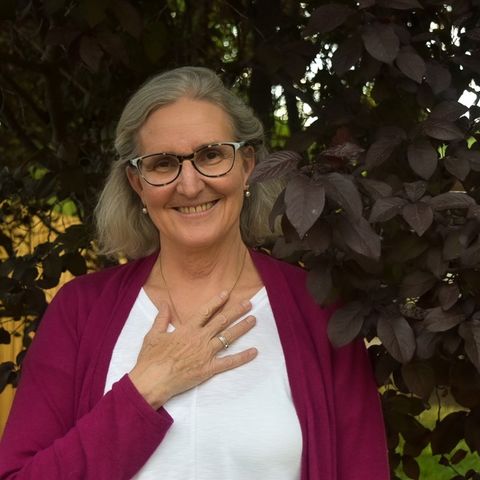
My name is Banu Joy Harrison.
Today's practice is called Sensory Orientation,
Which is a way of using your senses to help the nervous system recognize and inhabit the present moment.
When we're stressed,
Overwhelmed,
Or triggered,
Our nervous system can become stuck in the past or focused on potential threats.
Orienting to our environment gently brings attention back to what's actually here right now and opens the door for us to recognize greater safety.
Today we'll be working with sight and sound,
Noticing shapes,
Colors,
And sounds in the environment around you.
This isn't about analysis or naming things correctly.
It's about letting the senses do what they naturally do,
Orient to the world around us,
And take in information.
If at any point this feels overstimulating,
You can soften your gaze,
Close your eyes,
Or return to something that feels grounding.
Let's begin.
You can do this practice in any posture,
Indoors or outside.
Let your body be as comfortable as possible.
If you wish to take a few deep breaths,
You can do so at any time.
Now let your eyes take in the environment around you.
Be curious about whatever you see,
The colors and shapes.
Look all around you,
To the front,
The sides,
Behind you,
Below and above.
This slow turning of your head and movement of your eyes stimulates the vagus nerve,
Giving signals to our body that we are curious,
Present,
And safe enough in this moment.
Remember to keep your eyes and face soft.
We are not scanning for threat,
Which is often our default.
Rather,
We are looking for what is present right now in our environment,
Noticing anything that might be interesting or even beautiful.
Notice what begins to happen in your body as you orient with your eyes.
Your breath may ease or deepen,
Your shoulders may drop,
Or your jaw may relax even a little bit.
Next,
Invite awareness of any sounds in your environment.
These can be people sounds,
Animal sounds,
Machine sounds,
Sounds from inside of your body,
And possibly quiet sounds.
We're not judging any of the sounds,
Just letting the sound waves flow into and out of your awareness.
Sounds flowing in and out of your ears,
Colors,
Shapes,
And images present in your awareness through your eyes.
Come back again and again to these sounds or images if you find your mind wandering.
As we bring this practice of orienting to a close,
Check in with your body and notice how it feels to be here right now.
If you can,
Find a few words that describe what you're feeling.
Slower,
Softer,
Curious,
Settled.
Whatever words arise,
This will help wire this orienting deeper in your nervous system so you have more access to this regulating skill.
Thank you so much for practicing with me today.
Be well.
Meet your Teacher

4.7 (189)
Recent Reviews
Leigh
March 9, 2026
🙏🙏
Sandy
March 9, 2026
Awesome 😎
Taty
March 7, 2026
I was surprised by how much this mediation helped me feel more present during a moment of stress. I’ve done different types of sensory orientation exercises on my own but it really makes a different to have a soft calm voice coach you through it. Thank you.
Rebecca
March 3, 2026
Beautiful softening practice - thank you
Joyce
March 2, 2026
Listening for a second time. Returning to the present with curiosity again and again. Thank you.
Ivana
February 25, 2026
Beautiful! Though i practiced in my own familiar space the intentional non-judgemental observation and listening of the surroundings became a soothing blanket. Thank you for this practice.
Günter
February 25, 2026
I felt a very deep refreshing sleepiness while sitting in a chair.
SK
February 24, 2026
Wonderful
Emily
February 22, 2026
Short and very effective. Thank you!
