The world’s largest free audio library for everyday wellbeing
Attention & Awareness
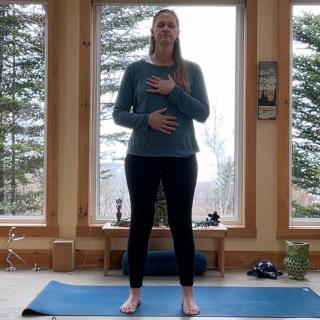
Somatic Presence is a meditation of steady, receptive awareness of the body as one whole felt experience, resting with the body rather than tracking single sensations. It builds on interoception, the body's ongoing sense of its own internal signals (Khalsa et al., 2018).
Last Updated
2 Jul 2026
We are still reviewing this page. Our research team checks every technique page for accuracy and evidence quality before final release. Details may change as that review completes. The evidence badge shows our current reading of the published research.
RECOMMENDED DOSE
A short, low-commitment introductory range is suggested so newcomers can build the habit of turning attention to body sensations without strain.
Once the basic practice feels comfortable, a modest step up in session length and regularity reflects general conventions for body-awareness and meditation practice.
A near-daily maintenance level is offered for experienced practitioners; treat it as a ceiling rather than a target and scale back if it becomes effortful.
Session length
Session length: 5–10 minutes
5
MIN
How long each individual practice session should last from start to finish.
Frequency
Frequency: 3–4 days
3
DAYS
The number of days per week to fit a session into your routine.
Session length
Session length: 15–20 minutes
15
MIN
How long each individual practice session should last from start to finish.
Frequency
Frequency: 4–5 days
4
DAYS
The number of days per week to fit a session into your routine.
Session length
Session length: 20–30 minutes
20
MIN
How long each individual practice session should last from start to finish.
Frequency
Frequency: 5–7 days
5
DAYS
The number of days per week to fit a session into your routine.
About this card. No direct dose-response literature was found for Somatic Presence; these recommendations are based on general practice conventions for somatic/meditation techniques and should be treated as starting points only. These recommendations are not a substitute for personalised guidance from a qualified practitioner.
Quick answers to what people most often ask. Each card links to the deeper section below.
evidence
No trial has tested Somatic Presence by name; the evidence is indirect, drawn from related body-awareness practices. A brief mindfulness trial found greater body awareness tracked with lower anxiety, and a body-oriented therapy for women in addiction treatment improved emotion regulation. Samples are small and rely heavily on self-report.
Read moregood for
Adults who feel disconnected from the body, or who notice stress and emotion only after it has escalated, may benefit most, since resting attention inward brings those signals into view earlier. Somatic Presence is supportive practice, not a substitute for care when trauma, panic, health anxiety, or dissociation is severe.
Read moresafety
Most healthy adults can practise Somatic Presence safely as a settling, low-risk practice. One caution matters: for some people, turning attention inward sharpens worry, so an ordinary fast heartbeat or tight chest registers as a threat. Those with trauma, panic, or health-anxiety histories should keep sessions short or work with a teacher.
Read morehow it works
Resting steady attention on the whole body trains interoception, the capacity to sense and read internal signals like breath, warmth, and muscle tension. This inward focus engages the anterior insula, the brain region that maps those signals. Research on related body-based mindfulness links this trainable awareness to steadier emotion regulation and earlier awareness of tension.
Read moreSomatic Presence is a meditation of steady, receptive awareness of the body as one whole felt experience, simply being with the body rather than tracking or analysing single sensations.
The practice is usually done seated and still, with attention resting on the body as a whole rather than moving through it region by region. It stays deliberately non-effortful and non-linear, letting sensations, breath, warmth, and tension register on their own while awareness stays open and receptive. There is no sequence to complete and no sensation to chase, which is what sets it apart from step-by-step body scanning.
Somatic Presence is not body scanning, and it does not track sensations in sequence or investigate them one by one; instead it rests in the body as a single felt whole. It is also not a worried, threat-scanning monitoring of symptoms, since the stance stays open and non-judging. It draws on Zen shikantaza, Gendlin's Focusing, and body-oriented mindfulness such as MABT, but it is the receptive whole-body attention itself, not any single lineage, that defines it.
Not to be confused with
Body scanning
Body scanning tracks sensations through the body in sequence and works actively with what it finds; somatic presence rests with the whole body at once, receptively, without moving through it or trying to change anything.
Focusing (Gendlin's felt sense)
Focusing deliberately turns toward a specific bodily feeling tied to a problem and questions it for a shift; somatic presence stays with the body as a whole and does not investigate, interpret, or seek any answer.
Interoceptive accuracy training
Interoceptive accuracy work aims to sharpen precise detection of signals like heartbeats, often measured as a score; somatic presence is about the quality of resting with the body, not improving raw detection performance.
Somatic Presence appears to work by training interoceptive awareness, the capacity to sense and read the body's internal signals, so a wave of tension or unease can be felt early rather than only after it has taken over. Research on body-based mindfulness broadly, not Somatic Presence specifically, links this trainable body awareness to steadier emotion regulation, the ability to meet a feeling without being swept up in it (Lazzarelli et al., 2024), (Schuette et al., 2021). Resting attention in the whole body also seems to support decentering, where thoughts begin to feel like passing weather rather than commands, alongside a quiet background noticing of where attention is resting (Sala et al., 2024). These are proposed pathways drawn from adjacent research, not effects measured during the practice itself.
Resting attention in the whole body, rather than chasing single sensations, trains interoceptive awareness: the capacity to sense and read internal signals like breath, warmth, and tension. People often describe feeling more at home in the body and catching a wave of stress or emotion earlier, before it takes over (Lazzarelli et al., 2024), (Sala et al., 2024).
Noticing that your attention has drifted, or sensing that your mind is quiet right now without that noticing breaking the thread of the moment, is the self-monitoring layer this mechanism describes. Resting in whole-body awareness is associated with steadier attention of this kind, though the evidence comes from related mindfulness and interoception research rather than trials of Somatic Presence itself (Lazzarelli et al., 2024), (Sala et al., 2024).
Racing thoughts start to feel less like commands and more like passing weather when attention rests in the whole felt body rather than in the stream of thinking. That shift is called decentering, the sense of watching thoughts as passing mental events instead of facts you must act on, and greater body-focused awareness has been linked to steadier emotion regulation (Lazzarelli et al., 2024), (Tan et al., 2023).
Turning steady attention inward engages the anterior insula, the brain region that maps internal signals like heartbeat, breath, and muscle tension, and imaging of interoceptive attention shows its activity increases during this kind of inward focus (Terasawa et al., 2013), (Farb et al., 2023). Early brain-imaging of a related body-oriented training also links it to increased somatosensory cortex activity and to shifts in the attention networks that hold focus in place, though this comes from one small pilot of 22 adults rather than from Somatic Presence itself (Price et al., 2023). In the body, this may feel like a clearer, more immediate read on what is actually happening inside, where sensations become easier to locate rather than vague or in the background.
When you rest attention inside the body, you may get a clearer, more immediate sense of what you are feeling from within. That shift shows up in the anterior insula, the brain region that maps internal signals such as heartbeat, breath, and muscle tension, whose activity rises during this kind of inward focus in imaging studies of interoceptive attention (Terasawa et al., 2013), (Farb et al., 2023).
As you rest attention in the body, sensations like breath, warmth, and tension can come into sharper focus, feeling clearer and easier to locate rather than vague or in the background. Early brain-imaging of a related body-oriented interoceptive training links this to increased activity in the somatosensory cortex, the brain region that maps physical sensation across the body (Price et al., 2023).
In practice, attention may start to rest on the body with a little less effort and wander off less often. That steadiness tracks with strengthened connectivity in the dorsal attention network, the brain system that aims and sustains focus, seen in early imaging of related body-awareness training (Price et al., 2023), (Farb et al., 2023).
[FLAGGED FOR DELETION - REDUNDANT CLONE]
Staying with a body sensation instead of being pulled straight into thought draws on the anterior cingulate cortex, a brain region that helps track internal signals and flag which ones matter right now. Imaging of interoceptive attention shows its activity rises during this kind of inward focus (Terasawa et al., 2013), (Farb et al., 2023), (Mehling, 2016).
When you rest attention in the felt body, difficult feelings can start to arrive with a little more space around them, easier to stay with than to react against. That shift involves the ventromedial prefrontal cortex, a frontal brain region that helps appraise and calm emotional and bodily signals, and related brain-imaging shows its activity rising during this kind of inward, interoceptive attention (Terasawa et al., 2013), (Farb et al., 2023).
When you rest attention in the felt body, sensations often become clearer and easier to stay with, and emotions start to feel locatable in the body rather than only in the head. Early imaging of related body-oriented training measured tighter coordination during this inward attention between the anterior insula and the anterior cingulate cortex, the regions that map and weigh the body's internal state (Price et al., 2023), (Terasawa et al., 2013), (Farb et al., 2023).
Body sensations can become clearer and easier to stay with as two body-sensing brain regions coordinate more closely: the insula, which maps the body's internal state, and the somatosensory cortex, which registers physical sensation. Related body-oriented interoceptive training has been measured to increase this coordination (Price et al., 2023), (Mehling, 2016), which practitioners often experience as a tight chest or restless energy feeling like information to notice rather than something to escape.
[FLAGGED FOR DELETION - REDUNDANT CLONE]
[FLAGGED FOR DELETION - REDUNDANT CLONE]
Limited–Emerging evidence supports Somatic Presence, and it is drawn from closely related body-awareness practices rather than trials of the technique by name. A randomized trial of brief body-focused mindfulness (N=40) found increased body awareness that related to lower anxiety (Lima-Araujo et al., 2022), and a study of women in substance-use treatment (N=217) reported gains in body awareness and emotion regulation (Price et al., 2019). Findings are mixed rather than uniform: in one trial, monitoring body signals alongside mindfulness eased stress but not anxiety or depression (Sumińska & Rynkiewicz, 2025). What is not yet supported are large trials of Somatic Presence itself, long-term follow-up, or any claim that it treats a diagnosed condition.
Most of what we know about Somatic Presence comes from research on closely related body-awareness practices, where learning to rest attention on internal body signals is linked to steadier emotion regulation (Lazzarelli et al., 2024) and, in a brief-mindfulness trial, to greater body awareness that tracked with lower anxiety (Lima-Araujo et al., 2022). The main areas studied are interoception, emotion regulation, and the brain networks that map bodily sensation, the last seen in small neuroimaging work such as a 22-person pilot of body-oriented therapy (Price et al., 2023). The limits are real, though: no trial has tested Somatic Presence by name, samples are small, many outcomes rest on self-report, and study authors describe the evidence as preliminary.
0
Meta-analyses
1
RCTs
0
Systematic reviews
0
Observational
19
Pilot
Outcomes measured
The research is useful for setting expectations, but study methods and participant groups vary. Treat the findings as general guidance rather than a promise about any single session, and not a replacement for clinical care.
Sahib S. Khalsa, Ralph Adolphs, Oliver G. Cameron, Hugo D. Critchley, Paul W. Davenport, Justin S. Feinstein (2018). Interoception and Mental Health: A Roadmap. https://doi.org/10.1016/j.bpsc.2017.12.004
2018
Finding: This review maps out interoception, the way the nervous system continuously senses and interprets signals from inside the body, from heartbeat and breath to gut and muscle, to build a moment-by-moment felt picture of how you are doing physically. The authors describe this internal-body sense as a foundation for emotion, motivation and overall wellbeing, and note that much of it runs below conscious awareness. That matters for Somatic Presence, which is essentially the practice of turning steady, receptive attention toward those inner signals rather than tuning them out. Keep in mind this is a conceptual roadmap of how interoception works, not a trial testing the technique itself, so it explains the mechanism the practice draws on rather than measuring its effects.
See full citation in referencesOliver G. Cameron (2001). Interoception: The Inside Story—A Model for Psychosomatic Processes. https://doi.org/10.1097/00006842-200109000-00001
2001
Finding: This review maps out interoception, the body's ongoing sense of its own internal signals, and describes it as a foundation for emotion, motivation and wellbeing that runs at both conscious and unconscious levels. For someone practising Somatic Presence, it helps explain why steadily tuning in to sensations like breath, heartbeat and muscle tension can be more than a relaxation trick; that inner sensing is woven into how we feel and respond. This is a theoretical review of the science circa 2000 rather than a test of the technique itself, so it explains the mechanism the practice draws on rather than proving any particular benefit.
See full citation in referencesCarolyn M. Schmitt, Sarah Schoen (2022). Interoception: A Multi-Sensory Foundation of Participation in Daily Life. https://doi.org/10.3389/fnins.2022.875200
2022
Finding: This review makes the case that interoception, the body's ongoing sense of its own internal signals, is far broader than gut feelings or a racing heart; it is a whole-body sense that shapes emotion, motivation and a felt sense of being at home in yourself, and it works partly below conscious awareness. That matters for Somatic Presence, because the practice of steadily "being with" the body is essentially training this internal-sensing capacity. Keep in mind this is a conceptual review that maps out why this inner sense is foundational to wellbeing rather than a trial testing the technique, so it explains the "why" behind the practice more than it proves specific outcomes.
See full citation in referencesWolf Mehling (2016). Differentiating attention styles and regulatory aspects of self-reported interoceptive sensibility. https://doi.org/10.1098/rstb.2016.0013
2016
Finding: This study mapped out the different ways people pay attention to signals from inside their own body, showing that "noticing internal sensations" isn't one single skill but a mix of distinct styles, such as how much someone tunes into bodily signals versus how they interpret and regulate what they feel. For someone practising somatic presence, it helps explain why turning attention inward is a trainable, multi-layered skill rather than a simple on-off awareness. Keep in mind that the findings rest on people's own questionnaire answers rather than a trial of any specific practice, and researchers have raised questions about how reliably these self-report measures capture what's really happening, so this is background on how body awareness works, not proof of what somatic presence delivers.
See full citation in referencesChatrin Suksasilp, Sarah N. Garfinkel (2022). Towards a comprehensive assessment of interoception in a multi-dimensional framework. https://doi.org/10.1016/j.biopsycho.2022.108262
2022
Finding: This paper examined how researchers measure interoception, our ability to sense internal body signals like heartbeat, breath, and gut sensations, and found that no single test captures it well: attention to the body, accuracy at reading it, and how we interpret those signals are separate dimensions that are usually measured in isolation. It also flagged that many popular self-report questionnaires have shaky reliability and unclear structure, so scores from them should be read with caution. For someone drawn to somatic presence, this is a reminder that body awareness is genuinely multi-layered rather than one skill, but it is a measurement and framework analysis, not a trial of the practice itself, so it does not show that somatic presence produces any particular benefit.
See full citation in referencesDominic A. Trevisan, Wolf E. Mehling, James C. McPartland (2021). Adaptive and Maladaptive Bodily Awareness: Distinguishing Interoceptive Sensibility and Interoceptive Attention from Anxiety‐Induced Somatization in Autism and Alexithymia. https://doi.org/10.1002/aur.2458
2021
Finding: This paper is a conceptual review rather than a trial, and it makes an important distinction: tuning into your body is not one single thing. The authors separate calm, curious noticing of internal signals like breath or heartbeat from an anxious, over-vigilant monitoring of the body that can amplify distress, arguing that these two very different experiences have often been blurred together in past research on autism and alexithymia. For someone exploring somatic presence, the practical takeaway is that how you attend matters as much as whether you attend: open, non-judgmental awareness is the goal, not anxious body-checking. Because this is a commentary focused on specific populations and does not measure the effects of any practice, it offers a framework for understanding body awareness rather than direct evidence that the technique produces a particular benefit.
See full citation in referencesHelen Y. Weng, Jack L. Feldman, Lorenzo Leggio, Vitaly Napadow, Jeanie Park, Cynthia J. Price (2021). Interventions and Manipulations of Interoception. https://doi.org/10.1016/j.tins.2020.09.010
2021
Finding: This review of mind-body research makes the case that our ability to sense and interpret internal body signals, things like a quickening heartbeat or tension in the gut, is a skill that can be strengthened with practice, and that this skill is a key link between working with the body and steadying our emotions. For someone exploring somatic presence, that means the simple act of tuning into physical sensations may build a more reliable channel for noticing and settling emotional states. The authors are careful to note, though, that body-movement approaches that work from the body upward are still under-studied, so this is a well-reasoned pathway rather than a settled result for any single practice.
See full citation in referencesGeissy Lainny de Lima-Araujo, Geovan Menezes de Sousa Júnior, Thatiane Mendes, Marcelo Demarzo, Norman Farb, Draulio Barros de Araujo (2022). The impact of a brief mindfulness training on interoception: A randomized controlled trial. https://doi.org/10.1371/journal.pone.0273864
n = 40
Finding: In a small three-day trial with 40 adults, those who did a brief body-focused mindfulness training reported noticing and trusting their bodily signals more (improving on 5 of 8 measures of body awareness) compared with an active control group, and this rise in body awareness tracked with a drop in their in-the-moment anxiety. Interestingly, their objective ability to detect their own heartbeat did not change, so the practice seems to shift how people relate to and interpret body signals more than how accurately they sense them. Because the study was brief and small, and used generic mindfulness rather than a specific somatic presence protocol, treat this as an early hint at how body attention may ease anxiety rather than firm proof.
reported narratively
Hugo D Critchley, Sarah N Garfinkel (2017). Interoception and emotion. https://doi.org/10.1016/j.copsyc.2017.04.020
2017
Finding: This review maps how the body's internal sense, called interoception, feeds into how we feel emotions: signals from inside the body, like heartbeat, breath and gut sensations, are picked up and interpreted by the nervous system to shape our emotional and bodily experience, often without us noticing. For someone practising Somatic Presence, this helps explain why steadily paying attention to internal sensations can matter, since that inner sensing appears to be woven into emotion, motivation and a sense of wellbeing. It's worth noting this is a theoretical review of how interoception works rather than a test of Somatic Presence itself, so it grounds the idea behind the practice without measuring the practice's effects.
See full citation in referencesKelly Leech, Peta Stapleton, Alan Patching (2024). A roadmap to understanding interoceptive awareness and post-traumatic stress disorder: a scoping review. https://doi.org/10.3389/fpsyt.2024.1355442
2024
Finding: This scoping review gathered the research on interoceptive awareness, the skill of noticing signals from inside your body, in people affected by trauma and post-traumatic stress. Across the studies it examined, the ability to notice and steady your attention on bodily sensations was most consistently tied to better emotion regulation, meaning people who read their internal signals more clearly also tended to identify and manage their emotions more effectively. For someone practising somatic presence, this points to why tuning into the body may support emotional steadiness, though the evidence here is correlational, so it shows a link rather than proving that the practice itself causes the improvement.
See full citation in referencesYuri Terasawa, Hirokata Fukushima, Satoshi Umeda (2013). How does interoceptive awareness interact with the subjective experience of emotion? An fMRI Study. https://doi.org/10.1002/hbm.21458
2013
Finding: In this brain-imaging study, people who paid closer attention to sensations inside their own bodies showed stronger activity in regions that map internal state, including the insula and anterior cingulate cortex, and that activity tracked with how vividly they experienced their emotions. For a practice built on tuning into the body, this offers a plausible mechanism: turning attention inward appears to engage the very circuits the brain uses to sense heartbeat, breath, and gut feeling, which are closely tied to emotional awareness. This is a small look at brain wiring rather than a test of the practice itself, so it explains how such attention works in the brain, not whether the technique improves mood or reduces stress.
See full citation in referencesNorman A. S. Farb, Zoey Zuo, Cynthia J. Price (2023). Interoceptive Awareness of the Breath Preserves Attention and Language Networks amidst Widespread Cortical Deactivation: A Within-Participant Neuroimaging Study. https://doi.org/10.1523/eneuro.0088-23.2023
2023
Finding: In this brain-imaging study, researchers scanned volunteers while they alternated between tracking their own breathing and tracking a visual cue, and found that turning attention inward to the breath switched on the network of brain regions that maps the body's internal state, including the insula and anterior cingulate cortex, while keeping attention and language circuits active even as much of the rest of the cortex quieted down. In practical terms, this helps explain why focusing on the felt sense of breathing can feel both settling and alert rather than dulling: the mind stays engaged while shifting toward the body. This is a mechanism-level look at what the brain does during interoceptive attention, not a test of whether the practice improves stress, mood or any health outcome, and it reflects a single small neuroimaging experiment rather than long-term results.
See full citation in referencesAleksandra M. Rogowska, Rafał Tataruch, Klaudia Klimowska (2023). Validation of the shortened 24-item multidimensional assessment of interoceptive awareness, version 2 (Brief MAIA-2). https://doi.org/10.1038/s41598-023-48536-0
2023
Finding: This study set out to build a shorter, 24-item questionnaire for measuring how well people notice and interpret signals from their own bodies, condensing a longer survey down to its most reliable questions. The result is useful mainly as a research tool rather than as a test of any practice: it tells us how researchers try to measure body awareness, and why that measurement is tricky, since earlier versions showed inconsistent and sometimes unreliable results. For anyone considering somatic presence, the honest takeaway is that much of the body-awareness research it draws on rests on self-report surveys like this one, whose accuracy is still being refined, so it offers background context rather than direct proof that the practice works.
See full citation in referencesStephanie A. Schuette, Nancy L. Zucker, Moria J. Smoski (2021). Do interoceptive accuracy and interoceptive sensibility predict emotion regulation?. https://doi.org/10.1007/s00426-020-01369-2
2021
Finding: In a study of healthy adults, the way people tuned into and made sense of their own body signals was linked to how well they managed their emotions: those more attuned to internal sensations tended to report stronger emotion-regulation skills. For someone exploring somatic presence, this supports the idea that paying attention to bodily cues and how you relate to them may go hand in hand with recognising and steadying your feelings. Because this was a one-time snapshot in a non-clinical group rather than a trial of any practice, it shows a connection rather than proof that building body awareness causes better emotion regulation.
See full citation in referencesCynthia J. Price, Gunes Sevinc, Norman A. S. Farb (2023). Within-Person Modulation of Neural Networks following Interoceptive Awareness Training through Mindful Awareness in Body-Oriented Therapy (MABT): A Pilot Study. https://doi.org/10.3390/brainsci13101396
n = 22
Finding: In this small pilot, 22 adults were split between eight weeks of body-oriented interoceptive training (learning to notice and stay with internal body sensations) and a no-treatment group, and brain scans showed a distinct pattern only in those who trained: quieter activity in the insula, a region that maps signals from inside the body, alongside stronger coordination between the brain's attention network and the areas that track physical sensation. People whose brain connectivity increased the most also reported the biggest gains in how tuned-in they felt to their own bodies, which hints that this kind of practice may reshape how the brain listens inward. Because the study was tiny and preliminary, these results point to a promising direction rather than a settled fact, and they need to be confirmed in larger trials before we lean on them.
reported narratively
Sylwia Sumińska, Andrzej Rynkiewicz (2025). Mindfulness-based stress reduction training supplemented with physiological signals from smartwatch improves mindfulness and reduces stress, but not anxiety and depression. https://doi.org/10.1371/journal.pone.0322413
n = 72
Finding: [FLAGGED FOR DELETION - MODALITY DRIFT (HARDWARE/BIOFEEDBACK)]
reported narratively
Alessandro Lazzarelli, Francesca Scafuto, Cristiano Crescentini, Alessio Matiz, Graziella Orrù, Rebecca Ciacchini (2024). Interoceptive Ability and Emotion Regulation in Mind–Body Interventions: An Integrative Review. https://doi.org/10.3390/bs14111107
2024
Finding: This integrative review draws together research on mind-body practices and concludes that our ability to notice and make sense of internal body signals, things like a racing heart, tight chest, or steady breath, can be strengthened through practice, and that this skill sits at the heart of how we manage emotions. For someone exploring somatic presence, that means paying closer attention to bodily sensations isn't just a relaxation habit; it may build a genuine capacity that helps you read and steady your emotional state. The reviewers frame this as a proposed pathway rather than settled proof, and they note that body-movement approaches specifically have been studied far less than seated mindfulness, so the link is promising but still being mapped.
See full citation in referencesYafei Tan, Xiaoqin Wang, Scott D. Blain, Lei Jia, Jiang Qiu (2023). Interoceptive attention facilitates emotion regulation strategy use. https://doi.org/10.1016/j.ijchp.2022.100336
2023
Finding: Using repeated real-life check-ins with participants, this study found that people who paid closer attention to their internal bodily signals were more likely to draw on effective emotion-regulation strategies, such as reframing a situation or shifting their focus, in the moment. For anyone practising somatic presence, it hints that tuning into physical sensations may help you notice and respond to feelings more skilfully as they arise. That said, the link here is a correlation, not proof that noticing the body causes better emotional control, so it points to a promising connection rather than a guaranteed result.
See full citation in referencesMargaret Sala, Sophie Schanzer, Claudia Morris (2024). Mindfulness and Interoceptive Awareness. https://doi.org/10.1097/nmd.0000000000001779
2024
Finding: In a large survey of just over a thousand adults, people who scored higher on everyday mindfulness also reported a stronger, more comfortable relationship with their body's internal signals, and the closest links centred on trusting those sensations, feeling calmer as attention settled into the body, and being able to steady wandering focus. For someone practising somatic presence, this points to why tuning into physical cues tends to travel alongside better awareness and handling of emotions. Because everyone was measured at a single point in time, the study shows these qualities move together but cannot prove that the practice itself causes the improvement.
See full citation in referencesCynthia J. Price, Elaine A. Thompson, Sheila E. Crowell, Kenneth Pike, Sunny C. Cheng, Sara Parent (2019). Immediate Effects of Interoceptive Awareness Training through Mindful Awareness in Body-Oriented Therapy (Mabt) for Women in Substance Use Disorder Treatment. https://doi.org/10.1080/08897077.2018.1488335
n = 217
Finding: In this trial, 217 women in outpatient addiction treatment were assigned either to a body-oriented therapy that teaches tuning into internal physical sensations, to a health-education class, or to their usual care alone. The women who received the body-awareness training became noticeably better at sensing and reading signals from their own bodies, managed difficult emotions more steadily, and logged more days abstinent than the other two groups; those who attended at least three-quarters of sessions also reported less depression and less craving. Because this study looked at one specific therapy therapy programme delivered only to women in clinical addiction treatment, it is best read as early evidence that learning to attend to bodily sensations can strengthen emotion regulation, rather than proof that a general somatic-presence practice treats substance use.
reported narratively
Somatic Presence draws on several traditions that each emphasise resting with the body: Zen Buddhism's shikantaza or 'just sitting,' Eugene Gendlin's Focusing-oriented psychotherapy and its felt sense, and contemporary body-oriented mindfulness such as Mindful Awareness in Body-oriented Therapy. These roots help explain the practice's form, its receptive, whole-body, non-sequential attention, rather than proving any clinical effect. Phenomenologists call the quality it cultivates lived body awareness, a pre-reflective sense of being embodied that the practice treats as a foundation for self-understanding.
For most healthy adults, resting attention in the body is low-risk and tends to settle rather than stir up the nervous system. One situation calls for care: for some people, turning attention inward sharpens worry instead of easing it, so an ordinary fast heartbeat or a tight chest starts to register as a threat rather than a passing sensation. This caution is practice-informed and mild to moderate, drawn from research on how a worried, threat-scanning way of noticing the body differs from open, non-judging awareness (Trevisan et al., 2021), (Mehling, 2016), (Leech et al., 2024). No trial has tested somatic presence itself for harm, so if inward attention consistently raises distress, ease off or seek guidance rather than pushing through.
People with a history of trauma, panic, health anxiety, or a habit of reading body sensations as alarming may find sustained inward attention harder rather than steadying, and are the group most likely to benefit from shortening the practice or working with a teacher. A worried, threat-scanning attention toward internal signals behaves differently from open, receptive body awareness, and only the second tends to calm the body rather than wind it up (Trevisan et al., 2021), (Mehling, 2016), (Leech et al., 2024). This caution is precautionary and practice-informed, drawn from adjacent interoception research rather than trials of somatic presence itself.
For most healthy adults, resting attention in the body settles the nervous system rather than stirring it up. But for some people, turning inward slides into a worried, threat-scanning way of noticing, where an ordinary fast heartbeat or a tight chest starts to register as danger rather than a passing sensation. If that happens, ease off: ground with the breath, open your eyes, keep sessions brief, or seek guidance rather than pushing through. An open, non-judging stance is what makes body awareness steadying instead of distressing.
People with a history of trauma, panic, health anxiety, or a habit of reading body sensations as alarming may find sustained inward attention harder rather than steadying. Shorten the practice, keep an external anchor like the breath or eyes open, and consider working with a qualified teacher or clinician. This caution is practice-informed and drawn from adjacent interoception and PTSD research rather than trials of somatic presence itself; if inward attention consistently amplifies distress, pause and seek professional support.
Somatic presence is best approached gently and briefly at first, resting attention in the body from a comfortable, supported position so it feels manageable rather than exposing. For most healthy adults this settles the nervous system, and a good starting format is just a few minutes with an open, non-judging attention and an easy anchor like the breath to return to. If inward attention consistently tips into worry, treat that as a signal to ease off or seek guidance rather than push through.
Begin with just a few minutes in a comfortable, supported position, so resting attention in the body feels manageable rather than exposing. A first sitting can feel like little more than sitting still, and the sense of being at home in the body deepens with repetition rather than by pushing the clock.
Simply be with what the body is feeling rather than scanning for problems. Let breath, warmth, weight, and tension register on their own. An open, non-judging attention is what makes body awareness steadying rather than distressing.
If attention gets sticky or a sensation grips you, let the breath or the contact of the body against the seat become a place to rest. Keep the option of practising with eyes open.
Notice whether inward focus feels settling or whether it is tipping into worry, where a normal heartbeat or muscle tension begins to feel like a threat rather than a passing sensation.
If turning to the body consistently raises anxiety, shorten the session, take a break, or shift to an external focus rather than pushing harder.
If inward attention reliably amplifies distress, or if you have a trauma, panic, or health-anxiety history, work with a qualified teacher or clinician rather than practising alone.
This information is educational and is not medical advice. This practice is not a substitute for professional care and should not replace prescribed medication or treatment for any medical or mental-health condition. If you are managing a health condition or taking medication, talk with a qualified health professional before changing your practice. If you are in distress or crisis, seek professional support.
| Technique | Best for | Use with care | Evidence strength | Distinction |
|---|---|---|---|---|
| Body scanning | Building a reliable, structured habit of locating and easing tension region by region, and learning where sensations live in the body. | If step-by-step tracking makes you strive or check anxiously, the effortful format can add pressure rather than settle you. | moderate EVIDENCE | Body scanning moves attention through the body part by part in a set sequence, actively investigating and often releasing tension along the way. Somatic presence stays with the body as a single, whole felt experience, receptive and non-sequential, without hunting for or working on any particular sensation. The difference is between systematically surveying the body and simply being with it. |
| Focusing (Gendlin's felt sense) | Exploring a murky feeling attached to a particular concern and letting a felt, bodily sense of it clarify or shift. | Its problem-directed inquiry can pull attention back into thinking, which is the opposite of somatic presence's receptive resting. | emerging EVIDENCE | Focusing turns toward a specific, initially unclear bodily feeling around a problem or situation and gently questions it until a shift or word arrives. Somatic presence is broader and non-investigative: it rests with the whole body without steering toward any issue or seeking an answer. Focusing works something through the body; somatic presence simply stays present with it. |
| Mindful Awareness in Body-oriented Therapy (MABT) | Guided, structured interoceptive skill-building in a clinical setting, such as supporting emotion regulation in addiction or trauma treatment. | It usually needs a trained facilitator and a course of sessions, so it is less suited to informal, self-led daily practice. | moderate EVIDENCE | MABT is a structured, therapist-delivered protocol that teaches interoceptive awareness skills step by step, often within mental health or substance-use care. Somatic presence shares the same inward, body-sensing mechanism but is a self-directed contemplative practice rather than a manualized clinical program. Most of the trial evidence in this area comes from MABT, not from somatic presence itself. |
| Shikantaza (Zen "just sitting") | Practitioners who want a formal contemplative sitting practice held within Zen tradition and its wider meaning and lineage. | emerging EVIDENCE | Shikantaza is a Zen practice of open, objectless sitting that includes a strong somatic component but sits within a specific religious and lineage framework. Somatic presence draws on that spirit of non-doing while placing the felt body at the center as its explicit anchor, and it is offered as a secular, cross-tradition practice rather than a Buddhist form. |

Somatic Presence is a meditation of steady, receptive awareness of the body as one whole felt experience, simply being with the body rather than tracking single sensations. It builds on interoception, the body's sense of its own internal signals like breath, warmth, and tension (Khalsa et al., 2018).
+
Somatic Presence means resting attention on the body as a single, whole felt experience rather than hunting for or working on particular sensations. It differs from body scanning by its unhurried, non-sequential quality: you are being with the body, not moving through it region by region. The practice rests on interoception, the body's ongoing sense of its own internal signals such as breath, heartbeat, warmth, and tension, which forms the felt ground it works with (Khalsa et al., 2018). This describes the practice form, not a clinical or treatment claim.
They differ in how you pay attention. A body scan moves through the body part by part, actively noticing and often easing tension in sequence, while somatic presence rests receptively with the whole body as one felt experience, without hunting for or working on any single sensation.
+
The difference is in the method and quality of attention, not in which one is better. A body scan is sequential and active: attention travels region by region, investigating and often releasing what it finds. Somatic presence is non-sequential and receptive: you stay with the body as a whole felt experience rather than surveying it or trying to change anything. Both build on interoception, the body's sense of its own internal signals, so they share a foundation even though the practice form differs (Khalsa et al., 2018). No head-to-head trial has compared the two, so this is a distinction in how each is practised rather than a claim that one works better.
Partly, but the evidence is indirect. No trial has tested Somatic Presence by name, so what we know comes from closely related body-awareness practices, where brief mindfulness raised body awareness that tracked with lower anxiety (Lima-Araujo et al., 2022), though results are mixed (Sumińska & Rynkiewicz, 2025).
+
Partly, though the support is indirect rather than proven. No study has tested Somatic Presence itself, so its likely effects are drawn from adjacent research: a brief body-focused mindfulness trial linked greater body awareness to lower anxiety (Lima-Araujo et al., 2022), and a body-oriented interoceptive therapy helped women in addiction treatment steady body awareness and emotion (Price et al., 2019). Findings are mixed, however; one trial eased stress but not anxiety or depression (Sumińska & Rynkiewicz, 2025), and this evidence comes from related practices in small, mostly self-report samples rather than trials of Somatic Presence (Suksasilp & Garfinkel, 2022). So it appears to be more than just relaxing, but that isn't yet established, and it doesn't treat any diagnosed condition.
Possibly. Resting receptive attention in the body may train interoceptive awareness, your ability to read internal signals like tension or quickened breath, so early cues of stress can register sooner rather than only after they take hold (Lazzarelli et al., 2024). This is a proposed pathway drawn from related body-awareness research, not proof from trials of Somatic Presence itself.
+
Possibly. The plausible pathway is that steady, receptive attention to the body trains interoceptive awareness, the capacity to sense and interpret internal signals, which is the felt ground somatic presence rests on (Khalsa et al., 2018). In adjacent research, noticing body signals is linked to steadier emotion regulation, meeting a feeling early rather than being swept up in it (Sala et al., 2024). This is a proposed pathway drawn from closely related practices, not proof from trials of Somatic Presence, and for some people a worried, threat-scanning way of attending inward can heighten distress rather than ease it, so ease off if that happens.
Attention turns on the brain's body-sensing circuitry. Resting attention inward engages the anterior insula, the region that maps internal signals like heartbeat and breath, and imaging of interoceptive attention shows its activity rises (Terasawa et al., 2013), (Farb et al., 2023). This is indirect mechanism evidence from interoception research, not imaging of Somatic Presence itself.
+
Turning steady attention inward engages the anterior insula, the brain region that turns internal signals such as heartbeat, breath, and muscle tension into felt experience, and imaging of interoceptive attention shows its activity increases during this kind of focus (Terasawa et al., 2013), (Farb et al., 2023). Early brain-imaging of a related body-oriented interoceptive training also links it to increased somatosensory cortex activity, the area that maps physical sensation, and to shifts in the attention networks that hold focus in place, though this comes from one small 22-person pilot rather than from Somatic Presence itself (Price et al., 2023). This is mechanism-level and indirect, so it points to plausible brain pathways rather than changes measured during the practice.
Use care. For most healthy adults, resting attention in the body is low-risk, but for some people turning inward can sharpen worry rather than ease it. If that happens, soften or shorten the practice, shift to an external focus, and seek a teacher or clinician if you have a trauma, panic, or health-anxiety history.
+
Use care. Somatic presence settles most people, but sustained inward attention can tip into a worried, threat-scanning way of noticing, where an ordinary fast heartbeat or tight chest starts to register as danger. The practical response is to ease off: ground with the breath or open your eyes, keep sessions brief, or work with a qualified teacher or clinician. This is a practice-informed caution drawn from adjacent research on interoception, how we sense internal body signals, rather than a proven risk profile, and no trial has tested somatic presence itself for harm (Suksasilp & Garfinkel, 2022), (Mehling, 2016).
Use care. For most adults resting attention in the body is low-risk, but with a trauma history sustained inward attention can heighten distress rather than settle it. Keep sessions short, use an external anchor like the breath or eyes open, and work with a qualified clinician if inward attention reliably raises distress (Leech et al., 2024).
+
Use care. This is a practice-informed caution, not a safety clearance: no trial has tested Somatic Presence itself for harm, and this guidance draws on adjacent interoception and PTSD research rather than adverse-event data (Leech et al., 2024), (Trevisan et al., 2021). A worried, threat-scanning way of attending to the body behaves differently from open, receptive awareness, and only the latter tends to settle the nervous system (Mehling, 2016). If trauma, panic, or dissociation is severe, or if inward focus consistently amplifies distress, shorten or pause the practice and seek professional support rather than pushing through.
Start short and simple. Sit comfortably for a few minutes and let your attention rest on the body as one whole felt experience, rather than hunting for particular sensations. Keep an open, non-worried stance, use the breath or the contact of the body against the seat as an anchor, and ease off if turning inward raises distress.
+
Start short and low-pressure. Begin with a few minutes in a comfortable, supported position and simply be with the whole body, letting breath, warmth, weight, and tension register on their own instead of scanning for problems. Keep an anchor available, such as the breath or the feeling of the body against the seat, and check whether inward attention feels settling or is tipping into worry. If turning to the body consistently sharpens anxiety, shorten the session, shift to an external focus, or seek guidance rather than pushing through; a gentle, receptive stance is what tends to make body awareness steadying.
Start short, just a few minutes in a comfortable, supported position, and let sessions lengthen naturally as resting in the body feels easier. There is no trial-tested duration for Somatic Presence, so treat this as practical starting guidance, and shorten or ease off if inward attention tips into worry.
+
Begin with only a few minutes. A first sitting can feel like little more than sitting still, and the sense of being at home in the body tends to deepen with repetition rather than by pushing the clock. Let session length grow gradually as the practice feels settling rather than exposing, and if turning attention inward consistently sharpens worry or distress, shorten the session or take a break instead of lengthening it. No study has tested a specific duration for Somatic Presence by name, so this is practice-informed guidance rather than an evidence-backed prescription.
They share the same inward, body-sensing mechanism but differ in structure: MABT is a manualized, therapist-delivered clinical program that teaches interoceptive awareness step by step, while Somatic Presence is a self-directed contemplative practice. Most named trial evidence comes from MABT (Price et al., 2019), not from Somatic Presence itself, and no head-to-head study compares them.
+
The core difference is structure, not mechanism. Both rest on interoception, the body's sense of its own internal signals, and both aim to train that inward awareness (Khalsa et al., 2018). MABT, Mindful Awareness in Body-oriented Therapy, is a structured protocol delivered by a trained facilitator, and most of the nearby trial evidence comes from it, such as a study of women in substance-use treatment (Price et al., 2019) and a small neuroimaging pilot (Price et al., 2023). Somatic Presence uses the same body-sensing pathway as a self-led practice, so it should not be read as inheriting MABT's clinical outcomes.
The body's ability to sense its own internal signals, such as breath movement, heartbeat, warmth, tension, and hunger. It is the raw sensing that somatic presence rests within.
The processing of visceral-afferent neural signals by the central nervous system, spanning conscious and unconscious levels, and contributing to emotion, homeostasis, and self-awareness.
The capacity to notice and make sense of internal body signals, so you detect early cues of stress or emotion and can stay with them rather than being swept up.
Self-reported interoceptive sensibility and attention regulation; the trainable ability to sustain and interpret attention to internal bodily states, linked to emotion regulation.
The shift from being caught inside thoughts and feelings to observing them as passing mental events, so they feel less like commands and more like weather moving through.
Also called cognitive defusion; a metacognitive stance in which mental content is experienced as transient events rather than facts, reducing automatic reactivity and identification.
A quiet background sense of knowing whether your mind is settled, wandering, or alert, without that noticing breaking the experience itself.
Metacognitive monitoring of the current state and quality of one's own attention and mental processes.
The brain region that turns internal body signals like heartbeat, breath, and muscle tension into felt, conscious experience; its activity rises when attention rests inward.
A cortical hub of the interoceptive network implicated in the representation and conscious appraisal of visceral and bodily states.
The brain region that maps physical sensation across the body; more activity means bodily signals are represented in finer detail, so sensations can feel clearer and easier to locate.
A pre-reflective, felt sense of being embodied, of inhabiting the body from the inside rather than observing it as an object. Phenomenologists treat it as a foundation for self-understanding and emotional grounding.
A structured, therapist-led program that teaches interoceptive awareness skills, often in mental health or substance-use care. Much of the trial evidence near somatic presence comes from MABT rather than the practice itself.
Sahib S. Khalsa, Ralph Adolphs, Oliver G. Cameron, Hugo D. Critchley, Paul W. Davenport, Justin S. Feinstein (2018). Interoception and Mental Health: A Roadmap. https://doi.org/10.1016/j.bpsc.2017.12.004
Cited in: Faq, What it is
Oliver G. Cameron (2001). Interoception: The Inside Story—A Model for Psychosomatic Processes. https://doi.org/10.1097/00006842-200109000-00001
Cited in: What it is
Carolyn M. Schmitt, Sarah Schoen (2022). Interoception: A Multi-Sensory Foundation of Participation in Daily Life. https://doi.org/10.3389/fnins.2022.875200
Cited in: What it is
Wolf Mehling (2016). Differentiating attention styles and regulatory aspects of self-reported interoceptive sensibility. https://doi.org/10.1098/rstb.2016.0013
Cited in: Faq, Research, Use with care, What happens in the body, Who should use care
Chatrin Suksasilp, Sarah N. Garfinkel (2022). Towards a comprehensive assessment of interoception in a multi-dimensional framework. https://doi.org/10.1016/j.biopsycho.2022.108262
Dominic A. Trevisan, Wolf E. Mehling, James C. McPartland (2021). Adaptive and Maladaptive Bodily Awareness: Distinguishing Interoceptive Sensibility and Interoceptive Attention from Anxiety‐Induced Somatization in Autism and Alexithymia. https://doi.org/10.1002/aur.2458
Cited in: Faq, Research, Use with care, Who should use care
Helen Y. Weng, Jack L. Feldman, Lorenzo Leggio, Vitaly Napadow, Jeanie Park, Cynthia J. Price (2021). Interventions and Manipulations of Interoception. https://doi.org/10.1016/j.tins.2020.09.010
Cited in: How it works, Research
Geissy Lainny de Lima-Araujo, Geovan Menezes de Sousa Júnior, Thatiane Mendes, Marcelo Demarzo, Norman Farb, Draulio Barros de Araujo (2022). The impact of a brief mindfulness training on interoception: A randomized controlled trial. https://doi.org/10.1371/journal.pone.0273864
Hugo D Critchley, Sarah N Garfinkel (2017). Interoception and emotion. https://doi.org/10.1016/j.copsyc.2017.04.020
Cited in: What it is
Kelly Leech, Peta Stapleton, Alan Patching (2024). A roadmap to understanding interoceptive awareness and post-traumatic stress disorder: a scoping review. https://doi.org/10.3389/fpsyt.2024.1355442
Cited in: Faq, How it works, Research, Use with care, Who should use care
Yuri Terasawa, Hirokata Fukushima, Satoshi Umeda (2013). How does interoceptive awareness interact with the subjective experience of emotion? An fMRI Study. https://doi.org/10.1002/hbm.21458
Cited in: Faq, Research, What happens in the body
Norman A. S. Farb, Zoey Zuo, Cynthia J. Price (2023). Interoceptive Awareness of the Breath Preserves Attention and Language Networks amidst Widespread Cortical Deactivation: A Within-Participant Neuroimaging Study. https://doi.org/10.1523/eneuro.0088-23.2023
Cited in: Faq, Research, What happens in the body
Aleksandra M. Rogowska, Rafał Tataruch, Klaudia Klimowska (2023). Validation of the shortened 24-item multidimensional assessment of interoceptive awareness, version 2 (Brief MAIA-2). https://doi.org/10.1038/s41598-023-48536-0
Cited in: Research
Stephanie A. Schuette, Nancy L. Zucker, Moria J. Smoski (2021). Do interoceptive accuracy and interoceptive sensibility predict emotion regulation?. https://doi.org/10.1007/s00426-020-01369-2
Cited in: How it works, Research
Cynthia J. Price, Gunes Sevinc, Norman A. S. Farb (2023). Within-Person Modulation of Neural Networks following Interoceptive Awareness Training through Mindful Awareness in Body-Oriented Therapy (MABT): A Pilot Study. https://doi.org/10.3390/brainsci13101396
Cited in: Faq, Research, What happens in the body
Sylwia Sumińska, Andrzej Rynkiewicz (2025). Mindfulness-based stress reduction training supplemented with physiological signals from smartwatch improves mindfulness and reduces stress, but not anxiety and depression. https://doi.org/10.1371/journal.pone.0322413
Alessandro Lazzarelli, Francesca Scafuto, Cristiano Crescentini, Alessio Matiz, Graziella Orrù, Rebecca Ciacchini (2024). Interoceptive Ability and Emotion Regulation in Mind–Body Interventions: An Integrative Review. https://doi.org/10.3390/bs14111107
Cited in: Faq, How it works, Research
Yafei Tan, Xiaoqin Wang, Scott D. Blain, Lei Jia, Jiang Qiu (2023). Interoceptive attention facilitates emotion regulation strategy use. https://doi.org/10.1016/j.ijchp.2022.100336
Cited in: How it works, Research
Margaret Sala, Sophie Schanzer, Claudia Morris (2024). Mindfulness and Interoceptive Awareness. https://doi.org/10.1097/nmd.0000000000001779
Cited in: Faq, How it works, Research
Cynthia J. Price, Elaine A. Thompson, Sheila E. Crowell, Kenneth Pike, Sunny C. Cheng, Sara Parent (2019). Immediate Effects of Interoceptive Awareness Training through Mindful Awareness in Body-Oriented Therapy (Mabt) for Women in Substance Use Disorder Treatment. https://doi.org/10.1080/08897077.2018.1488335
Editorially curated. Tracks are not themselves clinically studied; evidence on the page applies to Somatic Presence as a technique.
Beginner content for Somatic Presence

★ 4.8
·
Guided
·
19 min
Tara Brach
How hard is Somatic Presence?
Somatic Presence keeps a moderate base floor driven mainly by cognitive demand, while the reviewed modality defaults stay appropriate.
2
Mental Effort
2 / 4
▾Emotional Depth
1 / 4
▾Physical Intensity
1 / 4
▾Prior Knowledge
1 / 4
▾Explore guided sessions to deepen your Somatic Presence technique.