Hmm.
Welcome.
Come on in.
Thank you for being here.
And being curious about what the window of tolerance is.
I want you to get comfortable as we briefly go over this.
So that you can learn it and learn how to return to it.
A way that feels accessible to you.
So very simply,
Hyper arousal when you are very up or someone's very agitated they might be yelling they might be in full action that is hyper arousal and it means that you're in an enhanced state of energy.
You might be highly triggered in a way that's very visible.
Or audible for people.
Hypoarousal,
Is the opposite in that triggering.
It's a trigger that is often sometimes unnoticed because you tend to disconnect.
You tend to go silent.
You tend to retreat.
You tend to numb yourself.
It is very visible for those who are attuned.
You might have noticed it before if someone has just checked out of the conversation they had with you,
Or you witnessed someone receive news that put them into a state of hypo-arousal,
Of shock.
So there are multiple ways of reacting to a situation,
But those two.
.
.
Present kind of differing poles.
And how we return to the window of tolerance.
The window of tolerance is where we're neutral.
Where we are balanced.
Where we have equanimity.
There are three ways to make yourself back into a window of tolerance,
Into balance.
Into equanimity,
Into neutrality.
The first is following your breath.
Become conscious of it,
Listen to it.
Breathe in,
Breathe out.
And that's all you really want to focus on.
You can use multiple techniques,
But if you focus on inhaling and exhaling longer than your inhale,
You're on the right track.
Number two is grounding.
So grounding yourself means.
.
.
Figuring out where you are on this planet.
Sinking into the feeling,
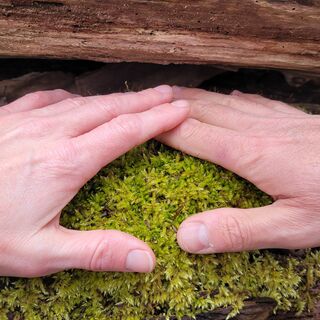
The knowingness that you're touching the ground or you're touching something below you in your home.
Or you have something in your hand,
Hopefully something natural of this earth.
It helps you bring that.
Solidification back in,
Imagining yourself deeply connected into the earth.
And breathing in that place.
And number three is movement.
If none of those are working,
Sometimes being lost in movement and allowing your body to fully express itself in movement through dance,
Through walking.
Through exercise.
Any kind of movement that's calling you.
Consciously choose it to help bring you back to the window of tolerance.
I hope you find these things useful.
And if you enjoyed practicing with me,
My name is Samantha Christofferson.
I'm grateful that you're here and you can find more of my offerings,
How to work with me,
All from my Insight Timer profile.
So come follow along and come to the next event.
Thank you.