Hi,
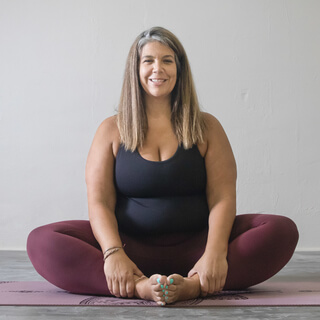
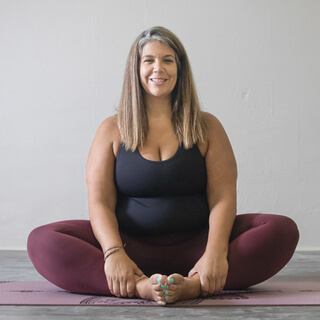
My name is Danielle.
I'm joining you today from my home in Malaga,
Spain.
I am a mindfulness meditation and yoga teacher,
And I focus on somatic awareness and how to use the felt sense in our body to notice what we need.
Create some space to support our mental and physical health.
But today we're going to have a little bit of a practice where we have some discussion and some tools.
Get started,
I just want you to arrive here together by finding a position where your body can feel supported.
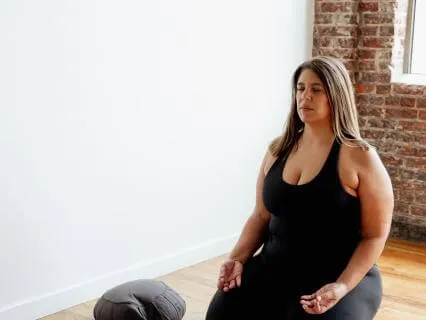
So you might be seated like I am,
Or perhaps you'll lie down or even stand.
As you start to settle in to this time together.
Maybe you soften your eyes,
Gazing down.
Or even close them for a moment or two.
Begin by noticing the contact points with the ground beneath you or the chair beneath you,
Wherever you feel supported,
Perhaps through your feet being pressed into the earth.
Or your sit bones in the seat that you're on.
Maybe the back of your head or your back on the earth.
Or a mat or your bed.
Just feeling the pressure of that support holding you up.
Now bring gentle attention to your breathing.
Without forcing anything,
Just start to lengthen a little tiny bit.
On the exhale and the inhale.
Nothing too.
.
.
Required at this moment Just breathing in.
Just one extra second on that breath out.
Again,
Inhale,
Maybe adding that extra second on the breath in.
And then exhale,
Let it out.
Each breath is just another signal that you can settle and you can soften.
It's really nice for us to be here together today because many of us don't actually have a space where we can be in community and also be contemplative and be reflective.
We gather and we talk,
We perform,
We work,
But it's often quite.
.
.
Fast we do everything a little too quickly sometimes And the shared contemplative spaces are just becoming more and more rare.
Because of this rarity,
Many people feel really alone.
Even when they're surrounded by others,
Even when they're logged in online.
Seeing everything that their friends and family might be doing.
There's just this sense.
Of disconnection of solitude.
There's nothing wrong with them.
It's just that the conditions for real connection are just missing in today's society.
So this practice is designed to just be a small interruption to that pattern.
You can move through it on your own right now.
You can come back to it.
You can do it alongside others or share it with others and discuss it later.
Or maybe you can even use it as preparation to enter community more intentionally later.
Or is a starting point for you to create a different kind of space with people in your life?
Because community isn't just a social situation.
It's physiological.
And your nervous system is constantly looking at your situations and your community and answering these questions through so many cues.
The questions might be,
Am I safe enough to stay open,
To stay authentic to myself here?
And your system's picking up on the physiological outputs of others.
Rapid flash of screens,
The sounds,
The smells.
So many things that we have no control over telling us if we're safe or not.
And when the answer our system is giving us is no.
We withdraw and we brace.
When the answer is yes.
We soften and engage.
There's a difference between fitting in and belonging.
Belonging is when we can be our true and authentic selves.
It's not just inclusion,
Though.
It's that regulated presence with other people.
So we can show up in community often.
But if our system is telling us it's an unsafe space.
Not going to give us the same impact of showing up.
Where we feel supported and seen.
Because the system is on that alert with that brace or that ready to go.
The first step.
To knowing what community that we want to try to engage with more or to trying to move a little bit closer to being in community.
It's just to bring awareness into that physiological.
State that our body goes into when it feels safe and when it doesn't.
So let's practice.
Let's practice awareness together now.
So for this part,
You might close your eyes or lay down or just find a space that feels really supportive.
By wiggling by taking another deep breath in or out.
I want you to visualize a time.
Or space.
We feel judged.
Let the image fully form.
Seeing someone's face perhaps,
Or.
.
.
A physical place.
Maybe hearing sounds,
Smells.
Start to notice your body again,
Maybe coming back to those points that are supported and seeing if there's any shift.
We can bring your attention back to your breath to see if it's still slow and steady or your heart rate.
You can notice your jaw,
Your shoulders.
You got.
.
.
What's changed and what's stayed the same?
Let's stay with this for a moment.
Let the image fade and return to your breath.
Right now in the present.
You're here.
You're safe.
Bring a new image to mind,
One where you're in a situation where you feel invisible.
I'm not rejected.
Just unseen.
Come back into noticing the same things in the body,
The same connection point.
Maybe your posture,
Your breathing,
Your heart rate.
The jaw.
Just stay with it for a moment.
Now let that image go.
Come back to right now.
Breathe in.
Breathe out.
Now I want you to bring to mind.
Imagine in your eyes the place where you feel the most welcome,
Right?
You feel the most seen the most heard the most cared for How does that show up for you?
Those contact points in your jaw and your breath and your chest and your face.
Let your body register this fully,
Not just as an idea,
But as a true felt sense,
Tapping into those physiological sensations as they're coming,
Staying here for a moment.
Stay with it.
Let the image fade,
Come back to right now.
Feel the ground beneath you,
The chair,
The pillow,
Whatever's supporting you.
Most people are not lacking desire for connection.
They're just lacking the environments where their nervous system can stay regulated enough to actually experience.
So this practice is just one way to begin changing that.
We're not trying to force connection.
We just want to increase our capacity to stay when things feel connected and to shift when they don't.
So how can you use this?
You can return the visualization anytime to continue to learn to recognize your own unique physiological symptoms of feeling seen,
Of feeling ignored,
And feeling welcomed.
How do these different things show up for you?
You can share it with others.
So that way you can create a more intentional space together.
Where you simply might just continue to notice where your body feels more at ease and where it doesn't.
And tap into the places where it feels more ease more.
If you have time to reflect on this practice,
You can write this down,
You can talk about it,
Or maybe you just think.
Where do you tend to contract,
Withdraw,
Or perform?
What would a safe enough community space?
Kind of look like for you?
Where do you feel that you can show up?
As authentically as possible.
And what's a really small way that you can move towards being connected a little bit more with others this week.
Keep it really simple and be specific.
There's no pressure to do anything more than just be aware Thank you so much for practicing with me today.