The world’s largest free audio library for everyday wellbeing
Attention & Awareness
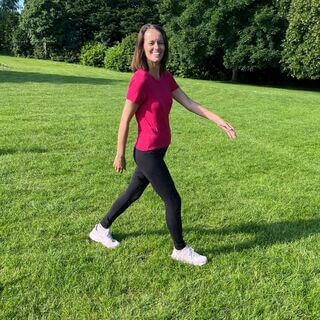
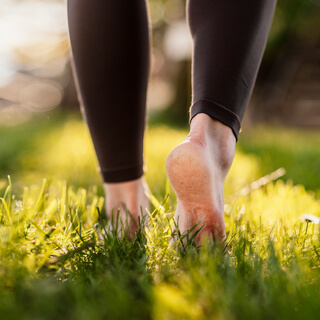
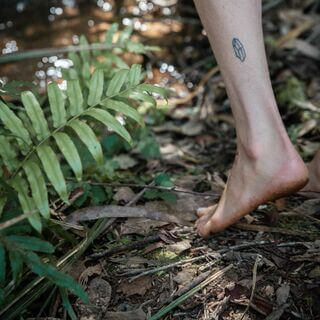
Walking Body Awareness is the practice of bringing gentle attention to the body's sensations as you walk slowly and deliberately.
Last Updated
2 Jul 2026
We are still reviewing this page. Our research team checks every technique page for accuracy and evidence quality before final release. Details may change as that review completes. The evidence badge shows our current reading of the published research.
RECOMMENDED DOSE
A short, unhurried walk while attending to foot contact and body sensation is a gentle, sustainable way to begin building the habit.
Related body-awareness and mindfulness studies typically run as multi-week programmes but do not report a specific per-session walking dose, so this step-up reflects general movement-meditation practice conventions.
A longer near-daily practice suits established practitioners maintaining the habit, but no cited study reports the session length or weekly frequency needed to produce a specific effect for this technique.
Session length
Session length: 5–10 minutes
5
MIN
How long each individual practice session should last from start to finish.
Frequency
Frequency: 3–4 days
3
DAYS
The number of days per week to fit a session into your routine.
Session length
Session length: 15–20 minutes
15
MIN
How long each individual practice session should last from start to finish.
Frequency
Frequency: 4–5 days
4
DAYS
The number of days per week to fit a session into your routine.
Session length
Session length: 30–45 minutes
30
MIN
How long each individual practice session should last from start to finish.
Frequency
Frequency: 5–7 days
5
DAYS
The number of days per week to fit a session into your routine.
About this card. No direct dose-response literature specifies the session length or weekly frequency for Walking Body Awareness; the closest cited studies describe multi-week body-awareness and mindfulness programmes without a per-session walking dose, so these figures are conservative starting points only. These recommendations are not a substitute for personalised guidance from a qualified practitioner.
Quick answers to what people most often ask. Each card links to the deeper section below.
evidence
Evidence is emerging and mostly indirect: walking body awareness itself has rarely been tested, so encouraging signals borrow from related work. Small trials of body-attention practices improved stress, body awareness, and mood, while one pilot found no balance benefit after stroke. The findings read as preliminary starting points, not established outcomes.
Read moregood for
Adults who want to steady attention or reconnect with the body but find seated stillness difficult may find walking body awareness useful. Supporting studies come from related body-attention practices in healthy young adults, not walking itself. It is not a substitute for care when anxiety, depression, trauma, or dissociation is severe.
safety
Most healthy adults can practise walking body awareness safely, and it tends to feel grounding. Two cautions apply: turning attention inward can amplify worry for people prone to anxiety, health anxiety, or trauma, and moving while focused inward carries a mild risk of stumbling. Choose a flat, familiar, low-traffic path and seek support if distress rises.
Read morehow it works
Walking body awareness trains interoception, the sense of your body's internal signals, so the weight of each step, the pull of a muscle, and shifts of balance become easier to feel. Attending to internal sensations increases activity in the insula, the brain region mapping the body's internal state. A curious, accepting attitude keeps the attention steadying rather than anxious.
Read moreWalking Body Awareness is the practice of bringing gentle, curious attention to the body's sensations, its weight, balance, and movement, while walking slowly and deliberately.
You walk slowly and deliberately, resting attention on the felt signals of each step: the weight shifting between your feet, the leg muscles engaging, the joints moving, and the constant small adjustments of balance. Whenever attention drifts, you return it to the sensation of walking. Because the body is moving rather than held still, the practice gives an accessible entry point for people who find seated meditation difficult, and it can be done along a short marked path or a longer route.
This is not ordinary walking for transport or exercise; the pace is slow and the aim is sustained attention to sensation rather than distance, speed, or fitness. It also differs from seated body-awareness practices in working with movement and balance rather than stillness. The inward attention is meant to stay curious and accepting, which sets it apart from anxious monitoring of the body for signs that something is wrong.
Not to be confused with
Fitness or brisk walking for exercise
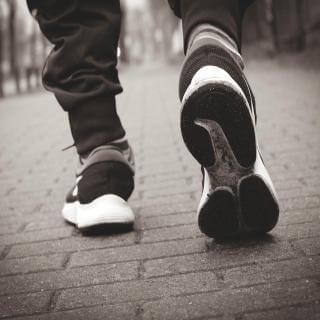
Fitness walking aims at pace, distance, and cardiovascular conditioning, with attention often on music, surroundings, or a step target. Walking Body Awareness is deliberately slow and directs attention inward to the sensations of each step rather than toward exertion or speed.
Walking meditation (general)
Walking meditation is the broad umbrella, which may anchor attention on the breath, a mantra, counting steps, or open awareness of surroundings. Walking Body Awareness is the specific form that anchors attention on the body's proprioceptive and kinesthetic sensations while walking.
Walking Body Awareness works mainly by training interoception, the sense of your body's internal signals, so the weight of each step, the pull of a muscle, and the drift of balance become easier to feel and follow. Researchers describe body awareness as having several facets: how much you notice sensations, how accurately you detect them, and how well you judge whether that read is reliable (Garfinkel et al., 2015), (Mehling, 2016), (Murphy et al., 2019). Mindfulness training that directs attention this way has been shown to strengthen how the brain processes body signals and to build trust in what the body reports, though this was studied in seated practice with adults who had depression or anxiety, not in walking specifically (Datko et al., 2022). The attitude matters as much as the attention: a curious, accepting noticing tends to help, while anxious monitoring of every sensation can work against you, a caution the same body-awareness reviews emphasize (Mehling, 2016).
Resting attention on the shifting weight, muscle work, and balance of each step trains interoception, the sense of your body's internal signals. Mindfulness-style training that directs attention this way has been shown to strengthen how the brain's insula processes those signals and to build trust in body sensations (Datko et al., 2022), so over time the body can feel more readable and early stress signals easier to catch, though this has mostly been studied in seated practice rather than walking.
Noticing that your mind has drifted from the feeling of walking, then returning to it, is meta-awareness at work: the quiet background capacity to observe the state of your own attention. Walking practice may build this metacognitive monitoring, the same ability that lets you sense how reliable your read on a body signal actually is (Garfinkel et al., 2015), (Mehling, 2016), (Murphy et al., 2019).
The most reliable bodily change is neural. When attention turns to internal sensations like the heartbeat, activity increases in the insula, the region that maps the body's internal state (Critchley et al., 2004). In the body this can feel like a stronger sense of being inside yourself, noticing each footfall land and the breath moving more vividly. That increase has been measured during heartbeat-timing tasks rather than during walking, so the link to this practice is inferred. Body awareness also tends to travel with steadier heart-rate regulation, the autonomic balance that shifts the body toward rest and recovery, and both run lower in people with more depressive symptoms (Ruggiero et al., 2025).
As you rest attention on each footfall, many people feel a stronger sense of being inside the body, the weight of every step landing and the breath moving more vividly. That felt shift draws on the insula, the brain region that maps the body's internal state, whose activity rises when people focus on inner signals such as the heartbeat (Critchley et al., 2004).
[FLAGGED FOR DELETION - REDUNDANT CLONE]
[FLAGGED FOR DELETION - REDUNDANT CLONE]
[FLAGGED FOR DELETION - REDUNDANT CLONE]
Over time you may notice a flutter of tension or a slowing breath sooner and more clearly, a sign of sharper interoceptive accuracy, which is how precisely you detect real internal signals like your own heartbeat. Turning attention to body sensations raises activity in the insula, the brain region that maps those internal states (Critchley et al., 2004), though this evidence comes from general interoceptive-attention research, not walking practice itself (Ruggiero et al., 2025).
As you walk, tuning into each footfall and the pull of your muscles can bring a clearer, steadier sense of what your body is doing. This draws on interoceptive processing, the brain's tracking of internal signals like heartbeat, breath, and muscle tension; in studies of interoceptive attention, though not of walking itself, activity increases in the insula, a region that registers internal states (Critchley et al., 2004), and stronger body awareness tends to accompany healthier heart-rate regulation (Ruggiero et al., 2025).
You can feel a flicker in the body and stay curious about it instead of spiraling into worry over what it means, that ability to judge how reliable a body signal is has a name: interoceptive metacognition. In studies of interoceptive attention, the insula, the brain region that maps the body's internal state, becomes more active when attention turns inward (Critchley et al., 2004), and adults with steadier heart-rate regulation tend to read their body signals more accurately (Ruggiero et al., 2025).

Limited–Emerging evidence supports Walking Body Awareness, and most of it is borrowed from closely related practices rather than measured for walking itself. In small trials, body-attention practices improved stress and body awareness in healthy adults (Parkinson & Smith, 2025) and eased depressive tendencies partly by improving how people sense their bodies (Lien et al., 2026), while seated mindfulness strengthened the brain's response to body signals in adults with depression or anxiety (Datko et al., 2022). What is not yet supported: large trials of walking body awareness, long-term follow-up, and any physical-function claim, one pilot trial found no balance or mobility benefit for stroke survivors (Lindvall & Forsberg, 2014). These are best read as early starting points, not established outcomes.
Body-attention practices related to walking meditation have improved stress, body awareness, and mood in small trials, though walking body awareness itself has rarely been tested directly (Parkinson & Smith, 2025). Greater body awareness also tends to track with steadier heart-rate regulation and lower mood symptoms (Ruggiero et al., 2025). The main areas studied are interoception, mindfulness training, and body-mind programs; because samples are small, the practices tested are not always walking, and outcomes are often self-reported, the findings read as suggestive rather than settled, and one pilot trial found no balance benefit after stroke (Lindvall & Forsberg, 2014). For now, the picture is encouraging but preliminary.

0
Meta-analyses
0
RCTs
0
Systematic reviews
0
Observational
12
Pilot
Studied populations
Hugo D Critchley, Stefan Wiens, Pia Rotshtein, Arne Öhman, Raymond J Dolan (2004). Neural systems supporting interoceptive awareness. https://doi.org/10.1038/nn1176
2004
Finding: Using brain imaging while healthy adults tried to sense their own heartbeat, this study found that paying attention to internal body signals switched on the insula and neighbouring regions that help us register what's happening inside the body. The more active one part of the insula was, the more accurately people tracked their heartbeat and the more vividly they reported sensing their inner state, which points to a brain basis for the kind of inward attention that body-focused practices rely on. Worth noting, though, the study measured a seated heartbeat task rather than walking meditation itself, so it maps the underlying wiring rather than proving what walking practice does to it.
See full citation in referencesWolf Mehling (2016). Differentiating attention styles and regulatory aspects of self-reported interoceptive sensibility. https://doi.org/10.1098/rstb.2016.0013
2016
Finding: Working with a normative sample of 80 adults, this study found that "body awareness" is not one skill but several that only partly overlap: how much you notice sensations, how accurately you actually detect them, and how well you judge the reliability of your own perception. It also drew a sharp line between two kinds of bodily attention, an anxious, hyper-monitoring style tied to worry and somatic complaints, and a calm, accepting style considered healthy and resilience-building. For a walking body-awareness practice, this means the aim is the curious, accepting kind of noticing rather than vigilant scanning, and that feeling more tuned in to your body does not automatically mean you are reading its signals more accurately. Because the work rests on questionnaires and a single non-clinical adult group, it maps out these distinctions rather than proving that any one practice reliably shifts them.
Walking Body Awareness comes from contemplative traditions that use walking as a formal attention practice, appearing in Theravada Buddhism as cankama, in Zen as kinhin, and in secular form as the mindful walking taught in mindfulness-based stress reduction. These roots help explain the practice's form, its slow pace and the sequential placement of attention on movement, rather than proving any clinical effect. What the traditions offer is a tested way to structure walking-and-noticing, a meaning frame that helps people take up and stay with the practice.
For most healthy adults, bringing gentle attention to the body while walking is low-risk and tends to feel grounding rather than activating. Two situations call for care. First, turning attention inward can, for some people, amplify worry until ordinary sensations start to feel alarming instead of settling, a mild-to-moderate caution drawn from reviews of body-awareness practices rather than from trials of walking itself (Mehling et al., 2009), (Mehling, 2016). Second, because attention moves inward while you are in motion, there is a mild risk of stumbling, easily managed by choosing a flat, familiar, low-traffic path. If inward attention consistently stirs distress, hold it lightly and reach out to a qualified professional if it becomes overwhelming.
People who tend toward anxiety, panic, health anxiety, or somatizing may want a teacher's or clinician's guidance before leaning heavily on inward attention, because noticing internal sensations can tip from steadying into anxious self-monitoring. The same applies to anyone with a trauma history, for whom close body focus can surface distressing material. This is a practice-informed caution, drawn from reviews of the body-awareness construct across clinical and general-population samples rather than from walking studies specifically (Mehling et al., 2009), (Mehling, 2016). Anyone with significant balance problems or unsteadiness should practise on stable ground or with support, since attention naturally turns inward while walking.
For most healthy adults, resting attention on the body while walking feels grounding. But if you tend toward anxiety, panic, health anxiety, or somatizing, the same inward focus can tip from steadying into anxious self-monitoring, until ordinary sensations start to feel alarming. Keep the attitude curious and accepting rather than scanning for problems, widen your attention to the sights and sounds around you if worry builds, and consider a teacher's or clinician's guidance before leaning heavily on inward attention.
| Technique | Best for | Use with care | Evidence strength | Distinction |
|---|---|---|---|---|
| Seated body scan meditation | Quiet, sustained inward focus, or settings where moving around is not practical. | For people who find stillness restless or distressing, or who dissociate when sitting quietly, movement may be steadier. | moderate EVIDENCE | Seated body scan meditation moves attention systematically through the body while sitting or lying still, whereas Walking Body Awareness tracks the dynamic signals of movement, the shifting weight, muscle engagement, and balance of each step. Both train the sense of internal body signals, but walking offers a moving alternative for people who find stillness difficult. Most interoception and mindfulness evidence cited for either comes from seated paradigms rather than walking itself. |
| Breath-focused mindfulness | Settling attention when you want a portable anchor available in any posture. | Breath focus can heighten distress for some people with dissociation or panic; a movement anchor may feel more grounding. |
Walking Body Awareness is a slow, deliberate walking practice in which you rest attention on the felt sensations of each step, the weight shifting between your feet, the leg muscles working, and the small adjustments of balance, gently returning your focus whenever the mind wanders. It offers a moving alternative to seated meditation.
+
Walking Body Awareness is the practice of bringing gentle attention to the body's sensations as you walk slowly and deliberately. Rather than aiming to get somewhere, the walk itself becomes the whole task: you track proprioception, your sense of where your body is in space, along with the kinesthetic signals of muscles and joints moving, and return attention each time it drifts. It appears across contemplative traditions, as cankama in Theravada Buddhism, kinhin in Zen, and mindful walking in secular MBSR courses, which makes it a useful entry point for people who find seated stillness difficult.
No. Walking Body Awareness is a slow attention practice where you rest awareness on the sensations of each step, while fitness walking aims at pace, distance, and conditioning with attention usually turned outward. Both involve walking, but they are not the same.
+
No. In Walking Body Awareness you walk slowly and deliberately, bringing gentle attention inward to the felt sensations of moving, the weight shifting between the feet, the leg muscles engaging, the small corrections of balance, and returning attention whenever the mind drifts. Fitness or brisk walking, by contrast, targets speed, distance, and cardiovascular conditioning, with attention often on music, surroundings, or a step goal rather than on the body's moment-to-moment sensations. The distinction is one of intention and where attention rests, not a claim about health outcomes for either.
The sensing of signals from inside the body, such as heartbeat, breathing, muscle tension, and temperature. Building it tends to feel like becoming more able to notice and read internal states, including early signs of stress.
The perception and integration of visceral and internal bodily afferent signals; often modelled as distinct dimensions of accuracy, sensibility, and metacognitive awareness.
The body's sense of where its parts are in space and how they are moving, such as knowing your foot has landed without looking. In walking practice, it is what lets you feel weight shifting and balance adjusting from step to step.
The felt awareness of movement and muscle effort, like sensing the leg swing forward or the ankle flex. Walking practice directs attention to these movement signals as they unfold.
A brain region that gathers signals from inside the body into a felt sense of your physical state. Its activity tends to rise when people deliberately turn attention to internal sensations.
The insular cortex, a primary substrate for interoceptive representation; anterior insula activity tracks interoceptive accuracy and awareness during heartbeat-timing tasks.
The quiet background capacity to notice the state of your own mind, including registering that your attention has wandered and how reliable your sense of a body signal is. It feels like noticing you drifted just now without that noticing breaking the flow.
Metacognitive monitoring of one's own cognitive and interoceptive states, including the correspondence between subjective confidence and objective accuracy.
How correctly you can detect real internal signals, such as sensing your own heartbeat. Higher accuracy can feel like noticing a flutter of tension or a slowing breath sooner and more distinctly.
Hugo D Critchley, Stefan Wiens, Pia Rotshtein, Arne Öhman, Raymond J Dolan (2004). Neural systems supporting interoceptive awareness. https://doi.org/10.1038/nn1176
Cited in: Faq, Research, Roots and tradition, What happens in the body
Wolf Mehling (2016). Differentiating attention styles and regulatory aspects of self-reported interoceptive sensibility. https://doi.org/10.1098/rstb.2016.0013
Outcomes measured
| Outcome | Effect size | 95% CI | N | Comparator | Source |
|---|---|---|---|---|---|
| insula response to interoception | reported significant; p<0.001 (insula); p=0.007 (body trusting) | — | 28 | — | Datko et al., 2022 |
| depressive symptoms (low-interoception/low-vmHRV cluster) | beta = 1.97 | — | 88 | — | Ruggiero et al., 2025 |
| anxiety | reported significant; p<0.001 | — | — | — | Datko et al., 2022 |
Research on body-awareness practices is still early, with inconsistent methods, varied measures, and few rigorous trials (Serrada et al., 2023), (Mehling et al., 2009). Almost no study isolates walking body awareness itself, samples are small, and results often rely on self-report or significance-only statistics, so the evidence cannot yet confirm technique-specific benefits.
Michael Datko, Jacqueline Lutz, Richa Gawande, Alexandra Comeau, My Ngoc To, Tenzin Desel (2022). Increased insula response to interoceptive attention following mindfulness training is associated with increased body trusting among patients with depression. https://doi.org/10.1016/j.pscychresns.2022.111559
n = 28
Finding: In an 8-week mindfulness programme, 28 primary-care patients living with anxiety or depression had brain scans before and after training, and afterward a region that processes internal body signals (the insula) responded more strongly when they turned their attention inward. Among the more deeply depressed participants, this shift went hand in hand with a greater sense of trusting their own bodily sensations, hinting that practising attention to the body can strengthen how the brain reads and relies on those signals. It's worth knowing the scope, though: this was a small study, and the practice studied was seated mindfulness training rather than walking body awareness, so it points to a plausible mechanism rather than direct proof for this particular technique.
reported significant; p<0.001 (insula); p=0.007 (body trusting)
Wolf E. Mehling, Viranjini Gopisetty, Jennifer Daubenmier, Cynthia J. Price, Frederick M. Hecht, Anita Stewart (2009). Body Awareness: Construct and Self-Report Measures. https://doi.org/10.1371/journal.pone.0005614
2009
Finding: This review examined the questionnaires researchers use to measure body awareness and found that no single one captures every side of the experience, and none can reliably tell healthy, grounding attention to the body apart from anxious over-monitoring of it. For someone exploring a practice like walking body awareness, that is a useful reminder that "tuning into the body" can be either steadying or unsettling depending on how you do it. It also means the science here is still finding its footing: the tools for tracking whether this kind of practice helps are incomplete, so treat the benefits as promising rather than proven.
See full citation in referencesYunn-Wen Lien, Shan-Chuan Teng, Li-Yun Wei (2026). From the body to the mind: interoception and sense of agency as mechanisms of depression reduction in the Body–Mind Axial Awareness (BMAA). https://doi.org/10.3389/fpsyg.2026.1755698
n = 71
Finding: In a 10-week study of university students, those who took an embodied body-mind awareness course (50 participants, compared against 21 who did not) showed lower depressive tendencies and became noticeably better at sensing signals from their own bodies. Further analysis pointed to that improved body-sensing, and a stronger sense of being in charge of one's own movements, as the path through which mood improved, suggesting that tuning into physical sensations may be one route to feeling better. Worth keeping in mind: the course studied here is a structured body-mind programme rather than walking body awareness specifically, and the comparison group was small, so the results speak to embodied awareness broadly rather than to this exact practice.
reported narratively
Vanessa Ruggiero, Carola Dell'Acqua, Elisabetta Cremonese, Matteo Giraldo, Elisabetta Patron (2025). Under the surface: Low cardiac vagal tone and poor interoception in young adults with subclinical depressive symptoms. https://doi.org/10.1016/j.jad.2025.01.057
n = 88
Finding: In 88 young adults, those who were more accurately tuned in to their own body signals also had more flexible, well-regulated heart rhythms and fewer depressive symptoms, while a subgroup with both poor body awareness and a less adaptable nervous system reported notably higher depressive symptoms. In everyday terms, being able to read what your body is telling you tends to go hand in hand with a steadier nervous system and better mood. This is a snapshot of how these traits cluster together, not proof that any practice changes them, so it can't tell us whether training body awareness through walking would shift heart-rate regulation or mood.
beta = 1.97
Sarah N. Garfinkel, Anil K. Seth, Adam B. Barrett, Keisuke Suzuki, Hugo D. Critchley (2015). Knowing your own heart: Distinguishing interoceptive accuracy from interoceptive awareness. https://doi.org/10.1016/j.biopsycho.2014.11.004
2015
Finding: Working with a group of adults, this study showed that "body awareness" is really three separate skills that don't move together: how accurately you can objectively detect signals like your own heartbeat, how much attention you say you pay to bodily sensations, and how well you actually know when your perception is reliable. These turned out to be only loosely linked, so someone can feel highly tuned into their body while still being no better at objectively detecting what it is doing. For a walking body-awareness practice, that means a growing sense of attentiveness is genuinely valuable in its own right, but it should not be read as proof that your internal readings have become more accurate. This was a single study in a general adult sample, so it maps the structure of these skills rather than testing whether any particular practice sharpens them.
See full citation in referencesMialinn A Lindvall, Anette Forsberg (2014). Body awareness therapy in persons with stroke: a pilot randomized controlled trial. https://doi.org/10.1177/0269215514527994
n = 46
Finding: In this small pilot trial, 46 adults who were at least six months past a stroke were split into two groups: one did eight weeks of group body awareness therapy, the other did nothing extra. Afterward, the body awareness group was no better than the no-treatment group on balance, walking ability, confidence in their balance, or overall sense of health, though people in both groups showed some improvement on their own over time. If you're drawn to this practice for other reasons that's fine, but this study gives no reason to expect it will improve balance or mobility after stroke, and its small size means the results are a first look rather than the final word.
reported narratively
Tracie D. Parkinson, Stephen D. Smith (2025). A Randomized Control Trial of the Effects of a Hatha Yoga Program on Psychological Well-Being. https://doi.org/10.21926/obm.icm.2503039
n = 55
Finding: In this randomised trial, 55 young adults (ages 18–32) were split between an eight-week posture-based Hatha yoga programme and a control group that attended lectures on yoga's history and philosophy; the ones who actually moved through the postures reported lower stress and a stronger sense of what was happening inside their own bodies. That growing body awareness appeared to be part of why their mood improved, which hints that tuning into physical sensations may be one of the ways movement practices lift how we feel. Worth noting: this study tested yoga, not walking body awareness, so it speaks to the broader idea of embodied movement rather than to this specific technique. The group was also small and skewed young, so the results are an encouraging early signal rather than the final word.
reported narratively
Yulia E. Chentsova-Dutton, Vivian Dzokoto (2014). Listen to your heart: The cultural shaping of interoceptive awareness and accuracy.. https://doi.org/10.1037/a0036193
2014
Finding: This cross-cultural study compared how closely people from West African and European American backgrounds pay attention to their internal body signals, and found that cultural habits strongly shape how much attention we naturally give to sensations like heartbeat and breath. It also separated two different things: how much people notice they attend to their bodies, and how accurately they can actually detect what their bodies are doing, showing these don't always go together. For anyone practising walking body awareness, this is a reminder that tuning into physical sensations is a learnable habit shaped by attention and background, not a fixed trait, though the study describes broad cultural patterns rather than testing any specific walking or movement practice.
See full citation in referencesJennifer Murphy, Caroline Catmur, Geoffrey Bird (2019). Classifying individual differences in interoception: Implications for the measurement of interoceptive awareness. https://doi.org/10.3758/s13423-019-01632-7
2019
Finding: This study argues that "body awareness" is really three separate things: how accurately you can detect internal signals on objective tests, how much attention you believe you pay to your body, and how well your confidence actually matches your accuracy. These dimensions only partly line up, so a walking practice that makes you feel more tuned in to your body will not automatically sharpen your objective ability to read its signals. For a practitioner, that is a useful reality check: noticing more sensations is worthwhile in its own right, but it is not the same as becoming a more reliable reader of what your body is doing. The framework comes from a modest normative adult sample and theoretical analysis rather than a trial of any specific practice, so treat it as a way to think about body awareness, not proof of what a given technique changes.
See full citation in referencesInes Serrada, Lindy Williams, Brenton Hordacre, Susan Hillier (2023). Key constructs of body awareness impairments post-stroke: a scoping review of assessment tools and interventions. https://doi.org/10.1080/09638288.2022.2123053
2023
Finding: This scoping review of 144 papers on body awareness after stroke found that the field still lacks agreed-upon definitions and consistent ways to measure body awareness, and that many of the interventions studied lacked robust designs and rigorous methods. The reviewers also noted that self-report questionnaires miss some dimensions of body awareness and cannot reliably tell helpful awareness apart from unhelpful, over-focused awareness. For someone considering a walking body-awareness practice, this means the underlying science is still early: the review did not test walking body awareness itself, so treat any benefits as promising rather than firmly established.
See full citation in referencesWith a trauma history, turning close attention to body sensations can surface distressing material rather than settle it. Hold the focus lightly, widen your attention outward or pause if distress rises, and work with a qualified professional when symptoms are significant. This is a practice-informed caution drawn from reviews of body-awareness and interoception practices rather than from trials of walking meditation in trauma survivors, so treat it as guidance, not trauma-specific safety clearance.
Because attention turns inward while you are in motion, there is a mild risk of stumbling. Anyone with significant balance problems or unsteadiness should practise on stable, flat ground or with support, and choose a familiar, low-traffic path so that focusing inward does not put you at risk of tripping.
Walking Body Awareness works best on a flat, familiar path with little traffic, where you can let inward attention settle without worrying about tripping or where you are headed. For most people it feels grounding, so a sensible way in is a few unhurried minutes at a gentle pace, held with friendly curiosity rather than a hunt for problems. Keep the stance light: if tuning inward starts to stir worry instead of steadiness, you can widen your attention outward or ease off entirely.
Pick a flat, familiar, low-traffic path, indoors or out, so that turning attention inward does not put you at risk of tripping or bumping into anything.
Begin with a few minutes at a deliberate, unhurried pace, letting the walk itself be the whole task rather than a way to get somewhere.
Rest awareness on the weight shifting between your feet, the leg muscles engaging, and the small adjustments of balance with each step, returning there gently whenever the mind drifts.
Notice sensations with friendly interest rather than scanning the body for problems, since a gentle stance is what keeps inward attention steadying instead of worrying.
If tuning into the body starts to amplify worry or make sensations feel alarming, soften your focus, widen your attention to the sounds and sights around you, or pause the practice.
If inward attention repeatedly brings on overwhelming anxiety or distressing material, ease off and consult a qualified health professional before continuing.
This information is educational and is not medical advice. This practice is not a substitute for professional care and should not replace prescribed medication or treatment for any medical or mental-health condition. If you are managing a health condition or taking medication, talk with a qualified health professional before changing your practice. If you are in distress or crisis, seek professional support.
| emerging EVIDENCE |
| Breath-focused mindfulness anchors attention to the sensations of breathing, while Walking Body Awareness anchors it to the proprioceptive and kinesthetic feel of walking. Both cultivate the same underlying interoceptive attention, noticing internal signals and returning when the mind drifts, but they use different bodily anchors. For some people, especially those with trauma or dissociation, breath focus can feel harder to stay with, which is one reason a moving, whole-body anchor can be a useful alternative. |
| Hatha yoga | Those wanting a structured, full-body movement practice with a physical-conditioning element. | Postures can strain joints or aggravate injury; walking is lower-impact for those with physical limitations. | moderate EVIDENCE | Hatha yoga links held postures and movement sequences with breath and body awareness, whereas Walking Body Awareness keeps to the single, continuous act of walking. Both are body-based practices that can sharpen how clearly a person senses their body, but yoga adds structured poses with flexibility and strength demands, while walking stays gentle and repetitive. One randomized trial found an eight-week yoga program improved stress, mindfulness, and body awareness in young adults. |
Partly, but the direct evidence is thin. No large or long-term trials have tested Walking Body Awareness itself, and one pilot trial found no balance benefit after stroke (Lindvall & Forsberg, 2014). The encouraging signals are borrowed from related body-attention practices, so treat it as promising but preliminary.
+
Partly. Walking Body Awareness itself has rarely been tested directly, and research on body-awareness practices is still early, with inconsistent methods and few rigorous trials (Serrada et al., 2023), (Mehling et al., 2009). The encouraging signals are indirect: related body-attention work has improved stress and body awareness in healthy adults (Parkinson & Smith, 2025) and eased depressive tendencies partly by helping people sense their bodies (Lien et al., 2026). But one pilot trial found no balance or mobility advantage after stroke (Lindvall & Forsberg, 2014), so this is best read as suggestive rather than settled, and not a treatment for any diagnosed condition.
Not established. Walking Body Awareness has not been directly tested for balance, and the one related pilot trial in stroke survivors found no advantage over no intervention for balance or mobility (Lindvall & Forsberg, 2014). Treat any physical-function claim as unsupported for now.
+
Not established. A balance or mobility benefit specific to Walking Body Awareness has not been demonstrated: the practice itself has not been directly trialled for balance, and a small pilot randomised trial of body awareness therapy in stroke survivors found no improvement in balance, mobility, or health status compared with no intervention (Lindvall & Forsberg, 2014). Research on body-awareness practices remains early, with inconsistent methods and few rigorous trials, so this points toward no effect rather than a confirmed benefit (Serrada et al., 2023), (Mehling et al., 2009). This is separate from the general fitness value of ordinary walking, which is not what this attention practice claims.
Because focused attention on each step trains interoception, your sense of internal body signals. Directing attention to sensations engages the insula, the brain region that maps the body's internal state, so the weight and movement of each step can feel more vivid (Critchley et al., 2004).
+
Because attending closely to the sensations of walking recruits interoceptive processing, the way your brain senses and interprets signals from inside the body. Studies show that turning attention to internal sensations raises activity in the insula (Critchley et al., 2004), and mindfulness training can strengthen that response and build trust in what the body reports (Datko et al., 2022). Body awareness also has several facets, how much you notice, how accurately you detect signals, and how reliable your read feels (Garfinkel et al., 2015), (Murphy et al., 2019), and a curious, accepting attitude tends to help more than anxious scanning (Mehling, 2016). Treat this as an inferred link rather than a proven one, since the insula and mindfulness findings come from seated and heartbeat-timing studies, not from walking itself.
Yes. A wandering mind is completely normal and expected in walking meditation. Noticing that your attention has drifted and gently guiding it back to the sensations of walking is the practice itself, not a sign you are doing it wrong.
+
Yes. Minds wander often during walking meditation, and much of the practice is simply catching that drift and returning attention to the felt sensations of each step, the weight shifting, the leg muscles working, the small adjustments of balance. Rather than a failure, each return is the exercise working as intended. Early sessions may feel unremarkable, and a steadier sense of presence tends to build with repetition rather than arriving all at once.
Start on a flat, familiar, low-traffic path and walk slowly for just a few minutes, resting attention on the sensations of each step and gently returning whenever your mind drifts. Keep the attitude curious and accepting rather than anxiously scanning, and soften or pause if inward focus starts to feel alarming.
+
Begin simply: choose a safe, even path where turning attention inward will not risk a trip, and keep early sessions short and slow. Anchor awareness in the feet and legs, the shifting weight, the muscles working, the small balance adjustments, and treat catching a wandering mind as the practice itself. Hold the noticing with friendly curiosity, since a gentle stance is what keeps body-focused attention steadying rather than worrying. If tuning into sensations amplifies distress, widen your focus to sights and sounds around you, ease off, and reach out to a qualified professional if it becomes overwhelming; those prone to anxiety, trauma responses, or balance problems may want guidance first.
Use care. For most healthy adults it is low-risk, but if you tend toward health anxiety or somatizing, where emotional distress is felt as physical symptoms, inward attention can tip into anxious self-monitoring. Keep the attitude curious rather than scanning, soften your focus if worry rises, and seek clinician guidance before leaning heavily inward.
+
Use care. Bringing attention to body sensations is usually grounding, but for people prone to health anxiety or somatizing, the same inward focus can amplify worry so ordinary sensations start to feel alarming. The practical guidance is to hold a friendly, accepting stance instead of scanning for problems, widen your attention to sounds and surroundings if distress builds, and pause the practice when it stops feeling settling. If inward attention repeatedly stirs overwhelming distress, ease off and consult a qualified professional. This is a practice-informed caution drawn from reviews of body-awareness practices rather than from trials of walking itself.
Use care. With a trauma history, close inward body focus can surface distressing material, so it is wise to seek a clinician's or teacher's guidance before leaning heavily on inward attention. Hold your focus lightly, widen it to the sounds and sights around you, or pause if distress rises, and treat it as a support rather than a substitute for care when symptoms are severe.
+
Use care. Walking Body Awareness is low-risk for most people, but for those with a trauma history, turning close attention to body sensations can bring up distressing material rather than settling it. This caution is practice-informed, drawn from reviews of body-awareness and interoception practices rather than from trials of walking meditation in trauma survivors, so it is not trauma-specific safety clearance. The practical guidance is to keep the attitude gentle and curious, widen your attention outward or stop if distress builds, and work with a qualified professional when symptoms are significant.
The main difference is posture and anchor: a seated body scan moves attention through a still body, while Walking Body Awareness tracks the dynamic sensations of movement, the shifting weight, working muscles, and balance of each step. Both train the same inward attention to body signals, so walking mainly suits people who find stillness difficult.
+
The difference is one of form rather than proven effect. A seated body scan sweeps attention through the body while you sit or lie still, whereas Walking Body Awareness rests attention on the felt sensations of walking, weight rolling heel to toe, leg muscles engaging, and the small corrections of balance, returning there whenever the mind drifts. Both cultivate the same interoceptive attention, the sensing of internal body signals that engages brain regions like the insula (Critchley et al., 2004), and mindfulness training of this kind can strengthen how the brain processes those signals (Datko et al., 2022). One caveat: most of this evidence comes from seated and heartbeat-timing studies rather than walking itself, and no direct head-to-head trial compares the two, so choose the form that helps you stay present.
A heart-rhythm marker of the body's rest-and-recovery balance, reflecting how flexibly the nervous system can settle. Lower values have been linked with more depressive symptoms in some samples.
The tendency to experience emotional distress as physical symptoms, or to read ordinary body sensations as signs that something is wrong. It is why body-focused attention is best held gently rather than as anxious scanning.
The formal walking meditation of Zen practice, typically performed slowly between periods of seated meditation. It is one traditional carrier of walking-based body awareness.
Walking meditation in the Theravada Buddhist tradition, practised by pacing back and forth with sustained attention. It is an early source of the walking-based awareness practice.
Cited in: Faq, How it works, Research, Use with care, Who should use care
Michael Datko, Jacqueline Lutz, Richa Gawande, Alexandra Comeau, My Ngoc To, Tenzin Desel (2022). Increased insula response to interoceptive attention following mindfulness training is associated with increased body trusting among patients with depression. https://doi.org/10.1016/j.pscychresns.2022.111559
Cited in: Benefits, Faq, How it works, Research, Roots and tradition
Wolf E. Mehling, Viranjini Gopisetty, Jennifer Daubenmier, Cynthia J. Price, Frederick M. Hecht, Anita Stewart (2009). Body Awareness: Construct and Self-Report Measures. https://doi.org/10.1371/journal.pone.0005614
Cited in: Faq, Research, Use with care, Who should use care
Yunn-Wen Lien, Shan-Chuan Teng, Li-Yun Wei (2026). From the body to the mind: interoception and sense of agency as mechanisms of depression reduction in the Body–Mind Axial Awareness (BMAA). https://doi.org/10.3389/fpsyg.2026.1755698
Vanessa Ruggiero, Carola Dell'Acqua, Elisabetta Cremonese, Matteo Giraldo, Elisabetta Patron (2025). Under the surface: Low cardiac vagal tone and poor interoception in young adults with subclinical depressive symptoms. https://doi.org/10.1016/j.jad.2025.01.057
Cited in: Research, What happens in the body
Sarah N. Garfinkel, Anil K. Seth, Adam B. Barrett, Keisuke Suzuki, Hugo D. Critchley (2015). Knowing your own heart: Distinguishing interoceptive accuracy from interoceptive awareness. https://doi.org/10.1016/j.biopsycho.2014.11.004
Cited in: Faq, How it works, Research
Mialinn A Lindvall, Anette Forsberg (2014). Body awareness therapy in persons with stroke: a pilot randomized controlled trial. https://doi.org/10.1177/0269215514527994
Tracie D. Parkinson, Stephen D. Smith (2025). A Randomized Control Trial of the Effects of a Hatha Yoga Program on Psychological Well-Being. https://doi.org/10.21926/obm.icm.2503039
Yulia E. Chentsova-Dutton, Vivian Dzokoto (2014). Listen to your heart: The cultural shaping of interoceptive awareness and accuracy.. https://doi.org/10.1037/a0036193
Cited in: Roots and tradition
Jennifer Murphy, Caroline Catmur, Geoffrey Bird (2019). Classifying individual differences in interoception: Implications for the measurement of interoceptive awareness. https://doi.org/10.3758/s13423-019-01632-7
Cited in: Faq, How it works, Research
Ines Serrada, Lindy Williams, Brenton Hordacre, Susan Hillier (2023). Key constructs of body awareness impairments post-stroke: a scoping review of assessment tools and interventions. https://doi.org/10.1080/09638288.2022.2123053
Explore guided sessions to deepen your Walking Body Awareness technique.
Editorially curated. Tracks are not themselves clinically studied; evidence on the page applies to Walking Body Awareness as a technique.
Beginner content for Walking Body Awareness

★ 4.9
·
Talks
·
40 min
Thich Nhat Hanh Legacy
How hard is Walking Body Awareness?
Walking Body Awareness keeps a meaningful base floor driven mainly by physical intensity, while the reviewed modality defaults stay appropriate with targeted technique overrides.
3
Mental Effort
2 / 4
▾Emotional Depth
1 / 4
▾Physical Intensity
3 / 4
▾Prior Knowledge
1 / 4
▾