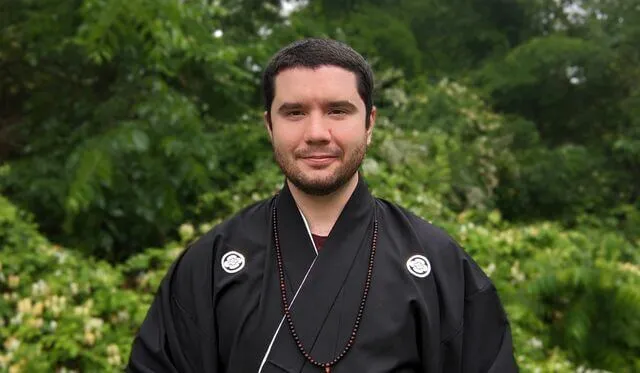
A complete commentary and teaching by Silas Day on each and every chapter found within the Buddha's profound text "The Dhammapada". Each lesson covers a chapter found within the Dhammapada and is considered not only for its general meaning but its spiritual, meditational, and life lesson factors.
A complete course & commentary on the Buddha's Dhammapada.
A complete commentary and teaching by Silas Day on each and every chapter found within the Buddha's profound text "The Dhammapada". Each lesson covers a chapter found within the Dhammapada and is considered not only for its general meaning but its spiritual, meditational, and life lesson factors.
Silas Day is a Dharma Teacher, meditator, and scholar whose main goal in life is to make the world a better place one person at a time. He does this by doing lectures and courses covering various aspects of Buddhism, eastern philosophy, and general spiritual practice.
The introductory lesson to the course that covers what the Dhammapada is, its place within Buddhist history, and how we are a going to be approaching the width and breadth of the course
This chapter uses pairs of contrasting scenarios to illustrate the law of karma. It emphasizes how our thoughts and actions, good or bad, steer our destiny. In this lesson as in all lesson we will take a short look at a few phrases from it and then consider how it can help us in our meditation.
this chapter presents earnestness or heedfulness and vigilance as the path towards awakening, contrasting it with negligence which leads to death, symbolically speaking. In this lesson as in all lesson we will take a short look at a few phrases from it and then consider how it can help us in our meditation.
This chapter extols the power of the mind. It asserts that mind is the primary cause of everything, and mind mastery leads to purity and peace. In this lesson as in all lesson we will take a short look at a few phrases from it and then consider how it can help us in our meditation.
In this chapter of the Dhammapada Flowers are metaphorically used to represent the impermanence of life and the fleeting nature of material pleasures. It advises individuals to prioritize spiritual awakening. In this lesson like in all lessons we will take a look at a few lines of this chapter and understand how this chapter could aid us in our meditation practice.
This chapter portrays the perilous consequences of foolishness and ignorance. It emphasizes the necessity of wisdom and learning. In this lesson like in all lessons we will take a look at a few lines of this chapter and understand how this chapter could aid us in our meditation practice.
The traits and virtues of wise individuals are discussed in this chapter, and wisdom is shown as a path to enlightenment. In this lesson like in all lessons we will take a look at a few lines of this chapter and understand how this chapter could aid us in our meditation practice.
Here, the text explores the state of Arhats, enlightened beings who've attained nirvana, thus breaking free from the cycle of life and death. In this lesson like in all lessons we will take a look at a few lines of this chapter and understand how this chapter could aid us in our meditation practice.
The chapter promotes righteousness and virtue, stating that even a single good act can be more valuable than thousands of insignificant ones. In this lesson like in all lessons we will take a look at a few lines of this chapter and understand how this chapter could aid us in our meditation practice.
this chapter explores the nature of evil, urging readers to refrain from harmful actions and to cultivate virtue. In this lesson like in all lessons we will take a look at a few lines of this chapter and understand how this chapter could aid us in our meditation practice.
This chapter underscores the karmic principle of 'cause and effect', insisting that one will inevitably face the repercussions of their harmful deeds. In this lesson like in all lessons we will take a look at a few lines of this chapter and understand how this chapter could aid us in our meditation practice.
The unavoidable reality of aging and the fragility of life are pondered upon in this chapter, encouraging the pursuit of enlightenment to transcend suffering. In this lesson like in all lessons we will take a look at a few lines of this chapter and understand how this chapter could aid us in our meditation practice.
The concept of self is examined here, with emphasis on the importance of self-reliance, self-control, and self-mastery in spiritual progress. In this lesson like in all lessons we will take a look at a few lines of this chapter and understand how this chapter could aid us in our meditation practice.
This chapter contemplates the nature of the world and life's inherent suffering due to worldly attachments and desire. In this lesson like in all lessons we will take a look at a few lines of this chapter and understand how this chapter could aid us in our meditation practice.
This chapter who describes the unique qualities of the Buddha and virtues of an enlightened one. In this lesson like in all lessons we will take a look at a few lines of this chapter and understand how this chapter could aid us in our meditation practice.
The cultivation of happiness through virtuous living, wisdom, and understanding of the truth of existence is promoted in this chapter. In this lesson like in all lessons we will take a look at a few lines of this chapter and understand how this chapter could aid us in our meditation practice.
This chapter scrutinizes the nature of attachments and affections, illuminating how they can lead to suffering and entanglement in the cycle of rebirth. In this lesson like in all lessons we will take a look at a few lines of this chapter and understand how this chapter could aid us in our meditation practice.
The chapter promotes overcoming anger through patience, compassion, understanding, and forgiveness. In this lesson like in all lessons we will take a look at a few lines of this chapter and understand how this chapter could aid us in our meditation practice.
This chapter discusses the concept of impurity in a spiritual sense, asserting that it arises from one's immoral actions and unwholesome mental states. In this lesson like in all lessons we will take a look at a few lines of this chapter and understand how this chapter could aid us in our meditation practice.
This Chapter praises the virtues of fairness, righteousness, and truth, characterizing the just person as one who holds themselves to high moral standards. In this lesson like in all lessons we will take a look at a few lines of this chapter and understand how this chapter could aid us in our meditation practice.
This chapter provides guidance on the Noble Eightfold Path, highlighting it as the direct way to enlightenment in Buddhist teachings. In this lesson like in all lessons we will take a look at a few lines of this chapter and understand how this chapter could aid us in our meditation practice.
This is an odd chapter and really is a compilation of various teachings not categorized elsewhere but hold significance in the path of enlightenment. In this lesson like in all lessons we will take a look at a few lines of this chapter and understand how this chapter could aid us in our meditation practice.
The chapter illustrates the downward path of immoral living and the resulting suffering, promoting moral rectitude and wholesome living. In this lesson like in all lessons we will take a look at a few lines of this chapter and understand how this chapter could aid us in our meditation practice.
In this chapter The tamed elephant is used as a metaphor to represent a disciplined and controlled mind, essential for spiritual growth. In this lesson like in all lessons we will take a look at a few lines of this chapter and understand how this chapter could aid us in our meditation practice.
This chapter discusses the concept of 'tanha' or craving, its role in creating suffering, and the liberation achieved by its cessation. In this lesson like in all lessons we will take a look at a few lines of this chapter and understand how this chapter could aid us in our meditation practice.
This chapter provides insight into the life of a Buddhist monk or Bhikshu. It discusses the virtues they uphold, the austerity they practice, and the serene state of mind they cultivate, ultimately leading to their liberation.
In the final chapter, the text describes the characteristics of a Brahmana or enlightened being. It transcends traditional caste-based definitions to depict a Brahmana as anyone who has attained true knowledge, become detached from worldly desires, and realized the ultimate truth. It provides a roadmap to achieving enlightenment.
In this chapter Silas offers some closing thoughts and reflection on the past twenty six lessons and how over time the lessons listened to here will seep deeper into your understanding and wisdom.