
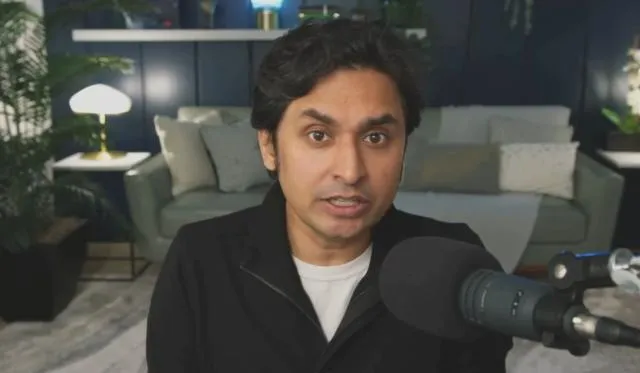
How Years Of Gaming Affects Your Brain
Explore how years of gaming impact the brain’s delicate chemistry. Dr. K explains the shifting roles of dopamine and serotonin, helping you understand how long-term play alters your neurotransmitters and affects your daily motivation. Gain a clearer perspective on the neurological side of your gaming habits.
Transcript
Today we're going to talk about what years or even decades of gaming does to your brain.
If you're a gamer,
Chances are you're kind of living life on hard mode,
Right?
Other people are able to do things like have fun activities like playing football or soccer or basketball.
They're able to socialize a little bit more easily.
They're able to focus on academics and derive like reward and pleasure.
But if you're a gamer,
You're kind of like,
You don't want to do that stuff,
Right?
You'd rather just stay at home and like play video games.
That's kind of fun.
And it sort of feels like life is passing you by.
Bad debuff and i know that i certainly felt that way even when i was no longer a degenerate gamer so after i got into med school and even was like training to become a psychiatrist at harvard i would look around at my colleagues and i would see them like being able to do lots of stuff and i could do a lot but i still spent a lot of time 10 hours a week 20 hours a week gaming and i thought to myself what could i accomplish if i was no longer a gamer what could i actually accomplish if i wasn't lazy or if i didn't Because that's what gamers sort of say,
Right?
We sort of think to ourselves like,
Oh my god,
I'm just lazy.
And other people are able to find like intrinsic motivation.
But I can't find intrinsic motivation.
And I lack discipline.
And I don't care so much about the external world.
And so you sort of look at yourself and you wish that you were different.
And so the cool thing is that there are actually ways that you can change that.
And the key thing here is that it's actually you're not lazy.
You're not born with a debuff.
Games will affect your brain in ways that we don't really understand.
So the first thing we're going to dive into is dopamine and serotonin.
And we have to have a more sophisticated understanding of these neurotransmitters.
So dopamine is a neurotransmitter that governs reward,
Pleasure,
And behavioral reinforcement.
The key thing about dopamine is it tends to be triggered by things that are external.
And it triggers this dopamine release.
Video games will trigger dopamine release.
And basically anything external that is fun or pleasurable will trigger a dopamine release.
And anything that's fun or pleasurable will also reinforce that behavior.
So when we play a video game and we have fun,
It triggers a dopamine release,
Which is why we're having fun.
And then we reinforce the behavior.
So we want to play again.
Serotonin is a little bit different.
Being and gives us things like confidence.
So if we look at gamers,
We engage in activities that give us lots of dopamine,
But don't actually give us much or any serotonin at all.
And so that's what creates this sort of picture of like,
Okay,
I'm capable of having fun,
But I don't feel good.
I don't like feel good in my own skin.
I don't feel confident.
I can't step away from the game.
And so this balance or imbalance of dopamine and screen and can't go out and sort of move in the real world.
Because moving in the real world requires you to be confident about yourself.
But if you're a gamer,
Chances are when you leave the safety of your computer or your console in these four walls,
You're filled with uncertainty and a lack of confidence.
And then you kind of retreat from that,
Right?
Because that's painful and it's difficult and it's confusing.
And you kind of come back and then you kind of think to yourself,
Oh my God,
Like,
Why am I so lazy?
Why am I so pathetic?
Of these things.
The weird thing about gamers is that they develop a dopaminergic dependence along with a serotonergic aversion.
And what do I mean by that?
So let's take a step back and understand how these two neurotransmitters normally function with like a regular human being.
So when I was like trying to become less degenerate,
I started going whitewater rafting a lot and I loved it.
So here's sort of the sequence of whitewater rafting.
When you first go rafting,
It's really,
Adrenaline,
Right?
Because you're like paddling really hard.
It's really rocky.
You're like flipping around and it's like you're getting wet and it's cold and it's like really awesome adrenaline kind of experience.
And you're kind of fighting for your life.
So it's highly dopaminergic.
But the key thing is that after you're done whitewater rafting,
The next day you're completely destroyed.
Every muscle in your body is sore.
You're kind of like you can't do a whole lot,
But you feel amazing.
In the feeling of like,
I faced the river and I survived and I conquered it.
And you feel really,
Really good about yourself.
It's not pleasure the next day.
You're not getting like activated.
You're not laughing or anything like that.
But you get this sense of like wellbeing and contentment and sort of like this other kind of triumph.
And we sort of look at other parts of life.
You know,
If you look at sort of like studying for a test or an exam,
You study really hard.
It's really painful.
And originally you get like this reward of hopefully getting an A,
Or a good grade.
But then there's this period afterward,
Maybe when you graduate,
That you sort of bask in this accomplishment.
And basking in that accomplishment is what causes serotonin to increase.
And so if we look at gamers,
They don't get to do that,
Right?
Because I still remember when I was like climbing the Warcraft 3 ladder and I made it to the spot 83.
It was the highest.
I was number 83 on the ladder in the United States.
And I can't bask in that accomplishment.
Like I can't go to people and like,
Party of congrats,
Dr.
K,
You made it to the top 100 of the ladder.
Like each of those games felt really good,
But I don't actually feel good about myself afterward.
So what we see in gamers is that they have a dopaminergic dependence,
I.
E.
You have to do things that are dopaminergic because you're easily bored,
Right?
And things are hard.
And then those activities that are actually serotonergic are things that you are aversive to.
So serotonergic activities are things that can be challenging,
Not necessarily pleasure.
So these are things that require a little bit more investment,
Can be difficult,
And don't necessarily have a really good reward at the end.
It's not like you get a huge prize or a rush of dopamine.
You just sort of feel good about yourself.
And if you're a gamer,
Chances are there are things that you could do that would help you feel good about yourself.
You think to yourself,
Well,
If I did this,
I'd feel better about myself.
But anytime you try to actually go and do those things,
Really hard.
And that's where that serotonergic aversion actually comes in because we're actually averse to doing those kinds of activities.
And so if you're a gamer,
In order to overcome that serotonergic aversion,
We need to start engaging in serotonergic activities.
So these are activities that are not pleasurable,
Can be somewhat difficult,
But help you feel good about yourself or accomplished when you're done.
Now,
This is what's really tricky is finding the right balance of this because frequently these two,
Activities are like really,
Really hard to do.
So you can't like go out and like go to a party or go hiking with a group of people or things like that.
So when I was working with one particular gamer,
We came up with a really good idea,
Which is this person was interested in free diving.
They wanted to like dive without scuba gear.
And so we kind of came up with a five minute or 10 minute stretch of walking where they would hold their breath as long as they could,
Not passing out or anything like that.
So don't do anything dangerous,
But they would start by holding their breath while walking.
That's the only thing they did.
On the first day,
They could hold their breath for 30 seconds.
And then on the next day,
They can hold their breath for 40 seconds and 50 seconds.
And over the course of like two weeks,
Three weeks,
All they had to do was go for a five minute walk,
A 10 minute walk.
And you can do that.
And they were holding their breath.
And over time,
They could hold their breath for five minutes,
Six minutes,
Seven minutes.
They would go for half hour walks,
Hour long walks where they're holding their breath for eight minutes,
Nine minutes at a time,
Right?
So they're taking 10,
15,
20 breaths where they're holding it.
Hard.
It's not something that you can really brag about,
But as you make progress,
You will feel good about yourself.
So try to find something that is challenging to do,
Kind of accessible to do.
You don't want to like tack on too much,
But isn't actually fun,
But makes you feel good about yourself.
So you can do something as simple as go for a walk and hold your breath.
The second problem we're going to deal with is how gaming interacts with your negative emotions.
When we play video games,
It actually suppresses our negative emotional circuitry.
So anything that is addictive,
One of the reasons it becomes addictive is not just because of dopamine.
It's not because of just the pleasure it gives us,
But because of what it takes away.
So we have this part of the brain called the amygdala,
And the amygdala is our survival center of the brain,
But it's also the part of our brain that governs our negative emotions.
So it makes us feel fear,
Anxiety,
Panic,
And things like that.
So the first thing that's really interesting is that the amygdala becomes hyperreactive,
When we are in low serotonin states.
So the lower our serotonin is,
The more hyperactive or jittery our amygdala is.
And if we're doing a lot of gaming where we're getting dopamine without serotonin,
The first thing we have to understand is it's priming our amygdala to be hypersensitive.
So gamers will literally experience fear or anxiety or panic or the sense of dread and uncertainty more rapidly and more intensely than the average person.
And this is why in psychiatry,
If we have people who have panic attacks,
Which oftentimes will start in the amygdala,
The treatment that we give them is actually serotonergic medications,
SSRIs.
There is also evidence that people who have been traumatized and are hypervigilant and kind of paranoid,
That serotonin can help them in some ways too.
So this is what's really tricky is we have this hyperreactive amygdala.
And why do we have a hyperreactive amygdala?
It may be because of serotonin,
But there's another layer at play here.
So if I'm going through life and I'm feeling fear,
If I'm feeling anxious,
If I'm feeling dread about the future,
My brain wants to make those things go away.
And in the past,
We would have to make those things go away by fixing a problem,
Right?
So if I'm like feeling lonely and I existed as a human being 5,
000 years ago,
I couldn't magically make that loneliness go away.
I would have to engage with other people to sort of like no longer feel lonely.
Now the problem is with video games,
We can make that emotion,
Of loneliness go away.
We can make our anxiety go away.
We can make our fear go away.
And you may say to yourself,
But Dr.
K,
Like that can sort of be a good thing,
Right?
There's one crucial thing that happens when we shut off our negative emotional circuitry,
Which is that we stop learning.
So if you're a gamer,
Chances are you're going through life with an XP penalty.
So if you look around at the people in your like general vicinity,
Right?
They seem to be making progress in life.
People finish college,
They get jobs,
They get married,
They have kids.
They get promoted.
They go on vacation.
And for a lot of gamers,
We kind of get stuck,
Right?
We're sort of like in our 20s.
We're not quite making as much progress or making some progress,
But everything feels harder.
Progressing through life feels really difficult.
And it turns out that video games are actually responsible for this in the way that they affect your brain.
And this comes down to how video games impact your ability to learn from your mistakes.
Video games and then like I'd have a test.
And then the day before the test,
I'd sort of enter this last minute panic stage of studying.
And I'd study,
Study,
Study,
And I'd pass the test.
And then I'd be filled with regret.
I'd be like,
Man,
Like if I could have started a day earlier or three days earlier,
If I had started four days earlier,
Five days earlier,
I could get an A.
And so I should learn my lesson at that point,
But I never did.
The next test would roll around.
I'd wait till the last minute.
I'd procrastinate and I'd end up getting maybe a B,
Maybe a C.
I knew if I just worked a little bit harder,
I could do so much better.
And that's what the experience of a lot of gamers is like in life,
That y'all work really hard for brief periods of time and then you do okay.
But if it weren't for this problem of gaming,
Then you would do so much better.
And so what's going on in our brain and how can we fix this?
It turns out that the reason that gamers progress more slowly is because they actually have an XP penalty.
And what do I mean from that?
Actually impaired.
So our learning circuitry,
The learning part of our brain is called our hippocampus,
Which is kind of seated right next to the amygdala.
So the hippocampus is what governs learning and memory.
And the key thing about how our brains learn is the most primary motivator for learning and changing behavior is actually negative emotion.
So if you go to a restaurant like five times and you like eating there,
The food is delicious.
But the sixth time you go,
If you get food poisoning,
You're never going to go to the restaurant again.
And so if we sort of think about how did you learn that lesson through pain and suffering?
I've also worked with a ton of people who have struggled with infidelity in marriage.
And once that trust is broken,
You can be married to someone for 10 years,
15 years.
You can trust them a lot.
But all it takes is one instance of infidelity for you to learn your lesson.
And in some cases,
This can be so traumatic that people struggle to trust for the rest of their lives.
So that's really powerful learning going on.
It's governed by negative emotional circuitry.
Games do.
Video games shut off our negative emotional circuitry.
So any addictive substance does two things.
It brings pleasure and it takes away pain.
And what video games essentially do is shut off blood flow to places like our amygdala,
Where we feel fear and panic and anxiety.
And since we're shutting off our negative emotions every time we play a video game,
Which is why we play them,
Right?
Because after you were done with that test and you were like,
Man,
What did you end up doing for the rest of the day?
You gamed.
And the moment that you game,
You shut off that negative emotional circuitry and you hamper your learning and start to develop that XP penalty.
So what can we do about this?
Essentially,
The first place to start is to actually be able to sit with negative emotions.
We don't need to conquer them.
We don't need to fix them.
We don't need to process them.
They're going to do the work on their own.
We just have to not numb them out.
Who feel like you've got an XP penalty if you're not just making progress.
What you need to do is spend some time sitting with your emotions.
And now gamers may wonder,
Well,
How can I do that?
And there's one really simple exercise you can do is if you've been burying your emotions for years because you game too much,
They're floating right beneath the surface.
So all you need to do is give them a neutral space.
So the next time you're feeling negative emotion,
Don't reach for any kind of advice or anything like that.
Just sit somewhere or pace for like five to 15 minutes.
The other thing that you can do is just stare at a wall.
So like this is a practice that I've given people.
Transformative and revolutionary.
Stare at a wall for 20 minutes up to an hour.
And what's going to happen is as you stare at the wall,
Like you're going to start by feeling bored.
Your mind is going to wander.
And then you'll start to notice like negative emotions come up,
Frustration,
Feeling like I'm being inefficient.
I'm wasting time.
I don't like this.
Those are actually all negative emotions.
And all you need to do,
You don't need to fix them.
You just need to be able to feel them and be able to tolerate them.
Because the moment that you're able to tolerate them,
Retreat into the video game.
If you don't retreat into the video game,
The emotional activity in the brain will be restored.
If the emotional activity in the brain is restored,
It will start working on your negative emotional circuitry.
So I want you all to think about why we have emotions for a second.
We'll really understand this point.
It's like 5,
000 years ago,
If a human being experienced a negative emotion,
Like feeling lonely,
What could they do to make that emotion go away?
That negative emotion would with other human beings.
In the same way that hunger prompts me to eat,
That's negative,
Right?
Makes me feel bad.
Thirst prompts me to drink.
Loneliness prompts me to reach out to other people.
That's why we have negative emotions because they prompt us towards the most important behaviors.
Nowadays,
We have a very serious problem because when we play a video game,
We can make the loneliness go away for a little bit,
But it doesn't actually fix any of our problems.
So we don't actually progress our life at all.
So we're taking away that negative emotional energy,
Leading ourselves to literally not learn that XP penalty and also not progress in life.
The third thing that video games do that really hamper our progress in life is they do all of the operationalization for us.
I got to explain what that means.
So when you play a video game,
Everything is laid out.
There's a main quest.
There's a side quest.
There's a mini map.
All the rules are laid out.
Mechanics of the game.
Everything is laid out for you.
And for the stuff that isn't laid out in the game,
There's a thousand different websites or YouTube tutorials or whatever that they can show you where to stand and what to click and optimizing DPS rotations.
All the rules of life are laid out in a video game.
And what you should do from start to finish,
Someone is holding your hand.
Real life does not work like that.
So what I found when I work with gamers is they have a very particular deficit,
Which is that they cannot operationalize problems.
What that means is that gamers can't take an abstract task,
Like become financially independent,
And break it down into pieces.
Why can't they do that?
It's because games have been doing this crap for you for so long that literally the circuits in your brain that do this start to atrophy and wither.
So if your brain doesn't use a particular functionality,
It starts to wither.
Continually engage with and lose,
Just like any muscle in our body,
We start to become deconditioned.
And so what gamers really struggle with is like moving forward in life because they don't know how to take these like big things that you're supposed to be doing,
Like be happy.
Well,
How do you do that?
I don't know how to do that.
Be financially independent,
Be successful,
Find a romantic relationship.
And it's like,
You don't,
You're like,
Where's the quest marker for that?
Like,
I'm confused.
Like anytime I go to a party and I hang out with people,
I don't see an exclamation.
Point in someone that i'm attracted to that i can walk up and then i right click them and then i'm like okay is my reputation high enough like do i need to gift this thing to make them like me and that's what fucking gamers do right they're like how do i like what's the rules of this game where i can get this person to to do how do i succeed how do i fulfill the quest objectives and so what they end up doing is they think like oh like i procrastinate because they don't get started but it's not like the reason they don't get started is because they procrastinate it's because the they don't want to get started because they don't know how to get started because for a decade,
There's been a computer that's telling you exactly what to do for like six hours a day.
And so your brain is like,
I don't know how to do that.
So what we really need to help gamers do,
And thankfully we can do stuff about this,
So don't panic,
Is take that abstract task and we need to teach y'all how to operationalize,
How to take this global main quest,
Right?
Because even if you think about a video game,
A main quest is really long,
But you don't even think about the end at the beginning.
There's like,
There are checkpoints.
Like there's the first part of the main quest and the second part and the third part and the fourth part.
So we need to use our cognitive skills to break down the main quests of life little pieces.
And there's a really simple exercise to do that.
So anything that you want to accomplish.
Anything,
Just whatever it is.
Can you do it right now?
The answer is no.
Okay,
So this is what you're good at.
We're going to leverage your strengths to overcome your weaknesses.
Take that task and split it into two parts.
Okay,
So let's say like I want to become financially independent.
So can I do that like right now this second?
No.
So what am I going to do?
I'm going to break it into two parts.
Okay,
What does that mean?
That means retire.
And before I retire,
I have to like get a job.
So those are the two pieces.
Can I retire?
No.
Can I get a job?
Can I do that right this second?
No.
What does it take to get a job?
Split that into two pieces.
Okay,
So like getting a job requires like having a job,
Like going to a job for a while and then like applying for a job or finding a job.
Can you apply for a job within the next five minutes?
Can you do that?
Can you do it literally right now?
If the answer is no,
Break that apart.
Okay,
Well,
Why can't you apply for a job?
What are the two pieces of applying for a job?
That's going to an interview and submitting an application.
Can you submit an application right this second?
If the answer is no,
What does that involve?
That involves a resume.
Right now.
No,
I don't have a resume.
What does that involve?
That involves finding a template,
Doing some research,
Making a list of your activities.
Unless you can do something within five minutes and have that task done,
I want you to break that apart into two pieces and you keep on breaking it apart.
And what you're going to end up with is a fucking main quest quest line,
Right?
Like that's what you're going to end up with.
You're going to end up with 50,
000 tasks that are very,
Very minute.
Go talk to this person in this village and deliver this thing.
And then you're going to get some And then they're going to give you the next thing.
And then you're going to go and you're going to go hunt boars for boar tails.
And you're going to take those boar tails and you're going to take them to the alchemist.
You got to do that for your own life because your brain literally does not know how to automatically do that.
So if you've been playing games for a very long time,
Like me,
And especially if you started early in life,
It's going to change or shape the way that your brain evolves.
With certain deficits.
Now,
The biggest mistake that gamers make is that they assume that these deficits are baked into the character.
They assume that when I generated this character,
I picked the lazy trait.
And so since I picked the lazy trait,
I will be lazy for the rest of my life.
I also picked the procrastinator trait,
And I also picked these traits.
And these are things that are baked into your character,
But they're not.
They're actually neuroscience deficits that gaming induces.
And if we start to reverse those neuroscience deficits,
If we start to do things like operationalize our problems and go through a formal cognitive process,
If we start doing things like sitting with our emotions instead of retreating to video games,
We will start to learn better.
We'll remove that XP penalty.
And the last and arguably most important thing is really understanding the difference between dopamine and serotonin and how gamers are dopaminergically dependent and serotonergically aversive.
Start to engage in some of these activities that are serotonin-inducing in nature.
And so once we start to do those,
We will develop a sense of well-being.
We will develop a sense of confidence.
And as we develop that well-being and confidence,
Moving out into the world is no longer overwhelming.
We're going to cleanse all those debuffs,
And then suddenly we're playing the game of life on an even footing.
Meet your Teacher


5.0 (4)
Recent Reviews
Neo
June 6, 2026
I don’t game, but I could see gaming as a potential analogy for any given activity. An obvious example would be something like watching TV, especially binge watching. Other things are a bit more challenging to identify as more seratonin-based or dopamine-based. I expect “reading” could function as a useful object lesson for activities that seem to fit both categories. Some people experience reading a book as seratonistic, if that’s a word. They resist lit classes, perhaps, or associate reading with school or failure. Gaming as you and many others have analyzed lends itself to the quest analogy. Everything Bad is Good for You by Stephen Johnson makes a kind of binary argument that explores the skills and rewards derived from a variety of socio-culturally so-called “bad” and identifies aspects that are culturally valued. But—please check my math—if someone generally loves reading, then certain subjects or genres might be more dopamine-producing than others. If this relativism can be applied to other activities or topics, what are some questions one might ask oneself to tease out its seratonin rewards compared to aspects of that task that produce dopamine rewards? To what extent might someone use this formula to assess non-gaming activities? What might be an example of a “balanced” activity that feeds both aspects, if there is such a thing? Fascinating stuff. I can see a lot of potential for developing this further as a therapeutic tool or prompt. Thank you. (If possible, I’d love a part two that addresses my questions above.)
More from Dr. Alok Kanojia
Related Meditations
Related Teachers
Trusted by 36 million people. It's free.

Get the app