Lesson 1
Music As An Instrument For Training The Mind
A supplemental talk on why this course is built around music and what music actually does to the brain. Longer than the practice lessons and entirely optional. Skip ahead to the next lesson if you'd rather. But if you stay, you'll hear what the research shows about how music trains the mind across emotion, prediction, culture, learning, motor function, and contemplative practice and how the music you'll hear throughout this course came to be. Anchored in neuroscience, woven through stories from a project recording original music across fifty genres.
read more
Lesson 2
You're the Wind Instrument: The Foundation Breath
The diaphragm is the bellows; the lungs are the air column; the throat, sinuses, and mouth shape the resonance. This first module introduces diaphragmatic breathing, the foundational motor pattern beneath every technique that follows. You'll locate the diaphragm, feel how it actually moves, and experience breathing from your body's primary respiratory muscle rather than from your shoulders and chest.
read more
Lesson 3
The Heart's Tempo: Introduction to Coherence Breathing
Coherence breathing is one of the most powerful practices for dialing down the sympathetic nervous system in real time, the technique you may find yourself reaching for the moment stress arrives. At about 5.5 breaths per minute, breath enters resonance with the heart's baroreflex, heart rate variability rises, and parasympathetic tone strengthens. Higher HRV correlates with emotional and cognitive balance.
read more
Lesson 4
The Heart's Tempo: Coherence Breathing (Guided Practice)
This is the guided practice for coherence breathing. An audible breath cue paces you gradually toward a rate of about 5.5 breaths per minute, layered over an original track. Use this as a daily anchor, or reach for it when you need to dial down the sympathetic nervous system in real time. The body finds the pace within a few minutes; the rest of the practice is staying with it.
read more
Lesson 5
The Heart's Tempo: Coherence Breathing (Practice - Minimal Cues)
The same coherence practice with the verbal instruction stripped away. An audible breath cue paces you toward 5.5 breaths per minute over an original track. There is no narration and minimal explanations. Use this version once you know the technique and want to settle in without the scaffolding of guidance. If coherence breathing is new to you, the introductory and guided practice lessons come first.
read more
Lesson 6
The Bass Note: Humming For State Change
Humming is one of the body's most efficient tools for shifting physiological state. This practice pairs sustained humming with an original interpretation of Bill Evans' Peace Piece, a jazz standard built around a single bass note that never leaves. You'll be that bass note. Humming pulls three levers at once: sound, breath, and body. Vibrations flush nitric oxide from the sinuses at fifteen times the resting rate, the exhale naturally lengthens, and the vagus nerve receives a continuous mechanical signal it cannot ignore.
read more
Lesson 7
The Bass Note: Humming For State Change (Minimal Cues/Instruction)
This is the humming practice with most of the science stripped away. An original interpretation of Bill Evans' Peace Piece carries you with minimal verbal cues. Use this version once you know the technique: closed mouth, a low comfortable note, hum on the exhale, let the note tell you when it's done. If humming is new to you, the full practice lesson comes first.
read more
Lesson 8
The Steady Hum: Vocal Technique with Music
A guided humming practice that builds on the basic hum through three vocal techniques: M/N/Ng placement, messa di voce dynamic control, and articulator focus from articulatory phonetics. Each technique is taught and then immediately practiced to an original ambient neo-soul track with a chromatic walk-up. The practice activates the vagus nerve, releases nitric oxide through the sinuses, and trains a steady center inside a shifting harmonic landscape.
read more
Lesson 9
The Steady Hum: Practice Session
A practice companion to Lesson 8, set to the same ambient neo-soul track with its slow chromatic walk-up. Minimal cues, maximum room for your own practice. Choose any of the techniques we learned in the previous lesson— placement, messa di voce, dynamic control, articulator focus — or stay with the simple sustained hum. Designed for daily repetition, the kind of practice that compounds over weeks and months rather than minutes.
read more
Lesson 10
Going Deeper: Polyphonics and Subharmonics
A short bonus lesson, a window into two traditions that take the simple act of humming somewhere most people don't know is possible.
Tuvan and Mongolian overtone singing produces two pitches from one throat by amplifying the natural harmonics already present in the voice. Tibetan Gyuto monks produce subharmonics below the fundamental by engaging a second set of vocal folds — pitches that physically shouldn't be possible from a single human voice.
Nothing to master here. Just listen, explore, and let the sounds expand what you thought a human voice could do.
Listening starting points:
Huun-Huur-Tu —Tuvan ensemble; 60 Horses in My Herd;
The Gyuto Monks Tantric Choir — Freedom Chants from the Roof of the World;
Anna-Maria Hefele — overtone singer, YouTube demonstrations make the technique visible;
Genghis Blues (1999) — documentary about American blues musician Paul Pena competing in the Tuvan throat singing championship
Snarky Puppy- Something Featuring Lalah Hathaway
read more
Lesson 11
The Hummed Physiological Sigh
A simple, portable breath technique that combines two of the most-studied stress-regulation methods in modern physiology: the physiological sigh (double-inhale, long exhale) and humming (which triggers a 15-fold release of nitric oxide through the nasal sinuses). Stacked into a single breath cycle, the hummed physiological sigh gives you both a real-time tool for acute stress and a five-minute daily practice for building nervous system resilience.
The 2023 Stanford study by Balban, Huberman, and Spiegel found that five minutes a day of cyclic sighing produced greater mood improvement than mindfulness meditation across 28 days. Combined with the parasympathetic effects of humming, the practice you'll learn here intensifies both mechanisms.
read more
Lesson 12
The Hummed Physiological Sigh: Minimal Cues
This is the practice companion to Lesson 12: The Hummed Physiological Sigh, which teaches the science of the technique. If you're new to the practice, listen to the lesson first; come back here for daily use.
read more
Lesson 13
Alternate Nostril Breathing: The Centering Breath
Right now, one of your nostrils is more open than the other. This is your nasal cycle: a measurable, roughly 90-minute alternation that correlates with autonomic state and brain hemispheric activity. Yogis identified this thousands of years ago and built a practice around restoring symmetry.
That practice is nadi shodhana, or alternate nostril breathing. Unlike the down-regulating techniques in earlier modules, this one doesn't pull you toward rest. It centers you. Research from Shirley Telles and colleagues shows measurable shifts toward heart rate variability coherence, modest reductions in blood pressure, and improved attention.
This module covers the science, the yogic framework, and a guided practice: three rounds of explicit instruction followed by two minutes of self-paced practice over music.
If your nose is congested, save this one for another day.
read more
Lesson 14
Alternate Nostril Breathing: Practice Track (Minimal Cues)
A minimalist practice track for alternate nostril breathing. Brief cues at the start, then music for sustained self-paced practice. Use after the guided module, once the technique is familiar.
Hand position: thumb closes the right nostril, ring finger closes the left. Inhale left, exhale right. Inhale right, exhale left. Continue at your own pace.
If your nose is congested, save this for another day.
read more
Lesson 15
Breath as Spirit: The Sacred Across Traditions
In traditions that never met (e.g. Gregorian chant, Sufi dhikr, Quranic tajweed, Tibetan and Tuvan singing) people gave the breath a sound to carry, and the breath slowed to almost the same rate: five or six cycles a minute, the pace that quiets the nervous system. They knew the felt state long before science named the vagus nerve.
Here you'll hear that convergence, then test it on yourself. The practice rides one chord progression, the bones beneath Amazing Grace and Peace Like a River, reharmonized. Sing either song, hum, or bring a chant from your own tradition. Come at it like a scientist: curiosity, rigor, even skepticism welcome. See whether the slow breath does in you what it did in them.
No belief required. Only your breath.
read more
Lesson 16
Breath as Spirit (Practice Track)
Only music. No narration, no cues. This is the practice from the guided session with the talking taken out.
A single chord progression: the bones beneath Amazing Grace and Peace Like a River reharmonized. Sing either song, hum along, or bring a chant from your own tradition. If you'd rather make no sound, simply breathe with it. Let each phrase carry one slow exhale, and let the breath settle toward five or six cycles a minute.
Use any technique you've practiced: coherence breathing, humming, alternate-nostril, the physiological sigh, or a mix. Nothing to get right. No belief required. Only your breath.
read more
Lesson 17
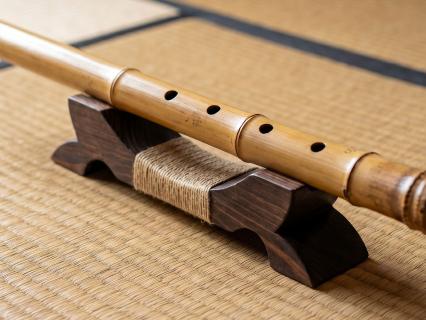
The Hollow Instrument: Wind Instruments as Breath Trainers
A supplemental talk on using wind instruments as tools for breathwork, not performance. Playing a flute or reed is sustained exhalation against resistance: it lengthens the exhale, works the breathing muscles, and trains the slow, supported breath you've built across this course. After a look at the science we move through seven instruments from around the world: the Native American flute, shakuhachi, harmonica, quena, bansuri, and duduk. For each, I play a few slow phrases. And included 3 longer pieces, so you can practice along with an exhale, a hum, or any technique we've covered. You won't need an instrument, though you may want one by the end.
read more
Lesson 18
Skull-Shining Breath (Kapalbhati)
An active, energizing practice... and a turn in the course. The earlier lessons worked the parasympathetic brake through slow, coherent, hummed exhalations. Kapalbhati moves the other way.
In the Hatha Yoga tradition it's classed as a kriya, a cleansing action, rather than a pranayama. The name means "skull-shining," after the sharp, clear mind that follows. It inverts resting breath: the exhale becomes an active abdominal contraction, the inhale a passive release. Practiced in rounds, it conditions the breathing muscles and gradually retrains your tolerance to shifting carbon dioxide.
Western research here is limited and early, so no clinical claims, only the mechanics, stated plainly.
The breath is carried by gnawa: the Moroccan sacred trance music. Here, the acceleration lives in the breath.
read more
Lesson 19
Skull-Shining Breath (Kapalbhati - Practice Track)
The unaccompanied audio bed for your own Kapalbhati practice — no voice, no cues, just the music to run your rounds against.
Gnawa: the Moroccan trance music of the all-night lila (all-night healing ceremonies). Use its pulse to hold your pacing, and let the acceleration live in the breath rather than the track.
New to skull-shining breath? Do the full guided lesson first. It covers the technique, the mechanics, and how to practice safely. This track assumes you already know the form.
read more
Lesson 20
Stoking the Fire: Cyclic Controlled Hyperventilation
The final lesson, and the most demanding. Cyclic controlled hyperventilation, the mechanism at the root of the Vajrayana practice of g-Tummo, "inner fire," and the engine of the modern Wim Hof Method.
Three phases per round: deep, rapid breaths; an exhale-hold in stillness; then one held recovery breath. Blowing off carbon dioxide shifts your blood briefly alkaline and drives a controlled sympathetic surge. You lean into the accelerator to earn the parasympathetic calm that arrives in the hold.
Western research here is early, so no clinical claims — only the chemistry, stated plainly.
Powerful, with real risks. Never practice in or near water, while driving, or standing — it can cause fainting. Not suitable during pregnancy or with several medical conditions. Read the full safety cautions in the practice before you begin.
read more
Lesson 21
Stoking the Fire: Cyclic Controlled Hyperventilation (Practice Track)
The companion track to the full lesson. Minimal cues, mostly practice, for when you know the form and want to run the rounds without teaching in between.
Three rounds. 1 to 2 minutes of deep, rapid breaths: active inhale, passive exhale. Then the exhale-hold, in stillness, for as long as stays comfortable. Then one full breath in, held fifteen seconds, to re-stabilize.
New to this? Do the full guided lesson first. It covers the mechanics, the chemistry, and how to read your own limits.
Powerful, with real risks. Never practice in or near water, while driving, or standing; it can cause fainting. Practice seated or lying down. Not suitable during pregnancy or with several medical conditions. Read the full safety cautions before you begin.
read more