Welcome.
Before we begin this practice,
I thought it might be helpful to share the science that informs it.
This very moment your body's performing millions of vital functions without input from the you you think you are.
The heart beats,
Food's digested,
Cells replicate,
Proteins are synthesized,
Toxins are released,
Muscles contract,
Electrolytes are balanced,
And you're breathed without any help from the egoic self.
These vital processes and the sensations that accompany them remain largely unconscious,
But by simply directing attention into the body,
You can feel this aliveness pulsing through you now,
Expressing in different ways as pressure,
Contraction,
Movement,
Or other sensation.
This ability to tune in is called interoception.
Interoception is the sense that answers the question,
How am I feeling in any given moment?
Interoception is the perception of bodily sensations and may express as tingling,
Throbbing,
Heat,
Coldness,
Pulsing,
Swelling,
Tickling,
Perspiration,
Contraction,
Expansion,
Numbness,
Pain,
Or other sensation.
Interoceptive awareness can be trained.
Simply check in.
What are you experiencing in the body now?
We're not using imagination.
We're simply observing sensations objectively as they arise moment by moment.
They could be the touch of cloth on skin,
The rising and falling of the abdomen,
Heat or coldness in the fingers,
Attention here,
A tingling there,
A tickling sensation,
Pressure,
Contraction,
Anything.
The words we use to describe the sensations are not important.
In fact,
Words are a step removed from direct experiencing.
We can know something fully without labels,
Without giving it a name.
There are many types of sensations.
In this practice,
We will limit our exploration to muscular contraction.
Muscles often become tense even during meditation.
For this practice,
All we need to know is whether a muscle is relaxed or contracted.
You don't want to share a very brief summary on the complexity of the science because when we relax fully,
We can affect change at the cellular level without understanding the mechanisms behind it.
At the molecular level,
An electrical signal called an action potential from a motor neuron triggers the release of acetylcholine.
Acetylcholine is a neurotransmitter that triggers depolarization and calcium ion release within the muscle fiber.
One type of muscle fiber pulls on the filaments of another the way an oar propels a rowboat.
These filaments are anchored to Z lines.
The row-like action pulls the Z lines closer together,
Shortening the muscle fibers and causing contraction.
This complex action is often triggered by thought.
We don't need to know the science to affect change at a molecular level.
Imagine this is what the ancient yogis were referring to when they attempted to describe more subtle bodies like the energy body.
Simply by letting go and relaxing fully,
We can exert some control over the body at the subtlest cellular level.
Relaxation is what is left when we stop efforting or trying to relax,
Expecting relaxation to come on demand or resisting what is.
If I sit with the expectation that I will still the mind and relax the body,
And I don't,
The brain will return a prediction error response.
At the experiential level,
This feels like agitation,
Frustration and failure.
Relaxation comes as the byproduct of letting go completely,
Expecting nothing,
Resisting nothing,
Encouraging nothing.
There's nothing to fight or flee or defend.
We give the sympathetic nervous system a respite from the ego.
During meditation,
You may feel muscles contract.
In this training,
We will focus on five regions where tension tends to build.
We will visit and revisit these regions throughout the practice.
So let's begin.
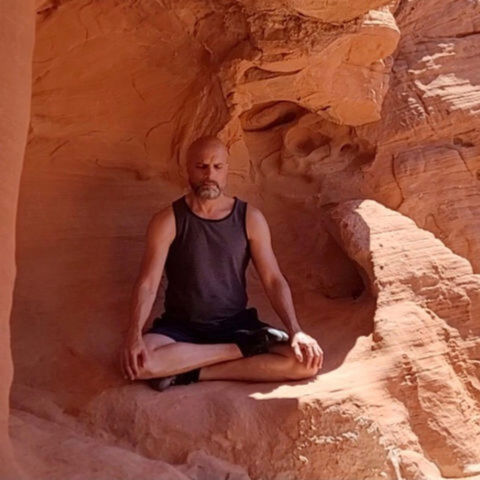
Find a comfortable position where you can sit or lie down undisturbed for the duration of this practice.
Close your eyes.
Adjust your posture if necessary.
Set the intention to really do nothing.
Muscular contractions begin with action potentials within motor neurons,
But these are triggered by movements of mind,
Restlessness,
Cravings,
Expectations,
Plans.
There's no place to be,
Nothing to do,
Nothing to expect,
Nothing to resist,
Nothing to encourage.
We're not even trying to encourage relaxation as this requires effort.
Simply choose to do nothing.
Relaxation is what's left when we stop trying and simply let go.
Like this,
You're giving yourself the gift of rest.
You'll be more resourced to attend to your to-do lists and projects after this practice.
Motor transmitters that influence learning,
Attention,
And motivation increase as much as 65% in similar meditation practices.
It's like a mental reset.
Your brain will be resourced for demanding cognitive tasks.
Levels of anxiety and stress will fall measurably when you practice just letting go.
As you go deeper,
We'll send a signal to the nervous system that all is well.
Take a deep breath and take in a little more.
Hold it and exhale slowly.
Let the exhalation be twice as long or longer than the inhalation.
Take two more inhalations.
This is called the physiological sigh.
Sit out long and slow.
Continue this breathing pattern of two inhalations,
A hold and a slow exhalation,
While explaining the body's inherent perfection and wisdom.
When we inhale twice,
The collapsed alveoli within the lungs reinflate with air.
This increases the surface area of the lungs and removes carbon dioxide from the body much more efficiently,
Making the body feel more relaxed.
When we take long exhales,
The receptors in the heart sense the increase in pressure.
This sends signals to the brain to slow down the heart rate,
Further inducing the relaxation response.
Keep practicing.
Two inhalations.
A slight hold.
A long and slow exhalation.
With the next breath as you exhale,
Release any tension wherever you notice contractions.
So two inhalations.
Hold.
Exhaling all the muscles ever further as you exhale long and slow.
Keep practicing.
Two inhalations.
Hold.
Long and slow exhalation.
Relaxing any tension in the body.
Next we'll add an ocean sound as we exhale.
You can make this ocean sound by contracting the muscles in the back of the throat.
Two inhalations.
Hold.
Relaxing all the muscles as we exhale long and slow with the ocean sound.
Two inhalations.
Hold.
Relaxing all the muscles as we exhale long and slow with the ocean sound.
Continue breathing like this for several more breaths.
Continue normally now.
We'll explore the five regions.
The first region is rectangular in shape and covers the muscles of the forehead,
The eyebrows,
The space between the eyebrows and the muscles around and behind the eye.
Place your attention here for a few breaths and note whatever tension or contraction you experience in this rectangular region which covers the muscles of the forehead,
The eyebrows,
The space between the eyebrows and the muscles around and behind the eye.
The second region is crescent shaped beginning at the hinges of the jaw and extending down from the nostrils to the chin.
Covering the muscles of the cheeks,
The mouth and the tongue.
Place your attention here for a few breaths and note whatever tension or contraction you experience in this crescent shaped region which begins at the hinges of the jaw and extends from the nostrils to the chin covering the muscles of the cheeks,
The mouth and the tongue.
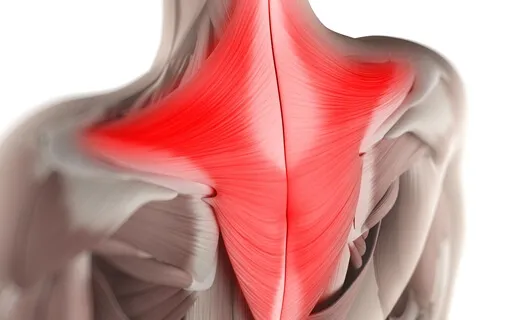
The third region is triangular.
The base extends from shoulder to shoulder and down the middle back covering the trapezius muscle.
Place your attention here for a few breaths and note whatever tension or contraction you experience in this triangular region which covers the back of the neck and trapezius muscle.
The fourth region can be imagined as two sets of parallel lines which represent the two arms from shoulder to fingertips and the two legs from hips to the tips of the toes.
Place your attention here for a few breaths and note whatever tension or contraction you experience in both arms and legs.
The fifth region is a three dimensional figure eight.
Imagine two spheres,
One covering the heart center and the other covering the abdominal cavity.
Place your attention here for a few breaths and note whatever tension or contraction you experience in this figure eight shaped region which covers the heart center and abdomen.
Keep letting go completely.
There's no need to trigger the sympathetic nervous system.
There's nothing to fight or flee from,
Nothing to defend,
Nothing to do right now.
Thoughts may come,
We do not engage them.
We don't resist or censor or analyze anything.
Just let them be and let go.
Bring your attention back to the first region,
Rectangular region that covers the forehead and eyes.
Continue relaxing the muscles that wrinkle the forehead.
The muscles of the forehead are completely smooth and relaxed.
Relax the muscles that raise and depress the eyebrows.
Now pass your attention over the muscles that elevate and close the eyelids and the muscles that elevate and rotate the eyes and eyeballs.
Let your attention sweep over the eyelids and muscles of the eye and around the eye.
Pass your attention over the forehead and the eyes further relaxing the muscles of the scalp and eyes.
Now bring your attention to the intraocular muscles which dilate and constrict the pupils.
Imagine these relaxing fully.
Relax all the muscles in this rectangular area we call region one.
Now bring your attention to region two.
Imagine a crescent shape extending from the hinge of one jaw to the other and covering the muscles of the cheeks,
Mouth,
Lips and tongue.
Pass your attention over the muscles that elevate and retract the jaw and the muscles that move the jaw from side to side,
Relaxing the jaw completely.
Bring your awareness to the muscles of the mouth and cheeks,
Relaxing the muscles which compress the cheeks,
Pucker the lips and draw them back.
Relax the muscles that elevate the mouth into a smile and the muscles that depress the angle of the mouth.
Relaxing the muscles which elevate the upper lip and depress the lower lip.
Relaxing the muscles that elevate the lower lip and depress the lower lip.
Relaxing the muscles that elevate the lower lip and depress the lower lip.
Now draw your attention within the mouth.
Feel the entire mouth,
The teeth,
The inner cheeks,
The back of the lips,
The back of the incisors,
Sides of the molars,
The palate,
The ducts,
The gums,
The pockets of empty space within the mouth.
Relax the muscles of the tongue.
Relaxing the muscles which depress,
Elevate,
Retract or raise the tongue.
Relaxing the muscles that shorten,
Elongate,
Retract and flatten the tongue.
Now pass your awareness over the entire face,
Regions one and two,
The entire head,
The forehead,
The eyebrows,
The eyes,
The nose,
The cheeks,
The mouth,
The tongue.
Now bring your attention to region three.
Imagine a triangle covering the entire trapezius muscle which runs from the back of the neck across the shoulders to the middle back.
Relax the muscles that extend,
Rotate and tilt the head and flex the neck.
Relax the trapezius muscle.
The trapezius muscle is especially prone to tension.
Everyone tends to build here.
Low threshold motor units are recruited at the onset of muscle activation.
They fire continuously.
This can occur even during periods of rest until the muscle is relaxed fully and completely.
So keep this muscle loose and relaxed.
Keep relaxing this muscle until even the smallest motor units stop firing.
Now bring your attention to region four,
The arms and legs.
You can imagine two sets of parallel lines jutting out from the main trunk like four peninsulas.
First bring your attention to the muscles of the shoulders.
Move your attention down to the upper arms,
The biceps,
Brachialis and triceps.
Then down to the elbow,
The forearm,
Muscles that flex,
Extend,
Abduct,
Adduct and pronate the forearm.
Bring your attention to your hands.
Relax the palmar muscles,
The muscles of the fingers and the muscles of the thumb.
Now bring your attention to the lower limbs and relax the muscles from the hips to the tips of the toes.
Relaxing the gluteal muscles and the muscles of the perineum.
Relaxing the muscles of the thigh.
Relaxing the muscles that rotate,
Adduct and abduct the thighs.
The muscles around the knee,
The hamstrings,
The muscles of the lower leg,
The calves and the chin,
The muscles that dorsiflex and invert the foot,
The muscles of the foot and toes.
Relax all the muscles in region 4,
The arms and legs.
Now bring your attention to region 5,
The chest and abdomen.
Imagine two spheres forming a three dimensional figure 8.
One covers the heart cavity and one covers the abdominal cavity.
When we're stressed our breathing patterns change.
Simply bringing attention to the abdomen we can detect whether we are breathing diaphragmatically or not.
When we breathe diaphragmatically the abdomen rises,
The ribs move out laterally or side to side and the chest lifts gently.
Except for the rising and falling of the abdomen the other movements are subtle.
Do not force the breath.
Noticing that we are breathing diaphragmatically is enough.
As you pass your attention over the muscles of the abdomen see if you can feel the different muscles involved in inspiration and expiration.
Feel the diaphragm contract and push downward,
Flattening out.
Imagine the three dimensionality of the abdominal space from the navel to the spine.
Do the same now for the heart cavity.
Imagine the top,
Bottom,
Front and back of your beautiful hearts.
Now pass your attention over regions 1 to 5 again,
Relaxing further and deeper.
Mind is triggered by electrical spikes within cells.
A thought can trigger movement.
Imagine relaxing at the molecular level,
The subtle energy body that moves with thought and that relaxes when we stop grasping at thought.
Keep reminding ourselves there's nothing to do,
Nowhere to be.
Continue signalling to the body that you are safe and it is well.
With each passing we go deeper,
Letting the muscles of region 1 soften.
The forehead,
Eyebrows and eyes.
Relaxing the muscles of region 2,
The jaws,
Cheeks,
Mouth and tongue.
The muscles of region 3,
The trapezius.
The arms and legs of region 4.
Relaxing the heart area and abdomen in region 5.
As we sweep through regions 1 to 5 again,
Notice from inside out as if placing your awareness on the bones of the skull and moving out to the surface of the skin.
Relaxing the muscles of region 1,
The forehead,
Eyebrows and eyes.
And region 2 from inside the mouth to the tongue,
The lips,
The cheeks,
The jaw.
Imagine peering out from the bones of the spine,
Clavicle and scapula to the trapezius muscle.
Imagine the muscles within this triangular region of region 3 fully relaxed.
The bones of the arms and hands scan out to the muscles from shoulder to fingertips.
From the bones of the legs and feet scan out to the muscles from hips to toes.
Imagine the muscles of region 4.
From within the body,
Imagine the muscles of region 5 around the heart cavity and abdominal cavity relaxing and contracting.
As we scan regions 1 to 5,
The whole body,
If you notice any pockets of tension outside of regions 1 to 5,
Can relax those as well.
Now scan from regions 5 to 1.
Region 5,
Figure 8 from the abdominal and heart center to region 4.
Two sets of parallel lines,
Feet to legs,
Hands to arms.
To the triangular shaped region 3,
Muscles of the trapezius and neck.
To the crescent shaped region of 2,
Muscles of the tongue and cheeks,
Jaws and lips.
To the rectangular region 1,
Muscles of the forehead,
Eyebrows and eyes.
Now we'll pass our attention from left to right,
Beginning with region 1.
Bringing the left side of the face,
Forehead,
Eyebrows and eyes.
And panning the attention slowly over to the right side of region 1.
Bringing attention down to region 2,
Crescent shaped region 2.
Bringing attention from left to right,
From the hinge of the left jaw,
Across the face,
Across the cheeks,
The lips,
The mouth,
Muscles of the tongue,
To the right side of the face.
Then bring the attention down to the triangular shaped region 3,
Muscles of the trapezius starting from the left shoulder.
Scanning slowly across to the right shoulder.
Then region 4,
Scanning from the shoulder of the left arm to fingertips,
The left leg from hips to toes,
And the right arm from shoulders to fingertips,
Hips to toes.
Moving along to region 5,
Scanning from the left side of the body to the right side.
Now follow the breath as it enters into the nostrils,
Into the vestibule filling the chamber of the nasal cavity.
Imagine the subtle in-breath moving up into region 1.
Relaxing any contractions you feel in region 1.
Follow the next in-breath as it enters the nostrils into the vestibule filling the chamber of the nasal cavity.
Follow the subtle breath in as it moves over to region 2,
Crescent shaped,
From hinge to hinge,
Cheeks,
Lips,
Tongue,
Mouth.
Follow the next breath in as it enters the nostrils into the vestibule filling the chamber of the nasal cavity,
Following the subtle in-breath as it moves down to region 3,
Softening the muscles of the trapezius.
Follow the next breath in as it enters the nostrils into the vestibule filling the chamber of the nasal cavity,
Follow the subtle in-breath as it moves from shoulders to fingertips,
Hips to toes.
Follow the next in-breath as it enters the nostrils into the vestibule filling the chamber of the nasal cavity.
Follow the subtle in-breath as it flows past the tonsils,
Down the nasal pharynx,
Passing the vocal folds into the lungs,
Feeling the diaphragm relax on expiration,
A touch of the breath as it exits the body.
Follow it in again,
Next in-breath,
Feeling the abdomen rising and falling.
See if you notice the subtle contraction of the diaphragm as it pushes the abdomen down and out.
For the next several breaths,
Practice independently,
Regions 1 to 5,
Noticing any contractions,
Relaxing if necessary.
Scanning from 1 to 5,
5 to 1,
From outside in,
Inside out,
From left to right,
Right to left.
Keep sweeping your attention over the body for the next 15 minutes.
As this practice draws to a close,
Bring your attention back to the body and breath.
Get any insights you may have picked up during this interceptive training.
May you be free from strain and suffering.
May you be joyous and safe.
May all beings be happy and peaceful.