We have our first guest in studio with us,
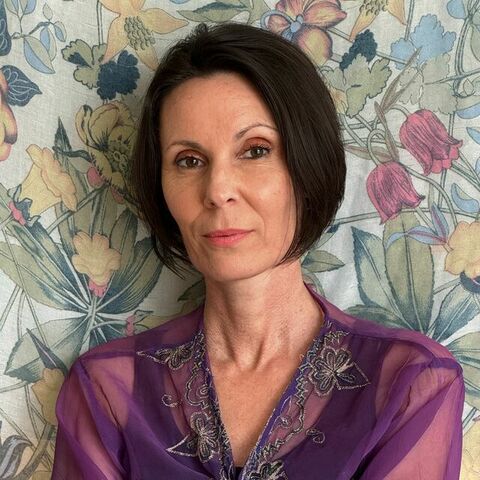
And that is kinesiologist Helen Hansen.
Welcome,
Helen.
Thank you so much.
Lovely to be here.
Lovely to have you here.
Helen is no ordinary kinesiologist,
As I said earlier on.
A little bit about her.
Yes,
She's trained as a kinesiologist,
Obviously,
And she's dedicated to facilitating individuals,
Both adults and children,
In helping overcoming balances and blockages in a holistic manner.
She has over 20 years' experience in mind-body programs.
Self-awareness is a key ingredient in her healing recipe.
Archetypal understanding is a modality she practices to bring about self-awareness,
And Helen has been featured on ITV,
DSTV,
Radio 2000,
Radio SM,
Radio 702,
And all over the place in print media,
Natural medicine,
Your family,
All over the place.
Helen has been also a guest speaker at the Montessori Association conferences and primary and high schools around the country,
As well as women's networking groups.
She's the author of the Quick Start Guide to Health and Wellness and 150 Inspiring Educational Activities for Young Children.
Helen's studies include kinesiology,
Bach flower remedies,
Limbic imprint recoding,
Amongst many other things,
But tonight our focus for the evening is going to be on exploring the archetypes which Helen runs courses on,
And Helen,
Won't you please,
First of all,
Explain what the archetypes are,
What our definition of archetypes,
And their importance in our emotional lives?
Thank you.
Yes,
So archetypes are patterns,
Essentially.
Sometimes people like to refer to it as roles we play or characters,
But if you start from that angle it can become a little bit limiting,
So looking at it more from a broader perspective,
Because it's not only about people,
It's patterns that can be in our behavior,
So that's personal.
It's also patterns which are universal,
So experiences,
Situations,
And archetypal language is very symbolic,
So if we look at our brain hemispheres,
It's an easy way to understand.
It is your intuitive side,
Right side of your brain,
Which is going to connect with and understand and process archetypal information versus the left brain,
Which is more linear and worldly,
So when we're talking about it from an inner emotional point of view,
Archetypes and our understanding of our patterns and our triggers in our life,
It brings self-awareness,
And self-awareness is the first step on our journey to self-development,
Otherwise we find ourselves in these habitual patterns that just keep repeating themselves over and over,
So this is why we will notice certain archetypal patterns,
Behavior patterns in people in general across the world,
And it also crosses ages,
Races,
Gender.
You've got very common patterns,
For example,
The victim.
We can all relate to that,
Whether it's something we project outwards or are more creating circumstances of victimizing others or whether we're on the receiving end,
And we can notice when that's happening in others,
And it's not only personal.
It is even looking at it in a larger group format,
So sometimes a country,
People in a country will feel victimized by another country or continent.
The prostitute is another common archetype,
Which everybody has,
And prostitute,
Of course,
Here we are talking about giving away power.
Yeah,
Okay,
So all of these can be worked at or referenced on the personal or on the collective level.
Absolutely.
So,
Yeah,
Okay,
Carry on.
Just give us a couple more prostitutes.
Okay,
So other popular ones.
The other two that everybody has,
We have got the inner child,
So inner child could be your wounded child,
Your orphan child,
Also your carefree child,
The irresponsible sign,
And then we've got the saboteur,
So of course,
Sabotaging us sometimes when we don't even realize,
And these four,
The victim,
The saboteur,
The prostitute,
The inner child,
They work together.
Now,
We tend to see them from a shadow perspective in psychology language,
Negative,
But every archetype has got both the shadow side and the light side,
And when we notice the shadow side,
When we become aware of that,
That allows us to ask questions and delve a little bit deeper to how can we activate the light attributes of this particular pattern in my life.
So,
How,
Okay,
Earlier on,
I'm just a bit obsessed with play,
I don't play at the moment,
I don't know about you,
But I was mentioning about playfulness,
The importance of playfulness,
So the positive side of,
Well,
To me,
There can only be a positive side of play,
But that is part of the inner child,
You were saying.
Yes,
So everything,
Every experience that we have in life,
Whether it's through our,
Again,
Behavior or a situation that we're in,
Everything has a balance,
There are as many benefits as there are drawbacks.
So,
When you're talking about play,
And that's just a lovely concept to work with,
You know,
If one plays too much,
In inverted commas,
What is going to happen?
We can tend to become too carefree and irresponsible,
And then we lose out on productivity,
We lose out on moving forward with our life's purpose,
And this is the reason why we use archetypal work in the way that we do for self-awareness,
So that we can actually follow our purpose here,
Because that's why we're on earth,
And when we're feeling stuck and not knowing where to go,
And I'm finding this in my kinesiology practice very common now with what's going on in a world perspective.
Amongst people.
Yes,
Feeling stuck and losing direction,
They had direction,
And now they don't know where to go,
And through that,
When you're seeing time and time again,
Old patterns are being reignited,
And this is not a bad thing,
It doesn't mean that the work that we may have done before to release a particular habit has not been of value,
And you know,
Why has it come back?
Well,
It's the next layer of the onion for us to work with,
And when we look at it from a solution perspective,
That gives the inspiration to move forward.