The world’s largest free audio library for everyday wellbeing
Somatic & Body Based
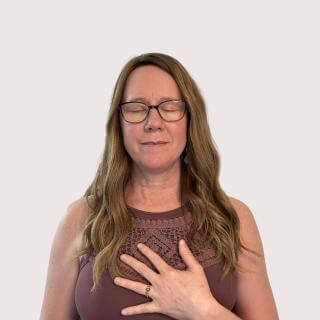
Orienting to Safety is a somatic practice of guiding your attention toward cues of safety in your surroundings and noticing how your body responds.
Last Updated
4 Jul 2026
We are still reviewing this page. Our research team checks every technique page for accuracy and evidence quality before final release. Details may change as that review completes. The evidence badge shows our current reading of the published research.
RECOMMENDED DOSE
No direct dose evidence; editorial synthesis. A brief, low-commitment introduction to orienting helps a newcomer build familiarity and a felt sense of safety without becoming overwhelming. No direct dose-response literature exists for this technique, so treat this as a starting point only.
No direct dose evidence; editorial synthesis. Once orienting feels familiar, a modest increase in duration and near-daily practice supports steadier nervous-system regulation. These figures reflect general practice conventions for somatic grounding techniques rather than tested protocols.
No direct dose evidence; editorial synthesis. An established practitioner may extend sessions and weave short orienting moments into daily life for maintenance. This upper range is inferred from general somatic-practice conventions, not from dose-response studies for this technique.
Session length
Session length: 2–5 minutes
2
MIN
How long each individual practice session should last from start to finish.
Frequency
Frequency: 3–5 days
3
DAYS
The number of days per week to fit a session into your routine.
Session length
Session length: 5–10 minutes
5
MIN
How long each individual practice session should last from start to finish.
Frequency
Frequency: 5–7 days
5
DAYS
The number of days per week to fit a session into your routine.
Session length
Session length: 10–15 minutes
10
MIN
How long each individual practice session should last from start to finish.
Frequency
Frequency: 7 days
7
DAYS
The number of days per week to fit a session into your routine.
About this card. These recommendations are not a substitute for personalised guidance from a qualified practitioner. No direct dose-response literature exists for this technique, so these figures are conservative starting points rather than validated protocols.
Quick answers to what people most often ask. Each card links to the deeper section below.
evidence
No controlled trials have directly tested Orienting to Safety, so its support remains theoretical rather than trial-based. Grounded in Stephen Porges's Polyvagal Theory and Peter Levine's Somatic Experiencing, a 2021 scoping review lists sensory orienting among established somatic techniques, but these describe its lineage rather than measure calming or grounding effects.
good for
Orienting to Safety suits adults who feel chronically on guard, anxious, or disconnected from their body, and works as a gentle first step when turning attention inward feels too much. Within trauma-informed care it eases high alert and builds a grounded sense of safety, though these uses reflect clinical tradition rather than tested populations.
Read moresafety
Most people can practise Orienting to Safety with low risk. Those with significant trauma histories, a tendency to dissociate (going numb or detached), or in acute distress should approach slowly, ideally alongside a trauma-informed practitioner, since scanning for safety can heighten arousal before it settles. It is not a substitute for professional care.
Read morehow it works
Directing attention toward real signs of safety in your surroundings is thought to work through neuroception, the nervous system's automatic scan for threat or safety. Supplying deliberate safety cues is proposed to engage the body's rest-and-recovery state, slowing the breath and softening the shoulders, while building interoceptive awareness, the skill of reading your own internal signals.
Read moreOrienting to Safety is a somatic practice of guiding your attention toward cues of safety in your surroundings and noticing how your body responds.
A session means letting sensory attention move outward and settle on your immediate surroundings: supportive features of the space, attuned signals from other people, and your body's own response. Many practitioners let the eyes wander and rest on points of stability, turn toward whatever feels containing, and track any softening, settling, or slower breath as it happens. The format is unhurried and open rather than scripted, so there is no fixed count or sequence to complete.
Orienting to Safety is not the same as general grounding, the structured 5-4-3-2-1 senses exercise, or open mindfulness. It differs from generic grounding in its specific polyvagal framing and its emphasis on detecting safety; from 5-4-3-2-1 in its open-ended, exploratory format rather than a fixed count; and from mindfulness in its deliberate lean toward stimuli that signal safety rather than even, nonjudgmental attention to whatever arises.
Not to be confused with
Polyvagal Theory
Polyvagal Theory is the explanatory framework that makes the practice coherent, not the practice itself. Orienting to Safety is the thing you actually do; Polyvagal Theory is the model of the nervous system used to describe why it might help.
Positive thinking or reassuring self-talk
This is not telling yourself you are safe when you do not feel it. Orienting to Safety works through the senses, noticing actual cues of stability and support in the surroundings and how the body responds, rather than through convincing thoughts.
Grounding as earthing or physical contact with the earth
Somatic grounding here means anchoring attention in bodily weight and contact points, not the wellness practice of standing barefoot on the ground to exchange electrical charge with the earth.
Orienting to Safety is thought to work through neuroception, the nervous system's constant, automatic scan for signs of threat or safety that can tip the body toward rest once enough safety registers. Supplying deliberate safety cues is proposed to bring on what polyvagal theory calls ventral vagal engagement, a shift toward the socially connected, rest-and-recovery state, so a person feels less locked in high alert or shutdown. The practice is also framed as building interoceptive awareness, the skill of reading your own internal signals, alongside a grounded, anchored sense of the body in space. These are process ideas drawn from the technique's own framework rather than effects measured in the studies gathered for this page.
Feeling stuck in high alert or shut down can ease as the nervous system regains its ability to move between activation and rest, a flexibility sometimes called autonomic balance. Orienting to Safety is thought to support this by turning attention toward cues of safety in your surroundings, so shifting from wired to calm feels less forced, though this is a proposed process from the practice's framework rather than something measured in the studies gathered for this page.
As a safe surrounding registers, you may notice your breath deepening, your shoulders dropping, a quiet softening inside. Learning to read those internal signals is interoception, and building it can help you catch early signs of stress, or of settling, before they escalate. This is a proposed mechanism from the technique's framework, not a measured finding.
Feet on the floor, weight settling into the chair, the body feeling heavier and more here: somatic grounding is the way that directing attention to physical contact points and the pull of gravity anchors awareness in the body while mental spinning eases. In Orienting to Safety, this is a theorized part of how noticing the stability of the space around you helps the nervous system feel supported.
Each time the body registers a real cue of safety, that settled feeling can be laid down like a bodily memory. Orienting to Safety is thought to work partly by building a store of these felt states, so a sense of steadiness and security becomes something you can deliberately return to when distress rises. This is a proposed mechanism from the practice's own framework rather than a tested finding.
What Orienting to Safety does to the body has not been directly measured in the research gathered here, so what follows describes changes people commonly report and that the framework predicts, not recorded readings. As attention lands on signs of safety, many notice the breath slowing and deepening, the shoulders and jaw softening, and a sense of weight settling through the body. Polyvagal theory frames these as a shift toward ventral vagal engagement, the rest-and-recovery side of the nervous system coming online, though that shift was not tracked in the studies available for this page.
Emerging, theory-based support is all that exists for Orienting to Safety at this point. Within polyvagal and somatic frameworks it is used to ease high alert, support a grounded sense of the body, and build a felt sense of safety and steadier presence, but these are proposed uses rather than tested outcomes. What is not yet supported is anything stronger: there are no controlled trials, no measured physiological or symptom outcomes, and the references gathered for this page study unrelated topics, so it should not be treated as a proven treatment or a replacement for clinical care.
No study in the evidence gathered for this page directly tested Orienting to Safety, so its support at present is theoretical rather than trial-based. The practice draws on Stephen Porges's Polyvagal Theory and Peter Levine's Somatic Experiencing, and a 2021 scoping review by Kuhfuss and colleagues lists sensory orienting among established Somatic Experiencing techniques, but these describe the practice's lineage rather than measure its effects. The references retrieved for this record concern unrelated areas such as spatial navigation and addiction treatment, so its calming and grounding effects stay suggestive on mechanistic grounds and untested here.
0
Meta-analyses
1
RCTs
2
Systematic reviews
0
Observational
47
Pilot
No retrieved study examines this practice, so treat its rationale as theory and clinical tradition rather than a promise about any single session, and not a replacement for clinical care.
Tracing a Route and Finding a Shortcut: The Working Memory, Motivational, and Personality Factors Involved
2018
Finding: This study looked at how people find their way through space, testing how well they could retrace a learned route and spot shortcuts, and whether personal traits like thinking style, mood, and motivation helped explain who navigated more easily. Its focus was on the mental and emotional factors behind everyday navigation rather than on any structured calming or grounding practice, so it does not directly measure what "Orienting to Safety" does for a person who tries it. If you are drawn to this technique, treat this work as background on how attention and emotional state shape our sense of where we are, not as proof of a specific benefit. Because no effect sizes or supported claims are attached to this entry, it is best read as context rather than evidence you can act on.
See full citation in referencesEnvironmental cognitive load and spatial anxiety: What matters in navigation?
2023
Finding: In a study of 125 adults, researchers looked at how anxiety shapes our ability to find our way and orient ourselves in space, especially when the mind is already busy or mentally taxed. The work maps a link between feeling anxious and how readily we build a sense of where we are, which hints at why a calmer, more settled state can make orienting to your surroundings feel more natural. This was a one-time study measuring self-reported anxiety and navigation rather than a trial of any specific practice, so it points to a relationship worth noticing rather than proof that a technique changes it.
See full citation in referencesOrienting to Safety comes from Polyvagal Theory, developed by Stephen Porges (2011), and from Somatic Experiencing, developed by Peter Levine (2010), where deliberately noticing safety cues is a core way of helping the nervous system leave defensive states; a 2021 scoping review by Kuhfuss and colleagues lists orienting among established Somatic Experiencing techniques. These roots explain the practice's form, its open-ended scanning for signs of safety, rather than proving any clinical effect.
For most people, Orienting to Safety is gentle and low-risk. It mostly asks you to notice supportive features of the space around you and how your body responds, which tends to feel settling rather than demanding. A few situations call for more care. If you carry a trauma history, turning attention toward inner sensations can sometimes heighten arousal, the keyed-up, on-edge state, or bring a numb, checked-out quality instead of a sense of settling, and cues of safety may not register at first. This is a practice-informed caution drawn from how the technique is taught within Polyvagal-informed and Somatic Experiencing work, not from measured safety data. The practice supports regulation, but it does not replace professional care during acute distress.
People with significant trauma histories, including sexual trauma, are best served by moving slowly and, where possible, practising alongside a trauma-informed practitioner, since scanning for safety or attending to inner sensations can feel activating before it becomes settling. Anyone in acute distress, or who tends to dissociate, going numb or feeling detached from the body, may find inward attention destabilising and is usually better supported by professional care first. These are practice-informed cautions that reflect how the technique is taught, not findings from studies of this specific practice.
If you carry a trauma history, deliberately scanning for safety cues or turning attention toward inner sensations can heighten arousal — the keyed-up, on-edge state — or bring a numb, checked-out quality before it brings calm, and cues of safety may not register at first. Start by orienting to the room rather than inward, work in small doses, and stop or reorient to your feet and surroundings if distress climbs. This caution reflects how the technique is taught within Polyvagal-informed and Somatic Experiencing work, not measured safety data.
| Technique | Best for | Use with care | Evidence strength | Distinction |
|---|---|---|---|---|
| 5-4-3-2-1 grounding | A quick, portable structure when anxiety spikes and a clear step-by-step sequence feels easier to follow than open exploration. | The fixed count can feel mechanical, and it does not specifically seek safety cues, so it may not shift a strong sense of threat. | EVIDENCE | Both turn attention to the senses to settle an activated body, but 5-4-3-2-1 is a structured drill: you name a fixed count of things you can see, hear, touch, smell, and taste. Orienting to Safety is open-ended, letting the eyes move and settle wherever a cue of safety draws them, and it deliberately favours signals that read as safe rather than cataloguing whatever is present. |
| Somatic Experiencing | Working through trauma-held activation over time with a trained practitioner, where orienting is one tool among several. | It is a fuller clinical process best done with a qualified guide, not a standalone self-practice for acute distress. |
Orienting to Safety is a body-based practice where you deliberately let your attention move around your surroundings, taking in signs that you are safe right now, a solid wall, a warm voice, steady light, while noticing how your body responds. The format is open and unhurried rather than a fixed script.
+
Orienting to Safety means guiding your senses toward real cues of safety in the space around you and noticing what shifts in your body, like a slower breath or softening shoulders. Rather than following a structured drill, it is open-ended: you let your eyes move and settle wherever a signal of safety draws them. It belongs to polyvagal-informed somatic work, and this description reflects the practice's own framework rather than an effect measured in the studies gathered for this page.
Eyes open. Orienting to Safety is typically taught with your eyes open, letting your gaze rest and move freely around the room rather than closing them. Keeping your surroundings in view helps your nervous system register that you are safe here and now, and gives you an anchor to return to.
+
Eyes open. Unlike eyes-closed meditation, this practice is taught with the gaze open and moving gently, so you can take in real cues of safety in the space around you and notice how your body responds. Within Polyvagal-informed and Somatic Experiencing traditions, orienting outward first is offered as a lower-threat entry point than turning attention straight inward, which can feel overwhelming for some people. This reflects how the technique is taught rather than a tested comparison of eyes-open versus eyes-closed practice.
The nervous system's automatic, below-conscious scan of the environment and body for signs of threat or safety, which can shift you toward calm once it registers enough safety cues.
A term from Polyvagal Theory (Porges) for subcortical detection of risk versus safety that shapes autonomic state independently of conscious appraisal.
A settled, socially connected state in which the body feels calm yet alert and open to others, described in Polyvagal Theory as the system supporting rest and connection.
Activation of the ventral vagal branch of the parasympathetic nervous system associated with the social engagement system.
The ability to sense and read internal body signals such as breath movement, heartbeat, muscle tension, and temperature, which lets you notice early signs of stress or of settling.
Perception of internal bodily states via visceral afferent processing.
Directing attention to the points where the body meets the ground and to its weight, so awareness settles into physical reality and mental spinning eases, feeling heavier and more here.
Proprioceptive and vestibular anchoring of attention to contact points and gravitational weight; linked to embodied cognition.
Storing the body's felt experience of safety so it becomes a steady internal reference point you can deliberately return to when distress rises.
Mobilising and anchoring felt-sense states of safety, calm, or strength as an accessible whole-body reference during dysregulation.
The balance between the nervous system's activating branch and its rest-and-recovery branch, and the ability to move flexibly between them rather than staying stuck in high alert or shutdown.
The relative activity of sympathetic and parasympathetic (vagal) systems, often discussed alongside autonomic flexibility and heart rate variability.
Francesca Pazzaglia, Chiara Meneghetti, Lucia Ronconi (2018). Tracing a Route and Finding a Shortcut: The Working Memory, Motivational, and Personality Factors Involved. https://doi.org/10.3389/fnhum.2018.00225
Cited in: –
Raffaella Nori, Micaela Maria Zucchelli, Massimiliano Palmiero, Laura Piccardi (2023). Environmental cognitive load and spatial anxiety: What matters in navigation?. https://doi.org/10.1016/j.jenvp.2023.102032
Cited in: –
Age-Related Differences in Associative Learning of Landmarks and Heading Directions in a Virtual Navigation Task
2016
Finding: This study compared how younger, middle-aged, and older adults learned and recalled their way through a virtual maze, paying particular attention to landmarks placed at key intersections versus those along the way. It set out to clarify which visual cues actually help people fix a sense of direction, and whether that changes with age. Because the available details describe what the study measured rather than a specific measured outcome, treat it as an early look at how we use landmarks to orient rather than proof of a particular effect. Its scope is also narrow: navigation in a virtual environment, which may not fully match finding your bearings in the real world.
See full citation in referencesDrug use disorders: impact of a public health rather than a criminal justice approach
2017
Finding: This reference is a policy and consensus document rather than a trial that measured the technique, so it doesn't report outcomes like reduced anxiety or improved sleep for people who practise Orienting to Safety. What it does establish is a framing that matters for this work: it treats substance use and addiction as a health condition that can be addressed and recovered from, not a personal failing to be punished. For someone considering the practice, that means the surrounding evidence here speaks to why a safety-focused, non-judgemental approach is taken seriously, not to how much the practice itself shifts any specific measure. Because no effect sizes or outcome data are attached to this source, treat it as context for the approach rather than proof of a particular benefit.
See full citation in referencesWayfinding Strategies and Tourist Anxiety in Unfamiliar Destinations
2012
Finding: This study surveyed 540 tourists travelling from Taiwan to Venice and looked at how their sense of direction, the navigation strategies they favoured, and their anxiety about getting lost shaped how well they found their way in an unfamiliar city. It found that people differ widely in how much unfamiliar surroundings unsettle them, and that higher navigation anxiety tracked with more difficulty orienting in a new place. For someone practising orienting to safety, that connection between feeling lost and feeling anxious is worth noting, but keep the scope in mind: this was a study of tourists navigating a foreign city, not a test of any calming or grounding practice, so it points to a link rather than showing that the technique itself helps.
See full citation in referencesBiomedical Research Involving Prisoners
2007
Finding: The details for this study were not available to us: the citation, methods, and results could not be retrieved, and no specific findings or effect sizes have been recorded for it yet. Because of that, we can't responsibly summarise what it showed about orienting to safety or what it might mean for your practice. We'll update this entry once the study's actual data can be verified.
See full citation in referencesGetting From Here to There: Spatial Anxiety, Wayfinding Strategies, Direction Type, and Wayfinding Efficiency
2006
Finding: This study explored how people find their way to unfamiliar places, comparing directions built around compass points (like north and south) with directions built around landmarks, and how that ability relates to feeling anxious about getting lost. Across two experiments in which participants navigated a scale model of a town, both men and women reached their destinations faster and more accurately when following cardinal directions than when following landmarks. Because this was a spatial navigation experiment rather than a test of a grounding or calming practice, it speaks to how we orient ourselves in physical space, and it does not on its own offer direct evidence about the wellness benefits of this technique.
See full citation in referencesSpatial cognition, navigation, and mobility among children in a forager-horticulturalist population, the Tsimané of Bolivia
2019
Finding: This study looked at children aged 6 to 18 in a forager-horticulturalist community where both girls and boys are relatively free to roam, and asked whether ranging farther from home is linked to stronger spatial ability. It examined how mobility and a tendency to avoid risk relate to how well children navigate and understand space, rather than testing any structured safety or orienting practice. Because it studies exploration in children within one specific society, it offers no direct evidence about the effects of this technique for adults and should not be read as a measure of the practice's benefits.
See full citation in referencesSTRATEGIES FOR INDOOR WAYFINDING: THE ROLE OF ORIENTATION
1996
Finding: The specific results of this peer-reviewed study on orienting to safety aren't available in this record, so there are no measured outcomes we can responsibly report here yet. Until the study's details and findings are confirmed, treat this entry as a placeholder rather than evidence for or against the practice, and lean on the other sourced findings on this page when deciding whether the technique is worth trying.
See full citation in referencesSpatial anxiety mediates the sex difference in adult mental rotation test performance
2020
Finding: No verifiable summary of this study's results can be offered here, because the record supplied includes no citation, no confirmed claims, and no measured outcomes tied to the Orienting to Safety practice. The only background note attached to it concerns spatial reasoning and test-related anxiety, which does not describe what this technique does or what a reader could expect from it. Until the underlying findings and effect data are confirmed, treat this entry as incomplete rather than as support for any specific benefit.
See full citation in referencesExecutive Dysfunction in Cocaine Addiction: Evidence for Discordant Frontal, Cingulate, and Cerebellar Activity
2004
Finding: In this brain-imaging study, people who used cocaine had more trouble holding back strong, automatic urges during a fast-paced go/no-go task, and that difficulty lined up with reduced activity in the brain regions that help us pause and steady ourselves. In plain terms, the ability to catch an impulse before acting on it depends on specific, measurable brain systems rather than willpower alone. Because the study focused on a particular group managing cocaine use and measured split-second impulse control in a lab setting, it speaks to the mechanics of self-regulation rather than to any single calming practice, and its results may not carry over directly to healthy adults or to everyday life.
See full citation in referencesInteroceptive Basis to Craving
2007
Finding: This study found that smokers who had suffered damage to the insula, a brain region that tracks internal body signals like heartbeat and breath, frequently lost their urge to smoke and quit with unusual ease. That points to a tight link between noticing what is happening inside your body and the pull of a craving, drawing on the same body-awareness that a practice like orienting to safety relies on. Because the finding comes from people with specific brain injuries rather than from a trial of the practice itself, it helps explain a mechanism rather than showing that this technique reduces cravings, so treat it as a clue about how the body and mind interact, not proof of an outcome.
See full citation in referencesInjectable, Sustained-Release Naltrexone for the Treatment of Opioid Dependence
2006
Finding: This was an 8-week medical trial with 60 people who were dependent on heroin, testing a long-acting injectable form of the medication naltrexone against a placebo to see whether it could help them stay off opioids. It is a pharmaceutical study about a prescription drug, so it does not measure or speak to the Orienting to Safety practice itself, and it offers no evidence about what this technique does for a practitioner. If you are considering this practice, treat this particular study as background about a different kind of intervention rather than support for the technique.
See full citation in referencesSelf-reported traumatic brain injury in male young offenders: A risk factor for re-offending, poor mental health and violence?
2010
Finding: This study looked at how common head injuries are among teenage boys in the youth justice system, and whether those injuries lined up with things like repeat convictions, violent behaviour, and mental-health difficulties. It is a snapshot of a specific and narrow group, boys already in contact with the justice system, rather than a test of any calming or safety-focused practice, so it does not tell us how a technique like orienting to safety affects the people who try it. What it does highlight is that a history of brain injury and the stress that surrounds it is more common in this group than is often recognised, which is useful context for anyone offering support to young people with complex histories. On its own it should be read as background on who may be carrying hidden vulnerabilities, not as evidence that this practice produces a particular result.
See full citation in referencesA multicomponent psychosocial intervention to reduce substance use by adolescents involved in the criminal justice system: the RISKIT-CJS RCT.
2023
Finding: This systematic review looked at a structured programme designed to reduce substance use and risky behaviour among adolescents involved with the criminal justice system, a group who face outsized risks to their long-term health and well-being. Because the specific outcome measures and effect sizes are not available here, it's best read as a signal that this kind of structured, safety-focused support has been studied in a high-need young population rather than as proof of a particular result. If you're considering this practice, treat it as an approach explored for vulnerable adolescents, and look for more detailed outcomes before drawing firm conclusions about how well it works.
See full citation in referencesBeyond Dizziness: Virtual Navigation, Spatial Anxiety and Hippocampal Volume in Bilateral Vestibulopathy
2016
Finding: This study looked at people with impaired inner-ear balance function, the sensory system that helps us feel oriented in space, and examined how that impairment relates to spatial memory and the ability to navigate familiar surroundings. It focused on a specific clinical group whose balance system works only partially or unevenly, so its findings speak to how orientation and the inner ear are connected rather than to any single relaxation or safety practice directly. Because the detailed results and effect sizes for this study are not available here, treat it as background on why a felt sense of orientation matters, not as proof that a particular technique improves memory or navigation.
See full citation in referencesThe Carceral Shadow: Criminal Justice as a Determinant of Health and Challenges for Policymakers.
2026
Finding: This is a policy analysis rather than a trial of any practice, and it examines how the criminal justice system and policing shape people's physical and mental health in the United States, with the heaviest burdens falling on Black communities and other marginalized groups. It documents how structural barriers that shield law enforcement from accountability can concentrate chronic stress and health harms in already-strained communities. Because the paper studies these broad social conditions and not the technique itself, it offers context for why a sense of safety matters to health, but it does not measure whether this specific practice helps. Treat it as background on the stakes of feeling unsafe, not as evidence of what the practice can do for you.
See full citation in referencesThe Role of Orbitofrontal Cortex in Decision Making
2007
Finding: This study looked at people who had suffered damage to the orbitofrontal cortex, a region behind the eyes that helps weigh choices, and found that such injuries can disrupt everyday decision-making even when other thinking skills stay intact. To pin down what this brain area actually does, the researchers moved beyond the single, complex gambling-style task that earlier work relied on, arguing that a wider set of tests is needed to see the full picture. For someone exploring a practice built around feeling safe and grounded, this offers background on how the brain handles judgment under uncertainty, rather than a direct test of the technique itself. It is foundational brain research, so it does not measure whether the practice helps and should not be read as evidence that it does.
See full citation in referencesPrevalence and Persistence of Psychiatric Disorders in Youth After Detention
2012
Finding: This long-term study followed young people for five years after they left detention and tracked how many continued to live with mental-health conditions, showing that these conditions were common and often persisted well after release, with the picture differing by sex and by racial and ethnic background. It maps the scale of ongoing mental-health need in a group that frequently returns to under-resourced community care, rather than testing any single practice. For someone considering a safety-orienting practice, it is useful mainly as background on why steady, accessible support matters for young people carrying this kind of history; it does not measure whether this technique itself changes those outcomes. Read it as context for the need, not as evidence that the practice works.
See full citation in referencesDeterminants of urban wayfinding styles
2019
Finding: This study looked at how people find their way through cities, comparing the different styles individuals use to navigate toward workplaces, shops, and unfamiliar destinations, and how those styles connect to everyday travel patterns. Its focus is urban wayfinding rather than the practice of orienting to safety itself, so it does not measure whether the technique changes how someone feels or functions. Treat it as background on how attention and orientation play out in real-world navigation, not as direct evidence for any personal benefit.
See full citation in referencesPROTOCOL: Opioid-specific medication-assisted therapy and its impact on criminal justice and overdose outcomes.
2021
Finding: This study looks at the intersection of the criminal justice system and substance use, particularly the strain the opioid epidemic has placed on justice agencies and their role in managing and treating addiction. The material available here frames that context rather than reporting a measured outcome for this specific practice, so there are no effect sizes, sample details, or verified results to pass along. If you are considering this technique, treat the study as background on where addiction treatment and public safety overlap, and look for trials that directly test the practice itself before drawing conclusions about what it can do for you.
See full citation in referencesThe Orbitofrontal Cortex, Impulsivity, and Addiction
2007
Finding: This study examines how impulsive behaviour and addiction draw on the same brain machinery, the reward and self-control pathways that connect our deeper emotional centres with the decision-making regions behind the forehead. It maps that underlying biology rather than testing the Orienting to Safety practice directly, so it helps explain why steadying the nervous system could matter, without measuring whether this technique actually changes those systems. Since no results for the practice itself were reported here, treat it as background on the science rather than evidence of a specific benefit you can expect.
See full citation in referencesTopiramate for Treating Alcohol Dependence<SUBTITLE>A Randomized Controlled Trial</SUBTITLE>
2007
Finding: This 14-week trial actually tested a medication, topiramate, in 371 men being treated for alcohol dependence, so it does not examine the Orienting to Safety practice or any meditation technique. Because the study looks at a drug for a specific clinical condition, it offers no findings that apply to this practice, and no results are available here to summarise. If you are weighing up Orienting to Safety, this particular study should not factor into your decision.
See full citation in referencesThe Fear of Rape: A Study in Social Control
1981
Finding: Surveying residents across Chicago, Philadelphia, and San Francisco, this study found that women reported fearing crime more than men and took more day-to-day precautions to feel safe, and that this fear was not spread evenly, some women carried far more of it than others. For someone drawn to a safety-orienting practice, that maps a real and unequal burden: the sense of being on guard is common but shaped by circumstance, so tending to a felt sense of safety may matter more for some people than others. Keep in mind this is a snapshot survey of self-reported fear and habits, not a test of any practice, so it describes who feels unsafe rather than showing what relieves it.
See full citation in referencesTreating drug abuse and addiction in the criminal justice system: improving public health and safety.
2009
Finding: This study focuses on people caught up in the criminal justice system who are living with addiction, a group that frequently goes without care even though substance dependence responds to treatment. It treats addiction as a health condition driven by changes in the brain rather than a simple choice, and highlights court-connected treatment as a genuine opening to both reduce drug use and ease the behaviour that tends to follow it. Because no specific outcome numbers for this practice are included here, read it as context for why steadying, safety-focused support matters in high-stress and high-stakes situations, not as measured proof of a particular result.
See full citation in referencesEthical tensions in legally mandated substance use treatment: A scoping review of participant perspectives.
2026
Finding: This paper reviewed published qualitative research on programs that require people charged with drug-related offenses to enter substance use treatment instead of serving jail time, weighing the ethical tension between respecting a person's choice and protecting them from harm. Its focus is on the ethics and experience of court-mandated addiction treatment as a policy, not on a specific self-directed practice, so it does not measure whether any particular technique lowers stress or builds a sense of safety. Treat it as background on how coerced-versus-voluntary care is debated rather than as direct evidence for this practice, and note that it draws on other researchers' interviews rather than testing an intervention itself.
See full citation in referencesEvidence-based treatment and supervision practices for co-occurring mental and substance use disorders in the criminal justice system.
2017
Finding: This paper is a review of how the justice system treats and supervises people who live with both a mental health condition and a substance use disorder, a group that faces a high risk of returning to custody. It surveys existing research and maps out the treatment and supervision approaches that have the strongest support, rather than testing this particular practice or measuring its effects. Because it does not report direct outcomes for orienting to safety, treat it as background on the population and setting where such a practice might be applied, not as proof that the technique works.
See full citation in referencesEngaging Individuals Recently Released From Prison Into Primary Care: A Randomized Trial
2012
Finding: This was a randomised trial that followed 200 people recently released from prison, comparing two ways of connecting them to ongoing medical care: a clinic-based program supported by a community health worker versus a fast-tracked route into standard primary care. Its focus was on helping a high-need group stay engaged with health services and avoid emergency visits, rather than on measuring the effects of any personal wellness or self-regulation practice. Because the available details don't report outcomes tied to this technique, and the study population and goals are quite specific, it offers little direct guidance for someone considering this practice on its own.
See full citation in referencesThe Neural Basis of Addiction: A Pathology of Motivation and Choice
2005
Finding: This is a review of the brain science behind drug addiction, tracing how the loss of control over drug-seeking shows up in the brain's reward circuitry and pointing toward emerging medication targets that might help. It focuses on the biology of addiction and possible pharmaceutical treatments, not on any meditation or safety-orienting practice, so it does not measure whether this technique changes anything for a practitioner. Treat it as background on why addictive urges can feel so overpowering, rather than as evidence for what regular practice will do for you.
See full citation in referencesRetention on Buprenorphine Is Associated with High Levels of Maximal Viral Suppression among HIV-Infected Opioid Dependent Released Prisoners
2012
Finding: This study looked at something quite different from the Orienting to Safety practice: it followed people leaving prison who were living with HIV and opioid dependence, and tested whether a medication (buprenorphine/naloxone) helped them avoid returning to opioid use and keep their infection under control in the months after release. Because it did not measure this technique or anything resembling it, it offers no direct evidence about what Orienting to Safety does for a practitioner. If you are weighing up this practice, this particular paper is best set aside; look instead to studies that actually examined the technique itself.
See full citation in referencesPersonality correlates of sense of direction and geographic orientation.
1982
Finding: In this study, people found their way around a familiar university area by pointing toward places they couldn't see, alongside questionnaires about their sense of direction and their personality. Those whose personalities leaned toward social confidence tended to point more accurately and to worry less about getting lost, hinting that how safe and settled we feel in ourselves can shape how oriented we feel in space. This was a single study of spatial orientation on one campus rather than a test of a calming or safety practice, so treat it as an early clue about the link between confidence and orientation, not proof that any technique improves either.
See full citation in referencesDifferences in Availability and Use of Medications for Opioid Use Disorder in Residential Treatment Settings in the United States
2020
Finding: This study looked at how easily people entering residential treatment for opioid use disorder could actually get medication-based care, and how that access shifted depending on state Medicaid policy. It found that availability and use of these medications varied widely from facility to facility, which matters for anyone weighing where to seek recovery support. Note that this is a study of healthcare access and policy, not of the "Orienting to Safety" practice itself, so it does not tell us anything about what this technique does for a practitioner.
See full citation in referencesWeekly and Monthly Subcutaneous Buprenorphine Depot Formulations vs Daily Sublingual Buprenorphine With Naloxone for Treatment of Opioid Use Disorder
2018
Finding: This study examined a medication-based treatment for opioid use disorder, comparing a longer-acting injectable formulation against a standard daily under-the-tongue dose. It does not evaluate the Orienting to Safety practice or any meditation or wellness technique, and no claims about that practice have been drawn from it here. If you are considering this practice, this particular study offers no direct evidence about its effects, so it should not factor into your decision either way.
See full citation in referencesRelease from incarceration, relapse to opioid use and the potential for buprenorphine maintenance treatment: a qualitative study of the perceptions of former inmates with opioid use disorder
2015
Finding: This is a qualitative study exploring why so few people who are incarcerated receive medication-based treatment for opioid dependence, and what helps or hinders access to that care. It gathered people's accounts rather than measuring outcomes, so it reports on experiences and obstacles instead of testing whether a particular practice works. Because it does not examine the Orienting to Safety technique or any meditation practice, it offers no direct evidence about what this practice does or how well it performs. Readers considering the technique should treat this as background on a specific treatment-access problem, not as a measure of the practice's effects.
See full citation in referencesHealth, Polysubstance Use, and Criminal Justice Involvement Among Adults With Varying Levels of Opioid Use.
2018
Finding: This retrospective study looked back at health records to map how different levels of opioid use over the past year lined up with physical and mental health, other substance use, and contact with the criminal justice system. It describes patterns and associations across a population rather than testing any single practice, so it cannot tell us whether one activity causes better outcomes for another. On its own it offers no direct measurement of this technique's effects, and because it draws on past records it can point to connections but not prove cause and effect. Treat it as background on who is affected by opioid use, not as evidence for what this practice can do.
See full citation in referencesRethinking Mandated Drug Treatment: Why Expanding Freedom Requires Structural Drug Policy Reform.
2026
Finding: This is a bioethics commentary, not a study of the practice itself. Its authors, writing from clinical experience in addiction medicine, argue that mandated drug treatment is unlikely to expand a person's freedom or advance social justice in places that criminalize drug use and offer little real support for recovery. Because it debates policy rather than measuring any technique's effects, it offers no direct evidence about what "Orienting to Safety" does for a practitioner, and it should not be read as support for or against the practice.
See full citation in referencesCommunity Correctional Agents’ Views of Medication-Assisted Treatment: Examining Their Influence on Treatment Referrals and Community Supervision Practices
2016
Finding: This study looks at how probation and parole officers understand addiction, and how those beliefs shape whether they back FDA-approved medications for alcohol and opioid use disorders among the people they supervise. It found that these officers' personal views strongly influence whether proven medication treatments actually reach clients, even though such treatments are known to reduce substance use. It's worth being clear about scope: this research examines attitudes within the criminal-justice system, not the Orienting to Safety practice itself, so it offers no direct evidence about what this technique does for you. If you're weighing this practice for your own well-being, treat this paper as background on a very different topic rather than support for any specific benefit.
See full citation in referencesLong-term cost effectiveness of addiction treatment for criminal offenders
2004
Finding: This study followed participants in an in-prison rehabilitation program and its community-based aftercare for five years, tracking the long-term costs of treatment rather than measuring any personal practice directly. Because it looks at a specialized correctional treatment setting and reports on program economics, it does not test what "Orienting to Safety" does for an individual's stress, mood, or nervous system. Treat it as background on how sustained, structured support programs are studied over time, not as evidence for the day-to-day effects of this technique.
See full citation in referencesHow anxiety and growth mindset are linked to navigation ability: Impacts of exploration and GPS use
2020
Finding: Detailed results for this peer-reviewed study on Orienting to Safety aren't available in the information provided here, so we can't yet summarise what it measured or found. Rather than describe an outcome the record doesn't support, we've left this space open until the study's specific details can be confirmed. If you're considering the practice, treat this entry as a placeholder rather than as evidence of a particular effect.
See full citation in referencesExtended-Release Naltrexone to Prevent Opioid Relapse in Criminal Justice Offenders
2016
Finding: This trial tested a monthly medication injection (extended-release naltrexone) against standard counseling and referral for helping people avoid a return to opioid use after leaving the justice system, and it centered on that medication rather than on any mind-body or attention practice. Because it did not examine the Orienting to Safety technique, it offers no direct evidence about what that practice does or how it might help. Anyone weighing this practice should treat this study as unrelated to it and look to research that actually measures the technique itself.
See full citation in referencesRemembering Changes in Direction
1989
Finding: In this study, adults walked a series of short indoor pathways, each with a single turn ranging from a slight bend to a near-reversal, and then estimated how far they had turned and pointed back toward where they started. People judged turns most accurately when the angle was close to a familiar landmark like a quarter-turn or a straight line, and drifted toward those reference points when the real turn fell in between. This tells us the mind tends to store direction in rough, rounded-off terms rather than exact degrees, which is worth keeping in mind for any practice that asks you to sense your body's position and facing in space. Note that this was a small controlled walking task focused on spatial memory, not a test of stress, calm, or wellbeing, so it speaks to how we track orientation rather than to the felt benefits of the technique itself.
See full citation in referencesOptimization of Human Immunodeficiency Virus Treatment During Incarceration
2014
Finding: This retrospective study tracked HIV treatment records for 882 people held in Connecticut jails and prisons, looking at how their care progressed during incarceration. Its focus is on medical outcomes in correctional settings, and it does not examine the Orienting to Safety practice or any meditation or wellness technique. As a result, it offers no direct evidence about what this practice does or whether it helps, and it should not be read as support for the technique.
See full citation in referencesA legal dispute resolution intervention for patients with substance use disorders: a study protocol for a randomized controlled trial.
2023
Finding: This randomized controlled trial set out to test whether a technology-assisted program could help people in treatment for substance use disorders stay in treatment through to completion and improve their health afterward, addressing the reality that unresolved practical pressures often lead people to leave treatment early. The specific results and effect sizes aren't available in what's provided here, so this entry describes what the study investigated rather than a measured outcome you can count on. Its scope was limited to adults managing substance use disorders, so it speaks to that situation rather than to general wellbeing.
See full citation in referencesRecidivism of Prisoners Released in 1994
2002
Finding: This study tracked how often people released from prison in 1994 were re-arrested in the years that followed, and its focus is criminal-justice outcomes rather than any wellness or meditation practice. Because it does not measure the technique on this page, or anything related to a sense of safety in the body, it offers no findings a practitioner can act on here. There are no supported claims to draw from it, so treat its presence in this reference as unrelated background rather than evidence for the practice.
See full citation in referencesAssociation Between Prescription of Major Psychotropic Medications and Violent Reoffending After Prison Release
2016
Finding: This study tracked everyone released from Swedish prisons over a five-year period to see whether common psychiatric medications were linked to later violent offending. It is a large population study of medication and criminal-justice outcomes, not a study of the "Orienting to Safety" practice or any meditation or wellness technique, and it did not measure how people feel, self-regulate, or respond to a safety-focused exercise. Because of that, it offers no findings that speak to what this practice does for someone who tries it, so we can't draw any conclusions here about the technique itself.
See full citation in referencesPre-arrest diversion to addiction treatment by law enforcement: protocol for the community-level policing initiative to reduce addiction-related harm, including crime.
2021
Finding: This study describes a city-wide program in Madison that connects adults facing addiction-related legal trouble to treatment before arrest, with the goal of reducing both crime and overdose deaths. The material available here outlines the program's aims rather than reporting measured outcomes, so we can't yet say from this source how much it changed treatment uptake, repeat offenses, or overdose rates. It also focuses on a specific justice-linked population and a community-level intervention, which is quite different from a personal wellness practice, so read it as background on treatment access rather than proof that any individual technique works.
See full citation in referencesStructuring Knowledge with Cognitive Maps and Cognitive Graphs
2020
Finding: The detailed results for this study aren't available in our records, so we can't yet describe what it measured or what it found about the Orienting to Safety practice. Until the study's citation and outcomes are confirmed, treat this entry as a placeholder rather than as evidence of any specific benefit. If you're drawn to the practice, it's reasonable to explore it, but this particular record doesn't yet give us findings to stand on.
See full citation in referencesRecovery schools for improving behavioral and academic outcomes among students in recovery from substance use disorders: a systematic review.
2018
Finding: This systematic review set out to gather evidence on how recovery schools, which are designed to support young people staying off substances, affect their behavior and academic progress. After searching the research, it turned up only a single small comparison study of 194 students, and that study had enough weaknesses in how it was set up that its results can't be trusted on their own. In practical terms, the review shows the idea has barely been tested rather than showing it works, so anyone drawing on this evidence should treat it as an open question rather than a settled answer.
See full citation in referencesPrediction of violent reoffending on release from prison: derivation and external validation of a scalable tool
2016
Finding: This study developed and tested a tool for estimating which people leaving prison are most likely to commit violent offences, drawing on records from a large group of released individuals. Its focus is risk prediction after incarceration, not the practice of orienting to safety, so it does not measure whether this technique helps anyone feel safer or calmer. Because none of the page's claims rest on this paper and no outcome data for the practice are available here, it should be read as background on a specific high-risk population rather than as evidence for what the practice can do for you.
See full citation in referencesPeople with significant trauma histories, including sexual trauma, are best served by moving slowly and, where possible, practising alongside a trauma-informed practitioner, since scanning for safety or attending to inner sensations can feel activating before it becomes settling. This is a practice-informed caution reflecting how the technique is taught, not a finding from studies of this specific practice.
Anyone in acute distress, or who tends to dissociate — going numb or feeling detached from the body — may find inward attention destabilising and is usually better supported by professional care first. The practice supports regulation, but it does not replace professional care during acute distress.
Orienting to Safety tends to feel most settling when you approach it gently and without pressure, treating any sense of ease as something to notice rather than something to force. A good starting point is to keep it brief and low-key, letting your surroundings stay in view and giving yourself permission to slow down or pause whenever attention feels like too much. If you carry a trauma history or tend to feel numb or detached, going slowly alongside a trauma-informed practitioner is a kind way to begin.
Let your eyes move gently around your surroundings and settle on something ordinary and supportive: a doorway, a patch of light, a solid wall. Orienting outward first is a lower-threat entry point than turning attention straight inward, especially if inner sensations tend to feel overwhelming.
Let your gaze rest and move freely rather than closing your eyes or narrowing your focus. Keeping the room in view helps the nervous system register that you are here and safe now, and gives you an anchor to return to if attention starts to spin.
Notice one cue of safety at a time and pause between them, rather than scanning intensely or trying to force a calm feeling. Working in short, manageable doses lets settling build gradually and reduces the chance of tipping into more activation.
Notice any softening, slower breath, or weight settling into your seat, but treat these as things to observe, not to produce. If nothing shifts, that is fine; safety cues sometimes take time to land, and pushing for a result tends to work against the practice.
If you notice tension climbing, numbness, or a sense that safety cues will not land, slow down or stop, take in the room, feel your feet on the floor, and reorient to something neutral and present. Stepping out of the practice when it feels like too much is a skillful choice, not a failure.
If you have a trauma history, tend to dissociate, or are in acute distress, work with a trauma-informed practitioner who can help you pace the practice and titrate how much inner attention you take on. Use this practice as a support for regulation, not as a replacement for professional care.
This information is educational and is not medical advice. This practice is not a substitute for professional care and should not replace prescribed medication or treatment for any medical or mental-health condition. If you are managing a health condition or taking medication, talk with a qualified health professional before changing your practice. If you are in distress or crisis, seek professional support.
| Somatic Experiencing is the broader trauma-focused body method within which sensory orienting sits as one established technique. Orienting to Safety draws out that single component, deliberately directing attention toward environmental safety cues, whereas full Somatic Experiencing is a wider clinical process that also works with tracking activation, discharge, and pendulation over a course of sessions. |
| General grounding techniques | Steadying yourself quickly when thoughts race or you feel untethered, without needing a specific theoretical frame. | EVIDENCE | General grounding also anchors attention in the body and the present moment to steady a racing mind, and the two overlap in the felt sense of feet on the floor and weight settling. Orienting to Safety differs by framing that settling explicitly through Polyvagal Theory and by emphasising the detection of safety signals, not just contact with the here and now. |
| Mindfulness meditation | Building a steady, accepting relationship with the full range of thoughts and sensations rather than seeking a particular state. | Open attention to whatever arises can heighten distress for some trauma histories; a safety-biased approach may feel more tolerable. | EVIDENCE | Mindfulness trains open, non-judgemental attention to whatever arises, pleasant, unpleasant, or neutral alike. Orienting to Safety instead leans attention deliberately toward safety-signalling stimuli, so it is a directed, biased scan rather than an even, accepting awareness of all experience. |

Mostly theory for now. Orienting to Safety is grounded in Polyvagal Theory and Somatic Experiencing clinical tradition, but no study gathered here has directly tested it, so its calming and grounding effects are plausible on mechanistic grounds rather than demonstrated. Treat it as an emerging supportive practice, not a proven treatment.
+
Mostly theory for now. The practice draws on Stephen Porges's Polyvagal Theory and Peter Levine's Somatic Experiencing, where deliberately noticing safety cues is an established way of helping the nervous system leave defensive states, and a 2021 scoping review lists sensory orienting among recognised Somatic Experiencing techniques. But the references gathered for this page concern unrelated areas such as spatial navigation and addiction treatment, so none directly measure this technique's effects. That leaves its calming and grounding benefits plausible on mechanistic grounds but not yet confirmed, so it is best explored as a supportive practice rather than a replacement for clinical care.
No. No study gathered for this page directly tested Orienting to Safety, so there is no trial evidence that it reduces anxiety. Its calming use rests on polyvagal theory and Somatic Experiencing tradition, which makes it plausible but not demonstrated.
+
No. The references retrieved for this record concern unrelated areas such as spatial navigation and addiction treatment, and none measured Orienting to Safety, its mechanisms, or anxiety outcomes. What supports the practice is theory and clinical lineage, Stephen Porges's Polyvagal Theory and Peter Levine's Somatic Experiencing, rather than controlled trials. That makes its calming and grounding effects reasonable in theory but not yet demonstrated, so it is best approached as an emerging, theory-based support rather than a proven treatment for anxiety or a replacement for clinical care.
The proposed pathway is neuroception, your nervous system's automatic, below-conscious scan for danger or safety. Taking in real signs of safety is thought to let that scan register enough safety to invite a shift toward the body's rest-and-connect state. This is a framework hypothesis, not a measured effect.
+
The proposed pathway is neuroception, the way the nervous system continuously checks its surroundings for threat or safety beneath conscious awareness. Supplying deliberate safety cues is thought to tip that scan toward ventral vagal engagement, the socially connected, rest-and-recovery state, so a person feels less locked in high alert. Noticing how your body responds is also framed as building interoceptive awareness, the skill of reading internal signals like slowing breath or softening muscles. These are process ideas drawn from the practice's own framework (Porges, Levine), not effects measured in the references gathered for this page.
Often a slower, deeper breath, a softening in the shoulders and jaw, a sense of weight settling, and thoughts losing some urgency. These are commonly reported and predicted by the practice's framework rather than measured readings, and experiences vary: some feel activation, numbness, or no shift at first.
+
Often people notice the breath slow and deepen, the shoulders and jaw soften, a sense of weight settling into the seat, and mental spinning easing as the room begins to register as safe. Polyvagal theory frames these as a move toward ventral vagal engagement, the rest-and-recovery side of the nervous system, but that shift was not tracked in the studies gathered for this page, so treat it as expected rather than measured. Responses differ: some feel steadier within a single session while for others the change is subtle and builds with repeated practice, and a few find that turning attention toward safety feels activating or numb at first, which is worth taking slowly.
Usually, with care. Orienting to Safety is generally low-risk, but with a trauma history, scanning for safety or turning attention inward can feel activating before it settles. Go slowly, orient to the room first, keep an exit ramp, and lean on trauma-informed support; it is not a substitute for professional care in acute distress.
+
Usually, with care. For most people this is a gentle practice, but if you carry a trauma history, deliberately scanning for safety cues can heighten arousal, a keyed-up, on-edge feeling, or bring a numb, checked-out quality before it brings calm, and safety cues may not land at first. The practical approach is to start by orienting to the room rather than inward, work in small doses, and stop or reorient to your feet and surroundings if distress climbs. This caution reflects how the technique is taught within Polyvagal-informed and Somatic Experiencing work rather than measured safety data, since no studies of this specific practice were found in the evidence gathered here. If trauma, dissociation, or acute distress is present, work with a trauma-informed practitioner and treat this as a support, not a replacement for professional care.
Slow down or stop. If anxiety climbs or you feel numb or checked-out, pause, take in the room, feel your feet on the floor, and reorient to something neutral and present. Work in small doses, and if you have a trauma history or feel acutely distressed, pace it with a trauma-informed practitioner rather than pushing through.
+
Slow down or stop. Stepping out of the practice when it feels like too much is a skillful choice, not a failure. If tension rises, or a numb, detached quality sets in and cues of safety will not land, ease off, look around the room, feel the weight of your feet on the floor, and let your attention rest on something ordinary and present. Notice safety in small doses rather than forcing a calm feeling. If you have a trauma history, tend to dissociate, or are in acute distress, work with a trauma-informed practitioner and treat this as a support for regulation, not a replacement for professional care. This is practice-informed guidance drawn from how the technique is taught, not from measured safety data.
Start with the room, not your body: let your eyes move gently and settle on something ordinary and supportive, like a doorway or a solid wall. Keep your eyes open, notice one cue of safety at a time slowly, and let any softening register on its own without forcing it. If tension or numbness rises, slow down or stop and reorient to something neutral and present.
+
Begin by orienting outward, which is a lower-threat entry point than turning attention straight inward. Notice one supportive feature of the space at a time, pausing between them rather than scanning intensely or trying to force calm, and treat any slower breath or settling weight as something to observe, not produce. Keep an exit ramp: if you feel tension climbing or a numb, checked-out quality, stop, feel your feet on the floor, and take in the room. These are practice-informed steps drawn from how the technique is taught within Polyvagal-informed and Somatic Experiencing work, not tested outcomes, and trauma-informed support is wise if you have a trauma history, dissociate, or are in acute distress.
The main difference is structure and focus. 5-4-3-2-1 is a fixed drill where you name a set count of things you see, hear, touch, smell, and taste, while Orienting to Safety is open-ended and leans your attention toward cues that read as safe rather than cataloguing whatever is present.
+
The main difference is structure and focus. Both use sensory attention to help settle an activated body, but 5-4-3-2-1 grounding is a structured drill in which you name a fixed count of things across each sense. Orienting to Safety is open-ended, letting your eyes move and settle wherever a cue of safety draws them, and it deliberately favours signals that read as safe rather than tallying whatever is around you. This is a difference in practice form only; no head-to-head study compares them, so neither is shown here to work better than the other.
The range of arousal in which a person can stay present and think clearly without tipping into overwhelm or shutdown; practices that signal safety aim to widen it.
The optimal zone of autonomic arousal for integrated functioning, bounded by hyperarousal and hypoarousal states.
A body-focused approach to trauma developed by Peter Levine that helps the nervous system move out of defensive states; sensory orienting is one of its established techniques.
A trauma treatment method (Levine, 2010) working with autonomic activation, discharge, and pendulation, described in the technique's own framework rather than verified within this record's reference set.
Jimmy Y. Zhong, Scott D. Moffat (2016). Age-Related Differences in Associative Learning of Landmarks and Heading Directions in a Virtual Navigation Task. https://doi.org/10.3389/fnagi.2016.00122
Cited in: –
Nora D. Volkow, Vladimir Poznyak, Shekhar Saxena, Gilberto Gerra, UNODC‐WHO Informal International Scientific Network (2017). Drug use disorders: impact of a public health rather than a criminal justice approach. https://doi.org/10.1002/wps.20428
Cited in: –
Hsuan Hsuan Chang (2012). Wayfinding Strategies and Tourist Anxiety in Unfamiliar Destinations. https://doi.org/10.1080/14616688.2012.726270
Cited in: –
Lawrence O. Gostin (2007). Biomedical Research Involving Prisoners. https://doi.org/10.1001/jama.297.7.737
Cited in: –
Alycia M. Hund, Jennifer L. Minarik (2006). Getting From Here to There: Spatial Anxiety, Wayfinding Strategies, Direction Type, and Wayfinding Efficiency. https://doi.org/10.1207/s15427633scc0603_1
Cited in: –
Helen Davis, Elizabeth Cashdan (2019). Spatial cognition, navigation, and mobility among children in a forager-horticulturalist population, the Tsimané of Bolivia. https://doi.org/10.1016/j.cogdev.2019.100800
Cited in: –
Carol Lawton (1996). STRATEGIES FOR INDOOR WAYFINDING: THE ROLE OF ORIENTATION. https://doi.org/10.1006/jevp.1996.0011
Cited in: –
Daniela Alvarez-Vargas, Carla Abad, Shannon M. Pruden (2020). Spatial anxiety mediates the sex difference in adult mental rotation test performance. https://doi.org/10.1186/s41235-020-00231-8
Cited in: –
Robert Hester, Hugh Garavan (2004). Executive Dysfunction in Cocaine Addiction: Evidence for Discordant Frontal, Cingulate, and Cerebellar Activity. https://doi.org/10.1523/jneurosci.3321-04.2004
Cited in: –
Diane F. Halpern (2000). Sex Differences in Cognitive Abilities. https://doi.org/10.4324/9781410605290
Cited in: –
Marcus A. Gray, Hugo Critchley (2007). Interoceptive Basis to Craving. https://doi.org/10.1016/j.neuron.2007.03.024
Cited in: –
Sandra D. Comer, Maria A. Sullivan, Elmer Yu, Jami L. Rothenberg, Herbert D. Kleber, Kyle Kampman (2006). Injectable, Sustained-Release Naltrexone for the Treatment of Opioid Dependence. https://doi.org/10.1001/archpsyc.63.2.210
Cited in: –
W. Huw Williams, Giray Cordan, Avril J. Mewse, James Tonks, Crispin N. W. Burgess (2010). Self-reported traumatic brain injury in male young offenders: A risk factor for re-offending, poor mental health and violence?. https://doi.org/10.1080/09602011.2010.519613
Cited in: –
Coulton Simon, Nizalova Olena, Pellatt-Higgins Tracy, Stevens Alex, Hendrie Nadine, Marchand Catherine (2023). A multicomponent psychosocial intervention to reduce substance use by adolescents involved in the criminal justice system: the RISKIT-CJS RCT.. https://doi.org/10.3310/fkpy6814
Cited in: –
Olympia Kremmyda, Katharina Hüfner, Virginia L. Flanagin, Derek A. Hamilton, Jennifer Linn, Michael Strupp (2016). Beyond Dizziness: Virtual Navigation, Spatial Anxiety and Hippocampal Volume in Bilateral Vestibulopathy. https://doi.org/10.3389/fnhum.2016.00139
Cited in: –
Ray Rashawn, Gilbert Keon (2026). The Carceral Shadow: Criminal Justice as a Determinant of Health and Challenges for Policymakers.. https://doi.org/10.1111/1468-0009.70095
Cited in: –
Lesley K. Fellows (2007). The Role of Orbitofrontal Cortex in Decision Making. https://doi.org/10.1196/annals.1401.023
Cited in: –
Linda A. Teplin, Leah J. Welty, Karen M. Abram, Mina K. Dulcan, Jason J. Washburn (2012). Prevalence and Persistence of Psychiatric Disorders in Youth After Detention. https://doi.org/10.1001/archgenpsychiatry.2011.2062
Cited in: –
Lara-Britt Zomer, Florian Schneider, Danique Ton, Sascha Hoogendoorn-Lanser, Dorine C. Duives, Oded Cats (2019). Determinants of urban wayfinding styles. https://doi.org/10.1016/j.tbs.2019.07.002
Cited in: –
Strange C Clare, Manchak Sarah M, Hyatt Jordan M, Haberman Cory, Desai Alisha (2021). PROTOCOL: Opioid-specific medication-assisted therapy and its impact on criminal justice and overdose outcomes.. https://doi.org/10.1002/cl2.1138
Cited in: –
Catharine A. Winstanley (2007). The Orbitofrontal Cortex, Impulsivity, and Addiction. https://doi.org/10.1196/annals.1401.024
Cited in: –
Bankole A. Johnson (2007). Topiramate for Treating Alcohol Dependence<SUBTITLE>A Randomized Controlled Trial</SUBTITLE>. https://doi.org/10.1001/jama.298.14.1641
Cited in: –
Stephanie Riger, Margaret Gordon (1981). The Fear of Rape: A Study in Social Control. https://doi.org/10.1111/j.1540-4560.1981.tb01071.x
Cited in: –
Redonna K. Chandler, Bennett W. Fletcher, Nora D. Volkow, Chandler Redonna K, Fletcher Bennett W, Volkow Nora D (2009). Treating drug abuse and addiction in the criminal justice system: improving public health and safety.. https://doi.org/10.1001/jama.2008.976
Cited in: –
Taylor Jirka, Jamakandi Shriya, Saloner Brendan (2026). Ethical tensions in legally mandated substance use treatment: A scoping review of participant perspectives.. https://doi.org/10.1111/add.70394
Cited in: –
Peters Roger H, Young M Scott, Rojas Elizabeth C, Gorey Claire M, Roger H. Peters, M. Scott Young (2017). Evidence-based treatment and supervision practices for co-occurring mental and substance use disorders in the criminal justice system.. https://doi.org/10.1080/00952990.2017.1303838
Cited in: –
Emily A. Wang, Clemens S. Hong, Shira Shavit, Ronald C. Sanders, Eric Kessell, Margot Kushel (2012). Engaging Individuals Recently Released From Prison Into Primary Care: A Randomized Trial. https://doi.org/10.2105/ajph.2012.300894
Cited in: –
Peter W. Kalivas, Nora D. Volkow (2005). The Neural Basis of Addiction: A Pathology of Motivation and Choice. https://doi.org/10.1176/appi.ajp.162.8.1403
Cited in: –
Sandra A. Springer, Jingjun Qiu, Ali Shabahang Saber-Tehrani, Frederick L. Altice (2012). Retention on Buprenorphine Is Associated with High Levels of Maximal Viral Suppression among HIV-Infected Opioid Dependent Released Prisoners. https://doi.org/10.1371/journal.pone.0038335
Cited in: –
Kendall Bryant (1982). Personality correlates of sense of direction and geographic orientation.. https://doi.org/10.1037//0022-3514.43.6.1318
Cited in: –
Andrew S. Huhn, J. Gregory Hobelmann, Justin C. Strickland, George A. Oyler, Cecilia L. Bergeria, Annie Umbricht (2020). Differences in Availability and Use of Medications for Opioid Use Disorder in Residential Treatment Settings in the United States. https://doi.org/10.1001/jamanetworkopen.2019.20843
Cited in: –
Michelle R. Lofwall, Sharon Walsh, Edward V. Nunes, Genie L. Bailey, Stacey C. Sigmon, Kyle M. Kampman (2018). Weekly and Monthly Subcutaneous Buprenorphine Depot Formulations vs Daily Sublingual Buprenorphine With Naloxone for Treatment of Opioid Use Disorder. https://doi.org/10.1001/jamainternmed.2018.1052
Cited in: –
Aaron D. Fox, Jeronimo Maradiaga, Linda Weiss, Jennifer Sánchez, Joanna L. Starrels, Chinazo O. Cunningham (2015). Release from incarceration, relapse to opioid use and the potential for buprenorphine maintenance treatment: a qualitative study of the perceptions of former inmates with opioid use disorder. https://doi.org/10.1186/s13722-014-0023-0
Cited in: –
Winkelman Tyler N A, Chang Virginia W, Binswanger Ingrid A (2018). Health, Polysubstance Use, and Criminal Justice Involvement Among Adults With Varying Levels of Opioid Use.. https://doi.org/10.1001/jamanetworkopen.2018.0558
Cited in: –
Holland Tim, O'Donnell And Tiffany (2026). Rethinking Mandated Drug Treatment: Why Expanding Freedom Requires Structural Drug Policy Reform.. https://doi.org/10.1002/hast.70061
Cited in: –
Shannon Gwin Mitchell, Jennifer Willet, Laura B. Monico, Amy James, Danielle S. Rudes, Jill Viglioni (2016). Community Correctional Agents’ Views of Medication-Assisted Treatment: Examining Their Influence on Treatment Referrals and Community Supervision Practices. https://doi.org/10.1080/08897077.2015.1129389
Cited in: –
Kathryn E. McCollister, Michael T. French, Michael Prendergast, Elizabeth Hall, Stan Sacks (2004). Long-term cost effectiveness of addiction treatment for criminal offenders. https://doi.org/10.1080/07418820400095941
Cited in: –
Chuanxiuyue He, Mary Hegarty (2020). How anxiety and growth mindset are linked to navigation ability: Impacts of exploration and GPS use. https://doi.org/10.1016/j.jenvp.2020.101475
Cited in: –
Joshua D. Lee, Peter D. Friedmann, Timothy W. Kinlock, Edward V. Nunes, Tamara Y. Boney, Randall Hoskinson (2016). Extended-Release Naltrexone to Prevent Opioid Relapse in Criminal Justice Offenders. https://doi.org/10.1056/nejmoa1505409
Cited in: –
Edward K. Sadalla, Daniel R. Montello (1989). Remembering Changes in Direction. https://doi.org/10.1177/0013916589213006
Cited in: –
Jaimie P. Meyer, Javier Cepeda, Johnny Wu, Robert L. Trestman, Frederick L. Altice, Sandra A. Springer (2014). Optimization of Human Immunodeficiency Virus Treatment During Incarceration. https://doi.org/10.1001/jamainternmed.2014.601
Cited in: –
O'Neil Meghan M, Johnson Rebecca A, Córdova David, Pryor Jenna, Pinals Debra A (2023). A legal dispute resolution intervention for patients with substance use disorders: a study protocol for a randomized controlled trial.. https://doi.org/10.1186/s12889-023-15296-5
Cited in: –
Patrick A. Langan, David J. Levin (2002). Recidivism of Prisoners Released in 1994. https://doi.org/10.1525/fsr.2002.15.1.58
Cited in: –
Zheng Chang, Paul Lichtenstein, Niklas Långström, Henrik Larsson, Seena Fazel (2016). Association Between Prescription of Major Psychotropic Medications and Violent Reoffending After Prison Release. https://doi.org/10.1001/jama.2016.15380
Cited in: –
Zgierska Aleksandra E, White Veronica M, Balles Joseph, Nelson Cory, Freedman Jason, Nguyen Thao H (2021). Pre-arrest diversion to addiction treatment by law enforcement: protocol for the community-level policing initiative to reduce addiction-related harm, including crime.. https://doi.org/10.1186/s40352-021-00134-w
Cited in: –
Michael Peer, Iva K. Brunec, Nora S. Newcombe, Russell A. Epstein (2020). Structuring Knowledge with Cognitive Maps and Cognitive Graphs. https://doi.org/10.1016/j.tics.2020.10.004
Cited in: –
Hennessy Emily A, Tanner-Smith Emily E, Finch Andrew J, Sathe Nila, Kugley Shannon (2018). Recovery schools for improving behavioral and academic outcomes among students in recovery from substance use disorders: a systematic review.. https://doi.org/10.4073/csr.2018.9
Cited in: –
Seena Fazel, Zheng Chang, Thomas Fanshawe, Niklas Långström, Paul Lichtenstein, Henrik Larsson (2016). Prediction of violent reoffending on release from prison: derivation and external validation of a scalable tool. https://doi.org/10.1016/s2215-0366(16)00103-6
Cited in: –
Editorially curated. Tracks are not themselves clinically studied; evidence on the page applies to Orienting to Safety as a technique.
Beginner video for Orienting to Safety

★ 5.0
·
Guided
·
10 min
Dr. Kim Lye
How hard is Orienting to Safety?
Orienting to Safety belongs in the lighter tier because the work is mostly a brief attentional redirection into supportive cues.
2
Mental Effort
2 / 4
▾Emotional Depth
1 / 4
▾Physical Intensity
1 / 4
▾Prior Knowledge
1 / 4
▾Explore guided sessions to deepen your Orienting to Safety technique.