Hello and welcome to Choosing Mindfulness.
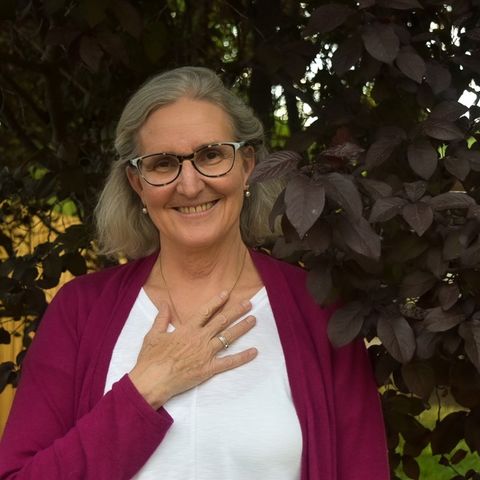
My name is Banu Joy Harrison and I'll be guiding you through the orienting practice,
A simple but profound practice for bringing yourself back to the present moment.
This exercise originates from Peter Levine's Somatic Experiencing Trauma work.
When we are overwhelmed or experiencing a trauma trigger,
Our attention is hijacked into the past or the future.
We can suddenly experience difficult sensations such as a pounding heart,
Irregular breathing,
Muscle tightness,
Or a disconnect from our body.
In addition,
We may experience racing thoughts,
A blank mind,
Or a range of emotions.
The storyline of what did or what will happen to us can also consume our full attention.
This orienting practice can help bring us back to the present moment through using our five senses with gentle movement,
Activating our vagus nerve,
And helping us calm and settle into the present moment.
So let's begin.
You can practice orienting in any position,
Sitting,
Standing,
Or lying down.
You can also take breaks from this practice when you feel saturated.
First,
Become aware of where you are.
Using your eyes,
Become curious about the room or the space you're in.
Slowly turn your head and move your eyes to notice your entire space.
What are you aware of?
If the entire space you're in feels too big,
Narrow your attention a bit to one smaller area.
Are there familiar objects such as pictures,
Plants,
Or furniture?
Perhaps you are outside and noticing grass or trees,
People,
Buildings,
Or vehicles.
Slowly moving your eyes,
Head,
And neck are important components of this orienting practice as it activates the vagus rest and digest nerve.
What are the colors,
Shapes,
Or textures of what you're seeing?
Are there objects that are pleasant to look at?
If you find yourself in a new environment right now,
Is there something that catches your attention,
Some beauty or detail that you can notice?
Perhaps you see an unusual cloud formation or notice a beautiful shade of green in a plant nearby.
Or you may see someone smile.
As you do this orienting practice,
What are you noticing in your body,
Your mind,
Or your emotions?
Does your breath come a bit easier,
Are your thoughts slowing down just a bit?
If thoughts or judgments about what you are looking at arise,
That's okay.
We are habituated to assess our likes and dislikes of what we experience.
Things like,
I don't like that color,
Or I wonder who thought to put the chair in that corner are judgments that may naturally arise.
If you acknowledge this process,
Then gently return your attention to noticing your environment with curiosity.
If you notice an increase in tension or vigilance as you orient to your environment,
See if you can soften your gaze or even take a break from this practice.
It takes time to help our system shift from being vigilant to becoming curious.
Give yourself short practice periods and pace yourself with kindness.
Returning your attention to your environment,
Feel the sensation of the chair or bed you are in or the ground you're standing on.
Is it soft or hard?
You may notice the temperature of the air on your skin or the uneven surface of the earth you're standing on or different smells in your environment.
As you expand your orienting to all five senses,
Find some adjectives that accurately describe your sensations.
Soft,
Fluffy,
Bumpy,
Hot,
Loud,
Spiky,
And so on.
Become aware of any sounds that may be present.
Let these sounds just be there.
Perhaps the wind is blowing,
A clock ticking,
Neighborhood children laughing,
Or maybe a train is going by.
You can also orient through touch,
Moving your fingers or hand over the texture of your clothes,
Noticing softness,
Ridges,
Or thickness,
Or perhaps feeling the sensation of a rock or object in your hand,
Perceiving temperature,
Weight,
Or density.
Continue to slowly attend to the space that you're inhabiting,
Gently turning your head,
Opening your senses,
And moving your eyes to look above,
Below,
And around with simple,
Gentle curiosity.
As we bring this practice to a close,
Take a moment to notice if you feel different than when you began.
How is your breath now?
What are you noticing in your body?
You can practice orienting for a short time or longer.
You can practice orienting in any environment,
On the bus,
The train,
Walking down the street,
At home,
At work,
Whatever feels best to you in any moment.
Just know that by using your five senses with gentle head and eye movements,
Along with curiosity,
Helps you know exactly where you are right now.
Thank you so much for practicing with me today.