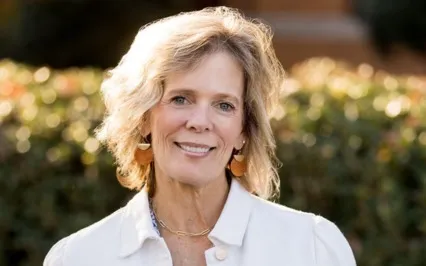
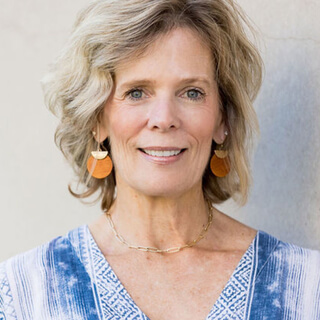
McConaughey and Jake McDonald from the PB Project with us this evening.
And I'm going to show you something just briefly as we pick off our conversation with them sharing my screen just real fast here.
Jake McDonald,
Yes,
One moment.
And actually a good housekeeping for the moment is if you do have your audio on,
If you can,
If you can mute that for us,
That would be amazing.
But just to get started here,
I want to show,
I just,
I'm not having slideshow mode because I don't have the techno quick hand to show you that.
But the first slide I have up is just really a couple of the key players who helped get this PB Project off the ground and showing up here in the top left corner on my screen is Alex Peavy,
Who is the founder of this process and this organization.
And our two guests will talk a little bit more,
But Alex Peavy is a deep friend of CKG Foundation.
And I'm happy to call him and lucky to call him a personal friend as well.
Among many other accolades,
One thing that stands out for people from Richmond is that he has been the director of mindfulness operations for the VCU Rams basketball team.
And if there's one place these skills can show up pretty quickly,
It's on the court or on just about any playing field.
But I'm going to use that metaphorically because there's so many places in life where the playing field where mindfulness comes in to help direct you to have your best outing and your best experience,
Whether it's a conversation,
A match,
A game,
A project,
Or just being kind to yourself.
So Alex Peavy is the founder of and who we're named for.
Just got a couple of VCU Rams up there.
And then of course,
Our friends,
Colin and Jake down with us as well.
And I just showing you this next slide because they are all over the place.
This is just a little collage of places that they've been heavy hitting athletic programs from colleges all over the country.
I think they're on a streak to 100 teams or groups that they've worked with.
But they span the sectors from athletics and schools and kids and teens to the corporate environment and just so many different kinds of environments where mindfulness is appropriate.
If you have a mind,
If you live a life,
Mindfulness will work for you.
There'll be something there for you to take.
And so just showing a little bit about how they really are everywhere.
But tonight we get them here and y'all it's a treat.
I can't tell you how thrilled I am to be in company with these two gentlemen.
And before we just really kick off the conversation,
I would love it if each of you would just say a word of welcome and a little bit about why you're why in the space of this work and just being here with us tonight.
And I'll just pitch it over to Jake to get started.
Cool.
Well,
Claire,
Thank you so much for having us.
We are huge fans of CKG and all you have done and continue to do.
So this is a real honor for us.
My personal why is really Alex.
That is,
You know,
He's kind of the person that made mindfulness really accessible,
Really practical.
And it's really been I think I might have snuck in the side door of mindfulness in graduate school.
I tried to study the flow state in this peak performance when you're thinking,
Feeling,
Performing your best and in playing lacrosse in college.
It would just seem like this elusive thing where sometimes you're feeling great.
Sometimes the game is coming easy to you.
Other times it's hard.
It's like you're playing in sand.
So I was really trying to learn this and understand this.
And then in 2015,
When my wife and I moved to Richmond,
I had a chance to work with Alex at the collegiate school.
And that's where Colin,
Alex and I linked up and his ability.
I think I'd heard the word mindfulness a bunch like 2012,
2013.
I've been like,
Oh,
Yeah.
All right.
There's that word.
But in 2015,
Alex's ability to be like,
OK,
There's a tangible toolbox that you can use and apply to bring a sense of clarity and a sense of calm to the most chaotic environments.
And so we basically got a masterclass of like seeing how to make this tool in this practice really accessible in the world of education.
And that's where Colin and I have been really for the past 10 years.
So as teachers,
As coaches and just continue to be students and just staying curious of like,
All right,
Well,
What you know,
How is our practice going to evolve and how can we get more effective and maximize our impact on others?
So that's really been the game for us.
And to see him teach children of like,
Hey,
This is a tool you can use when you're nervous for a wrestling match and to see them like understand that and get confident.
That's so cool.
But then in 2017,
When Alex gets his first cancer diagnosis and he's given days to live,
His same mindfulness practice that he was teaching kids to use on the wrestling mat was just brought to the forefront.
And so that ability to refocus on like,
What's important now,
How do I want to show up for my family?
How do I want to show up for myself?
And how can I choose joy in this moment?
That's where this kind of mission started is just in awe and inspiration of just like,
Man,
This is powerful.
And so I think,
You know,
Anybody that's ever been in the same room as Alex has definitely had that experience of like,
Man,
I want some of what that guy's got.
That was really,
We were just like,
We were just super fortunate to have that experience.
And so I'll kick it over to Colin,
Who will tell you a little bit about kind of where all of our paths cross and what brought him here.
Absolutely.
Claire and Sarah,
It's been,
We just want to firstly say thank you guys and CKG for what y'all do.
We couldn't be bigger fans of y'all's mission and what y'all have done in the Richmond community and beyond.
We're grateful to be here today and be able to talk about mindfulness in conjunction with y'all's work that y'all been doing for years.
But Jake hit it on the head or collective wise,
Alex,
There is no mindfulness in my life without meeting Alex.
I got hired on at the collegiate school in 2012,
Shortly after I graduated from the University of Richmond,
Where I played football,
I majored in business,
And also was a certified strength coach at the time.
So I got hired on at Richmond to coach football,
Be a strength coach,
Run the summer programs.
And when I got there,
Obviously,
I'm in the weight room,
I'm on the football field,
And everyone's like,
You need to meet Alex Peavy,
You would absolutely love Alex.
So they kind of told me a little bit about mindfulness what it was to me coming out,
Being a college football player,
I was a middle linebacker,
I was like,
This sounds really fluffy.
And I'm not sure if it is for me.
And when I met Alex,
Jake hit it on the head,
His ability to take mindfulness,
Which we say has had the worst marketing strategy in the history of marketing strategies in our country,
Right?
It was always someone crisscross applesauce on the side of a mountain and a loincloth,
Which just so much of our society can't see themselves in those pictures.
And I say 10 years later,
Like,
Yeah,
You let me go to the side of a mountain,
I'd love to,
If I had a week to do it.
But we've got three young kids,
And it's just just not the reality.
So we got to basically have a masterclass and learn mindfulness from Alex,
See him teach it.
And we said,
Alex,
Write down every certification and training that you would go through.
And he did.
And Jake and I just over the years with with the help of collegiate school as well,
We went through every single one of them.
And the mission for me was kind of twofold.
I knew coming out of college,
Like sleep,
Exercise,
Nutrition,
We've all been preached the importance of those,
Right,
Because of the scientific research that's back in those,
But I was never taught coming out of college,
How to take care of,
You know,
The mental performance side of it,
The mental health side of athletics of life in general.
And I am,
You know,
Personal story,
I lost my oldest brother when I was 19,
Who had battled some mental health issues,
Died by suicide as well,
When I was 19.
And when I met Alex,
I was kind of dealing with that I was processing it later on.
And mindfulness and Alex were such an avenue to allow me to create some space to work with what was going on.
And I'll tell you,
I had no idea what was going on.
It was not something,
You know,
Growing up the youngest of three boys,
It was not,
Hey,
Sit and work with your emotions.
And if you're sad,
Like,
Let's process sadness,
Let's process anxiety,
Or whatever it may have been.
And working with Alex and coming to a mindfulness practice was like a release valve for me,
It opened up so much that has allowed me to,
I truly believe,
Be a better husband,
Be a better father,
Be a better coach.
And as I coach over at collegiate for us,
You know,
I,
We talk about the big four a lot.
We talk about sleep,
We talk about exercise nutrition,
But we also talk about mindfulness,
Those four to us lead to health and performance.
And we stopped at four,
Because you could keep going on forever.
But number five,
For us is,
You know,
What's your social life look like?
Who are you hanging out with,
You have some outlets,
Where you feel connected to your friends to the community as well.
So those were my whys with mindfulness,
But it all comes back to Alex.
And we're so fortunate to have him in our lives,
To just be blessed to be around him on a daily basis.
And anytime we have the chance to meet with and talk with him,
We're sponges to this day,
We soak it all up.
And he is just such a wonderful person.
And we're so grateful to have him in our lives.
And we're fortunate to be able to live this mission and go out and honor him with the work that we do.
Well,
Thank you both.
That's a beautiful and very clear way to see and we can understand how you got here.
And just as a little,
You know,
Plan on the conversation tonight,
Let everyone know that,
You know,
We'd like you to participate and,
And write in the chat or write in the chat,
Sarah will be managing that.
And a little just a moment about,
About Alex,
Too.
He has helped us for a number of years putting together our mindful Mondays and some other things,
But it's more than just the techniques and the practice.
It's the way he lives it himself.
And I remember asking him as I was also getting started in this work and had garnered several certifications,
And I was going to the best enrichment,
That's Alex Peavy and asking him,
You know,
What,
How long do you spend a day,
You know,
In your practice?
And he literally didn't understand the question because he came,
He said,
Claire,
It's the way I am.
It's the way you are.
And you're not,
You're not born this way.
Well,
You know,
We typically have to find our way to mindfulness.
And tonight with the help of Colin and Jake,
We're going to,
We're going to all find our way to learning more about what in the world is it,
What's the science behind it.
I like a lot of data just to,
To solidify and affirm the reason for investing into maybe an area that doesn't feel comfortable for me.
And then it's just,
It's just the personal experiences and the outcomes and,
And the way things shift in your life in every area,
As you consistently learn and try out new ways to bring mindfulness in.
Our gentleman said this evening about four things they focus on and boy,
It's such a good,
Good way to,
To tell this just short descriptor.
And that is that Steve Kerr of the Golden State Warriors required four things of his team.
And the four things were joy.
He required that they own the fact they chose basketball as their vocation and their life life's work.
So joy,
They,
He requires compassion.
And that means that,
You know,
Whether you win or lose a game,
A million little things came to that moment and the winning shot doesn't really belong to the person who threw it in the basket.
It really belongs to everybody.
So that's that teamwork.
So the other one is competition.
There's a vest and a verb to want to be better.
That's the performance aspect.
And the fourth thing is mindfulness.
And he,
He requires his,
His players to go through a rigorous amount of practicing and training.
And a lot of what Alex brought to VCU came from that,
That sort of platform.
And and so it's a key component to varying different places that we interact in our own lives.
And I'm just so happy that Alex also mentioned that he was a surfer,
Is a surfer,
Loves the water,
Loves to be in the ocean.
And there's a famous quote.
I don't think it's Jon Kabat-Zinn,
Who of course is sort of brought,
You know,
Mindfulness to the West in the early seventies,
But it's,
It's you can't stop the waves,
But you can learn to surf.
And what mindfulness is really is your surfboard.
It's your surfboard of life.
And and so tonight I hope we're going to build a little surfboard together and talk talk some about where it's applicable in and out of the waves and how it's just a way to live more deeply and fully,
Even if maybe you're not in a time where crisis is,
Is,
Is happening at a,
At a fast pace for you.
So that's,
That's really a lot about Alex's approach and how he inspired and had and continues to inspire so many of us in the space of mental health and,
And just having agency over things that we can control in a chaotic,
Crazy world and a very busy lives that we all have.
So so welcome.
And,
And these are our why's and we're,
We're happy to have us here.
So I thought maybe I know that the PV project has a cool approach to bring in these concepts,
One that's shorter than most,
You have sort of a four part series as an intro.
I wonder if you could just kind of outline how you are bringing this to your audiences who probably most of the time don't have a lot of experience in the space of these practices,
But sometimes do.
So we have to approach this with a beginner's mind,
Whether you've done it before or not.
And so I wonder if the two of you just riffing off of each other,
Just,
You know,
Go,
Go for it.
Tell us about your program and what those four components are or what happens in the four part series.
And let's just,
Let's just talk,
Let's chat about this and let's do a couple of practices as we go.
Love it.
Absolutely.
Yeah.
Jake,
Go ahead.
Hit start,
Start with the mindfulness boot camp.
Yeah.
So our,
Our initial approach is really just demystifying any preconceived notions about what they think mindfulness is.
So as Colin alluded to,
If someone thinks you like have to be in nature or you have to be sitting crisscross applesauce,
Right?
I think to demystify is kind of step one and to bring maximum clarity to like,
What is this practice?
Like,
What is this?
And we'll define now.
So it's really just paying attention to what's going on in this moment internally.
So what's going on within my bodily body,
What's going on within my mind.
So where's my thinking,
How is my body responding?
Cause our body is always kind of processing some semblance of an emotion.
So it could be someone's grit our teeth,
Squint our eyebrows,
Carry our shoulders up and have maybe have tightness in the chest.
Right?
So paying attention to what's going on internally and externally with an attitude of curiosity and kindness and curiosity is really kind of seeking to understand it's not feeling like we have to have everything figured out all the time.
It's a willingness to be totally open to what's going on and getting a little bit curious about ourselves and our circumstances.
Cause as we know that's constantly evolving and constantly changing and then kindness,
Because if we talk to our friends and family,
The way we talk to ourselves,
We wouldn't have any friends and our family would keep a very healthy distance.
And so we go through this practice of paying attention to what's going on practicing with these attitudes of curiosity and kindness.
So then we can choose our behavior and that's it.
It's that's it.
Right.
And understanding,
You know,
We're making anywhere from 3,
000 to 5,
000 decisions a day and just asking ourselves,
Like how many of those are an autopilot?
How much,
How many times are we really present for those decisions and these behaviors?
And what we'll realize is once we hit a certain age,
I think they estimate it like once you hit age 35,
Like most of your life is autopilot.
And so understanding that tendency and grounding ourselves,
That's why some people call it almost like waking up of just being really in tune.
So if I'm making all these decisions that impact me and sometimes they're the big four Colin talked about sleep,
Exercise,
Nutrition,
Mindfulness.
If we can be really intentional about making those sort of decisions,
Often we'll see a little bit of a trajectory shift and it's not this like super sexy change or like light switch that we hit.
That's just a magical transformation.
It's just through consistency.
We see like maybe like a one degree or a 1% shift,
Right?
We get 1% more aware,
More curious,
More kind and through practice and through consistency.
That's why we have a four session series we're able to really help mold it into becoming a habit.
And that's what you see in Alex is like,
It's a state for most people.
Like it's a state of being mindful,
Like,
Oh,
I'm at the beach and I feel the sand on my toes and the breeze.
And I hear the sounds or the sound of the waves crashing.
Like,
Yeah,
You're really in tune with what's going on.
That's awesome.
The more we practice and train that we see this transition,
Like we effectively rewire our brain,
Which Colin will tell you about in a second.
But that's where we rewire our brain to effectively go from a state to a tree.
It's like a little bit more ingrained and kind of like who we are.
And we are more likely to respond versus emotionally react.
And so that's really the framework.
And so our job is to give people as many tools as possible.
So different practices,
We'll do belly breathing,
We'll do a body scan,
We'll do box breathing.
We'll do a handful of different practices that we've learned throughout the years and just give them to people and just be like,
All right,
Let's run through this together.
And the goal is not for people to love every practice,
But to find like even one or two or three that they can use formally.
So creating time every day and then creating a few informal practices because we're not,
We don't always have the luxury to be like timeout,
Timeout.
I'm in a board meeting.
I'm actually going to meditate for five minutes.
It's like,
That work like that,
Right?
So life is on the go.
So how can we use these informal tools to drop into the moment?
So we can choose our behavior.
And so we can open up the door to bringing curiosity and kindness to this moment.
And I'll let Colin kind of build from there as to kind of where we go and how we roll.
Yeah.
So Jay gave us the long definition,
Right?
I like the,
I love that definition,
Right?
Paying attention on purpose in the present moment with non-judgmentally with an attitude of curiosity and kindness.
I think that for some people feels a lot and fluffy and a little ambiguous until you jump into it.
For me being the,
The,
The why guy,
I love the neuroscience behind this.
It's nothing more than awareness training.
I like to look at it as we're taking our brains to the gym.
We all know why we go to the gym,
What that does for us physically and mentally.
This practice does the exact same thing for our brain.
It's kind of like brain training,
Or you could look at it as creating a pause button.
All right.
If there's anybody on here who remembers the saved by the bell day,
Zach Morris,
Right?
He used to have the time out where it was,
Everything was going on and all heck was breaking loose around him.
Right.
And he had the ability to call time out and think through situations and then respond wisely.
That's what mindfulness allows us to do.
It gives us the awareness of what we need in this moment.
So we can serve ourselves,
Which we need to do first so that we can then serve those around us as well.
And as we get going the ideal situation for us,
When we go in and work with a team or a corporation is we get them over a four week period because this is habit development.
The world right now is not telling us to,
Hey,
Just go sit down and focus on your breath for a little bit.
When you have 10 minutes,
The world is telling us,
Hey,
Why do you have 10 minutes?
You need to add something to your plate,
Pick your phone up,
Check your email,
Answer your text message,
Do more and more and more.
We all know the rat race that we're kind of in.
So what we know is if we came in once and we saw an individual and then they left,
They may see a benefit from practicing with us over 10 minutes.
You do notice the kind of immediate benefit,
But it's not a habit.
And then when you walk back out into the real world,
It's not something you pick back up immediately.
So we'd love to see folks four times over four weeks,
Because that kind of 28 days allows us to kind of build a habit with any group or individual we're working with.
And session one for us is kind of laying the foundation,
What mindfulness is,
The who,
What,
Why,
When,
Where,
How of it.
And then we give up,
Then we give everybody some practices.
Session two,
We start talking about the neuroscience.
I think that's the sales pitch this day and age.
Why would I do it?
There's 40 years worth of scientific data,
Right?
That is showing the benefits of this practice.
So we get into that a good amount in session two.
Session three,
We start talking about mindfulness of thoughts.
We have roughly 60 to 70,
000 thoughts per day,
Which is a lot,
Obviously.
And most folks think with mindfulness,
Like I can't practice mindfulness.
Like I have too many thoughts or like I can't blank my mind out.
And it's like,
Well,
If you blank your mind out,
You're going to be dead.
We don't want that to be the case.
Your mind's never going to be blanked out.
It's good that your mind is producing thoughts.
That's its job.
Let's bring awareness to it.
Understand when our attention is wandering and go into thoughts of these what if scenarios that we can't control.
And when we notice our minds drift away,
We can bring it back and we can choose a different thought.
That's what mindfulness allows us to do.
And we use this quote so often,
Like one of our greatest weapons against stress is our ability to choose one thought over another.
All right.
And what they say is we spend roughly 30% of our time in the present moment.
The other 30% would be in the past,
30 to 40% in the past,
Thinking about things that have happened.
The other 30 to 40% in the future,
Which leaves the 30 for this present moment.
But in the present moment,
It's the only moment where we can experience joy,
Where we can make an impact right now.
So mindfulness allows us to come back.
And then the fourth session,
We start talking about emotions.
And for us,
That's probably one of what we consider are more important presentations.
Especially with the males that we grow up,
We work a lot with student athletes and young males and even adult males just not understanding that it's okay that we experience emotions.
And that's not just males,
But it is everybody.
But understanding that if you're a human,
You experience the good,
The bad,
The ugly when it comes to emotions.
We all experience happiness and joy.
We don't worry too much about folks experience happiness and joy.
We're all good in those situations.
But fear,
Anxiety,
Sadness,
That's a part of all of us as well.
How do we understand that that emotion is going on?
How do we bring awareness to it so that we can do something productive for ourselves,
Allow that emotion to work itself out,
And to handle the emotion?
And again,
I'll go back to my story that I talked about a while ago,
I didn't understand how to how to work with emotions such as fear and anxiety as they were coming up.
And what we know is if you don't work with emotions,
They're going to come back at some point.
And if you fight emotions,
They're going to come back a little bit stronger as well.
So we really love the opportunity to talk about emotions and just kind of creating some common humanity around those.
So that's kind of our four session mindfulness boot camp.
And the hope is that,
You know,
Through the practices,
We create some form of habit where we're sitting and we're meditating some,
But we're also able to just bring mindfulness to any moment throughout our day where we can drop in and experience a little joy and just experience the wonderful things that are going on in life.
Yeah,
I think that's really,
Really interesting and a very well,
Very directly expressed way to talk about what all of this is.
And when you talk about mindfulness of thought and awareness of thought,
So to speak,
I think what teens suffer with a lot is drama,
And and things that they assume are being said about them or things that they are not included in or,
Or are included in whatever those,
Those kinds of situations are.
And it can be in any kind of environment,
But in the space where they're feeling a lot of stress about isolation or not connecting and all of that,
It's,
It's well,
Let me let me go back and rewind a bit.
What is happening right now?
You know,
I've got all the air I need to breathe.
I have my basic needs are being met in this moment.
So I'm safe.
I mean,
That's always a number one,
You know,
We've got to make sure we're feeling that safety.
And I know the biology of this,
I'd like to jump,
Jump toward that in just a second.
But I think for teens,
There's a lot of,
Of unnecessary anxiety.
Life is hard,
Stress belongs in life,
Because life is hard.
It's just,
It's part of this being human gift that we have.
But there are things that are unnecessarily robbing our brains hijacking those thoughts.
And if we can go in early,
Yeah.
And do this with Yeah,
If we if we can incorporate you into our,
You know,
Your thoughts and your process into the teen development space,
There'll be that it's that habit that takes them right through,
You know,
It doesn't mean life will be easy,
But life will be less complicated and unnecessary anxiety.
And so I feel like all of this is so appropriate.
And it's about languaging it just right to the audience,
You know,
Because we know the basics of these concepts.
And we know how powerful they're they're truly ancient count concepts that come to us in 2023,
In a really creative way.
But I wonder if we could just for a moment,
Talk about,
You know,
What happens literally in that moment in the body and in,
In your countenance when when you're in practice,
Or have practiced or what are those physiologic benefits of incorporating these practices on a regular basis?
Yeah,
Absolutely.
I'm Jake,
I'm happy to jump in and you follow up here.
What I said earlier,
There's roughly 40 years of research into this.
And what we know over time with practice,
Consistent practice,
This has led to decrease in stress and anxiety,
It enhances our health.
They've done study after study,
They inject folks with an active flu virus,
And folks with a mindfulness practice on average heal two days faster,
Which is unbelievable.
It helps with the aging process,
Our brain,
I like to look at it as almost a muscle,
Right?
They've done studies,
Steve Jobs was one of them,
They studied his brain after he passed away.
And because he had a mindfulness practice,
They said,
On average,
His brain was roughly eight to 10 years younger than that of his age because of his practice.
It allows us to sleep better.
It allows us to understand our emotions and regulate our emotions a little bit better.
It doesn't mean we're not going to have emotions,
But it allows us to work with them a little bit better as well.
And the list kind of goes on.
And what I like to say is if mindfulness were a pill with no side effects,
I think the entire world would want to have a lifetime supply,
Right?
But how we see the benefits is through the actual practice.
And what we know is that when we sit and we go to our breath with a formal mindfulness practice or a meditation,
What we start to see is a decrease in our stress or decrease in our heart rate initially,
Because as we take deep breaths,
There's a direct path from our belly.
When we take a proper deep breath down into our belly and we let it expand like a balloon,
We kind of push that diaphragm out,
Get some oxygen down there.
But there's that nerve that runs from our belly to the base of our brain called our vagus nerve that is directly responsible for activating our parasympathetic nervous response,
Which is our rest and our digest.
So what we know is that when we go to some deep breaths,
We immediately start to feel a little bit more settled.
So if we're stressed out,
We're anxious a little bit and we work with so many student athletes.
So whether it be before a test,
A game or to be,
You know,
You're getting ready to walk into a big sales presentation,
Whatever it may be,
Being able to remind ourself to stop,
Stop what you're doing,
Take a deep breath,
Observe,
Proceed.
That's the acronym we give and go to a few deep breaths.
It drops us into this moment,
It settles us down,
And then it activates the part of our brain,
The most recently developed part of our brain,
Our prefrontal cortex,
Which is involved with being here in this moment right now,
Allowing us to pay attention.
It gets our hippocampus back online,
Which allows us to recall the information that we've stored.
We like to say this is coined by Dan Siegel,
Right,
Who is out in UCLA,
A doctor out there,
But the prefrontal cortex online with the hippocampus are our wise leaders.
They allow us to pay attention,
Be here in this moment and recall all the information we need for honestly any performance that we may have.
Whether you're,
You know,
At work,
You've got to recall information,
You're taking a test,
You're on a playing field.
So those are some of the kind of neurological things that we see.
And with repeated practice,
What we know is that prefrontal cortex actually stays online more.
It actually gets thicker,
Like it's a muscle that's gotten stronger.
The amygdala,
That emotional part of our brain that goes off,
It used to go off when tigers were running around and it was life and death situations,
But now it goes off before performances,
Right?
We get test anxiety,
Pre-test anxiety or whatever the performance may be.
And the practice allows us to downregulate that emotional part of our brain so that it doesn't go off when it doesn't need to.
And Claire,
What you were hitting on earlier with our young adults this day and age or our teenagers is the number one thing that creates the emotional response this day and age is the fear of other people's opinions.
And what we know about that is that's not life or death.
That's a what if situation.
That's a thought process that creates that strong anxiety.
So being able to recognize that,
Come back to the breath,
Come back to this moment,
I immediately have the ability to settle my body down a little bit.
But Jake,
Feel free to add to that.
The only thing I'd add is it's also good to provide context to our default wiring system of how we're all wired.
So Colin hit it on the head.
We've got 60 to 70,
000 thoughts per day,
And those are not facts.
Those thoughts,
Sometimes they feel very real,
But that's not a fact.
And so understanding that is really helpful for a lot of folks because our brain is just a professional storyteller.
It just gets one piece of information,
Another,
And tries to link them up.
But we also talk about the negativity bias,
Where it's like on a five to one ratio,
We experience our lives and we kind of drench these stories about ourselves,
Other people and our circumstances in negativity,
Again,
On a five to one ratio.
And so thinking about,
I had the luxury of teaching a super easy class in high school where I gave out a bunch of 98s and 99s.
Claire,
What do you think the response was when I would give out a bunch of 99s?
Maybe,
I don't know.
I can't think of what it might be.
They were basically were like,
We're going to war.
They're like,
Where's that one point?
And they say,
That's your negativity bias.
And all that is,
Is like,
We could have the best day ever.
You can have 59 minutes after an hour that are incredible.
And if one thing goes wrong,
Our brain's going to Velcro to that one minute,
Five times stronger than the other 59.
And that's just how we're all wired.
And so understanding that like when we all lived in the woods and you hear something moving in a bush,
If you assumed it was a tiger,
You could probably survive and run away and pass on your genes.
If you wait around to figure out what's going on,
Often that didn't benefit you.
So to assume the worst in yourself,
Others in the situation is such a deep seated part of our brain.
And it's good to know that it's like,
Oh man.
All right.
So I'm not just this negative Nancy.
Like that's common.
Like that's how we're all wired.
What we now know is through consistent gratitude practice.
We do this Thanksgiving,
Right?
Make Thanksgiving every day because what we found is consistent gratitude practice will effectively level us up.
So if we are thinking five to one negative to positive through consistency and an easy practice for us to take is three things you're grateful for and why for 90 days and you can't repeat.
So you're going to go through a friend's family and guacamole really quickly.
So then we really got to find something else for the other 89 days.
But through that practice,
We just get to this state of clarity where we,
Yes,
We can still see the problems and the challenges.
Those don't disappear and get replaced with rainbows.
That doesn't happen.
But we also see more clearly the moments of awe and the moments of joy that are constantly around us.
And so through that practice,
You're going to hear practice and consistency a ton because that's what it is,
Right?
As Colin said,
It's training the brain.
And we know with the body,
You can't go,
You can't go lift once a month and expect our body to change.
So we do have to be consistent.
So gratitude and mindfulness are very two practices that go hand in hand and mesh very nicely.
They do.
And I'm struck by the notion that our bodies are very wise and all of the stress and things that have happened over time and the cortisol and the amygdala and all the things that happen in those moments of stress,
The headache,
The tummy hurts,
Or the contracted muscles,
The things that are happening when we,
You mentioned as we evolved out of caves and into homes and from hunting for our food to Wegmans,
Our bodies didn't really,
They weren't wise to Wegmans,
But they're wise in protecting us,
Right?
And so for us to have almost an awe about that,
Or knowing that my digestion has been slowed because if I needed to escape a certain environment,
I'd have all the blood flow to my extremities.
I could run,
I could do the things.
And so it's not our enemy,
Our bodies and those anxiety feelings are not,
But this is what makes us human is we are sentient beings,
Right?
So we can understand and have a moment to kind of regulate and work on those systems that are activated in moments of stress.
And I actually,
I think I was at St.
Christopher's a few years ago doing a mindfulness delivery and I did not know I had a cross country coach in the session.
And I was talking about,
The heart rate slows down with the extended exhale,
The things that are offshoots of what you guys have already said.
And I didn't realize that I had this gentleman using his Fitbit to test me and to see if in fact he could believe that after a number of breaths and sure enough,
He did,
He raised his hand at the end and I said,
He's like,
My heart rate was this,
Now my heart rate is this.
So there are rescue moments,
There are rescue things like the breathing and that do have that immediate biologic loop that comes into a place,
Like you say,
Of stasis.
And also I think that's really good for teens and families to know that the breath as a consistent practice will help level and regulate our approach to anxiety.
But even in the moment we can't help it,
There are these things that down regulate the systems in our bodies.
And I think that is just brilliant.
And we would be silly not to learn more about this so we can take that quick action into these practices.
So as we,
You know,
We're coming up on about 20 minutes left,
I wish we had two days with you and we'll do that another time.
We're going to hopefully have you come train our staff in your style and your approach.
And I'm very excited about that.
But I wonder if we could talk about,
We could do a practice.
I don't know if you want to say that toward the end and that would be fine as well.
And then talking a little bit about what's out there in the world that people can hold on to,
Who's doing it?
You know,
Where are we seeing it?
And maybe from that influencer place.
I know lots of people are,
You know,
Talking about this,
But,
You know,
You mentioned Steve Jobs and there's,
You know,
There's lots of people that just have experienced the benefits of their own practice.
And if you can just kind of riff a little on who you know,
What you know in your own life on anecdotally,
How has it shifted a few things?
I know that Alex,
Just to bring it back to our dear friend,
He said,
You know,
Before he uses doorways as a way to reset,
You know,
That's his mindfulness bell in the day is to say he will leave,
You know,
His thoughts and emotions from a current and then walk toward whatever he's,
He will be present with.
And it's a gift to the people around him.
We've all said,
If you've been around him,
You know,
The magic of Alex and,
And it's because of these,
These practices and how he's just made them part of who he is.
So as,
As who you are and obviously passionate and very,
Very skilled,
I wonder if you could give us a little more about that real life scene on how it shows up maybe for you or for others that all of us might know in the world of 2023 that,
That you could tell us about.
Sure.
So I'll actually,
Yeah,
I'm going to read you a quote.
This is from LeBron James.
He broke the all time scoring record in the NBA yesterday,
Maybe two years ago.
He broke,
He broke this record.
And so one of the questions he got is like,
Okay,
How do you stay mentally fit?
He got asked about his physical fitness and he went through that.
He talked about the importance of sleep,
Eating well,
Stretching,
But he said,
What does it mean to be mentally fit?
It means presence.
No matter what I'm doing,
My attention is locked in.
It means awareness.
I can see my surroundings with clarity and I can calculate my options.
It means calm and composure in those big moments when the pressure is on.
It means resilience.
I face a setback and I show up fresh to the next game,
The next quarter,
The next possession.
And you're not playing professional basketball if you're listening to this,
But you do have carpool and you do have all these challenges that go on.
And so to understand how we can use this exact same tool that's leveraging peak performance,
You're called to perform thousands of times per day.
And so if we can be really aware,
Curious,
Kind,
But intentional about how we show up for those moments for ourselves and for others,
That's where we,
That's where you can feel most authentic.
That's where you can feel most effective.
So that's an easy one that comes to mind.
I mean,
Colin,
We can,
We can rattle a ton like every top tier athlete you've ever seen.
So like ranging from Tom Brady to Patrick Mahomes to Seth Curry to Michael Jordan,
To Kobe Bryant,
The CEO of Google,
Kendrick Lamar,
Dr.
Dre.
Yeah,
We can,
Most folks that are operating at a very high level have some semblance of a reflection or meditation practice.
That's what,
That's what we are finding more and more is like,
It's really tough to not be at an elite level and not be really proactive in training your brain and practicing proven tools to enhance your mental health.
And Claire for us,
It's so awesome that those guys are coming to the forefront to talk about it because when we go and work with athletes and we're letting them know,
Like we come in and yeah,
We were former college athletes and now we're coaches and doing what we do.
So us saying it to them is one thing,
Right?
Talking about mindfulness and the benefits,
But to be able to talk about LeBron,
Kobe,
Michael Jordan,
These awesome figures,
It just,
It resonates on a completely different level and whatever walk of life you're in right now,
You can find folks who are using mindfulness,
But I'll bring it down to just our level right now,
Right?
We have three young kids.
I will tell you,
Mindfulness allows us to get our three young kids out of the house in the morning with some peace and calm and me not feeling like I'm getting ready to explode as we're trying to find tennis shoes and make sure everybody's teeth are brushed and they've got their book bags packed and their lunches are good to go.
Mindfulness allows me as well when I'm at work,
Whether I'm coaching or whatever it may be I'm doing to be fully present for the people that are there.
But I will say maybe most importantly is mindfulness allows me to park my car outside of my house,
Take a deep breath,
Bring some present moment awareness to me,
Getting ready to walk back into the door to the most important people in my life who are my kids and my wife and be there for them when that's what the moment ask of me and not to bring the rest of the day with me to maybe put this phone down which is constantly calling at us to do more and more and more.
So you see it absolutely everywhere and mindfulness,
You know,
Philip and Kay Davidson in the Richmond area are two of just the greatest teachers that we've had a chance to be around.
And besides Alex,
Philips and Kay and Susan Wilkes who you mentioned earlier and what Philip I just it's etched in my brain.
He said,
There's nothing that you can't bring mindfulness to that doesn't make that experience a little bit better,
Right?
Because you're fully present for it,
Whether it's the good,
The bad,
The ugly in that situation right there,
But you are fully present for it.
You can take on what's in front of you.
If it's joy,
Go experience joy.
If it's a tough moment,
Don't make it tougher than it needs to be,
Which we're really good at doing,
Right?
Life is hard and we do a really good job of making it harder based off of our decisions.
Mindfulness allows us to reduce stress.
We're not going to ever eliminate all of it.
Life is tough.
We experience stress,
But we can absolutely reduce it by the decisions and the choices we make throughout the day.
And if we're called to respond 3000 to 5000 times a day,
What a wonderful opportunity to choose the less stressful response and the more stressful response.
So for anyone out there,
Whatever you're doing,
Mindfulness in any moment just increases the moment is the reality of it.
Yeah.
Good.
Well,
I have two final questions that I think will be fun to answer before we do a practice.
And maybe if there are some live questions we could take,
And if not,
We'll just go to some announcements.
But one is,
I'm sold,
I've been sold for a decade,
But tonight maybe there's some new people.
Why do people stop?
That's number one.
Why do people not like it if it's so good?
And what is the solution to stopping and having potentially a not fun experience with it or not beneficial early?
Like what is the anchor for the process and people that say,
I got it.
I believe these gentlemen,
I believe the data.
If we can speak to that,
Why people don't like it,
Why they stop and what would we say to solve that experience?
Yeah,
For sure.
Jake,
Jake,
You want to go ahead?
So often we find a practice that's not very comfortable or not very intuitive and we assume that that's it.
And we're like,
This isn't for me.
Right.
Or we overlook the information we talked about earlier where we do have a negativity bias and we do have 70,
000 thoughts.
So if you're paying attention just to one thing and your brain is going everywhere,
Which that's its job,
And you don't know that,
You don't know that like that's part of the game.
It's very easy to be like,
I suck at this.
I'm terrible at this.
Right.
But through this information,
I think that's the difference between what we do versus like an app is an app doesn't always tell you where it's like,
Hey,
If you're having a ton of thoughts,
That's very normal.
Right.
Or in a meditation,
Hey,
We're to focus on the breath.
If the attention hasn't wandered already,
It will.
And that's okay.
Right.
But it's finding them.
So for an example,
Belly breathing is one of my favorite practices for Colin.
It's body scan.
The breath is more elusive for him.
And we do a body scan.
The body scan is a little more elusive for me.
So there are going to be different practices that resonate differently with different people.
So to find a practice and to be open-minded,
To find the ones that work for you,
Whether they are more movement oriented,
We have walking meditation,
We have dynamic breathing,
Whether it is much more like anchoring our brain on something.
So box breathing where there's counting we have like a Gata,
Which is like a word meditation.
And so finding the practices that work for you and really viewing it as like a journey of like,
Okay,
I'm going to try to do this for the rest of my life.
Let's see if I can find some practices that I like that I feel like can meet me where I am.
And so that's maybe where we see people really just kind of like not like it or not enjoy it as they are still lurk looking for the practices that's right for them.
Why people drop off is plentiful.
Like life happens.
My practice gets derailed when we have COVID for the third time and we're stuck at home with the kids and like,
They've got the barf bug.
My practice every morning is like at five,
But if they get up at four 30,
It's tough.
Right.
I got to like find time or create time.
So life happens,
Which is why people drop off.
And then what we find is we don't judge ourselves or criticize ourselves in that moment.
The practice itself is just beginning again.
Your attention just wandered.
That's cool.
Let's begin again.
Hey,
You fell off for five days,
Whatever,
Let's begin again.
And so I think through that approach,
It's very,
It's a little bit loose.
There's no like perfection.
We're really big proponents of progression,
Not perfection.
If we can be a little bit better today or a little bit healthier.
Cool.
You don't have to be perfect.
Cause that's,
That's doesn't exist.
Does that answer your question?
Yeah,
It does.
It really does.
Thank you.
That I just,
I so know the benefits of this in my own life.
I mean,
Just today I was walking into our new office and had a million thoughts in my head and all I said,
You know what,
All I can do is walk from my car to the next doorway.
So I was just watching my foot fall,
Like one,
The other and one,
The other,
Just getting to the door.
And so that,
That really,
By the time I walked in,
I was not the,
You know,
Curled up stress bag.
I felt like I had been,
You know,
The whole drive in.
So those,
Those small things I'm like,
You know what?
I'm not perfect,
But I'm going to begin again.
I'm going to begin again.
Colin,
Do you have anything to add before we go to a practice?
I was just going to say the two,
The two that we get off and are,
I can't,
I can't stop my brain down.
I have too many thoughts.
And Jake already talked about that.
The reality is we do all have thoughts,
Right?
Our thoughts,
Our brain producing thoughts as we're trying to practice that failure,
As we see it allows us to succeed.
That's the beauty of it.
That is the practice.
The failure allows us to continue to come back again and again.
And the other one is this,
I don't have enough time.
And what we would say to that is one minute counts.
And the beauty of this practice,
The counter argument is for every minute that you put in,
Scientific studies are showing you get back about a minute and a half to two minutes because you're more focused,
You're more productive,
You're more calm throughout the day.
So what we like to say are that there are no negatives.
It's just,
How do I create a habit and continue to find ways to sit and implement this into my life?
Yeah,
Very good.
Thank you.
Just the patience and self-compassion and approaching with kindness,
You know,
That's an intentionality.
So it's really can be seen throughout all of it.
I wonder if before we kind of go to either some questions and some announcements,
If we could do a practice of your choosing for us auto experience.
Yeah,
I'd love to run us through just a deep belly breathing practice if that works here.
And what I'll do is I'll kind of give us some directions before we go in.
What we normally say is get into a dignified posture.
All that means is get comfortable.
I can't sit crisscross applesauce because I've had three hip surgeries and now have a metal hip.
So if you are sitting in a chair right now,
Just allow your feet to be flat on the floor.
You can cup your hands in your lap or rest them on your thighs.
What we like to say is a nice tight back and a soft front.
And then if you want to,
You can look down like you're reading a book just to take a little pressure off the neck,
Let the eyes close.
And what we're going to do is just notice where we experience the breath most vividly.
And if you can,
We're going to breathe through the nose and let it travel down into the belly.
And then we're just going to exhale again through the nose.
And you're just keeping your attention on wherever you notice the breath most vividly.
Again,
That could be at the base of your nostrils.
You may decide to follow the breath all the way down into the belly and out again.
What your notice is going to happen if it hasn't already is your mind is going to produce thoughts.
Your attention is going to wander away from the breath.
When it does,
You simply notice it has and you just gently bring your attention back to the breath.
As I like to say,
That's like getting a rep for your brain in the weight room every time that happens.
And we just continue to focus on the breath.
Now that our attention's on the breath,
What we're going to do is see if we can actually drive that breath down into the belly a little bit more now.
We'll do some deep belly breaths is what we call these.
So on the inhale,
You're going to breathe as comfortably as it is down into the belly and let it expand like a balloon.
And then on the exhale,
Just allow the stomach to contract back.
Through this process,
If we can exaggerate the exhale just a little bit longer than the inhale,
That initiates that relaxation response and allows us to settle down into this moment.
So our attention still is just on the breath and we're just seeing if we can get it down into the belly.
And you may notice that you're more of a chest breather and it's a little uncomfortable right now.
With practice,
We often find the ability to get the breath down into the belly and just continuing to stay with that breath for about 30 more seconds here.
And as always,
If the attention wanders away,
Just simply noticing it has and bringing it back is the entire practice.
And now what we'll do is just slowly start to bring some movement back to the body.
We can wiggle our fingers and toes,
Open our eyes when we're ready,
Maybe stretch out a little bit.
That is our breath awareness into our deep belly breathing practice.
And what we ask after that,
Claire,
With all of our groups is simply what you notice.
And what we often get with most folks is,
I feel a little bit calmer.
I feel a little bit more focused.
If they're a little tired,
Run down throughout the day,
I feel tired.
I feel like if I would have kept going,
I would have fallen asleep,
Which are all normal responses.
There is there isn't a right or wrong response to what you notice during a meditation.
But the beauty is that was roughly three minutes.
Most folks know pretty quickly,
Like,
I feel a little bit more settled.
I feel a little bit more calm.
I feel a little bit more patient,
Which is which is the beauty of this practice.
Well,
That was that was really experiential.
We get it,
You know,
We to have that experience and know that the body can respond with these practices.
And,
You know,
There's just so much hope in this work,
Because that just gives us a little agency amidst the chaos of our lives and the chaos of our situation,
Which sometimes we don't have control over,
But we do.
And in putting a habit together that that will assist us and,
And the science tells us that our experiences tell us that LeBron James tells us that,
You know,
We've got it,
We know we can.
And we just seek at CKG Foundation to bring to people,
You know,
Free practices that they can go to,
It's all about incorporating them into into their own lives so that they can show up a better parent,
A better student,
A better athlete,
Or even just a more present one.
And that to me was what I mean by better,
It's just being fully engaged in it in every moment.
I wonder,
Sarah,
If we had any questions,
Or if we wanted to open that I haven't been watching a chat,
I've been really focused on our guests.
But I wondered if if anybody did,
Or would like to type a question before we start to close down.
So far,
There,
You've answered all of them.
You have a couple shout outs here.
It sounds like there are a couple people in attendance that are familiar with you all and are going to be reaching out soon.
Awesome.
Yeah.
But thank you for walking us through that.
I think it's really important that,
You know,
Now everybody attending parents,
Caregivers have that to take away right and use with their teens right now.
So I think it's just awesome that that you guys can provide that.
And it's perfect.
I'm sorry,
No,
I'm done.
I was gonna say if it's okay,
Really quick that that's the formal practice.
If we can reiterate the informal practice that we love for folks to have throughout the day.
It's just the acronym stop.
And what I like to say and Jake says often and he knows I do I talk to myself throughout the day all the time.
And it's kind of to remind myself to be mindful.
And it's Colin stop and what the acronym is,
Stop what you're doing.
Take a nice deep belly breath,
Observe what's going on within you mind the thoughts,
The body,
The emotions and what's going on around me that gives me information.
And then with that information,
The P is proceed wisely.
Maybe I need to take a few more deep breaths.
Maybe I need to call somebody,
Maybe I need to go for a walk.
Or maybe it just drops me into the moment and I'm actually behind the wheel of my car and I'm paying attention.
So many of us get into the car,
Right and you drive 20 minutes and you're like,
How in the world did I get here?
I don't remember any of the drive.
But reminding ourself to stop brings clarity and presence to any and every moment.
So we just wanted to make sure folks have that tool as well.
Absolutely.
Yeah.
And,
And yeah,
If you're waiting in line,
If you're waiting in traffic,
Like all the in between moments,
That's where stop can fit in very intuitively.
And the more you practice it,
Uh,
You really can train yourself to like pause and just find the pause in between all those,
Like all the,
All the to do's.
Um,
And the more reps you get,
The better you get.
So dose dependent indeed.
Indeed,
Indeed.
Well,
What,
Um,
What a rich and very profound and helpful conversation,
Um,
You know,
Delivered by two gentlemen that are in the work and doing the work and seeing the results,
Um,
In the short and long-term when people take,
Take this on as a concept as part of their lives.
So we hope that this,
By offering this to our,
Um,
Through our portal and through our,
Our,
Um,
Organization that it'll just reach as many people as we can feel free anyone to please share the recording.
We're,
We're very,
Um,
Excited to send that out.
We,
We kind of use the conversations with CKG as a great way to support the caregivers of our teens,
But also teens as well.
I mean,
Sometimes we do have,
Um,
Teens hop on and,
And be a part of this,
But what you're told us has so much to do because as parents and as teachers or caregivers,
People that interact with teens quite a lot,
There's just another layer of protection happening in our own minds as we,
We interact and do the work of caring for people and just being able to slice through that for ourselves.
We can then show up,
Um,
Exactly as our,
Our people need us to be.
And without our own preconceptions,
We just say,
What's here,
What's now,
Who are you,
What are you saying?
I'd like to hear more.
And it's,
It just enriches relationships and,
Um,
It,
It helps in,
In so many ways.
Um,
And the good news is there's lots of tools and resources out there.
We'll,
We will have,
Um,
For those that,
That came on with us tonight,
There'll be a follow-up,
Um,
Summary email with some helpful resources,
Also a link to the PV project.
If you're interested in learning more,
Um,
At CKG foundation,
We,
Um,
Our,
Our,
Our race registration for the Speak of 5K is,
Is open just about all year.
Um,
We're,
We're doing a really,
A nice,
Um,
Price break for Valentine's day right now.
So,
Um,
You know,
Just be able to look out in our social media to engage with us in that way.
We also have a lot of,
Um,
Wonderful mental health education resources of which the PV project is a great partner and part of,
Um,
For us.
And so,
Um,
Sarah Jane Scoble has,
Um,
Directed and put together a wonderful,
Um,
Resource treasure chest for all that we have to offer.
And she would be the first point of contact for anyone that needs to know more about what we could do to help,
Help teens erase the stigma.
I think mindfulness is the perfect thing to erase the stigma because stigma is based on things that are not real,
You know,
Stigma comes because of assumptions.
And,
Um,
And so mindfulness is a perfect tool to erase stigma,
Just eradicate it.
Let's talk about what is happening and the best way would be through these great practices.
And,
And,
Um,
I'm thrilled and proud of CKG,
Proud to be here with all of you all.
And,
Um,
I think Sarah,
If you have some closing remarks or either the two of y'all,
We can close down the conversation.
There you go ahead.
Yeah.
Okay.
Let's say if you guys don't have anything to add,
Um,
I think Claire pretty much covered everything.
Um,
We recorded the conversation tonight,
So that'll be sent out,
Um,
Along with resources related to the topic,
Um,
And some details about our race,
Um,
And a couple other events that we're planning.
So just keep an eye out for that.
Um,
And thank you Claire for facilitating tonight.
Thank you.
You're joining us so much.
And thank you everybody for attending tonight.
Thank you guys so much.
Yep.
Yep.
Good night,
Everybody.
Thank you.
Yep.
Bye.
Bye.