How To Breathe During A Qigong Practice - Module 1 - by Freya Bennett-Overstall

COURSE

How To Breathe During A Qigong Practice - Module 1

With Freya Bennett-Overstall

In this course, we will explore and practise a range of breathing techniques used in YOQI® qigong flows and meditations. How you breathe during practice is deeply important, as the breath helps guide the flow of qi (energy) throughout the body. 氣 - is the traditional Mandarin character for qi. It contains the words breath, vapour, rice, and air. The character can be translated as "steam rising off (cooked) rice". This beautiful, sweet steam is nourishment, it is life force energy, and so is the breath. The word qi in Chinese is used interchangeably to mean life force and life breath. Throughout the course, each lesson will focus in depth on one specific breathing technique. Every method offers its own unique benefits and stands as a complete practice in itself. By learning all three techniques, you will build a strong foundation in breathwork, supporting you to participate confidently in a wide range of YOQI® qigong classes and guided meditations.


Meet your Teacher
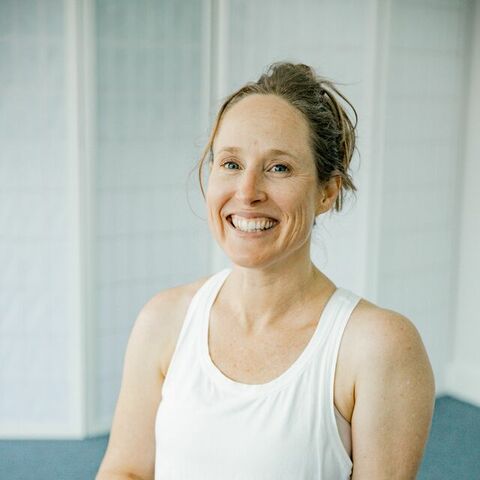
Freya is a registered yoga teacher RYT 500 with Yoga Alliance, a Certified YOQI® Qigong instructor, and a registered mindfulness and meditation teacher with the Meditation Association of Australia. She is also a chiropractor, mother of 2 boys, and the award-winning author of "Wonder Full Women. Attune & Bloom. Eat, Move & Meditate with the Seasons". Freya has been practicing various forms of mindful movement and meditation for more than 45 years. She interweaves these ancient wisdom practices with modern science in her teachings. She leads workshops and retreats focused on women's health, seasonal living, and holistic well-being. Freya currently resides in Melbourne, Australia, where she teaches regular classes at Maitri Studio Brighton, as well as at retreats, festivals and workshops. On Insight Timer, she offers guided meditations and 'live' Qigong, Yin Yoga & Meditation classes to help you develop your own regular nourishing practice.

read more

3 Days

4 students

No ratings

10 min / day

Focus

English


Lesson 1

Deep Abdominal Breathing

During this lesson, we share some simple tips and tricks to help you breathe more deeply into your abdomen. Deep Abdominal Breathing is incredibly beneficial. It gently massages your internal organs and improves oxygen exchange. It helps activate the parasympathetic nervous system into ‘rest and digest, heal and grow’ mode. It helps calm the mind, reduce stress and anxiety, and release chest, shoulder, and jaw tension. From a YOQI® qigong perspective, it also helps guide qi (energy) down into the belly, which supports energy balance and vitality.

read more

Lesson 2

Dantian Breathing

Once you have mastered Deep Abdominal Breathing, the next step is to begin Dantian Breathing. Dantian Breathing builds upon Deep Abdominal Breathing by expanding awareness to include the back of the body, the sides of the torso, and the pelvic floor. By gently directing attention to these areas, the breath becomes fuller and more integrated throughout the entire torso. In this lesson, we also learn the location of the acupoint known as Ming Men, which translates as “Gate of Life.” We learn how to gently activate the Ming Men through Dantian Breathing. When activated, it is said to support Kidney function and increase the body’s qi (vital energy). During Dantian Breathing, on the inhale the diaphragm moves downward, and the Lower Dantian, Ming Men, and perineum expand and gather qi. On the exhale, the diaphragm lifts, and the Lower Dantian, Ming Men, and perineum contract, collecting and condensing qi. The goal of Dantian Breathing is to allow everything inside the body to move in one integrated rhythm, free from obstruction, calming the mind and cultivating internal energy.

read more

Lesson 3

Purging Breath

Purging is a way to clear and cleanse the body of what no longer serves us. Generally, people accumulate excess qi (energy) rather than lacking it. When qi becomes excessive, it can become blocked, stagnant, or stuck. This congestion disrupts the natural flow of qi and leaves little space for fresh qi to enter and nourish the body. In this lesson, we will learn how to use the qigong purging breath, Tu Na, to release and clear stagnant qi. * Contraindications: This practice should be avoided if you are bleeding heavily, have an acute injury or illness, or are pregnant.

read more


Trusted by 35 million people. It's free.

Insight Timer

Get the app