memberplus
Living WELLth
6-Tage-Kurs

Living WELLth

Von Cari

Beginne Tag 1
Was du lernen wirst
Welcome to Living WELLth Many of us live in ways that slowly interrupt the natural flow of energy — through overwork, constant input, disconnection from place, or imbalance in giving and receiving. Over time, this can show up as fatigue, stress, isolation, or a sense that something important is missing — even when life appears full. Living WELLth approaches wellbeing differently. This course is an invitation to restore the conditions that support vitality, clarity, and meaningful contribution in your life. Rather than asking how to do more, improve faster, or optimise your habits, this course explores how life moves through living systems — including your body, your relationships, the places you live, and the work you do. Across five guided sessions, you’ll be introduced to: Flow — how energy circulates Vital — what enters your system Relational — how exchange occurs between people Ecological — how place shapes vitality Creative — what you contribute in return Each session is delivered as audio only. You may choose to listen while walking, stretching, cooking, or resting. This is intentional. Because WELLth is not something we understand by observing alone — it is something we understand through participation. There is nothing to get right here. You are simply invited to notice where circulation may be interrupted and how it might begin to move again. When you’re ready, Begin with the introduction to Flow.
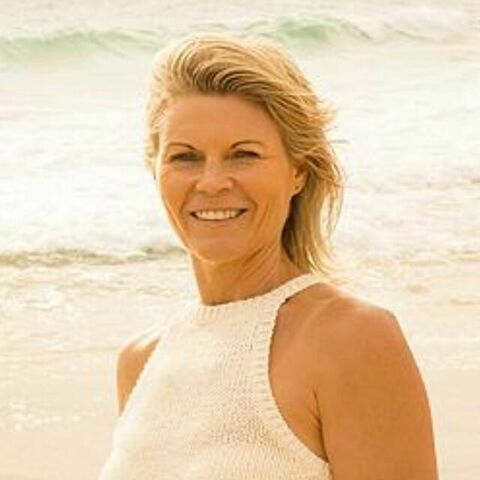
Cari is the creator of the One Living System framework and the Living WELLth Masterclass. Her work integrates living systems science with lived human experience exploring how vitality, relationship, environment, and contribution are not separate parts of life, but movements within the same living field. Over the past decade, she has developed...

Lektion 1
Remembering The Flow - From Scarcity To Circulation
WELLth is not the possession of resources — it is the circulation of them. In living systems, vitality depends not on how much is stored, but on how freely life moves through the system. Energy, time, attention, care, and creativity must circulate between individuals, communities, and environments in order for systems to remain stable. When circulation is interrupted - through withholding, over giving, or disconnection from exchange - strain appears as exhaustion, isolation, or scarcity. Scarcity is not always the absence of resource. Often, it is the interruption of flow. Restoring WELLth begins by reopening small channels of circulation between giving and receiving.
Lektion 2
Vital WELLth - Your Body As Your First Economy
Vital WELLth concerns the quality of what enters the system - your body and the Earth. Air, food, water, light, sound, information, social interaction, and movement are all forms of inflow that must be processed and circulated by the body. Living systems remain stable not because they possess resources, but because they regulate what enters. Fatigue, overwhelm, or illness are often signals that the quality or quantity of inflow has exceeded the system’s capacity to circulate it. To nourish is to bring in what supports vitality. To nurture is to reduce what overwhelms it. Managing inflow restores the body’s ability to circulate WELLth through every other river.
Lektion 3
Relational WELLth - Rebuilding Trust As Currency
Relational WELLth concerns the circulation of resources between people. Time, attention, care, labour, and trust are exchanged through relationship. When exchange is reciprocal, systems stabilise. When exchange becomes extractive - through over-giving, withholding, or lack of consent - strain appears as burnout, resentment, or isolation. Trust is sustained not through generosity alone, but through balanced exchange supported by boundaries and ownership.
Lektion 4
Ecological WELLth - Restoring Reciprocity With The Earth
Ecological WELLth recognises that vitality is place-dependent. Air quality, soil health, water systems, biodiversity, light patterns, and built environments determine the quality of inflow available to living systems. As humans, we metabolise the environments in which we live. When shared terrain is degraded, the inflow that supports vitality becomes costly to circulate. Reciprocity maintains the conditions required for life to continue. Participating in the care of shared terrain restores WELLth not only for the environment, but for ourselves.
Lektion 5
Creative WELLth - Redefining Prosperity As Contribution
Creative WELLth concerns what leaves the system. Living systems must release energy, nutrients, or information to remain stable. Retention beyond need leads to stagnation or toxicity. Ideas, labour, care, innovation, and service are forms of systemic outflow that shape future conditions for vitality. When aligned with what has been received, contribution restores shared terrain and supports continued circulation. Creative WELLth is not self-expression alone - It is participation in sustaining the field that sustains you.
Lektion 6
Living WELLth
Throughout this masterclass, We have explored five rivers of WELLth. Each one invites a shift - not in behaviour but in understanding. WELLth is not created by doing more. It is restored by seeing differently and participating accordingly. As a way of reflection, you are invited now to consider: Have I moved from the understanding I arrived with to the understanding offered in each class?

Cari's Collection

Trusted by 35 million people. It's free.

Insight Timer

Get the app