Well hi George,
It's nice to see you.
Good seeing you too,
Wesley.
So for everyone watching,
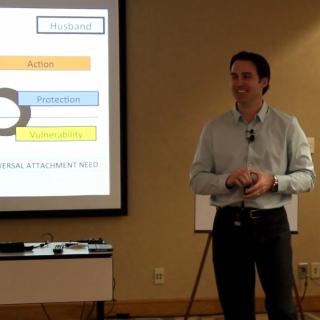
We've got George Fowler.
He's a certified EFT trainer.
He does EFT trainings all over the world,
Really.
And so he's going to talk to us a little bit today about enactment.
And this is just a casual conversation with the hopes of sharing with you all really important information about enactments to help all of our work.
So George,
If you could start us out,
Tell us why enactments are so important.
Well,
Wow.
I mean,
I get excited every time I just hear the word enactment.
People go to my trainings.
That's the one thing I'm always looking for.
It is the theory of change in EFT.
It's not enough to understand something.
You actually have to try to do it differently.
This is a behavioral change model,
And enactments is how we do that.
You actually have to kind of get clear about your experience and share that with your partner.
Most clients don't want to do enactments.
Most therapists don't want to do enactments.
Everybody agrees,
But if you don't do enactments,
You're really not going to create change.
I mean,
Just to really reframe how we see enactments,
Enactments is how we create new neural pathways.
Our target is to be doing multiple enactments in every session because the more each partner can access kind of clearer parts of themselves and share it,
That's how they create secure attachment.
So if you're going to avoid enactments because if they're uncomfortable,
You're not really sure,
Feel awkward and we just agree not to do them,
Then you're not going to get that chance,
Which really enactments are the bridge of how we get to create that secure attachment.
Yeah.
So it's,
It sounds like really it's the thing that.
Is really creating the change between the couple.
It's sort of like that magic alchemy step.
Awesome.
Totally right.
And again,
I think I want to change people's perception because most of the time they think enactments have to go well,
Right?
If it's going to create secure attachment,
Then the person has to be clear and the partner has to be receptive and it has to be the Hollywood ending where both people respond and comfort each other.
And if that works,
Great,
I'll do an enactment.
But if that doesn't work,
Oh,
It's a bad enactment.
The couple feels bad.
The therapist feels bad.
And yet.
Some of the best enactments I've ever done is when it doesn't work because that's really going to reveal a live block to the process.
I mean,
We trust the process.
If a couple can do it and have success,
That's great.
If they can't,
They're giving you the very mistrust,
Stop that secure attachment.
So either way I went as a therapist setting up an enactment,
As long as I go with where the enactment goes,
Right?
If it goes towards strengthening the bond,
Then I could celebrate that and that shift towards positive affect.
Or if it doesn't work and now I'm getting the mistrust,
The block to that secure attachment,
Now it's alive in my room and I could go to work with that.
So it's really having a flexibility to go with where the enactment goes.
And I think that's a lot of times where therapists get in trouble because they're hoping it goes well.
They don't have a plan if it doesn't go well.
And then when these blocks emerge,
Which you can't really know until you set up these enactments,
There's not really a plan on what to do with those blocks.
Well,
You're going to help us get a lot more confident and brave with this.
I like that.
You know,
A grounded therapist,
A grounded therapist is what,
You know,
Is going to be the best in the room.
I'm probably hitting that about 30% of the time.
So we're going to increase that to 50 by the end of this talk.
I like it.
I like it.
All right,
So tell me,
Tell us a little bit about when you're leading up to an enactment,
Tell us about the pre-enactment.
What are you thinking?
When do you know you kind of have the thing you want to enact?
Walk us through the pre-enact.
All right,
Well.
.
.
Let's zoom out for a second.
Because we teach these enactments and for me,
They're just,
They're too global.
It's,
It's,
You know,
You do an enactment.
Well,
Great.
All right.
Can you turn and talk?
And just share what we talked about to your partner.
And before you know it,
It's like,
It's because we really,
I don't think we've done a good enough job teaching how to build an enactment.
So for me,
I'm trying to take this global thing and break it down into more manageable parts.
So I'm going to talk about the pre-enactment,
How you set the stage to send over the enactment,
The actual enactment itself,
And then what happens after the enactment.
So we're going to have pre,
During,
And post enactment.
Great.
Right.
So the pre-enactment,
I think that's the most calming comment I get is how deep is deep enough?
How do I know I got what I need?
How do I send that over?
You know,
I think Sue in her new book does a great job with really trying to assemble and make emotions more poignant before we kind of send them over.
So how do you assemble that emotion?
How do you take that trigger?
Really give yourself a bodily sensation.
Try to,
How do they make meaning out of that?
What their action tendency,
Right?
These are all the elements of emotion that we're trying to unpack.
So it becomes more alive in a room.
And then we want to.
We want to send that enactment over.
But it's not just like,
Do I grab a primary emotion and send it over?
I want to make sure that primary emotion is alive in the room.
So some of the targets that i'm looking for when i'm assembling First thing I'm looking for,
Is it new information?
That's usually what we're trying to get clearer about.
I feel frustrated when you criticize me.
Well,
Does that sound new?
Does that sound like something I want to send over?
As I start to validate that secondary emotion,
I feel frustrated and I make sense of that frustration.
And then I start getting to that more primary place where it feels like I'm failing.
There's something wrong with me.
Well,
This is new information.
This isn't typically what's shared in the couple's negative cycle.
So if I don't have new information,
I don't really have what I need to set up in an act.
That new information should also be risky to share.
If it's not risky to share,
It's not vulnerable,
Right?
So I guess I feel like I'm failing.
Have you talked about that?
Yeah,
We talk about that all the time.
You know I feel like I'm failing.
I tell you,
That doesn't feel so new to me,
Right?
But if you stay with that a little bit,
So if I get it's not new,
Then I need to go a little bit more,
Right?
So it's not new.
So what's it like that you tell your partner all the time that this makes you feel like a failure,
Yet it keeps happening?
Well,
It feels like my partner,
Doesn't care about me oh so tell me more about that your partner doesn't care how do you make sense your partner doesn't care well there's something wrong with me oh have you shared that no I've never shared that now I know I have new information and it's risky to share and what's really critical in setting up enactments is that they're really coming from view of self not view of other right so often people talk about the enactment I get frustrated and they send over secondary emotion that's focusing on the other person well if you weren't so critical I wouldn't feel bad Well,
That view of others is going to tend to elicit the defensiveness of the partner.
View of self is much more likely to pull,
You know,
That vulnerability to respond to the partner.
So those are the elements that I'm really looking for as I'm going deeper.
Is it new?
Is it?
View of self,
And is it risky to share?
That's all the building of an enactment.
What I'm also looking for is,
It's good to highlight the opportunity to really let our clients know the good reasons we're setting up an enactment.
This is how they create change.
This is how they create secure attachment.
And it also might reveal the blocks,
But how we're heading them towards the target of more closeness is through doing these enactments.
So if somebody is reluctant,
I want to prime that longing that says,
Yes,
I get why you don't want to take that risk of sharing this place where you feel unlovable or sad.
But the opportunity in this risk is that you won't be alone in those places and you could actually receive comfort.
So sometimes,
You know,
Clients are going to need,
As you're assembling,
Your ability to kind of give them the reasons to do the enactment and to prime the longings that are there.
Otherwise,
It wouldn't be risky to share.
You know,
The fear isn't the whole picture.
There's a longing there in all these emotions that we're also trying to bring to that surface.
Well,
Let me just reflect what you're saying so I can absorb it.
So I think that's important to break it down into you're sharing something new.
You're sharing something that's risky to share.
It's increasing the vulnerability of the person who's sharing.
And you're sharing something that's from their view of self so not those kind of like cloaked bullets you know that's like if you weren't so then i wouldn't you're sharing you know how it makes them feel in the relationship exactly And when you have those elements,
Just to add to that quickly,
There is a felt sense in a room of that vulnerability.
You can feel the process slow down when people start to tap into new places they tend not to tap into or they don't share.
So there is a felt sense that we also are using as a marker.
It's just a less clear in teaching of what,
You know,
But if we were doing role plays or live sessions,
You can kind of feel in a moment that you're watching a tape,
Boom,
Where it kind of drops down a little bit.
Yeah.
So yeah,
You can kind of feel the energy shift in the room when you're hitting some of those spots that it's increasing the vulnerability and risk for that person.
If I'm capturing that right.
You have captured it right.
And let me ask this because I know,
You know,
In stage one,
I know we're often going to get people who,
You know,
Really,
They might be able to name some of the primary emotions,
But their bodies are really still in that secondary emotion,
You know,
Anger,
Frustration.
Would you ever set up an enactment from secondary emotion?
And if so,
How would you shape that?
We can do a whole nother talk on that and certainly working with secondary emotion and i think it's so important but in a real simple way yes if the secondary emotion If you're organizing the function of it or the intention of it,
That kind of can start bridging distance.
It can be very helpful.
For like a lot of pursuers,
If you really stay with their anger,
For example,
That their anger is actually their hope,
Their belief that things might change,
That they might get closer to their partner,
Right?
That their anger isn't meant as a club to beat the other person further down.
Pursuer that would be a helpful enactment to start bridging that distance or for a withdrawal to say you know my my going away is my attempt to to escape the pressure to reset so i can try again because that's the irony the anger and the withdrawal is actually hope or otherwise people wouldn't be doing it but the partner doesn't see it as hope the partner sees it as the worst thing possible so if you're trying to kind of change the meaning the reframe a helpful thing it's helpful for me if I was a withdrawer to kind of stand up for myself and it would be helpful for you to hear it in a different way so that's what we're sending over secondary enactments if it's still meeting that criteria it's sharing new information that's what a reframe is it's probably risky to share because most of the time when you talk about this behavior partly triggers from it Yeah.
No,
That makes sense.
And I like pairing it with the function of it because,
Number one,
It would help the person sharing feel like they're sharing a piece that's like,
Hey,
I'm not this bad person.
You know,
There's a reason that I'm trying this,
Even if I know it never works.
You know,
There's some sort of reasonableness to what I'm doing.
And I think it also brings that attachment piece in because it directly links to the importance of that relationship,
Trying to maintain by not escalating conflict.
And that's how you know a couple's de-escalated when they're able to start understanding and taking it less personal because they start to see the meaning the other person has it.
You know,
If your anger is your hope.
If I actually took away your anger,
I would leave you in a worse place.
Now I'm starting to see your anger a little bit differently.
I still don't like it.
I still want you to change it,
But I'm taking it less personal,
Right?
That's when a couple is really deescalated and it's now safer for them to take the deeper risks,
Which we're going to do in stage two.
Yeah.
And you,
I think you've spoken really well on the anger hope link.
And I'm going to link to that video below for anyone who wants to see it.
It's a video with Annabelle Bugatti.
So do you feel like we're ready to talk about during the enactment?
Yes.
So,
I mean,
Once you've assembled this emotion and it's alive in a room,
A lot of people are setting up enactments that are just people say,
I feel sad.
It's not alive in a room.
Can you share your sadness?
Yeah,
I feel sad.
And it doesn't have the energy that we're looking for to kind of create those new neural pathways.
So really staying deeper,
Allowing this,
You know,
The emotion to emerge in the room now sets up the sharing of the enactment.
And a lot of times the sharing of enactments,
It takes practice,
But most of us have way too many words when we're trying to set up an enactment.
There are two different versions I see a lot.
One is I'm not really sure because we just spent 15 minutes talking about it.
So I just say,
All right,
Can you turn and share what you just talked to me with your partner?
And there's like no guidance to that.
Open-ended.
So it's most likely that a partner is going to go to what they know,
Which is more of that negative cycle.
So we've done all this work to get all this emotion,
But because we don't frame it,
It then winds up being shared in a way that triggers the cycle,
The negative cycle.
We just need to do a better job of helping each other get clear on what is it we're trying to share.
And the other thing a lot of us do when we're sharing enactments is we're not clear ourselves as a therapist.
So we're hoping they're going to get clearer through the enactment,
Which is never really a good idea.
We want the enactment to kind of be clear.
That's why it's not ready to send over.
If it's not clear,
We need to do more work.
So if I'm like,
Well,
What do you think you need in this place?
Can you share that?
Can you tell your partner what you need in this place?
If I'm expecting my client to be able to figure all of that through an enactment,
That's just too ambitious.
So I like to keep my enactments really simple.
I think the simplest recipe for the enactment is.
.
.
You know,
When you,
When the trigger comes from me,
I feel this right view of self.
So the generic,
What is the trigger?
And how does it make me feel about me?
That's a nice,
Simple enactment to kind of send over to your partner.
So I'm really trying to get that new information that when my partner gets critical of me,
I start to really feel bad about myself.
I start to feel like a loser.
All of that work is trying to get that to be clearer.
So when we're setting up the enactment for me to turn to you and share,
I mean,
I could build it.
As a therapist,
I think it's always good too.
To frame the enactment,
Right?
So I might say to you,
Say you were this withdrawal who just would let me into this world of feeling like a failure.
This is the first time we're touching it in a step three or going deeper in a step five.
I might say,
Wow,
I might try to respond a little bit first to just kind of create some safety.
I might say something like,
It really touches me that you're taking this risk to kind of fight for yourself in a different way and let us into this place that normally people don't see.
And I really,
I think you deserve to be responded to in these places.
We all do better when people we love come closer to us.
So I'm just kind of building the momentum to then set up the risk.
So what would it be like to turn and share to your partner?
That when you see her face that feels critical,
Right?
That's the trigger.
You see her face,
You see her eyes,
You see her shaking her head,
You're passing the trigger by.
I feel like a loser view of self.
Those are really powerful because they're simple,
But they're getting right to the heart of the message,
Right?
This behavior triggers this place in me.
And that's what I'm trying to send over.
Not a lot of words,
Because if there's too many words,
They're going to start bleeding into,
Yeah,
When you get so critical,
I wouldn't feel so bad if you weren't so critical.
It starts to slip back in,
Which is fine.
Once the anachron starts going sideways,
We want to interrupt it and redirect it.
But the therapist,
We have to have a clear target.
Of what we're setting up in the enactment.
So again,
What I'm saying is Start with the trigger so you know it's alive.
Your shaking head makes me feel like a loser.
You going away makes me feel unlovable.
It's that view of self that's the new information.
That's the most likely what's going to start pulling that partner closer.
So that's my map for just right in that moment of the enactment.
Simple but powerful.
And a lot of times we could load the enactment is what I'm calling it.
When you're really trying to get people to see the opportunity,
That they can have a different outcome.
But this is also really risky to do.
To look at your partner in the face and say,
I feel like a loser.
I feel unlovable.
I feel like.
A failure.
These are things that often don't get expressed.
Right.
That's the crafting of the enactment.
And if you feel like you're too wordy,
Then just say,
Hold on,
Let me try that again.
You have to give them the words in a simple way.
You know,
A sentence or two max,
Because this is just too emotional to do.
I can't talk about feeling like a loser while I'm explaining,
I'm a pursuer who's a recovering withdrawal and all those words.
It just,
It's not gonna land in that evocative way.
Yeah,
I can hear,
As you say it,
I can hear the simplicity and the power of those simple words.
And I think it's a good reminder since I'm definitely in the too many words camp where I'm jamming in the trigger,
The feeling,
The meaning,
The action tendency,
And,
You know,
They're getting confused and,
You know,
It's,
You know,
Not great.
So it helps to just kind of hear the cleanness and the power of that.
Right,
And I think we could do a lot better job of teaching and starting to unpack different options because it's never that simple.
But our goal needs to be simple because if it's really risky to share and it's from view of self and it's coming from this kind of place that's not really shared,
That's incredibly risky to do.
I don't need a lot of words to do that.
It's really the heart of the message that needs to be expressed.
And I think that just takes some practice to try to kind of distill through all those words and all of those feelings and grab the most poignant part of the message.
But that,
Again,
What helps me is to know that it's going to be this view of self-place that isn't expressed.
And that's the most important thing I'm sending over.
All the other stuff that I use to get there is less relevant.
But if I'm too ambitious,
I'm trying to send over too much.
And then it just,
We kind of wind up losing the emotion in doing that.
And it's a good reminder you're giving us just that it is so risky what we're asking them to share.
I think,
You know.
When you see so many clients and you're so steeped in this world,
I can forget how risky it is,
You know,
Because I hear it,
You know,
30 times a week.
And so I don't,
You know,
I start to desensitize to the risks to them.
So it's a good reminder.
Yeah,
And again,
You're not going to create change without that riskiness.
And to remind ourselves,
There is nothing worse than putting your heart,
In your hand,
And going over to your partner and being rejected.
Well,
Take us there,
George,
Because those are always.
.
.
Obliteration,
Right?
That's obliteration.
So we need that respect of that.
Yeah.
Well,
So talk to us about the ones that blow up,
Because I think that's.
.
.
Well,
That's all the post-enactments.
Yet.
Now we set it up in a simple way,
Right?
Really at the heart of the message,
Sent it over a view of self.
Now we got to be ready for the post enactment,
Right?
What are we going to,
Who are we going to go with first?
I mean,
There's lots of different ideas and I don't think we want to force people into like a.
A cookie cutter way you have to do it all the time.
There are a lot of different options and we want that flexibility.
You know,
So there,
There are a lot of us that immediately want to stay with the person who takes the risk,
Right?
Because if you process what it's like to take a risk,
You could already start that the person took the risk is already successful.
You can already start to highlight,
You know,
The benefit of taking the risk.
It usually,
It sets the stage for the partner to be a little bit more responsive if you start the process with the person taking your risk.
So I think I just want you to think whoever you start with.
There's benefits and there also might be some drawbacks depending on which direction you go with it first.
I know a lot of trainers really love going with a person who takes the risk.
I think I might be a little bit.
.
.
Different and i i often go to the person hearing first because for me what's so critical about that is if it is empathetic It's the most natural,
Organic,
Responsive way.
So if you share,
I feel like a loser,
And I hear you,
And I'm your partner,
And that breaks my heart,
And I'm like,
I didn't know that.
I want to reach to you.
I mean,
To me,
That's the best response that you can get.
So I want to be ready to harness that.
So that's where I look at these red light,
Green light,
Yellow lights,
These different ways of possible responding.
If a partner's in a green light place where they really want to respond,
A partner first,
The listening partner,
Because I want to harness that and start creating that secure bond right in the room.
Yeah.
If I get a yellow light or a red light,
A yellow light is simply mistrust with longing.
And a red light is just kind of hostility.
It's a partner's not open,
Not responding to it.
You know,
Then it might change which direction I'm going to go.
So let's just talk about the different ones.
Ready for all the different possibilities that could happen after the enactment.
So the best case scenario is that green light,
You get the partner's response and you're trying to now process what it's like to be responding to each other,
Which is great for them and great for the therapist.
And it's really kind of why we do what we do.
It's least frequent to happen right at enactment.
So we can't just limit all enactments to that Hollywood ending.
That yellow light is a partner wants to respond.
But has their own stuff going on too.
So there's some combination of longings and responsiveness,
But mistrust and kind of defensiveness,
Right?
So yes,
I feel sad that you feel like a loser,
But maybe if you would listen to what I said and you did what I said,
You wouldn't feel this way.
So that kind of,
That anger,
That defensiveness is going to kind of get into the message and it's going to do what to you,
It's going to push you further away.
So that.
When we get those yellow lights,
We're trying to validate that mistrust and then go for the longing.
So if you would say,
Yes,
You're right.
And so often you get into these fights.
And if she would listen,
You'd be in a better place.
And that's really your hope that things are going to be better.
So I so appreciate how you want to keep bringing that into the message.
But what I also hear you saying is something is different here.
That you normally don't hear this part of your wife that feels like she's a loser.
That's how she makes sense of it.
I guess how does that impact your heart when you hear your partner feels like a loser when she can't take your advice?
Well,
That really makes me feel so sad.
I don't want her to feel that way.
Can you tell me?
So now I'm getting that longing about the vulnerability.
So I'm trying to turn that yellow light into a red light,
Into a green light to get you to respond.
Yeah well and i mean that makes perfect sense i think that you're preparing for whichever light you get and that with the yellow light you're validating you're seeing the part of them you're saying it's okay this part of you that can't trust this i see that And you're refocusing them back to what just happened so that their bodies don't miss that something new did just happen.
Awesome.
Right.
That's so key to try to tap into that longing of something new.
That's why we're trying to create change.
If they can do it,
Great.
If they can't,
That's okay too,
Because we're just going to see that block that.
So that yellow light is only going to go two directions.
It's going to turn towards green or is it going to turn towards red?
Well,
And I want to highlight the way you're speaking,
Like your pace,
Your tone of voice.
And I think this just this takes time and practice and getting to know yourself as a therapist.
To me the tone is strong,
Grounded,
Slower.
And so I think,
You know,
Sometimes we get anxious and we can go,
Wait,
Wait,
Wait,
Wait,
But don't you see they're doing this great thing?
And like,
We're going to take them out of the ability to regulate their bodies.
Because we're not regulated or we go two under where it's sort of what I think of as like kindergarten teacher voice where it's like.
You're like really like basically telling them they need to,
You know,
Be softer and like taking what their partner is saying.
And so I just,
I think it's important to note that You're also regulating them with your voice in those moments.
Yes,
That's great.
And to.
.
.
Cut yourself some slack.
I mean,
All of us who are self and a therapist triggers,
We have good reasons for that.
I mean,
If we haven't been trained to be ready for different scenarios,
You know,
We're hoping it's going to go well.
When it's not going well,
We're just kind of,
We should get anxious.
We need more of a plan.
And that's really why we're trying to do this,
That this stuff's pretty predictable.
That if somebody has mistrust,
They have really good reasons for it.
We don't want to shame them for it,
But if we're not ready for it,
We're going to wind up doing that.
To break this down into more micro moves that that you're ready for these different scenarios and the yellow lights can be very common and it often doesn't take a lot to validate that mistrust that's seeping in because that's why the negative cycle is rampant in this couple how could they not have that but they're in your room because they want something different too so if you could just validate that mistrust to kind of reduce it enough to allow that longing to come up you can really start creating some new some some new things which is cool yeah yeah no i think i think that's exactly right um talk to us a little bit about that red light what do you think we're going to skip that one avoid the red lights Again,
The red lights.
R.
I think the most disjointing for the therapist and most disruptive,
But they're also pretty predictable because when you turn that that defended partner into a vulnerable partner,
The listening partner still doesn't know how to really trust it.
And anger or withdrawal in these critical moments is going to feel like a red light,
But that's a predictable move for somebody that doesn't know how to trust something.
Right.
So again,
We're trying to see,
We're trying to hold two truths in that moment.
The good reasons this person's mistrustful.
But even more importantly,
This person who's being shot by that mistrust has just taken a risk that we've encouraged.
So I think that's the critical thing.
Most of us want to immediately go and try to talk the person in the mistrust out of it so they can respond.
But that whole time we're doing all that work,
This person we've asked to risk is kind of bleeding out on us.
So I think that's really one of those critical moments where if I ask you to.
.
.
To share,
I feel like a loser.
You're able to access that part of you.
You put your heart out there and your partner kind of just lashes out like,
This is ridiculous.
I mean,
You do act like a loser because you don't listen to a word I'm saying.
I mean,
This is just so stupid.
Here goes the partner in this place.
You know,
A lot of times it's therapists because we're not ready for that.
It's like a trauma response happens in us,
Right?
So we.
.
.
What I've taught myself to do over,
You know,
Getting shot way too many times by these yellow lights,
Because it feels like that as a therapist,
It feels like we're getting shot too.
You've done all this beautiful work.
You are in attunement in vulnerability.
Your nervous system is slow and soft and feeling kind of rooting for this person.
So you don't have defensiveness in place for when this hostility or this mistrust comes.
But I think with time,
You're expecting it.
It's a lot easier to try to interrupt it and say to the pod,
I don't understand your anger right now.
I trust you have really good reasons for it.
Whatever language you want,
This person who took that risk.
So I might say to you,
I am so sorry right in this moment.
Your worst fear,
Why you don't want to talk about it,
Is people don't respond.
And worse,
They blame you for it.
And yet that's kind of what's happening now.
And I need to explore that with your partner.
I trust your partner has good reasons.
I'm not really sure what that is.
But the last thing I'd want you to experience is kind of being brought to this new place and feeling left in it.
Because it took a lot of courage for you to show this place.
Partner trying to understand kind of what's happening.
Right.
And I'm trying to get your buy-in to transition because I don't want you to feel abandoned in this place of vulnerability.
I mean,
The key line that I want everybody to hear is if you're going to invite vulnerability,
We have an obligation and a responsibility for that person to have some success.
And obviously the partner's responsiveness is the key.
But if the partner can't,
We must respond if we're going to encourage that vulnerability.
So partner's response best therapist good nobody that's bad and i've done that too many times because i just am like god let's touch this new place and share it and then when the partner can't respond it's like everybody gets blown up and we don't even know kind of what's happening Yeah.
And control that.
We can control giving that person some sense of being seen,
Of being responded to,
Of being fought for.
And then we're going to transition and try to understand what is actually happening for the partner,
Why they're not,
Their empathy seems to be blocked and their defensiveness is so,
So entrenched.
And if it blows up,
Which is,
You know,
I like that.
I like what you're saying that our systems are getting into that affect with them,
You know,
So we get.
Hit as well when it doesn't go well.
And so,
Yeah,
Just that we can at least as you would say,
Maybe tie a tourniquet on it with them before moving to the other person and exploring what just upregulated them to the point of that level of distress.
It also keeps your focus in a moment that says,
Listen,
What I was trying to do is get this person to have success.
And now it's also revealed the block.
So let me give this person some success and then transition to try to understand this block.
This person has good reasons for it.
I just don't know what it is.
Right.
We're going to have to then make that transition,
Which is a whole new focus.
And that's a lot of work for the therapist.
Right.
So we don't have a plan.
No wonder why so many of us get lost in these moments.
And then it trains us not to do enactments.
There's nothing like.
These red light dead enactments to train therapists not to want to do an act.
I know.
We become our own withdrawers from them.
That's right.
That's right.
Because we don't feel successful.
Yep.
Well,
And I think,
You know,
Something I've just learned through experience is to really,
Really prepare for this when working with attachment ruptures.
You know,
With infidelity,
Like these red lights are like popping like crazy.
And they also,
There's a lot of vulnerability and a lot of mistrust that's all mixed in together.
I've gotten to the point where I just,
Before I have a session with someone who's had an attachment rupture,
I'm really stretching out.
I'm really getting ready for those red lines.
Do that yoga,
Get yourself ready to slimmer.
We have to pivot.
Yeah,
That's and that's that flexibility to pivot is what's going to be so crucial.
And you can't pivot if you don't know where you need to go if you don't know different steps.
So that target of.
That Hollywood ending,
Which we need to have a clear image of what is it like to risk and be responded to.
Can you see that shift from fear that you felt in that enactment?
It was new information,
Right?
It was risky to share.
There was this sense of vulnerability.
And view of self,
And you sent that over.
And if the partner does respond,
You should expect a shift.
That's why these bodily sensations are so important.
I feel like a loser.
It's not enough to have that word.
When you say that,
Where do you feel that?
I can feel my stomach is nauseous and my chest,
It's hard to breathe.
And here comes this partner not knowing that,
Responding,
Saying,
I didn't know that.
I love you so much.
I'm so sorry you're in this place.
I don't know what to say.
I just don't want you to be alone.
And he reaches out and gives a hug.
You want to come back to these places.
Check in now as your partner's rubbing your hand you know i see tears in your eyes and tears in your partner's eyes just check back in how does your stomach feel how does your chest feel right we're looking for that shift that's what transformation is when people go from insecurity to security you know i can feel my stomach's calm i can feel i can take a breath i feel lighter i feel calmer i feel you know these words are then so important just like we did earlier to go deeper now we want to help people really unpack this positive emotion that's Because that's trying to install that new muscle memory.
That's kind of replacing that negative cycle with a positive cycle.
So if you don't give yourself these bodily markers,
You're not going to be able to put words to this shift.
And it's just going to be some conceptual thing.
So to me,
That's always the target.
You know,
I have this pre.
How I'm building the enactment during nice and simple.
I'm ready for all these post enactments,
But the target is working towards the proof is going to be in your room.
Do you see a shift towards positive emotion?
That means the enactment was successful and anything short of that is just more blocks that we're going to just kind of keep just doing the tango around all these different blocks.
Yeah,
I mean,
I think that's helpful because what you were saying at the beginning,
The enactment is the change element in the room.
And so.
.
.
To really let them soak in and and really understand that within of what just what change just happened for them you know to like let them you know really just sit with That worked.
You know,
That was successful.
My partner heard me.
That was less frightening.
Is so important to install that.
Yeah.
And a lot of times we're just not taught what to do with that.
So it's like,
It's nice and we don't know what else to say before,
You know,
We're talking about the negative cycle again.
Right.
Yeah.
And I,
Yeah.
And I think just a good reminder for,
For us as therapists that.
You know that's not that's not redundant you know that's not repetitive for you know the sake of being repetitive like we're really anchoring the amygdala into this this less threatening place And so that.
.
.
Just letting their bodies sit in the fact that it was successful,
They feel calmer,
They feel more bonded,
Is so crucial.
Great image,
Right?
You are anchoring the amygdala.
It's a great image.
Literally,
They need help doing that.
Otherwise,
They're going to go back to what they know.
And a lot of therapists actually want to fade away in these moments.
I know I used to do that for years.
They'd have this nice corrective emotional experience and I'd smile and want to give them some privacy.
And now it's like,
No,
Now they need me more than ever.
They really need words to really understand what is shifting for them so they can hold on to it and they can do it without me,
Which is the whole point.
Yeah.
And I,
And I think that's,
That's my development too.
You know,
I think I'm still in a stage where I have so much cognitive buzzing around my head of like,
What am I trying to hit?
Where am I trying to go?
What am I trying to remember?
That that attunement piece,
You know,
I can sometimes just not attune because I'm not emotionally resonating and I've got a to-do list,
Right?
And I'm not there and I'm not attuning with them.
So I think,
I think you're really talking about that attunement as well.
Yeah.
And,
And using your attunement as a vehicle to,
To speed up the process,
You know?
So if you want them to put words to positive affect,
Your positive affect is going to help.
I mean,
I would never do now things like this.
I'm like,
Dan,
That was awesome.
I mean,
My engagement level is going to change because I'm seeing this positive affect.
I want to kind of feed off it and kind of join them in that place.
And this is the first time you've touched this place where you feel like a loser.
And not only did you touch it,
But you did this crazy thing and shared it.
Not only did your partner not go further away,
Your partner came forward and loved you in this place.
And you're both beaming with these smiles because it's a new world.
The world just shifted in this moment.
And I want to celebrate that.
So my energy level is going to have to change to kind of join in that.
Yeah.
And like you said,
If I'm not ready for it,
I'm like,
What do I do next?
And I'm spitting in all this.
I'm going to fire away a lot of questions.
And those questions are going to like pop the balloon of that new effect.
Yeah.
And again,
That wouldn't be your fault.
I don't think we've done such a great job in teaching all of these little elements that are pretty predictable in the process.
We focus too much on global kind of steps and process and attachment theory and emotion.
And we really haven't taught therapists.
What do you do in that moment when they shift and they bond?
Oh.
This is where the practice.
This to happen.
Yeah,
I mean,
I think it's all so developmental.
You know,
I think that's the humility of learning and the humility of learning a model is beautiful and complex at times as this one.
And so I think for any therapist listening,
Just to.
.
.
Have grace with themselves that this is like this is all we get right like i don't get to come out of the womb george faller i just don't i don't have i don't live in a universe where that's handed to me i didn't hear this i don't know who does There you go.
There you go.
Yeah,
So we're all in development with this,
And I'm lucky that we have people like you who can help guide us.
So thank you so much for.
.
.
All of your time with it.
Well,
You are welcome.
And,
You know,
We need each other.
We learned there's something so redemptive about this model.
When any of us is struggling,
We have good reasons to struggle,
But we're learning from each other.
My couples taught me how to do this.
I didn't learn how to do this stuff.
Right.
So that's the way I'd want to end with this,
That we have good reasons to be scared of enactments.
And I'm just trying to change because if you're going to like fall asleep during one of my trainings or you're like.
Zoning out in your session,
Start to wake up around the enactments because it's where everything starts to happen.
It's where the energy becomes the most alive,
The most blocks,
The most longings.
I mean,
That's the magic of the model is around these moments.
And if we can't get excited about it and we can't kind of see,
I mean,
It is so deceptively simple because you have both partners simultaneously with longings and fears and all these kinds of different things happening.
So it's really,
We're going to do a better job.
I mean,
That's what I'm starting to get passionate about.
And about are really taking these 30 second moments and really setting therapists up for much more success around how to craft them,
What to do with them,
Really help couples harness the magic that's happening in those moments.
Yeah,
Well,
I think all of your guidance is helping us get there.
And I really recommend watching.
All of George's other videos.
He's done amazing stuff with Annabelle Bugatti.
So all of those are on this same page that you're looking at now.
And I'll also put links to them below.
So soak up as much as you can,
Because I think all of this stuff is so necessary for our growth as therapists.