Lesson 1
Guided Exercise: Coming Here Now And Clarifying One’s Intentions
Module one:
The sessions of this module provide both theory and practice in relationship to the Buddha's Four Noble Truths, meditation, and the distinction between serenity and insight.
Lesson and Session 1: Guided Experiential- Coming here now and clarifying one’s intentions.
Like a previous course based on insight meditation, session one of this course based on serenity and the four divine abodes begins by welcoming participants and then inviting them to an experiential exercise. The invitation is to come into the reality of this present moment and then reflect on one’s intentions for attending this course.
read more
Lesson 2
Presentation: Ethics And The Guiding Principles Of The Course
This lesson or session outlines the foundational principles and structure of this course by combining Buddhist practice with clinical psychology. It emphasises the ethical foundations of five ethical principes or precepts and provides some basic information about meditation for serenity and the cultivation of the heart. It also reiterates the importance of self-care and stopping the practice if they feel overwhelmed.
read more
Lesson 3
Guided Meditation: The Cultivation Of Serenity
During this lesson 3 (which is also session 3), listeners are invited practice a meditation practice for the cultivation of serenity by focusing on breathing. In this meditation, relaxing the body with breathing will be emphasised
read more
Lesson 4
Presentation: The Four Truths And A Framework For Meditation
This lesson or session involves a presentation on the Buddha’ four noble and ennobling truths and how they work to liberate us from dukkha. Dukkha is commonly understood as suffering. However, it is probably best understood as unsatisfactoriness.
read more
Lesson 5
Guided Meditation-Serenity By Focusing On Breathing At Three Places
This recording is a guided mindfulness where we focus on breathing as in session 3. However, with the meditation in this session you will be invited to relax with a focus on the whole body. Then build concentration by focusing on the abdomen and finally focusing on vividness by focusing on the breathing as it is experienced at the nose tip.
read more
Lesson 6
Presentation: Meditation And The Dynamics Of Serenity And Insight
This recording involves a presentation on meditation and the dynamics of serenity and insight with a mention of how they work together to help us wake up to the ways things actually are. All meditation practices involve energy, mindfulness and concentration. Two features of the insight aspects of meditation are enquiry and mindfulness. Two features of the serenity aspect of meditation are absorption and concentration.
read more
Lesson 7
Guided Meditation: Serenity By Absorbing Into The Felt Sense Of A Sign
The recording of this lesson or session involves some clarity about what signs are and how we can use them as objects of serenity meditation. In this way we absorb in the felt sense of a sign. Sometimes signs can also be just a cognition, a word or a mental image or all of these.
read more
Lesson 8
Presentation-Summary Of Module 1, Working With The Hindrances And Cultivating The 7 Factors Of Awakening
The recording of this session involves a brief summary of Module 1 and clarifies what the hindrances are and some ways we can work with them. The module also explains the seven factors of awakening and how we can use strategies such as RAIN (credit to teachers Tara Brach and Michelle McDonald), to release the hindrances and cultivate the seven factors.
read more
Lesson 9
Presentation -Negativity Bias And Correcting This With HEAL
Module 2
In this module I will explore some features and factors of serenity meditation, including highly concentrated and refined states of mind called the Jhanas. You will also be invited to consider and practice an approach from contemporary psychology that heals the mind. It follows the acronym HEAL and it was developed by Rick Hanson, clinical neuropsychologist and meditation teacher.
Session 9: Presentation -negativity bias and correcting this with HEAL
This session or lesson explores neuropsychology and something called negativity bias, a tendency evolved due to the need to be on the lookout for danger. This session also described HEAL (Having, Enriching, Absorbing and Linking), a protocol developed by Dr Rick Hanson, in order to shift negativity bias with neuroplasticity.
read more
Lesson 10
Guided Meditation-HEALing With Joy, Happiness And Or Peace.
This recording involves an invitation to a guided meditation based on HEAL that is aimed on nourishing joy, happiness and or peace. It will use the acronym HEAL developed by Dr Rick Hanson. HEAL refers to Having, Enriching, Absorbing and Linking.
read more
Lesson 11
Presentation: Samadhi (Meditative Concentration), Jhanas And Their Factors-Part 1
This and the following two lessons will represent one “session” divided into three parts.
This lesson is Part 1 and it involves information about samadhi, or meditative concentration and highly refined states of concentration called the jhana and their features.
On an administration point, from here on in this course, the number of the lessons shown in print will vary from the number of the sessions mentioned in the recording. This was not intentional, but a mismatch between the uploading numbering system with Insight Timers website and the recording numbering system, used in the recording studio that was used. I apologise for any inconvenience and I trust you understand.
read more
Lesson 12
Guided Meditation-Samadhi (Meditative Concentration) To Calm, Stabilise And Refresh The Mind,
Samadhi (Meditative Concentration), Jhanas And Their Factors-Part 2
This guided meditation offers an opportunity to refresh and stabilise the mind after what could have been a lot of information in the previous session, part 1. Part 2 offers an invitation to a brief guided serenity meditation.
read more
Lesson 13
Presentation: Jhanas, Their Factors And Other Associations-Part 3
This lesson is Part 3 of the discussion and practice related to samadhi and the jhanas. It involves sharing information about the factors of jhanas and associations between various states of mind that could lead to enhanced levels of concentration.
read more
Lesson 14
Guided Meditation – Serenity With An Emphasis On The Jhana Factors
This recording involves a guided serenity meditation where what could be emulations the jhana factors are described and pointed out. Even if these “emulations” may be experienced at basic levels, they may still provide some familiarity with how concentrated states can be experienced.
read more
Lesson 15
Presentation: Helpful Hints To Improve Your Practice
In this lesson or session there will be a reminder of the five hindrances to meditation with some descriptions of how the five jhana factors can help us work with the five hindrances. In addition, there is an explanation about “signs” as how we recognise an experience, as well as how we can use signs to enhance our serenity meditation practice.
read more
Lesson 16
Module 3 The Four Divine Abodes
Module 3 involves an introduction to four divine abodes: loving kindness, compassion, empathetic joy and equanimity in order to liberate our self and others from the binds of Samsara. The four divine abodes go by a variety of names including the heart qualities, the brahma viharas, the four immeasurables, the heart practices as well as the sublime states. During this course these different names will be used in an interchanging manner.
This module will focus on giving a general overview of all the heart qualities and practices. It will include repetitions of what they are, some reference to what are called their near and far enemies, some ways to practice these qualities, four guided meditations as well as a reference to what could be considered as blocks to the practice of these qualities. This module is merely an overview. In modules that follow, we will go into details about each of the different heart qualities. This module has 6 lessons.
read more
Lesson 17
Presentation: The Heart Qualities As Bodily Energetic Qualities
This presentation involves an explanation to why we refer to these practices as heart qualities and consider their relationship to the physical body as well as more refined energetic bodies. One reason they are called heart qualities is because we feel them in that part of our bodies.
read more
Lesson 18
Guided Meditation-Meditation On The Energy Centers
The recording of this lesson or session invites the listener to meditate on the energy centres. Gathering attention and placing it at the various energy centres is a samadhi practice. This practice can lead to balancing and healing our body-heart-mind.
read more
Lesson 19
Presentation: The Heart Qualities-Biology And Evolution
This presentation invites the listener to consider how the basics of the heart qualities developed with evolution and the roots of them are there within our human biological systems. It mentions the vagal nerve and the hormone oxytocin.
read more
Lesson 20
Guided Meditation-Exercise: Name, Feel Soften Soothe And Allow-For Painful Emotions
This recording invites the listener to practice a mindful self-compassion exercise/meditation that was developed by Drs Kristin Neff and Chris Germer and used in their Mindful Self Compassion (MSC) program to help practitioner’s cope with and transform painful emotions. A reference is Neff, K., & Germer, C. (2018). The mindful self-compassion workbook: A proven way to accept yourself, build inner strength, and thrive. Guilford Press. The lesson or session begins with some information about this exercise/ meditation and the follows with an invitation to practice with some guidance.
read more
Lesson 21
Presentation-Overview Of The Heart Qualities And Practices Part 1- Dependent Arising
The recordings of this “session” are divided into two parts. Part one, (Lesson 21) provides an overview of the principle of change that in Buddhism is called dependent arising. Part two, (Lesson 22) will repeat the description of the four divine abodes mentioned in this module’s introduction and include a discussion of what are called the near and far enemies of these qualities, and how we can transform these enemies.
read more
Lesson 22
Presentation-Overview Of The Heart Qualities And Practices Part 2, The Near And Far Enemies
The recordings of this “session” are divided into two parts. Part one, (Lesson 21) provided an overview of the principle of change that in Buddhism is called dependent arising. Part two, (Lesson 22-this lesson) will repeat the description of the four divine abodes mentioned in this module’s introduction and include a discussion of what are called the near and far enemies of these qualities, and how we can transform these enemies.
read more
Lesson 23
Guided Meditation-Cultivating Warm Friendliness Using A Dear Friend First
The recording of this session invites the listener to practice a mettā or loving kindness meditation. This meditation emphasizes the aspirational aspect of this heart quality using phrases including the terms the words “May you” or “may I”. The use of the term “may” is not intended as asking for permission, but as an opening of a possibility. The guidance precedes with some explanations, then follows on with guidance. If “may I” or “may you”, does not work for, please use what works for you such as a single word that you can attune to and focus on.
read more
Lesson 24
Presentation-How We Can Kindle And Cultivate The Heart Qualities
This lesson invites the listener to consider some suggestions on how we kindle and cultivate the heart qualities. These can include: recognizing the sign of the quality, using words, memories and imagery.
read more
Lesson 25
Guided Meditation-Practicing A Heart Quality As A Boundless State
The recording of this lesson invites the listener to practice one or more of the heart qualities as boundless divine abodes, as described in early Buddhism. Though the concept of innate goodness is a later development in Buddhism, in this meditation you will be invited to connect with innate goodness. This could manifest as happiness, lightness of heart, mettā, compassion, joy, gratitude, awe or deep peacefulness. Meditation teacher Stephen Synder (a teacher on Insight Timer) is credited for introducing the idea of innate goodness to the presenter and guide of this course.
read more
Lesson 26
Presentation-Fears Blocks And Resistances
In this final lesson of the Module 3 you will be invited to consider yet another way of developing the heart qualities. This way is based on working with our fears, blocks, resistances and reactions to experiencing the heart qualities. Though this session does not discuss CFT specifically, the terms “fears blocks and resistances” is credited to Prof Paul Gilbert in the development of Compassion Focused Therapy (CFT) (e.g. Gilbert, P., Basran, J., Plowright, P. (2025). The Fears, Blocks, and Resistances to Compassion. In: Medvedev, O.N., Krägeloh, C.U., Siegert, R.J., Singh, N.N. (eds) Handbook of Assessment in Mindfulness Research. Springer, Cham..https://doi.org/10.1007/978-3-031-47219-0_108 )
read more
Lesson 27
Introduction To Module 4 Mettā-The Hearts Release Through Loving Kindness
The focus of this module is the heart quality of mettā or warm benevolence. It has 13 lessons or sessions. It will begin by considering the power of intentions in the form of aspirations.
This will be followed by a meditation learnt from Dr B. Allan Wallace called the four aspirations. This module will also include details of mettā meditation from a Buddhist perspective as well as invitations to practice with guided meditations and a Buddhist forgiveness prayer.
read more
Lesson 28
Presentation: Aspirations Of Freedom
The focus of this lesson or session will be on the power of aspirations. In that process, the factor of right intentions of the noble and ennobling eight-fold path, will be discussed. This will include descriptions of the three types of right, or skilful intentions.
read more
Lesson 29
Guided Meditation- Four Aspirations
In this lesson or session you will be invited to a meditation I learnt from Dr B. Alan Wallace, one of my respected teachers that is called four aspirations. Basically, this meditation involves asking oneself four questions and using these questions to form aspirations.
read more
Lesson 30
Presentation- Loving Kindness-Mettā
This this lesson or session you will be invited to consider mettā or warm benevolence and its cultivation. I will discuss some ways it heals our minds and also relate a personal experience I had when I encountered a teacher in Thailand, in the 1970s.
read more
Lesson 31
Guided Meditation: Kindling Mettā
In this lesson or session, you will be invited to kindle mettā and abide in it by firstly thinking of a being that brings a smile to your heart, then nourishing a sign of mettā that it kindles. In the nourishing, mettā or loving kindness may pervade your being and radiate out.
read more
Lesson 32
Presentation-Forgiveness
Though forgiveness may have cultural loadings and be unthinkable for some types of harm, in this lesson or session you will be invited to consider forgiveness as a way of letting go of the hurts and harms we may carry around as a burden. Forgiveness is also a helpful way of releasing the affliction of ill will.
read more
Lesson 33
Guided Prayer/Exercise- Forgiveness Prayer
In this lesson or session, I will offer a forgiveness exercise in the form of a prayer. I am not sure of the author of this particular prayer, yet I pay my respects to this author as it replicates the practice that I was taught by a Buddhist monastic decades ago.
read more
Lesson 34
Presentation- Mettā As An Aspiration Practice
In this lesson or session, you will be invited to consider how you can use phrases as aspirations as well as how one can direct mettā to different categories of beings, including those who may be considered as difficult.
read more
Lesson 35
Guided Meditation-Practicing Loving Kindness With Aspirations Of Good Will
In this lesson or session, you will be invited to practice loving kindness using aspirational phrases. I will be providing many suggestions and guidelines mostly about how you can use aspirations of mettā for yourself. Please be patient and understand that these possibly verbose suggestions are just examples. In the long run it is up to you to choose what works for you.
read more
Lesson 36
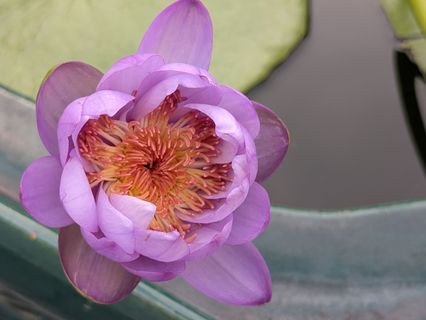
Presentation: No Mud No Lotus
In this lesson or session, you will be invited to consider how the sequence of the four truths is sometimes symbolized like a beautiful lotus growing out of the slime and slushy mud of the bottom of a pond. The phrase “no mud no lotus” comes from the late venerable Thich Nhat Hahn in reference to how from the difficult experiences of our lives, wisdom can grow. This session will include discussion about this process and also refer to what are called attachment disruptions in contemporary psychology and how we can heal them with mettā. If you feel that discussion about attachment disruptions may trigger an untoward response, please exercise discernment and skip this session if you consider it may be unhelpful.
read more
Lesson 37
Guided Meditation- Mettā Towards Our Inner Child
During this lesson or session, you will be invited to bring mettā to an adolescent, child or toddler or baby version of yourself. If you feel uncomfortable doing such an exercise, please pass it by. In addition, if it feels awkward to think about yourself, you could just use a young version of another human or pet, to rouse the qualities of mettā. If you feel that practicing this meditation could trigger an untoward response, please exercise discernment and skip this session if you consider it may be unhelpful.
read more
Lesson 38
Presentation- Post Traumatic Growth
In this lesson or session, I will be talking about post traumatic growth and transformation. As a warning, I will be talking about trauma and how we can heal from it. If you are someone who is suffering from PTSD or other trauma related disorder, please seek the assistance and support of a professional therapist before proceeding. If you choose to continue with this session, please do so responsibly and with discernment and stay within your window of tolerance. The window of tolerance was explained in Module 1, and it will be reiterated during this session.
read more
Lesson 39
Guided Meditation: Mettā As A Boundless Divine Abode
In this lesson or session, you will be invited to develop mettā as a boundless divine abode. It will firstly involve an invitation to kindle this quality. Then, an invitation to attend to the sign of mettā, so that it grows and begins to pervade your being. After that, you will be invited to let this quality radiate in all directions to the extent that it is relevant for you, possible boundlessly.
read more
Lesson 40
Reading Of A Translation Of The Mettā Sutta And Recitation Of One Of The Many Mettā Chants
In this session you will be invited, to listen to a translation of the mettā sutta as well as an often recited mettā chant in both Pali and English. You are invited to listen to the words and access the meaning of the words in whatever way is suitable for you. The translation was by the Sangha of Amaravati
read more
Lesson 41
Module 5 Compassion
The focus of this Module is compassion. The lessons or sessions of this module will clarify our understanding of compassion, its near and far enemies, how we can cultivate it, how we can practice it as a meditation and in daily life and also how we can dwell in it as a boundless divine abode. You will also be invited to a few of the many possible compassion meditation practices. As in the other modules, the lessons of this module will coming from both the perspectives of contemporary psychology, as well as Theravada and Mahayana Buddhism. This Module has 11 lessons or sessions.
read more
Lesson 42
Presentation-Empathy And Emotional Regulation Systems
In this lesson or session, you will be provided with some contemporary psychology insights on empathy as well as information about emotional regulation systems. These insights will include descriptions of three types of empathy highlighted by Dr Paul Ekman as well as three emotional systems as described with Compassion Focussed Therapy (CFT)
read more
Lesson 43
Guided Exercise- Mindfulness Of Current State Using RAIN
This is just a brief lesson or session where you will be invited to take a snap shot of your current state of mind and emotion, with mindfulness using RAIN (Tara Brach). If you feel it is out of balance you will be invited to be aware and balance the system with awareness and enquiry. When and if you feel the system is balanced, you will be invited to nourish and nurture this state of mind. Credit to Tara Brach for creating this version of RAIN
read more
Lesson 44
Presentation: Different Ways Of Understanding Compassion
As mentioned early, a definition of compassion offered by His Holiness the Dalai Lama is ‘a sensitivity to suffering in self and others, with a commitment to try to alleviate and prevent it’ (The Dalai Lama, 2001). As well as this, compassion can be understood in many different ways. During this session you will be invited to consider some of the different ways compassion is described.
read more
Lesson 45
Guided Meditation-Compassion Meditation With A Sign
In this session you be will invited to a compassion meditation. As mentioned earlier, there are many ways to practice compassion meditation. In the following practice, you will be invited to rouse a sign of compassion by thinking about someone who is suffering, which could be yourself. Then nourishing this sign so that it can be absorbed into.
read more
Lesson 46
Presentation: Near And Far Enemies And Fears Blocks And Resistance Of Compassion
I mentioned the near and far enemies of compassion as well as its fears, blocks and resistances in previous modules. In this lesson you will be invited to consider more details about these barriers to compassion and how we can work with them in order to reduce their blocking power.
read more
Lesson 47
Guided Meditation- Receiving Then Sharing Compassion
This lesson or session invites you to a meditation that involves receiving compassion as if from an external source then sharing it with whoever we feel may benefit. If it feels right for you, you may choose to coordinate breathing to receive and then share compassion.
read more
Lesson 48
Presentation- The Power Of The Compassionate Other
This lesson invites the listener to consider how important it is to have compassionate friends. It makes references to both the teachings of the Buddha and contemporary psychology to highlight this importance.
read more
Lesson 49
Guided Meditation-Compassionate Friend Meditation
As compassion is central in Tibetan Mahayana traditions there are many different meditation practices in addition to the four immeasurables, to cultivate this quality. As mentioned earlier, one involves the visualization of and merging with White Tara, a deity of compassion.
Paul Gilbert created a similar guided meditation practice called the compassionate friend or compassionate image. In it, practitioners are invited to imagine or visualize the image of a person or iconic figure that for them represents compassion and wisdom, and practice the three flows of compassion: other to self, self to self and possibly self to other. The guided meditation of this session has been adapted from Prof Paul Gilbert’s version (e.g. https://balancedminds.com/compassionate-other-script-2/M3 and also another version adapted from Paul Gilbert’s by Drs Chris Germer and Kristin Neff (e.g. Germer, C. & Neff, K. Mindful Self-Compassion (MSC) Teacher Guide. San Diego, CA: Center for Mindful Self-Compassion. https://centerformsc.org/ )
read more
Lesson 50
Guided Meditation- Tonglen
In this session, you will be invited to a compassion meditation called in Tibetan, “tonglen”. It involves breathing in or imagining suffering coming into the heart of the Buddha’s compassion in order for it to be transformed. The session will precede with some more explanation before the invitation to practice it.
read more
Lesson 51
Presentation-Compassion And Emptiness
In this lesson or session you will be invited to consider emptiness and its relationship to compassion. In Theravada Buddhism except for some minor distinctions, emptiness and not self or the Pali anatta, are considered as referring to the same principle. That is that there is no separate "thing" in life but streams of dependently arising processes interacting (credit to Leigh Brassington). With the realisation of emptiness, there is also a natural arising of compassion, when suffering is witnessed.
read more
Lesson 52
Guided Meditation- Boundless Compassion Meditation
In this lesson or session, you will be invited to practice compassion as a boundless meditation. Here boundless means both the sense of the state being expansive and infinitely spacious and also as not having any boundaries between self and other.
read more
Lesson 53
Module 6 Appreciative Joy
The focus of this module is joy and a particular expression of joy which in Pali is called muditā. In English this practice is also called empathetic, sympathetic or appreciative joy. In this module we will explore the meaning of joy in general and hone in on the joy that comes from appreciation. We will also revisit the idea of negativity bias and how it can be corrected with positive neuroplasticity, discuss default mode networking and revise the practice of HEAL developed by Dr Rick Hanson. This module will also explore how joy is considered in Buddhist psychology, how we can practice muditā and also work with its near and far enemies. Finally, we will consider and practice appreciative joy as an undivided, boundless, immeasurable state or divine abode. As with the other modules, there will be a balance between theory and practice. This module contains 8 lessons or sessions, which will follow
read more
Lesson 54
Presentation: Default Mode Networking, Negativity Bias And Neuroplasticity
In this lesson or session, you will be invited to understand a neurological pathway pattern called Default Mode Networking (DMN). You will also be invited to consider negativity bias and how we can shift these patterns, such as those related to anxiety and depression with positive neuroplasticity. Credit for much of the information in this session goes to Dr Rick Hanson (e.g. Hanson, R. (2016). Hardwiring happiness: The new brain science of contentment, calm, and confidence. Harmony/Rodale/Convergent)
read more
Lesson 55
Guided Meditation-Healing With Joy
As mentioned in the last session this lesson or session will involve and invitation to Have, Enrich Absorb and Link (HEAL) with joy. In this meditation you will be invited to bring to mind something that brings joy to your heart.
read more
Lesson 56
Presentation-Understanding Joy And How We Can Cultivate It
In this session you will be invited to consider what joy and happiness may be from the perspectives of both contemporary and Buddhist psychologies and how we can cultivate these qualities. Then the focus will be on a particular variation of joy, being the joy of appreciation.
read more
Lesson 57
Guided Meditation-Muditā
This lesson or session involves an invitation to a muditā meditation practice. It begins with some explanation then proceeds with guidance. Like the other abodes, it is considered as a meditation practice where we dwell in the divine and boundless abode of the joy of appreciation. Like the other abodes, muditā is also one of the ways that awakened ones, relate to themselves and others. Like the other divine abodes, muditā provides a taste of temporary liberation.
read more
Lesson 58
Presentation-The Near And Far Enemies Of Muditā
Like the other abodes mudiā has near and far enemies. In this session I will mostly talk about the far enemies or the resistances to muditā or appreciative joy, such as jealousy or comparing to others and devaluing ourselves. I will also briefly mention the near enemies or distortions of muditā.
read more
Lesson 59
Guided Meditation-Cultivating Joy By Emulating The Jhanas
In this lesson or session, you will be invited to a meditation on joy, happiness, contentment and peace, by emulating the jhanas. In module 2, I described jhanas as altered states of consciousness that arise from highly refined meditative concentration. Though jhanas are difficult to achieve requiring many hours of meditation, it is possible to emulate them and thus experience joy, happiness, contentment and peace to a level that is beneficial even though the concentration may not be at a highly refined level.
read more
Lesson 60
Presentation: Cultivating Muditā As A Boundless State
In this lesson or session, you will be invited to consider how to cultivate muditā as a boundless state and how one can kindle this state with gratitude and deep appreciation. Once kindled it can be nourished and radiate out like the rays of light at sun rise
read more
Lesson 61
Guided Meditation- Muditā As A Boundless Divine Abode
As the title indicates, during this lesson or session you will be invited to cultivate
muditā as a boundless divine abode. Firstly you will be invited to kindle it. Then, the invitation will extend to let it radiate from your heart to fill the space of your being, and out boundlessly.
read more
Lesson 62
Module 7 Equanimity
The focus of this module will be on equanimity. I will describe what it is, the various ways it is understood in Buddhism, how it is the result of both insight and serenity meditation as well as a practice within its self as a divine abode. Rather than describing a quality from perspectives that include contemporary Western psychology, with this module I will just speak about the Theravada Buddhist perspective. This is because to understand equanimity deeply, also requires an understanding of law karma and the principles of what is wholesome and what is unwholesome. I find that Buddhist psychology explains this law and these principles most clearly. This module has 8 lessons which are also called sessions in the recordings.
read more
Lesson 63
Guided Meditation: The Equanimity Of Meditative Concentration
This lesson or session will involve an invitation to a serenity meditation. This meditation will be similar to the meditation in a previous module based on emulations of the jhanas. However, the focus will be mainly on emulations of the 4th jhana, a feature of which is equanimity.
read more
Lesson 64
Presentation: Understanding Equanimity
During this lesson or session, you will be invited to understand what equanimity may be and how it is understood in Buddhism. I will discuss the meaning of karma and how equanimity involves an understanding of how actions have consequences. In addition, I will also begin to talk about how we can cultivate equanimity through reflections and mindfulness.
read more
Lesson 65
Presentation: A Personal Story From Thailand And Reflecting On Aging, Sickness, Death, Impermanence And Karma
During this lesson or session I will tell you story of a time in when I was in Thailand living as a Buddhist monk and I found that meditating on five recollections was a powerful way to cultivate equanimity.
read more
Lesson 66
Guided Reflections: Deep Acceptance With Five Recollections
During this lesson or session you will be invited to practice the five recollections on aging, sickness, death, being parted from what is dear to us and karma, in a more concentrated way than it was offered in the previous session.
read more
Lesson 67
Presentation: Different Types Of Equanimity And Some Ways We Can Cultivate Them
In this lesson or session you will be invited to consider some supports for the development of equanimity as well as 10 kinds of equanimity as they have been listed in “The path of purification”. “The path of purification” is a comprehensive text that was edited and complied about 9 centuries after the Buddha’s passing.
WARNING. This lesson or session is particularly dense with detailed information. It may be a lot to take in. If you feel you are not ready or you are not in the right mental space right now to receive this intellectual information, please fast forward to the next session. Credit goes to Gil Fonsdale, meditation teacher for outlining the 10 supports in A Perfect Balance: Cultivating equanimity with Gil Fronsdal and Sayadaw U Pandita. By Gil Fronsdal and Sayadaw U Pandita WINTER 2005: Tricycle
read more
Lesson 68
Presentation: Cultivating Equanimity As A Divine Abode
In this lesson or session, you will be invited to consider how we can kindle and practice equanimity as a divine abode. The invitation includes understanding the near and far enemies of equanimity as well as recognising the signs of equanimity as tools for absorption and abiding in this quality.
read more
Lesson 69
Guided Meditation- Cultivating Equanimity Using Phrases And As A Way Of Relating To Others
In this lesson or session, you will be invited to rouse equanimity and as a divine abode, where the emphasis is on its relationship aspects. This guided meditation will utilize phrases. Some of the phrases are used within Buddhist traditions and some are adapted. Feel welcome to use whatever phrases work for you to awaken the peacefulness and the even mental balance of equanimity. If they don’t work for you, feel free to discard them and or use phrases that are meaningful for you to awaken this quality.
read more
Lesson 70
Guided Meditation: Equanimity As A Boundless Divine Abode.
In this lesson or session, you will be invited to awaken and abide in the spacious quality of equanimity as a boundless divine abode. Firstly, you will be invited to rouse this quality. Then enrich and absorb in this quality and let it radiate out in all directions.
read more
Lesson 71
Module 8 Cultivating The Heart And Waking Up
In this module we will be focusing on what it may mean to wake up. In that process, I will highlight a few different perspectives on these realisations and also indicate where the heart practices and connection, the main focus of this course, sit in relationship to waking up. The perspectives will include a western psychological approach, an adapted Zen approach and the classic Theravada Buddhist approach. I will also share some of my personal views and experience, which include that we can wake up at noble or absolute levels and ennobling or relative levels. This is the final module of this course. It has 13 lessons or sessions.
read more
Lesson 72
Guided Meditation: Resting In Awareness
This lesson or session will involve an invitation to rest in awareness. Guidance with this meditation will firstly invite you to settle your body, mind and inner speech into silence and stillness. Then it will invite you to rouse mettā, to create a concentrated boundless state of good will and connection. After this, you will be invited to be aware of sounds, then sights, then thoughts, then states of mind, then open awareness in order for this awareness to rest in being aware of itself.
read more
Lesson 73
Presentation: A Contemporary Psychologist Perspective On Waking Up
In this lesson or session I will be referring to a contemporary psychological perspective on waking up and how it includes the sense of connection to something greater than our separate individuated self-identities. A reference for this session is: Taylor and Krisztina (2017), The journal of transpersonal psychology, (Vol 49, No 1).
read more
Lesson 74
Guided Exercise: Silver Lining Exercise
This lesson or session will involve a reflection exercise. In session 5 of the Mindful Self Compassion (MSC) program created by Drs Chris Germer and Kristin Neff there is a self-reflection exercise called Silver Linings. It is about reflecting on the hidden value of difficult past experiences where the experiences are clearly resolved and they will not trigger an untoward reaction. The invitation to participate in this exercise is given only after program participants have developed a level of self-compassion as well as reflected on and nourished wholesome core values. In addition to this preparation, participants are invited to this exercise only if they feel confident enough to turn towards difficult experiences without being re-traumatized or overwhelmed by reflecting on these experiences. (for a reference, see Neff, K., & Germer, C. (2018). The mindful self-compassion workbook: A proven way to accept yourself, build inner strength, and thrive. Guilford Press ). In this session, I will invite you to an adaptation of this MSC self-reflection exercise. If you do not feel 80-90% confident that the situation or memory is far enough back in the past to not trigger an untoward reaction and that it is completely resolved, please skip this exercise.
read more
Lesson 75
Presentation: Awakening In Buddhism
In this lesson or session, I will be talking about Buddhism and its different developments over the centuries since the Buddha was alive and teaching in India, nearly 2600 years ago. Later in this session we will focus on a Zen (Mahayana) Buddhist perspective of awakening from Stephen Snyder (reference Snyder, S. (2022). Demystifying awakening: A Buddhist path of realization , embodiment, and freedom. Buddha's Heart Press). Later in this module we will focus on the Theravada Buddhist approach, which is closely aligned with what is sometimes called early Buddhism.
read more
Lesson 76
Guided Meditation: Opening The Heart To Boundless Benevolence
In this lesson or session, you will be invited to cultivate mettā as a boundless divine abode. Then from that space, the invitation will be to become aware of what could be described as access to boundless all encompassing, unconditional benevolence or love. This may manifest to you visually if you are visual type, or if not, there may be a felt sense that it is there. In addition, it may manifest in a form that is meaningful for you. It could be a like opening up to the infinitely benevolent and compassionate heart of the Buddha, or Jesus or mother Mary, or a deity, or a spirit being or an angel or the memory of someone who is kind and loving or as light surrounding you, or like the felt sense love or like the appearance of an infinite ocean of luminous love.
read more
Lesson 77
Presentation-An Early Buddhist Perspective On Waking Up
In this lesson or session, you will be invited to consider what waking up may mean from a Theravada, early Buddhist perspective. From this perspective, the terms Nibbana (Pali) or Nirvana (Sanskrit) are used in reference to freedom from dukkha and what is realized with the third noble truth. As conceptual descriptions are inadequate, some analogies will the provided. Reference will also be made to what in Theravada Buddhism are considered as stages of awakening.
read more
Lesson 78
Guided Meditation: Practicing Boundless Mettā And Equanimity In Combination With The Seven Factors Of Awakening.
Welcome to lesson 78 which is also session 69. In this session you will be invited to practice two of the divine abodes, mettā or boundless benevolence and uppekhā or equanimity in combination the seven factors of awakening.
read more
Lesson 79
Presentation: Exploring The 8th Fetter, The Conceit “I Am” Or Self-Conceiving
In lesson 79, which is also session 70, you will be invited to explore the nature of the 8th fetter, related to self-conceiving. Self-conceiving is when we personalize and identify with the stories we create about ourselves and take them to be reality, when in fact they are just fictitious stories. In this session, you will be invited to consider both a contemporary neuropsychological approach as well as a traditional Buddhist approach to this fetter.
read more
Lesson 80
Presentation: Practicing Bare Awareness
This lesson or session involves some suggestion for different ways to practice bare awareness. With bare awareness the practitioner is invited to be aware of the raw experiences of the senses, prior to conceptualising about the experience. In the next lesson or session you will be invited to listen to a reading of a partial translation of the Bahiya sutta, which is, in my opinion, an example of bare awareness. A copy of the sutta for free distribution only, can be accessed as: The Udana: Inspired Utterances of the Buddha, translated from the Pali by John D. Ireland (Kandy: Buddhist Publication Society, 1997). Copyright ©1997 Buddhist Publication Society.
read more
Lesson 81
Guided Meditation: A Bare Awareness Practice
In this session you will be invited to one of the many ways we can practice bare awareness. This includes becoming aware of the raw experiences of hearing, seeing and bodily sensations. You will be invited to experience the raw sensations prior to conceptualising about them.
read more
Lesson 82
Presentation: Deceiving Ourselves About Awakening Experiences
This lesson or session will involve some further discussion about waking up and some ways we can deceive ourselves about it. Sometimes, we may think that we are enlightened and develop a subtle conceit about it. Unfortunately, this idea can become a fetter holding us back from the reality of non-clinging, or Nibbana.
read more
Lesson 83
Guided Meditation: Release From The Binds Of Samsara
This lesson (83) which is also session 74, involves an invitation to a meditation that combines all of the heart practices, the seven factors of awakening and an invitation to let go of being bound to cycles of samsara for the realization of Nibbana, the deathless or the unconditioned.
read more
Lesson 84
Reading: The Mettā Sutta
This is the final lesson or session of this module and this course. I would like to finish our time together by reading the mettā sutta which is, according to records, the Buddha’s words on loving kindness or mettā. This version is a translation by the Sangha of Amaravati. Thank you for listening to this course and I wish you the peace, security, supreme happiness and psychological freedom of Nibbana.
read more