Welcome to Zen Stories for Sleep with me,
Helen.
Let's settle in now,
Taking your body to a most comfortable position and let your hands rest wherever is most relaxed.
We begin with the breath,
No need to change it,
Just let the natural flow of your breathing move through you.
A soft inhalation and perhaps a slightly longer exhalation.
With each breath imagine releasing tufts of small clouds.
Now notice these fluffy white clouds drifting further and further and further away.
In our tales today we turn to the animals for wisdom.
Animals can often appear as teachers.
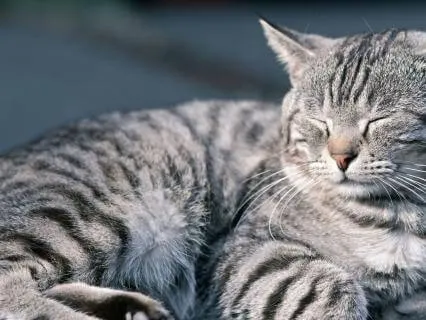
A cat does not worry if it is meditating correctly or not.
A crane does not think about tomorrow.
A fish will not regret yesterday.
They are all fully present in each moment because they simply are.
As you receive these stories simply listen,
Just as if you were sitting quietly in a forest watching the creatures go about their lives.
Now let's take a long slow breath in together and as you exhale let the human world soften and let the animal world welcome you.
Chapter One.
The Temple Cat.
This is a traditional Zen story about a temple cat.
In a small Zen monastery they lived a cat.
This was no ordinary cat.
She was old,
Gray and seemed to have been at the monastery forever.
No one could remember a time before her.
She had her own cushion in the corner of the meditation hall and every day when the monks gathered to sit in Zazen the cat would walk slowly to her cushion,
Curl up,
Close her eyes and just be still.
The monks loved this cat.
They saw her as a fellow practitioner,
A silent teacher.
Visitors to the monastery would remark on how peaceful the cat seemed,
How utterly present.
One day old cat grew ill.
She stopped eating.
She slept more and more and finally one morning the monks found her curled on her cushion having passed her over to the other world during the night.
They buried her with great ceremony beneath the oldest pine tree in the garden.
But now there was a problem.
The meditation hall felt empty without the cat.
Cushion in the corner unused and the monks without meaning to began to feel that something was missing.
Their meditation felt less complete.
One day an old monk hoping to restore the meditations had a small ornament of a cat carved from wood,
Placed it on the cushion and all the other monks seeing it felt comforted and so they resumed their practice.
Years passed and the old monk died.
New monks came and the story of the real cat faded.
However the ornament remained.
Slowly over time the new monks began to believe that the ornament itself was sacred.
They would bow to it before sitting.
They would whisper prayers to it and they believed that the statue's presence helped them meditate.
One day a new monk came from another monastery.
On his first morning he entered the meditation hall and saw the monks bowing to a wooden cat.
He watched for a moment.
Then he walked calmly to the cushion,
Picked up the carving and threw it out the window.
The monks were horrified.
How could you,
They cried.
That cat has been here for generations.
It helps us meditate.
The new monk sat on his cushion and looked at them.
Tell me,
He said,
Did the original cat meditate because she was a cat?
Or did she meditate because she sat?
The monks were silent.
The young monk continued,
That cat sat because sitting was what she did.
She did not need a statue to remind her.
Neither do you.
The moment you think you need something outside of yourself to find peace,
You have lost the peace that is already there.
Throw away all of your wooden cats.
Just sit.
The story so beautifully reminds us how easily we can attach to forms and forget our own essence.
Consider for yourself what wooden cats have you collected?
Any beliefs?
Perhaps attachments to what peace should feel like?
How your breath should flow?
Can you let them go and simply rest?
And as you rest here for this next minute,
Let's quietly contemplate.
What am I believing I need that I actually already have?
Chapter 2.
The Crane and the River.
This is a traditional tale inspired by the grace of water birds.
There was once a young crane who lived beside a wide flowing river.
He was beautiful,
Tall and white,
With wings that stretched wide and legs that moved with precision.
But the young crane was unhappy.
He watched the older crane standing motionless in the shallows,
Waiting for fish.
He thought they looked lazy.
He wanted to be a great hunter.
So he decided to try harder.
Instead of standing still,
He chased the fish.
It ran through the water,
Splashing,
Stabbing his beak left and right.
But the fish saw him coming from far away and scattered.
So he caught nothing.
After some time,
He grew frustrated.
He tried swimming after them,
Paddling furiously,
But his body was not built for speed in deep water.
The fish always seemed to stay just ahead of him,
Even laughing at his efforts.
Exhausted,
The young crane finally stopped.
He stirred in the shallows,
Breathing hard,
Feeling like a failure.
An old crane,
Grey-feathered and calm,
Had been watching all this from a nearby rock.
The old crane walked slowly into the water and stood beside the young one.
She did not chase.
She did not swim.
She simply stood,
Still as stone,
Her eyes soft,
Her body patient.
Within moments,
A small fish,
Thinking the water was safe,
Swam nearby.
The old crane's head moved like lightning.
She caught the fish and swallowed it so smoothly.
The young crane stared.
How?
He asked.
I tried so hard and caught nothing.
You barely moved.
The old crane looked at him with her ancient eyes.
You fought the river,
She said.
You splashed and churned.
The fish felt your struggle from far away.
I became the river.
I stood still.
The river flowed around me.
The fish did not feel a predator.
They felt only water.
When you stop fighting,
The river becomes your ally.
The young crane stood in the shallows,
And for the first time,
He did not try.
He did not chase.
He simply stood,
Feeling the current against his legs,
Feeling the sun on his feathers,
And slowly,
Almost without noticing,
A fish swam near.
And this time,
The young crane's beak moved on its own.
He had become one with the river.
The story is about right effort.
There is effort that comes from struggle,
And effort that comes through stillness and patience.
For the next minute,
Quietly ask yourself,
Where am I fighting the river?
Or perhaps,
Where could I be flowing with the river?
Chapter 3.
The Monkey and the Moon.
This is a classic Zen story that's found in many traditions.
One night,
A troupe of monkeys was playing in the forest near a deep,
Clear pond.
The moon was full that night,
And its reflection shone brightly on the surface of the water.
Oh,
It looked beautiful,
Round and luminous,
Like a perfect white jewel.
The youngest monkey saw the reflection and grew excited.
Look,
He cried,
The moon has fallen into the pond.
We must rescue her.
The other monkeys gathered around and saw the reflection,
So they agreed.
The moon must be saved.
If it remained in the water,
It might drown,
And then there would be no moon in the sky.
The oldest monkey,
Who was considered the wisest,
Devised a plan.
We will form a chain,
He said.
One monkey will hang from a branch above the water.
Another will hang from his tail,
And another from that one,
Until the lowest monkey can reach the moon and scoop it out.
The monkeys worked together.
They climbed a tree that hung over the pond.
The strongest monkey grabbed a branch with his tail and hung down.
The next one grabbed his tail,
And so on,
Until the chain of monkeys stretched down toward the water.
The youngest monkey at the very bottom reached out towards the beautiful,
Shining moon.
His fingers touched the water.
The reflection rippled,
So he grabbed at it,
But his hand closed on nothing but water.
He grabbed again and again,
And each time,
The reflection shattered into shimmering pieces,
And then reformed.
I can't catch it,
He cried.
The monkey above him pulled him up a little,
So he could try again.
Still nothing.
He was just getting wet,
Tired,
And frustrated.
And then,
One of the monkeys at the top of the chain looked up.
Through the leaves of the tree,
He saw the real moon,
Hanging high and perfect in the night sky,
Untouched,
Unharmed,
Exactly where it had always been.
Stop,
He called.
The moon is not in the water.
Look up.
One by one,
The monkeys looked up,
And they saw the real moon.
They realized their foolishness,
Reaching and grasping for a reflection,
Getting themselves soaking wet and exhausted,
While the real thing was calmly above.
The oldest monkey let go of the branch,
And the whole chain tumbled into the pond,
With a great splash.
They climbed out,
Shivering,
But laughing at themselves.
And from that night on,
They never tried to rescue the moon from the water again.
This story is a mirror for our own lives.
How often do we chase reflections,
Be they status,
Approval,
Possessions,
Even peace?
Meanwhile,
The thought of peace is not peace,
And the reflection of happiness is not happiness.
Is there something that you are currently grasping for?
Meanwhile,
The real thing is already here.
Let's contemplate this for the next minute.
Chapter 4.
The Toad Who Heard Thunder.
This is an original story about a small creature and a big sound.
In a peaceful garden pond,
There lived a toad.
He was a quiet toad,
Content to sit on his lily pad,
Catching flies,
Soaking up in the sun,
And sleeping through the warm afternoons.
He had lived in this pond his whole life,
And knew everything about it.
The taste of the water,
The feel of the mud,
The sound of the rain on the leaves.
But there was one thing that this toad did not know.
He had heard stories from the older creatures about something called thunder.
The frogs spoke of it in hushed voices.
The dragonflies whispered about it.
They said it was a sound so loud,
So deep,
So powerful,
That it shook the very earth.
They said it came from the sky.
And when it came,
Everything changed.
The toad was curious.
It asked the oldest frog,
What does thunder sound like?
The old frog thought for a moment and then said,
It is like a hundred stones falling on a hollow lug.
The toad tried to imagine that.
He had heard stones falling.
He did know the sound inside a hollow lug.
But putting them together did not give him the feeling the old frog had in his eyes.
So the toad asked a passing heron,
What does thunder sound like?
Hmm.
It is like the beating of a giant's wings,
She said.
The toad tried to imagine that too,
But again he knew he was missing something.
He asked a mole who lived beneath the garden,
What does thunder sound like?
The mole trembled.
It is not a sound.
It is a shaking.
The whole world shakes.
The toad grew more and more confused.
A sound that is not a sound.
A shaking that comes from the sky.
He could not put it together.
One afternoon the toad was sitting on his lily pad,
Drowsy in the heat.
The sky had grown dark without his noticing.
The air had become heavy and still.
And then,
Without warning,
The sky cracked open.
There was a blinding flash.
And boom!
The thunder rolled across the sky,
Deep and endless.
The toad felt it in his belly.
He felt it in his bones.
The water rippled.
The lily pad trembled.
Every hair on his body stood up.
And in that moment,
The toad understood.
Not because someone had explained it.
Not because he had imagined it correctly.
But because he had heard it himself,
Directly.
He laughed.
All those descriptions.
Wings.
Shakings.
They weren't wrong.
They just were not the real thing.
Because the real thing can only be known by experiencing it.
This story speaks to the heart of Zen about the truth that cannot be described.
It is an experience to be known,
To be felt,
To be realised.
Let's contemplate on this question.
Can I stop asking what peace sounds like and simply hear it?
Chapter 5.
The Two Fish and the Net Our final story is a traditional one.
And it takes place in a great river where there lived two fish who were close friends.
They swam together every day through the clear water,
Past rocks and reeds,
Beneath the shadow of the bridge,
Knowing every bend of the river,
Every hiding place.
One day,
They noticed something new in the water.
A large net was being lowered from a boat above.
They had heard stories about nets.
Terrible stories of the fish being pulled from the water,
Never to return.
And so the sight of the net filled them with fear.
The first fish,
Being quick and clever,
Said,
We must fight.
We must swim against the net,
Break through it and escape.
He charged at the mesh,
Thrashing wildly,
Trying to tear a hole.
But the more he fought,
The more tangled he became.
The net wrapped around his fins,
His gills,
His tail.
And soon he was unable to move.
The second fish watched his friend struggle.
He felt the same fear and the same urge to fight.
But something in him paused,
And instead of charging the net,
He stopped swimming.
He became very still.
He let the current hold him.
He did not push against the net.
He simply drifted.
And as he was drifting,
He noticed something.
The net was not solid.
It had holes.
Some of them were large holes.
Without fighting or thrashing,
He simply swam towards one of the large holes,
And slipped easily through,
Into the clear water beyond.
He turned and watched as the net was being pulled up,
Pairing his struggling friend with it.
So he called out,
Relax,
Relax and let go.
His friend heard him and followed his instructions.
As he felt his body becoming limp,
He noticed the net's grasp loosening.
Then he heard his friend call out again,
Look for the biggest hole.
And sure enough,
There was a hole nearby that was bigger than others.
Moving very,
Very slowly,
He was able to reach the hole just in time before the net was pulled onto the boat.
He landed in the water with joy,
And the two fish were once more reunited,
Having learnt a great lesson that,
Letting go,
Seeing clearly,
Moving with what is rather than against it,
This is true freedom.
Our final question to contemplate on.
What net am I fighting when I could simply slip through?
And now,
As our time together gently comes to a close,
Let us rest with the animals who have shared their wisdom.
You've sat with a cat who needed no statue.
You've stood with a crane who stopped fighting the river.
You've watched monkeys grasp at the moon's reflection.
You've heard thunder through the body of a toad.
And you've slipped through the net like the fish who knew when to be still.
These animal teachers ask nothing of you.
They're not asking of us to become like them.
They simply show what is already true.
That presence is natural.
Struggle is optional.
And peace is not earned.
It's recognised.
Quietly bring your attention now once more to your breath.
Feel the rise and fall like a gentle cat sleeping,
Patient as a crane in the shallows,
And clear as the moon above the water.
Let your breath remind you of your own animal wisdom which asks for nothing,
Proves nothing,
And simply lives through you.
Thank you so much for being here.
Until we meet again,
May you be peaceful and trusting.
.