Hi there,
Welcome to a Yoga Nidra question and answer session.
This was originally recorded for an Insight Timer live broadcast.
But I wanted to record it so that questions could keep getting answered long after the live events.
I hope you enjoy it.
And if you have any other questions,
Please be sure to leave them in the comments.
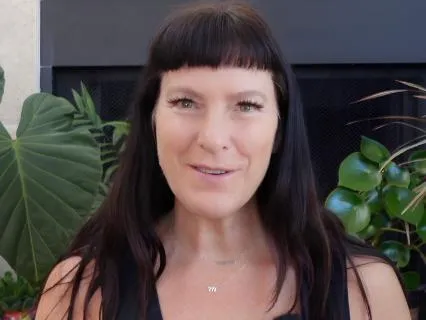
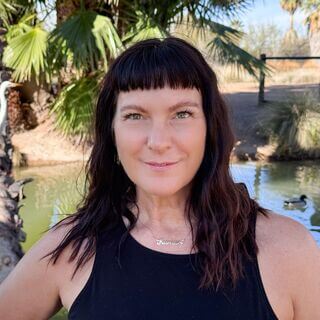
I'll just say a little bit about myself.
So yoga nidra is definitely one of my passions in this life and I love to make recordings and offer them to people because it is so beneficial.
So it's beneficial on so many levels.
I think what we know most popularly right now is it benefits with sleep.
Yoga Nidra practice any time of the day can help with your circadian rhythm.
And help to bring your sleep cycle back to normal.
A really healthy rhythm.
It's really easy these days for our sleep cycles to get disturbed.
It could be environmental reasons.
It could be the food we're eating.
It just could be stress,
Anxiety,
There's just so many reasons,
Menopause,
Perimenopause,
That we aren't sleeping.
Yes,
Really beneficial before bedtime.
So that I think is probably the most popular time I know for my uploads.
The most popular ones are the ones that are labeled for sleep,
Which by the way,
You could do any yoga nidra before bed and it doesn't have to say sleep on it.
It's just that a lot of times the ones that are labeled for sleep the guide isn't going to bring you back to waking consciousness after the practice.
Or sometimes like for me,
For instance,
I have several that the music keeps playing for an hour or even more.
I even have some that last for eight hours just with music or white noise.
So yes,
Before bedtime,
So,
So beneficial because.
.
.
The very beginning of the guidance is simply to help you get comfortable.
So your body can completely relax.
And so that in itself is like the gateway to falling asleep.
And then another thing that really helps calm the physical body is when we do the body scan in yoga nidra,
It's called the rotation of consciousness.
And that really helps the person that's receiving the yoga nidra completely let go just by putting your attention on different areas of the body.
You're going to relax so deeply.
Yes,
That happens to me.
So Susan says she hardly makes it through the first 10 minutes before falling asleep.
Yep,
That happens to me all the time when I do Yoga Nidra before bed.
And if you're intending to use it to help you go to sleep,
That's totally fine.
There's no big deal in that.
But what I will tell you.
.
.
Is that if you have fallen asleep or moved into that hypnagogic state where you're not awake but you're not like dreaming yet,
Your subconscious is still listening and doing the guidance.
And so in this way,
You're still getting a lot of the benefits of the practice.
Just laying there and receiving it.
Isn't that cool?
I know.
Yeah,
It's really cool that.
The practice is still super potent.
I end up dozing off pretty often at night depending on what I've done during the day or from extra tired.
I definitely don't hear the whole thing.
Like last night when I went to sleep,
I definitely heard the whole thing.
What I find interesting is a lot of times,
If I do fall asleep while listening to Yoga Nidra at night.
At bedtime in my bed,
I will wake up when the guide is bringing me out.
And so that really confirms that your subconscious is always listening.
It's kind of powerful if you think about it.
We can relate that to how we talk to ourselves all day,
Every day.
Like there's a part of us that's always listening.
That's below the conscious mind,
Our cognitions,
Our habits,
Our beliefs,
All the stories that we have.
There's this pure consciousness,
This pure mind stuff.
So that's pretty cool.
But there's also so many other benefits of yoga nidra beyond sleep.
So like I was saying,
It deeply relaxes the physical body.
And then once the physical body gets really relaxed,
Now the breath.
So when your breath slows down,
Your brainwaves.
Slow down.
And you move into a brain,
Oh,
There's my kitty.
We move into a brainwave state called alpha.
And a lot of times in yoga nidra we also will move into theta brain waves.
And then,
Of course,
Delta brainwaves are sleeping brainwaves.
And when we move into these brainwave states,
This is where the body has the innate capacity to heal,
Regenerate,
Rebalance,
Whatever is needed happens and this is why it's so imperative that we get a good night's sleep every night.
This supports our health and healing and how we show up in our daily lives.
That's another benefit of Yoga Nidra.
And because of that,
Anxiety and tension are allayed during the practice.
But this transfers over into our waking life.
Notice over time with practicing yoga nidra that maybe they're having a little less anxiety.
They're having a little less worry.
They're not reacting so much to the little things.
Maybe a deeper trust in the unfolding of their lives.
That's another way yoga nidra can be so beneficial to people.
Again due to the slowing of the brainwaves.
And the breath and the body moving back into regulation.
So a parasympathetic nervous system dominance is happening.
And this also creates a cascade of beneficial happenings with your organs and systems in your body.
So for instance,
The blood pressure normalizes and drops,
The heart rate normalizes,
So this is great for people that do have chronic conditions like high blood pressure or any heart condition.
It also can be really beneficial for digestion.
What could be called the relaxation response or the parasympathetic nervous system state or regulation Um.
.
.
Our body can function optimally.
And when the body is functioning optimally,
We breathe optimally,
And our mind stuff starts to balance,
Starts to slow down and become more even.
And we,
During the process of yoga nidra,
We're disidentifying from our thinking minds,
All the 50,
000 thoughts we have a day.
That is being put aside because it's like our body and our thinking mind kind of get out of the picture when we're moving through yoga nidra.
Um.
.
.
So yeah,
There's.
.
.
Many benefits of yoga nidra and it's not necessarily that it's just when you're doing the practice.
When we practice on a regular basis,
You will notice subtle changes in your experience and the Sankalpa is a huge part of that.
So the Sankalpa Is.
Heart-based resolve or intention.
And it's really most powerful when we Take the time.
To meditate and align with what our overall intention is for our life experience.
And I have videos about how to do that,
But I can tell you more if you're interested.
But it is also potent and okay if you don't have an established sankalpa.
Um A lot of times in yoga nidra guidance audios I will hear the guide give an example some culpa that you could use like I trust in my body's innate healing capacity.
You could even use a one-word Sankalpa.
Or make one up for that practice.
And it's still helpful and potent because basically what the sankalpa is,
Is that in the beginning of the practice we're planting a seed of our intention.
In the subconscious.
So we're already in a super quiet,
Relaxed state,
Hopefully.
And then later when we are even more still and relaxed and we are dwelling in the most subtle layers of our beingness.
We plant the Sankalpa again.
But this time it's like we're watering the seeds of what we really want in this life.
So the Tsongkhapa represents something we like to experience or live every day of our life.
It would be kind of like our true north.
And if we practice yoga nindra daily and keep bringing back this intention,
This Tunkulpa.
What starts to happen.
Is this intention is making an impression.
In our most subtle layer of mind stuff.
And it begins to rewrite over the stories,
The habits,
The beliefs that we've been operating off of and starts to become more dominant.
And it doesn't mean we have to have a Simkalpa about every aspect of our lives that we'd like to improve or.
.
.
Move into closer alignment with our true natures.
Just one Simcolpa.
It works just fine.
The Simcolpa really is a powerful tool if you enjoy yoga nidra and you find that it's a practice that really resonates with you.
It's well worth your energy to create your sankalpa.
I will tell you I do have free content about creating your Sankalpa.
Is like creating a new neural pathway.
It's like It's like rewriting the program.
And so what the little grooves I was talking about in the substance of your mind stuff,
They're called samskaras.
And maybe Vijay is familiar with when I say samskaras.
I don't know if you're still on here,
But um over our life and maybe even from our past lives,
According to yoga philosophy,
We come in with these samskaras,
These grooves,
And then as we move through life,
We keep creating more of them.
And This is what forms and shapes our personality and who we are.
A lot of,
Actually the majority of samskaras are beneficial.
It's really beneficial that we have a habit.
And a belief that we should cross the road with caution,
Right?
We should go on the green light or we should look both ways.
Like this is a really beneficial samskara.
But we also could have some scars that are not serving us anymore.
And maybe they started as a way to protect ourselves when we were little.
Maybe our parents would always say things to us.
And we thought it was really important that we believed that about what they were saying or believed that about ourselves.
I'm just thinking of an unhelpful samskara maybe that I personally have is my parents' belief that at all costs,
You should be skinny and that you were less worthy of what you desire because you had more body content.
And so I guess another way I could say it would be fat shaming.
And so growing up,
I heard that over and over and over,
And not just from my parents,
From the generation I was brought up in.
It was TV and movies and books and magazines.
All just really talking about you know,
The ideal way a woman should look.
And so over time,
I built up this story about my body and now that I'm an adult,
Very much an adult,
I noticed that these stories are not serving me.
And I think a lot of women and men are starting to realize like,
This information around the body It's not one size fits all.
And So that is just an example of how a samskara can form.
And so the result of that has been me judging my body,
My size.
Do I look good enough?
Am I worthy of this man who's interested?
You know what I mean?
I don't need to get too specific,
But you can see how this starts to happen.
And so not that my Sunkalpa is.
.
.
Based around that.
Particular topic.
But my overall intention for my life.
Guys.
Create new grooves.
So grooves,
Like not literally,
But new patterns in my brain.
So that starts to become more dominant.
And this is why people kind of report,
Like my teacher is Allie Boothroyd,
And she did a whole video about the benefits of yoga nidra and that is on a different internet host that hosts videos if you're looking for that in the future.
And it's the biggest report is that just people feel more content and at ease overall in their lives.
It definitely can be specific.
About change and evolution and coming into alignment.
But I think most of all,
People just feel a greater sense of ease.
Of clarity of purpose.
Emotions more regulated.
I know in my life I have found that over time with this practice I am less reactive to stressors.
Now,
That's not to say that I.
.
.
Don't get pissed off.
Or react to things ever.
But I do expect.
Because I'm going to keep doing this for as long as I live.
That it will get less and less and less and less as I evolve in my life.
So that's just a little bit more about the concept of Sankalpa.
Of the samscaras and what those are.
And,
How?
That intention or sankalpa creates.
Change and so that's just such a huge part.
Of yoga nidra.
Can we still get benefit from Yoga Nidra if there is no Sankalpa practice?
Yes.
It is true.
You can get plenty of benefit and this has actually been studied.
And I don't know if proven's the right word,
But,
Um.
.
.
The feedback was observed.
So Andrew Huberman,
I'm sure you've heard of him.
Maybe not but he is You think he's a neurobiologist?
At Stanford?
And he really loved the yoga ninja practice and found so much benefit.
In his life through doing it.
And he kind of stripped it down of the spiritual aspect.
And coined the term non-sleep deep rest.
So basically his intention was to make it accessible.
To all people because of course that it's called yoga nidra.
Some people are going to like right off the bat have opinions and judgments about what it is.
It is kind of a confusing name because when we think of yoga in the West,
We think of Triangle pose.
Child's pose.
That is definitely not what Yoga Nidra is.
So that is an interesting thing.
I think that and as D.
R.
Can still be an extremely potent practice.
All right,
So a lot of times you'll hear yoga nidra called yogic sleep.
Maybe you were wondering about that,
So I'll talk about that.
Thanks Susan.
I'm glad that you're enjoying this session.
So yogic sleep.
Why is it called yogic sleep?
Yoga.
Let's talk about that first.
In case you weren't aware,
Yoga is so much more than the physical asanas.
The asanas are triangle pose,
Child's pose,
You know,
Vinyasa,
Hot yoga,
Okay?
Those are the asanas,
But yoga is a philosophical system that has several different limbs to it.
And the goal of yoga.
Is to still the fluctuations of the mind stuff.
This is the overarching goal of yoga.
And when a practitioner meets that goal through meditation,
Practicing the whole system of yoga,
So to speak.
So not just asana,
But concentration,
Meditation,
Breathing,
And the.
.
.
The precepts,
That's not the word I want to use,
But they're called the yama and the niyamas.
They're guidance for ways of living.
I hate making this comparison,
But they're kind of like,
Maybe like the 10 commandments.
But in yoga,
And there happen to be 10 of them.
Okay,
So that's all of yoga.
That's what yoga represents.
Is stilling the fluctuations of the mind-step.
That's the whole goal of yoga.
The result of attaining that goal is union.
With your divine true nature.
So your divine true nature is.
.
.
Pure presence is peace.
Is.
Boundless love and compassion,
Right?
Like that's who we are at the core,
At our essence.
Those samskaras are what kind of muddy that water,
So to speak.
Right?
We're all like a clear,
Still pond at our true essence.
But the pond can get cloudy because of external circumstances.
All right,
So that's yoga.
Nedra.
Nedra.
In essence,
In the Sanskrit language means sleep.
But Yoga Nidra isn't any ordinary sleep.
This is a sleep with a trace awareness of consciousness,
Your subconscious,
Like we were talking about in the beginning.
So that's why it's called the yogic sleep.
Yoga nidra.
So I hope that maybe was interesting and helpful.
Yogic sleep,
Yoga nidra.
The art of conscious rest.
A lot of times it's called transformational sleep because so much happens while we are in this state.
Yoga Nidra can be practiced any time of day.
Morning,
Noon,
Or night.
It's going to be potent.
Really beneficial?
Anyone can practice it.
Because everyone innately knows how to sleep and needs to sleep.
It might be a little more challenging.
Um.
.
.
For some people.
Like for instance maybe you have ADHD it's a little harder to relax and people.
That have ADHD if they can just really breathe through it and concentrate.
It can be such a supportive practice.
People ask me like,
How often should I do Yoga Nidra?
Is it too much to do a practice morning and night?
No,
Not at all.
The more the better.
So getting back to like how much should a person Practice yoga,
Ninja.
If we rewind all the way to like 30 minutes ago,
I was talking about how yoga nidra has a cumulative effect on your body,
Mind,
Spirit.
And so the more often we plant that seed of our sunculpa,
And or the more often we bring our body into a deep state of rest the better.
There's no limit.
You can practice Yoga Nidra as much as you can.
Or as much as you want to.
You know we kind of get into this area of like okay so are we using it as an escape?
I don't know,
Maybe that's a good thing for you in your life at the moment.
So yeah,
It's not harmful to practice yoga nidra as often as you would like to.
Let's see what other questions.
My teacher Ali sometimes refers to yoga nidra as bliss for your brain.
There's actual studies where this guru guy Amrit Desai Actually,
And this other guy too who wrote the first book on yoga nidra,
They got brain scans during their yoga nidra practice.
And it's incredible.
How?
Organized.
And relaxed the brain.
Scan looks.
For instance,
I haven't looked at this information for a while,
But I think it was the prefrontal cortex.
And the amygdala.
Were like green,
So very cool,
Not a lot of brainwave action going on,
So that's very,
Very relaxed.
And over time,
It just stays like that.
So you're essentially rewiring your brain.
Yoga Nidra is an amazing practice.
I was introduced to it.
A long time ago like in 1992 1991 like a really long time ago.
Uh,
I would go to a place called the meditation center and it was a It was a Himalayan Institute place.
Now their version of yoga nidra is much different than the yoga nidra that I teach now,
But I was exposed to it.
Many,
Many years ago,
And it was only about five years ago that I decided to do a hundred hour training in it with my teacher,
As I mentioned,
Allie Boothroyd.
And that's when I really started getting into it on a regular basis because in the training you have to commit to doing yoga nidra twice a day.
And I did that,
It took me like four months to get through the training,
It was online.
I'm And so that's where the benefits of the practice really started revealing themselves.
And at that time,
I was struggling a bit with insomnia.
Stress reasons and hormonal reasons and It really supported me with the help of other things.
Sometimes I did have to use a little medication,
Herbal medication,
To help me.
Sleep but for the most part I know that it It really greatly impacted my nervous system.
Um.
.
.
And it happened to be at that time at the studio I teach at,
They asked me to start doing yoga nidra there,
So.
Yeah,
It's really been a big part of my life in recent years,
And I'm very,
Very grateful that I learned about it and that I brought it back into my life experience.
Loving loving yoga nidra um what else was i gonna say about yoga nidra I guess I could talk about these layers of consciousness.
So in yogic philosophy.
We have five layers of our being.
These are called the koshas.
We have the physical layer,
And that's called the anamaya kosha.
Essentially,
In yoga,
They call it the food body.
It's our physical body.
Then the second layer is called the prana maya kosha.
This is prana,
Our life force energy.
So it's our energy body.
But the next three layers of our consciousness are also energy.
They're energetic.
So like I said,
The only physical one is that first layer.
The third layer is called the monomyakosha,
And this is the layer of mind stuff,
Of cognitions.
Um And then we have the fourth layer,
Which is the Vijnana Mayakosha.
And this is getting like more subtle so this layer is also like a storehouse of all that we are?
But it also is the layer that has the bird's eye view of the other layers.
And then the most subtle layer is called the Ananda Mayakosha.
This is our bliss body.
So it's not like these layers are separate or in order from like worst to best or anything like that.
Sometimes they're pictured as like nesting dolls.
But really it it's all one but each more subtle layer affects the one previous.
The pranamaya kosha is going to affect even more.
The anamaya kosha the first layer so we're relaxing so okay so then in the yoga nidra the systematic sequence of guidance is a journey through the koshas,
The layer of being that we are.
We always start out with the physical body.
And usually before that we plant this in culpa and before that is like the settling phase and that's where you might do a little more you might do some body relaxation and some breathing practices there.
Maybe even physical stretching or movement during that phase.
But when we really get into the heart of what the yoga nidra journey is it's um it's moving through the koshas.
So that first one,
We have the rotation of consciousness where we move around the body.
Second,
We have the pranamaya kosha and this is where we might be guided to.
Focus on the breath.
One of my favorite examples would be like inhaling to the top of the head and then exhaling down through the body and then inhaling from the toes.
You're starting to experience the breath as an energetic feature besides the physical breath you're moving in and out.
The mano maya kosha is represented in the yoga nidra journey as sensing opposites.
One you might be really familiar with is starting to cultivate the feeling of heat in the body.
And then the feeling of cold in the body.
Heavy.
Light,
Grounded,
Floating.
There are yoga nidra practices that guide the practitioner to sense opposite emotions and this really is the original text of yoga nidra that was codified by a guy named Swami Satyananda Saraswati.
It was experiencing opposite emotion.
I think a lot of modern yoga,
Nidra guides.
Tend to do physical opposites because we know when we offer emotional opposites that this could bring up feelings for people.
And I know myself.
I want to lead practices that are trauma-informed.
So if I'm just putting a recording out into the world,
And someone's doing that and they have like an emotional.
Happening during their yoga nidra because of that.
If I don't need to do that,
I'm not gonna do that.
Put it that way.
So you might do a yoga nidra where someone is guiding you to feel anger.
And then guiding you to feel the opposite of peace.
So it's not a bad thing.
It's just not a one-size-fits-all thing.
I would call sensing emotions a more intermediate practice.
That would be better if you had a physical guide.
Okay so that's the third layer.
The fourth layer is the vijnana maya kosha.
So this is like an even more subtle body.
This is the phase in yoga nidra where you might be taken on a journey Maybe you're walking down a path and noticing things around you.
This also originally was flash images.
So.
.
.
Asking you to visualize a waterfall.
A grassy field with horses running through it,
A full moon in the dark night sky,
That kind of thing.
Butt back.
In the early years of Yoga Nidra.
This also could be symbols.
Um.
.
.
That's not so much what I do at this point.
So yeah,
That part of the guidance,
It could be a journey,
It could be sensing different symbols.
Yeah,
And then the last part of the last kosha is that bliss body.
And this is where you're left.
To realize your innate true nature.
This is where a lot of time people feel like they're floating.
Were.
That they're in this place where they're not the body,
They're not the mind,
They're just resting as.
.
.
Pure presence.
And this is also a time.
Where you could receive.
You could receive.
Images or guidance.
Um.
.
.
Could have an experience here in this space.
I don't want to say too much about it because it's It's different for every body,
Every time.
They do yoga nidra and sometimes it's just that you're.
.
.
Laying there.
In pure awareness,
You're not thinking about anything,
You're just completely.
Present.
So that's the five koshas in yoga nidra.
A full yoga nidra practice that includes all of the koshas takes about 45 minutes.
So that also brings me to.
.
.
There are now several schools of yoga nidra.
The foundational schools.
Have sssssssssssssssssssssssssssssssssssssssssssssssssssssssssssssssssssssssssssssssssssssssscript So they're the same every time.
Maybe a little variance,
But the same every time.
Now,
There's other school.
That Teach the teacher.
To understand the process of yoga nidra.
And the why's This is my school.
And we are encouraged to get in a meditative state ourselves.
And we teach through transmission which means Sort of Channeling isn't the right word,
But.
.
.
Just receiving what's next to say.
I'm not saying that that is exactly what I did as soon as I came out of my training.
I would write scripts.
I have 50 yoga ninja scripts that I wrote.
That's I started to really embody each segment of yoga nidra and to understand it so completely that now I do feel like I am receiving the guidance.
I don't use a script anymore.
So this is why.
When you choose a yoga nidra it's not going to be the same every time.
But what's going to be the same,
Hopefully,
Is the journey through the cautious.
Now you'll notice that I said a full yoga nidra usually lasts about 45 minutes.
It just depends on how long you make each section.
It could last longer.
It could be shorter.
But what about if you see a yoga nidra that's 12 minutes long.
Is it technically still a yoga nidra?
Yes.
We don't have to move through every kosha.
For it to bring us to that lasts.
Part of the yoga nidra or when we're just resting as awareness or consciousness.
If.
.
.
The guide can bring you into a deep state of rest in the intro.
The body scan and the breathing.
And then leave you to rest,
It is still considered a yoga nidra.
Is it as potent as a longer yoga nidra?
Maybe not.
But it's still really beneficial,
Because not everyone has an hour to just lay down on their floor on a Thursday afternoon.
So they want to do something,
Right?
Um,
So yeah.
I would say most of my yoga nidras are just full yoga nidras.
I do have some shorter ones and I can even make it shorter by doing the phases a little bit shorter.
So.
.
.
All that to wrap all that up.
There's different schools and styles of yoga nidra,
But they all have the same basis.
Just like there's different styles and schools of yoga asana.
They all have the same basis.
Wishing you the best rest of your night or your day,
Whatever time zone you're in.
And Thanks again for being here.