Hello and welcome to the practice of yoga nidra or the scientific name non sleep deep rest and SDR.
My name is Kumari and I'll be guiding you today.
So as you take the next few moments to create the most comfy setup for relaxation I will share a bit about this practice.
Yoga nidra is conscious rest.
During the practice the body sleeps but the mind remains awake.
This is referred to you as the yogic sleep or hypnagogic state.
It's that sweet spot between wakefulness and sleep.
When we quiet the overactive conscious mind and then move into a meditative state of pure consciousness the brainwaves slow down and we become very relaxed.
Yoga nidra cultivates a winding down of the nervous system and shifts you into the realm of the parasympathetic nervous system.
This is where we experience rest and digest.
Here is where you can surrender,
Rearrange and refresh on all levels physical,
Mental and emotional.
Take note of how your body is feeling as you rest here.
Can you feel any subtle or gross sensations?
Just notice any sensations that you may feel.
Now notice where you can feel stillness.
Taking notice of how your physical body is right here,
Right now and not trying to change anything.
Being the observer of your body.
We will now practice tensing and releasing the whole body three times.
Squeeze the toes,
The feet,
The legs,
The buttocks,
The core,
The fingers and hands,
The arms,
The neck,
The face.
Squeeze,
Squeeze,
Squeeze and relax.
Again,
Squeeze the whole body,
Everything tight,
Tight,
Tight and relax.
Now one more time,
Squeeze it all,
Squeeze tight,
Tight and relax.
Feeling how the body responded to the tense and release practice.
Feel the body so still and relaxed.
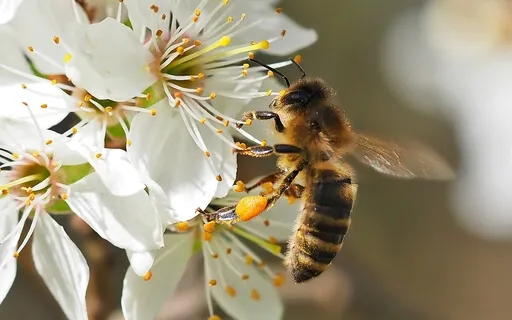
Next we'll do a yogic pranayama practice called the brahmari or bee breath.
This practice is done by cupping the ears with your palms and making a humming sound with the mouth closed like this.
The hum should be low to medium pitched and make your exhale as long as possible.
We are practicing this breath as a way to calm the nervous system even more and make ready for our yoga nidra journey.
On your own count six breaths exhaling with that hum sound each time.
Cupping your ears and let's go.
Continue to keep your focus on the breath.
Notice the trail of your breath,
The inhale and the exhale.
Each breath guiding you deeper into a relaxed and aware state.
It's now time to bring a sankalpa into your practice.
A sankalpa is an intention,
Something you truly desire in your life.
It can be something you are working on as a theme in your life currently or something that organically rises to the surface right now.
Speak your sankalpa in the positive present tense.
I am statements work really well.
So let's take a moment to allow the sankalpa to arise or if you're already currently working with one bring it to your mind now.
Go ahead and repeat your sankalpa three times in your mind silently.
Believe in this intention.
Bringing it here now is like planting and watering a seed.
Now we'll welcome awareness of the body through a body scan.
Follow along with my voice to the area of the body I mentioned.
Perhaps you see this area in your mind's eye or maybe you use a shape or a color as I say the area.
However you experience this body scan is perfect for you right now.
Starting at the crown of the head.
Sense the crown of the head.
Move to the space between the eyebrows.
The right eye and the left eye.
Both eyes simultaneously.
The tip of the nose.
The right ear.
The right shoulder.
The left shoulder.
The left ear.
And now sensing the mouth.
The tongue.
The teeth.
The upper lip.
The lower lip.
And both lips together.
The center of the throat.
The right shoulder.
The right elbow.
The right wrist.
The right hand and its fingers.
One.
Two.
Three.
Four.
Five.
And the whole right hand.
And now sensing the whole right arm.
The hollow of the throat.
The left shoulder.
The left elbow.
The left wrist.
The left hand and all its fingers.
One.
Two.
Three.
Four.
Five.
And the whole left hand.
Sensing the entire left arm.
To the center of the chest.
The right side of the ribcage.
The left side of the ribcage.
The solar plexus.
The navel center.
Peel into the right hip.
The right knee.
The right ankle.
And the sole of the right foot.
And all five toes.
One.
Two.
Three.
Four.
Five.
Sensing the whole right foot and up the entire leg.
The pelvic bowl.
The left hip.
The left knee.
The left ankle.
The sole of the left foot.
And all five toes.
One.
Two.
Three.
Four.
Five.
Feeling into the entire left foot and leg.
The hip points.
The buttocks.
Sensing the whole spine.
The whole backside of the body.
And now the whole front side of the body.
The entire body now.
Sensing and feeling your entire body.
And the mind is still.
Very still.
You are completely safe to let go of any thoughts that arise.
And notice if you have a thought.
Just notice it and let it go by coming back to the rhythm of your breath.
Do this as many times as you need.
Allow your mind to take the back seat and simply be here now.
Staying in this quiet yet aware state for several minutes.
Just following your natural breath.
Staying with your breath.
And now in this sweet space of space.
Stillness.
Could you welcome your sankhopa to come back again?
Affirming it several more times.
Resting here a bit more mingled with your heart's desire.
Start to draw in some deeper breath.
Experiencing your whole body as you breathe.
Sensing the subtle movement your breath makes within your body.
Feeling the soft air that flows in and out of your nostrils.
In and out.
In and out.
Now invite some gentle movement into the body.
Your toes and feet.
Fingers and hands.
Deeper breaths gently expand the ribcage.
Moving the head from side to side.
Allow your awareness to drift to any sounds you hear.
And ever so slowly bringing your awareness back to the space you're in.
Whatever is next for you in your day or evening,
I'm wishing you all the best.
And I'm so happy you decided to meditate with me.
Namaste.
Namaste.
Thank you.