
The world’s largest free audio library for everyday wellbeing
Real people. Real life. Real time.
Retreat categories
All RetreatsYoga RetreatsWellness RetreatsMeditation RetreatsYoga Teacher TrainingWomen's RetreatsYoga Retreats in BaliYoga Retreats in United KingdomYoga Retreats in AustraliaYoga Retreats in ItalyFind Your Perfect Retreat
Discover transformative Retreats led by Insight Timer's best teachers.Reconnect, recharge, and return renewed.
The world’s largest free audio library for everyday wellbeing
Blog categories
Mental Health and WellbeingTips and GuidesScience and ResearchTraditionSpiritualityAt WorkTop Articles
How to Meditate
Meditation is something everyone can do. Practicing can help improve your health and wellbeing.
Explore MeditationMeditation Timer
Free meditation timer with customizable intervals, bells, and ambient sounds.
Meditation Timer Online
COURSE
The Science & Practice Of Breathwork - Module 4, Mixed & Specific Methods
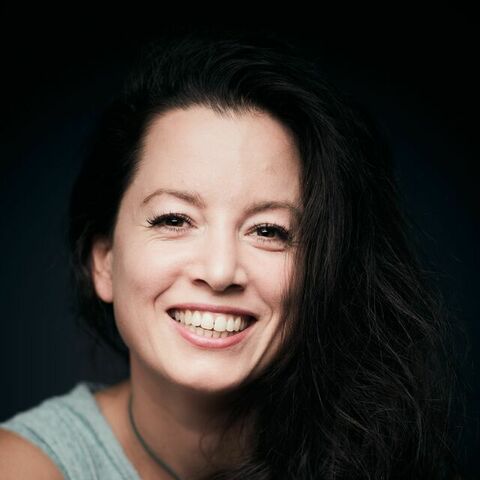
With Dr. Inge Wolsink
Once you understand the foundations of breathing, slow and nasal breathing, fast breathing, and breath holds, the next question becomes: which practice do I use, and when? That is the focus of this fourth module of The Science & Practice of Breathwork. In this module, you will learn how to use breathwork as a practical tool for specific situations. Instead of treating breathwork as one general solution, you will begin to understand it as a set of different “gear switches” for your body and nervous system. Some practices help you calm down when you feel anxious or overwhelmed. Some help you recover after stress. Some help you build energy and focus. Some can support sleep, emotional regulation, endurance, or performance. And some practices are especially useful because they are simple enough to use in the middle of daily life. In Module 4: Mixed Practices and Specific Tools, we bring different techniques together and look at how to apply them more intelligently. You will explore breathwork for stress relief, anxiety, panic, energy, focus, recovery, relaxation, performance, and daily nervous system regulation. This module helps you move from learning techniques to building discernment. You will start to ask: what does my body need right now? Do I need to calm down, wake up, focus, release tension, recover, or build capacity? And which breathing practice supports that state best? My hope is that by the end of this module, you will no longer feel lost in the world of breathing exercises. Instead, you will have a clearer map of breathwork and a more personal understanding of how to use your breath in a way that is safe, effective, and relevant to your life. Welcome to The Science & Practice of Breathwork: Module 4, Mixed Practices and Specific Tools.
Meet your Teacher
read more
10 Days
1.3k students
4.9 stars
15 min / day
Sleep
English
4.9 (64)
Recent Reviews
Cathy

November 6, 2025
This course was so very informative and helpful. The theory mixed with practice was perfect. The instructor responded quickly and thoroughly to questions posted. As I learn more about breathwork, I have a feeling I will return to this course often.
Sergio
July 6, 2025
Thanks Inge for all this super deep professional and interesting course! I have learned a lot, not only different breath works but the science behind, very interesting all of it! Thanks for sharing your knowledge with us! And let’s keep up the good breatwork 🙏😉 be well be happy be safe. Sergio
Karlheinz
March 28, 2025
I am grateful for this enriching course. My breathing journal is being filled and I want to evolve my personal breathing practice furthermore. I appreciate the mindful and healthy approach on breathing. Thank you, Inge for your dedication and for sharing your wide knowledge here. Nadia
Param
October 29, 2024
Excellent course; will go thru the 4 modules again. I picked up a lot from this course, which appears to supplement the course by Ben Holts, The 21 Days Breathwork Academy. Would be great to add another module, Moduke 5; designed specifically for improving specific conditions e.g. better sleep, improving immune system, improving body injury, etc. Excellent course.
Mike
October 7, 2024
Great course that combines the theory and practical application of breath work.
Rizwan
July 14, 2024
Simply the best course so far for me 🙏
Pete
June 8, 2024
Thank you so much for this set of fantastic of well structured, informative breathwork courses. They have really helped me understand and tailor particular practices to my varying needs. Practices I keep coming back to here in Course 4 are Sudarshan Kriya and Tummo with Triangle breathing. Thank you again for this excellent course. Most appreciated! Pete
Cees
May 15, 2024
This was the best course I’ve ever done on Insight Timer. Learning the backgrounds, the why and how, behind the working of all kinds of breathwork patterns is very stimulating. The teachings are thorough and profound, the language and tone immaculate and loving. Thank you so much for sharing and making this world a better place 🙏🏻
Claudia
April 28, 2024
Thank you so much for this course. I have learned so much regarding my breathing in various situations throughout my daily rhythms. Understanding that breath work needs to be aligned with the rhythms was a key learning experience. I am now integrating somatic exercises and adapted TaiChi with the breath work which helps the vagal tone and perception of chronic pain. Still need some more practice including yoga nidra for sleep improvement but getting better slowly. Would you be interested in combining yoga with the breath work practice for advanced breathing training?
Jayme
April 19, 2024
Thank you. It was extremely valuable to learn both the theory and practice. The instruction was so clear. I feel empowered with the education to use various breathing exercises for different reasons His was an excellent course. I will absolutely continue to practice as part of my mental and physical health routines.
Jim
April 16, 2024
Well organized and excellent explanation.
Rob
March 28, 2024
This is a very valuable course both in wisdom and application. Simply put, all humans must breathe to sustain our body, our temple. That is job one. Inge explains and expands this simple notion across a wonderfully organized look at how we can be mindful breathers and not just sustain our bodies but indeed sustain our consciousness and quality of living. Thank you for this awesome course, Dr. Inge. - Rob A. Kansas USA
Mark
March 9, 2024
Wonderful
Andrea
February 12, 2024
The whole four-part course was excellent! The mix of theory and practice drew together the importance and usefulness of various techniques in a way that I hadn’t previously understood. I can see the changes in my life and personal breath work practice. Thank you!
Mark
January 25, 2024
Such an informative and empowering course. I am looking forward to incorporating this knowledge and the practices presented into my own breath practice.
Iain
December 21, 2023
Interesting and instructive.
M
December 16, 2023
This course is excellent. I am fairly new to breathwork having tried the breathwork challenge on the app. This course is a great next step because it explains some of the details of the science of breathwork as well as the limitations of our current knowledge. The practices can be a bit challenging but are not overwhelming. Ideally, with this information and a bit of reflection you can tailor a practice to your needs. I enjoyed it very much and it is clear that a great deal of time, care and knowledge went into the preparation.
Drew
December 5, 2023
Thank you for a powerful and effective course! Now to make like Inigo Montoya and go back to the beginning! I will review and practice all of the lessons to build my practice from the foundation of nasal and slow breathing and incorporate mixed breath work as my understanding develops further. So far, I’ve seen some improvement in sleep quality and I have used slow breath breaks during the work day to bring attention to my state and make minor adjustments. I have been doing most of my breathing practice in the morning, and I think I will add a practice prior to sleep to wind down from the day. I have been skiing and snowshoeing at 3200m elevation while nasal breathing as a training tool. My MBT was shockingly low. I plan to use breath holds and mixed practices to work on this. If there is a module five, I will participate. I would love to experience the full length sessions of both mixed practices you offered in module 4. We often say “they took my breath away” as a compliment. Maybe the higher accolade it “you gave my breath back to me.” Thank you for being our guide in this course. Drew
More from Dr. Inge Wolsink

Trusted by 37 million people. It's free.

Get the app


