The world’s largest free audio library for everyday wellbeing
Energy & Subtle-Body
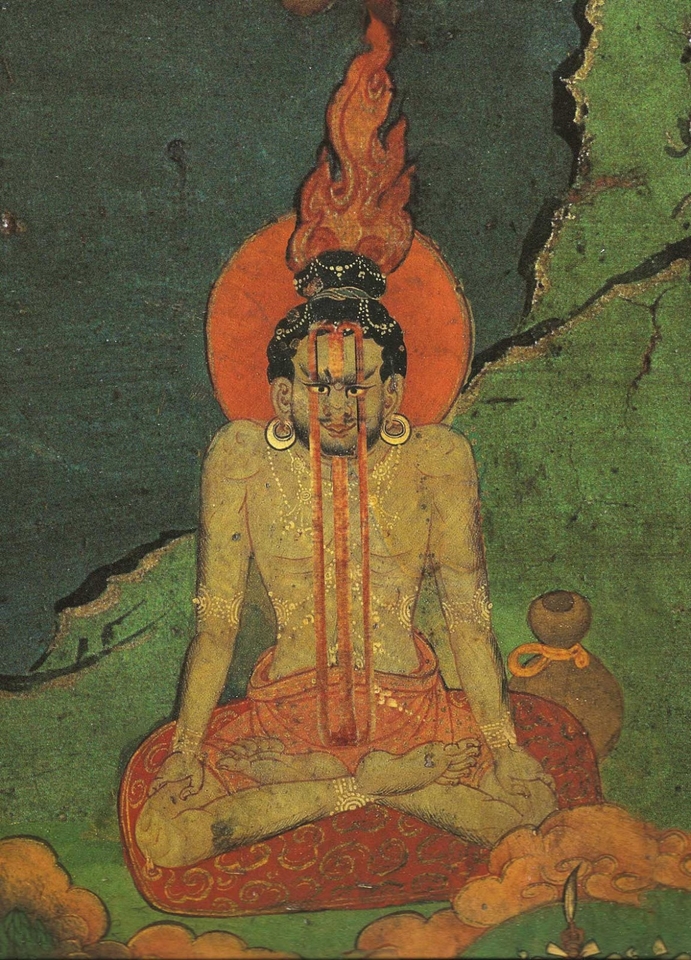
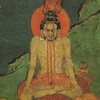
Tummo Inner Fire is a Tibetan Vajrayana Buddhist and Bön subtle-body practice that combines channel visualization, vase breathing, and muscular contraction to generate inner heat and draw wind-energy up the body's central channel.
Last Updated
3 Jul 2026
We are still reviewing this page. Our research team checks every technique page for accuracy and evidence quality before final release. Details may change as that review completes. The evidence badge shows our current reading of the published research.
RECOMMENDED DOSE
No direct dose-response literature exists for this technique. These recommendations are based on general practice conventions for breath-focused meditation and should be treated as starting points only. A short, gentle introduction helps new practitioners build tolerance to the intense breathing before increasing duration. No direct dose evidence; editorial synthesis.
No direct dose-response literature exists for this technique. This is a typical established-practice level inferred from general breathwork and meditation conventions once basic technique is comfortable. No direct dose evidence; editorial synthesis.
No direct dose-response literature exists for this technique. This maintenance level reflects general conventions for committed contemplative practice and should only be approached under experienced guidance given the physiological intensity of Tummo. No direct dose evidence; editorial synthesis.
Session length
Session length: 10–15 minutes
10
MIN
How long each individual practice session should last from start to finish.
Frequency
Frequency: 3–4 days
3
DAYS
The number of days per week to fit a session into your routine.
Session length
Session length: 20–30 minutes
20
MIN
How long each individual practice session should last from start to finish.
Frequency
Frequency: 4–5 days
4
DAYS
The number of days per week to fit a session into your routine.
Session length
Session length: 30–45 minutes
30
MIN
How long each individual practice session should last from start to finish.
Frequency
Frequency: 5–7 days
5
DAYS
The number of days per week to fit a session into your routine.
About this card. No direct dose-response literature exists for Tummo Inner Fire; these figures are editorial synthesis based on general breathwork and meditation conventions and should be treated as starting points only. These recommendations are not a substitute for personalised guidance from a qualified practitioner.
Quick answers to what people most often ask. Each card links to the deeper section below.
evidence
No controlled trials have tested Tummo Inner Fire directly, so the evidence is indirect. Research on related relaxation and meditation practices links this kind of mind-body training to a quieter fight-or-flight response and measurable shifts in stress-related gene activity, but none of these findings were measured in Tummo itself.
Read moregood for
Tummo Inner Fire may suit people drawn to an intensive, tradition-based practice who want strong activation followed by deep settling, especially those who feel wired after stress and want a structured way to come down. It is not a self-guided fix for anxiety, and its physical intensity requires medical clearance and experienced instruction for some.
Read moresafety
Most healthy adults can practise Tummo Inner Fire safely when learning slowly under an experienced teacher. People with cardiovascular disease or uncontrolled high blood pressure, seizure disorders, pregnancy, or a history of panic or trauma should seek medical guidance first, because forceful breath retention raises heart rate and blood pressure and floods the body with strong sensation.
Read morehow it works
Tummo Inner Fire works through a two-phase rhythm: forceful breath retention, muscular contraction, and vivid heat imagery first drive the body into strong fight-or-flight arousal, raising heart rate and building warmth. A deliberate drop into stillness then engages the rest-and-recovery branch of the nervous system, slowing the heart and easing the body out of high alert.
Read moreTummo Inner Fire is a Tibetan Vajrayana Buddhist and Bön subtle-body practice that combines channel visualization, vase breathing, and muscular contraction to generate inner heat and draw wind-energy up the central channel.
Practice moves through distinct phases. You first picture the three principal channels, the central one flanked by a right and a left, then draw the breath down below the navel and hold it, a technique called vase breathing, while contracting the muscles of the lower body. That effort kindles a felt sense of inner heat and guides the wind-energy upward through the central channel. Vigorous, heat-building stages alternate with a deliberate settling into stillness, and the whole sequence is taught progressively through lineage transmission rather than picked up as a self-directed exercise.
Tummo and Hindu kundalini yoga both work with a rising vital energy, but Tummo sits within a Buddhist Vajrayana and Bön framework, maps chakras within the central channel, and is traditionally woven into preparation for death and the bardo transitions. It is not a passive relaxation or gentle breath-awareness meditation; its active phases are physically demanding and deliberately heat-generating. It also should not be confused with general breathwork or cold-exposure methods, which share some surface features but come from entirely different traditions and aims.
Not to be confused with
Wim Hof Method
Often linked to tummo in popular accounts, but it is a modern secular protocol of cyclic breathing and cold exposure, without the Tibetan visualization, central-channel framework, or lineage transmission that define Tummo Inner Fire.
Hindu Kundalini Yoga
Shares the language of rising kundalini-like energy through a central channel, but belongs to a Hindu Shakta cosmology; Tummo sits within a Buddhist Vajrayana and Bon framework tied to death and bardo preparation.
General pranayama and breathwork
Tummo uses breath retention as one tool, but it is not simply a breathing exercise; the breath serves visualization of channels and the guiding of inner heat and wind-energy, within a specific contemplative path.
Tummo works through a two-phase rhythm. Forceful breath retention, muscular contraction, and vivid heat imagery first drive the body into strong arousal, and a deliberate drop into stillness then lets it settle. Research on meditation and relaxation broadly, not Tummo specifically, suggests this settling phase engages parasympathetic activity, the rest-and-recovery branch of the nervous system that slows the heart and eases the body out of high alert (Reddy & Roy, 2019), (Benson, 1983). Practitioners often feel the shift as breathing slowing and the body growing heavier once the heat-building effort stops.
Once the vigorous heat-building phase gives way to stillness, many practitioners feel the body grow heavier, breathing slow, and mental urgency ease. That settling is when the parasympathetic branch, the body's rest-and-recovery system, tends to take over, an effect that broader meditation and relaxation research links to lower fight-or-flight arousal (Reddy & Roy, 2019), (Benson, 1983).
After the vigorous breath-holds and heat-building of Tummo, the body finally has room to settle, and that drop from high activation toward calm is what arousal downregulation describes. Different meditative practices produce their own distinct mind-body effects, and the stillness that follows the active work may let a keyed-up system ease back toward rest (Reddy & Roy, 2019).
Tummo produces two opposite bodily states in sequence. During the active phases, vigorous breath retention and muscular contraction raise sympathetic arousal, the body's fight-or-flight gear, so heart rate and blood pressure climb and internal heat builds, felt as a pounding heartbeat and a spreading warmth. As the practice settles into stillness, that arousal is expected to fall: the same broad relaxation research links this kind of settling to reduced sympathetic activity (Benson, 1983) and to shifts in stress-related gene activity measured in relaxation-response practitioners (Bhasin et al., 2013), felt as the racing quality draining away into a warm, heavy quiet. None of this has been measured in Tummo itself, so the calming direction is inferred from adjacent practices.
When the forceful breath-and-heat work gives way to closing stillness, the effort and internal warmth often dissolve into a warm, heavy quiet, the heartbeat slowing and the body no longer bracing. That settling reflects a drop in sympathetic nervous system activity, the body's fight-or-flight arousal, a shift inferred from calmer relaxation practices rather than measured in Tummo itself (Benson, 1983).
Once Tummo's vigorous, heat-building phases give way to stillness, the body can step down out of fight-or-flight. That easing of sympathetic activity, the branch that speeds the heart and primes you for action, is a hallmark of calming mind-body practices (Benson, 1983); it has not been measured in Tummo itself, so it is inferred from related practices, but where it happens the racing, keyed-up quality tends to drain away as breathing slows.
After Tummo's intense, heat-building phases give way to stillness, many people feel the wired, keyed-up quality drain away as the body settles into a heavier, steadier calm. That reflects the sympathetic branch of the nervous system, the fight-or-flight gear that speeds the heart, easing its activity. Calming mind-body practices are consistently linked with reduced sympathetic activity (Benson, 1983), though this has not been measured in Tummo itself, so the direction is inferred from related practices.
Feeling drained after a long run of stress is common, and people who practise related breath-and-meditation techniques often say they feel more physically resourced after a session. In regular relaxation-response practitioners, genes that run mitochondrial energy metabolism, the machinery cells use to turn fuel into usable energy, become more active while inflammatory pathways quiet down, though this has not been measured in Tummo Inner Fire itself (Bhasin et al., 2013).
The braced, run-down feeling that lingers after long stretches of stress is driven partly by NF-κB, a molecular switch inside cells that turns on genes for inflammation. In people practising relaxation-response techniques, this switch shows lower activity (Bhasin et al., 2013); Tummo Inner Fire has not been measured directly, but the same easing of inflammatory signalling may accompany the calm, settled phase that follows its active heat-building work.
Limited–Emerging evidence is all that exists for Tummo Inner Fire, because no controlled trials have tested the practice itself. What can be pointed to comes from research on related relaxation and meditation practices, which links this kind of training to reduced fight-or-flight arousal (Benson, 1983) and to shifts in stress-related gene activity in healthy practitioners (Dusek et al., 2008), (Bhasin et al., 2013). The practice cannot be said to specifically relieve anxiety, boost energy, or change a health condition: there are no large trials, no Tummo-specific outcomes, and no long-term follow-up.
Direct research on Tummo Inner Fire is very thin, so most of what can be said comes from studies of related relaxation and meditation practices. That work links this kind of mind-body training to a quieter fight-or-flight response and to measurable shifts in stress-related gene activity in relaxation-response practitioners (Benson, 1983), (Dusek et al., 2008), and finds that different meditation styles produce distinct physiological and brainwave, or EEG, patterns compared with ordinary thinking (Reddy & Roy, 2019), (Davis et al., 2026). The central limitation is scope: none of these studies tested Tummo itself, so any effects are inferred from adjacent practices rather than measured in this technique.
0
Meta-analyses
0
RCTs
0
Systematic reviews
0
Observational
5
Pilot
Studied populations
Outcomes measured
A study of different cognitive states for meditators and non-meditators with the use of multiple classification indices derived from the PSD of EEG data and lessons learned about cognitive states and the nature of intelligence in minds and machines
2026
Finding: This EEG study compared experienced meditators with non-meditators as they moved through several mental tasks, and the meditative state showed brain-signal patterns clearly distinct from ordinary thinking, reading, or watching a video. In plain terms, meditation appears to put the brain into a measurably different mode rather than just a quieter version of everyday attention. Worth knowing, though: this was a small exploratory study of general meditation, not of Tummo Inner Fire itself, and it tracked brain activity rather than any health or well-being outcome, so it tells us about the shape of the meditative state more than what the practice does for you.
See full citation in referencesGenomic Counter-Stress Changes Induced by the Relaxation Response
n = 58
Finding: Comparing 58 people, long-term practitioners of relaxation techniques, complete beginners trained for eight weeks, and a comparison group, this study found that regular relaxation practice shifted the activity of hundreds of genes tied to how cells produce energy and handle oxidative stress, the kind of wear-and-tear linked to chronic stress. In everyday terms, calming the body through practice appears to leave a measurable imprint at the cellular level, and even eight weeks of training began to move these markers. One important caveat: this research looked at general relaxation-response practices, not Tummo Inner Fire specifically, so it points to what mind-body training can do rather than proving these exact effects for Tummo. Direct scientific study of Tummo itself remains very limited, so treat this as encouraging background rather than proof.
Tummo Inner Fire comes from Tibetan Vajrayana Buddhism and the Bön tradition, documented in the eleventh-century Six Yogas of Naropa of the Kagyu lineage and in the Bön five-fold path, with modern transmission through teachers such as Tenzin Wangyal Rinpoche and various Kagyu centres. These roots help explain the practice's form, its channel visualizations, vase breathing, and staged movement toward inner heat, not its clinical effects. It is framed within a subtle-body cosmology of channels, winds, and chakras and taught progressively through lineage instruction.
For most healthy adults, Tummo Inner Fire is low-risk when it is learned slowly under an experienced teacher rather than rushed alone. The caveat that matters is physical intensity. The active phases use forceful breath retention and muscular contraction that drive strong sympathetic arousal, the fight-or-flight activation you may feel as a pounding heart, building internal heat, and a surge of alertness, and they briefly raise heart rate and blood pressure while you practise. Because no study has directly tested Tummo for adverse events, these cautions come from its known physiology and from how it is traditionally taught, not from safety trials (Reddy & Roy, 2019).
People with cardiovascular disease or uncontrolled high blood pressure should take particular care and seek medical guidance before starting, because the rise in heart rate and blood pressure during the active phases can add real strain on the heart. That is a moderate-to-high caution inferred from the practice's physiology rather than from direct safety data. The same care applies to seizure disorders, where forceful breath retention may lower the seizure threshold, also a moderate-to-high mechanism-inferred caution. Pregnancy and a history of panic or trauma-related overwhelm warrant modification and close teacher support, a practice-informed caution, since the intense breath-holds and the flood of strong internal sensation can feel destabilising.
Tummo's active phases use forceful breath retention and muscular contraction that briefly raise heart rate and blood pressure, which can add real strain on the heart. If you have cardiovascular disease or uncontrolled high blood pressure, seek medical guidance before starting and learn slowly under an experienced teacher rather than self-guiding. This caution is inferred from the practice's physiology, not from direct safety trials (Reddy & Roy, 2019).
| Technique | Best for | Use with care | Evidence strength | Distinction |
|---|---|---|---|---|
| Wim Hof Method | A short, structured, self-directed practice for feeling energized and building cold tolerance, without committing to lineage training. | The rapid breathing and holds can cause lightheadedness or fainting; never practice in or near water or while driving. | EVIDENCE | The Wim Hof Method is a modern, secular routine of rapid cyclic breathing, breath holds, and cold exposure, often described as inspired by tummo but stripped of its Tibetan framework. Tummo Inner Fire keeps the full Vajrayana and Bon context: visualizing the central channel, guiding wind-energy upward, and alternating heat-building effort with a deliberate settling into stillness, all learned progressively through lineage instruction rather than a standardized public protocol. |
| Hindu Kundalini Yoga | Practitioners drawn to a yogic path within a Hindu framework, often combining posture, breath, mantra, and energy work. | Intense energy-raising practices can stir strong physical and emotional states; steady guidance matters, especially with a trauma history. |
It rises, then settles. During the vigorous active phases, forceful breath retention and muscular contraction drive fight-or-flight arousal, so heart rate and blood pressure climb, felt as a pounding heartbeat and building heat; the racing quality eases as the practice drops into stillness. This is inferred from the practice's physiology, not measured in Tummo itself (Benson, 1983).
+
It rises, then settles. Tummo's active phases deliberately raise sympathetic arousal, the body's fight-or-flight gear, so a faster, pounding heartbeat and warmth are the expected pattern rather than a warning sign on their own, and heart rate and blood pressure tend to fall again as you move into the quiet settling phase (Benson, 1983). Direct study of Tummo is very limited, so this rise is inferred from known physiology and adjacent meditation research rather than measured in the practice itself (Dusek et al., 2008), (Reddy & Roy, 2019). Because the active phases briefly raise cardiovascular load, anyone with heart disease or high blood pressure should seek medical guidance and experienced instruction first.
Partly untested. No controlled trials study Tummo directly, so its specific benefits remain unproven (Reddy & Roy, 2019). Related relaxation and meditation research suggests this kind of practice may help calm the body's fight-or-flight response, the keyed-up, racing feeling, but that finding is borrowed, not measured in Tummo (Benson, 1983).
+
Partly untested. The tradition is real and centuries deep, but no randomised trials have tested Tummo Inner Fire itself, so claims that it "works" for any condition stay unproven (Reddy & Roy, 2019). What can be pointed to comes indirectly from studies of related relaxation and meditation practices, which link this kind of mind-body training to a quieter fight-or-flight response, the racing, keyed-up alertness easing into calm, and to shifts in stress-related gene activity (Benson, 1983), (Dusek et al., 2008). Read that as suggestive of the settling many people notice, not confirmation for Tummo specifically, and not a replacement for clinical care.
A Tibetan Buddhist and Bon practice that uses breath retention, visualization, and physical movement to generate a felt sense of internal heat and raise a kundalini-like energy through the body's central channel.
A forceful breath retention in which the held breath is drawn down and gathered below the navel, contracting the lower abdomen so the belly rounds like a vase; it is the engine that kindles inner heat in Tummo.
In the tradition's map of the subtle body, the main energy pathway running up the core of the torso, flanked by right and left channels; Tummo aims to guide wind-energy into and upward through it.
A traditional subtle-body construct, not an anatomical structure; it functions as source-context for the practice form rather than a measured physiological feature.
The inner currents that Tibetan practice describes moving through the channels; practitioners work to settle and direct these winds, experienced as sensations of flow, warmth, and vitality along a pathway.
The tantric stream of Tibetan Buddhism that frames Tummo, using visualization, subtle-body practice, and progressive lineage instruction as a path.
Tibet's indigenous spiritual tradition, which preserves its own version of inner-heat practice within a five-fold path alongside the Buddhist Six Yogas of Naropa.
A rise in the body's rest-and-recovery branch, which slows the heart and eases tension; in Tummo this is the settled, heavy-bodied calm that tends to follow the active heat-building phase.
Increased parasympathetic (largely vagal) tone shifting physiology from arousal toward recovery; inferred for Tummo's settling phase from relaxation-response literature, not measured directly.
J. J. Joshua Davis, Florian Schübeler, Ian J. Kirk, Robert Kozma (2026). A study of different cognitive states for meditators and non-meditators with the use of multiple classification indices derived from the PSD of EEG data and lessons learned about cognitive states and the nature of intelligence in minds and machines. https://doi.org/10.3389/fnsys.2025.1718733
Cited in: Research, What happens in the body
Jeffery A. Dusek, Hasan H. Otu, Ann L. Wohlhueter, Manoj Bhasin, Luiz F. Zerbini, Marie Joseph (2008). Genomic Counter-Stress Changes Induced by the Relaxation Response. https://doi.org/10.1371/journal.pone.0002576
Many people describe deep meditative focus as mental chatter quieting until attention feels steadier and more absorbed. Underneath that shift, the brain's electrical rhythms, the activity that EEG recordings capture, take on patterns measurably different from ordinary, task-focused thinking (Davis et al., 2026). This has been measured in meditation research broadly, not in Tummo Inner Fire specifically.
| Outcome | Effect size | 95% CI | N | Comparator | Source |
|---|---|---|---|---|---|
| other | reported significant; p<0.05 | — | — | — | Dusek et al., 2008 |
No trials study Tummo directly, so all findings are borrowed from adjacent relaxation and meditation research, study methods and participant groups vary, and some statistics report significance only rather than full effect-size estimates.
reported narratively
Relaxation Response Induces Temporal Transcriptome Changes in Energy Metabolism, Insulin Secretion and Inflammatory Pathways
2013
Finding: In this study, healthy adults who practised a relaxation-response technique showed measurable shifts in gene activity: genes involved in energy production and mitochondrial function became more active, while genes tied to inflammation and the body's stress response quietened down. For someone drawn to breath-and-focus practices, this hints at how deep relaxation may reach all the way down to how cells manage energy and inflammation, not just how calm you feel in the moment. Two important caveats, though: this looked at a general relaxation practice rather than Tummo Inner Fire specifically, and it tracked biological markers rather than health outcomes, so it points to a possible mechanism rather than a proven benefit. Treat it as an indirect, early clue about the body's response to relaxation, not direct evidence for Tummo.
See full citation in referencesUnderstanding Meditation Based on the Subjective Experience and Traditional Goal: Implications for Current Meditation Research
2019
Finding: This is a broad conceptual review of meditation rather than a study of Tummo itself, and it makes one main point clearly: different styles of meditation are not interchangeable, each producing its own mix of physical and mental changes along with measurable shifts in brain activity, even though they share a common meditative purpose. For someone drawn to Tummo, that means the practice sits within a wider family of techniques whose specific effects can differ from one another, so general meditation benefits should not be assumed to transfer directly. The review offers no measurements or outcomes for Tummo specifically, so treat it as background context on how meditation practices vary rather than as evidence of what Tummo does.
See full citation in referencesThe relaxation response: its subjective and objective historical precedents and physiology
1983
Finding: This paper is a review of the "relaxation response," the calm state people can bring on deliberately through mind-body practice, and it describes that state as involving lower fight-or-flight (sympathetic) nervous-system activity, both in the moment and over time with regular practice. For Tummo, this is only relevant to the quiet, settling phase of the practice, and it suggests that calming down after the intense breathing may draw on the same nervous-system shift toward rest. Importantly, this review did not study Tummo Inner Fire itself; it comes from the broader relaxation-response literature, so treat it as background rather than direct proof of what Tummo does.
See full citation in referencesThe forceful breath retention central to Tummo may lower the seizure threshold. If you live with a seizure disorder, get medical clearance first and practise only with close, experienced instruction and modified, gentler breath-holds. This is a mechanism-inferred caution drawn from how the practice works rather than from safety data (Reddy & Roy, 2019).
The intense breath-holds and strong internal sensations of Tummo warrant modification and close teacher support during pregnancy. Check with a clinician before starting, and favour gentler, shorter rounds rather than vigorous, prolonged breath retention. This caution reflects the practice's physical intensity and how it is traditionally taught, not direct safety trials (Reddy & Roy, 2019).
Tummo deliberately drives strong sympathetic arousal, felt as a pounding heart, building heat, and keyed-up alertness, which can mimic or trigger the very sensations a panic-prone person fears. A panic or trauma history calls for slower pacing, modification, and close guidance from a qualified teacher; it is not a self-guided practice here. This is a practice-informed caution, not a measured adverse-event finding (Reddy & Roy, 2019).
Tummo Inner Fire is best approached slowly and under an experienced teacher, since the forceful breath-holds and heat-building are traditionally paced to your body rather than picked up alone from video or text. A sensible starting format for beginners is short, gentle rounds practised seated in a safe space on an empty stomach, with time afterward to rest and let the keyed-up, racing quality settle before you get up. If you live with a heart condition, high blood pressure, a seizure disorder, pregnancy, or a history of panic or trauma-related overwhelm, treat medical guidance as part of preparing well.
Tummo is traditionally transmitted step by step through lineage instruction, so begin under an experienced teacher rather than from video or text alone, letting the breath retention and heat-building be paced to your body.
If you have heart disease, high blood pressure, a seizure disorder, are pregnant, or live with panic or trauma-related overwhelm, check with a clinician before you start.
Start with short, gentle rounds of vase breathing and lengthen them over weeks, letting the body adapt rather than forcing long or vigorous breath-holds early on.
Stay seated during breath retention and avoid standing or moving near water, so any lightheadedness cannot lead to a fall.
After the active heat-building work, rest in stillness and let the keyed-up, racing quality ease, the breath slow, and the body grow heavy before you get up.
Chest pain, faintness, a pounding or irregular heartbeat, or a wave of emotional flooding are signals to stop, return to normal breathing, and consult your teacher or a clinician.
This information is educational and is not medical advice. This practice is not a substitute for professional care and should not replace prescribed medication or treatment for any medical or mental-health condition. If you are managing a health condition or taking medication, talk with a qualified health professional before changing your practice. If you are in distress or crisis, seek professional support.
| EVIDENCE |
| Hindu Kundalini Yoga also works with a rising vital energy along a central channel and through chakras, so the vocabulary overlaps closely. Tummo Inner Fire is distinguished by its Buddhist Vajrayana and Bon framework, its explicit mapping of chakras within the central channel, and its integration with death and bardo preparation, where kundalini yoga sits inside a Hindu, Shakta cosmology with its own goals and transmission. |

| Relaxation-response practices (e.g. Benson-style meditation) | Anyone wanting a gentle, low-intensity route to reduced stress arousal without vigorous breath retention or heat-building effort. | moderate EVIDENCE | Relaxation-response practices aim straight for calm, using a simple repeated focus to lower fight-or-flight arousal, and they carry the research base that Tummo borrows from. Tummo Inner Fire reaches a comparable settled state only after its vigorous, heat-generating active phases, so it pairs strong physical activation with the later calm rather than pursuing quiet from the start. |
Possibly, but this is inferred rather than proven. Tummo's settling phase, the deliberate drop into stillness after its vigorous heat-building work, may help a keyed-up system come down, based on broad relaxation research linking such practice to reduced fight-or-flight arousal (Benson, 1983). No study has tested Tummo itself, so it is not a proven anxiety fix.
+
Possibly, though this is inferred rather than proven. Tummo alternates forceful, arousing active phases with a deliberate settling into stillness, and it is that settling phase that matters most for calming down after stress. Research on related meditation and relaxation practices, not Tummo specifically, links this kind of mind-body training to a quieter fight-or-flight response and distinct calming effects (Benson, 1983), (Reddy & Roy, 2019). The direction is suggestive rather than confirmed, because no trial has measured Tummo itself (Dusek et al., 2008), so it is not a self-guided fix for stress, and its physical intensity means it should be learned with experienced instruction and, for some, medical clearance first.
A teacher is strongly recommended. Tummo is traditionally passed on step by step through lineage instruction, and its forceful breath-holds and heat-building need to be paced to your body in a way video or text alone cannot manage. Working with an experienced teacher lets you build up gradually rather than rushing the intense sensations some people notice, like a pounding heartbeat or lightheadedness.
+
A teacher is strongly recommended. Tummo has traditionally been transmitted step by step through lineage instruction, partly because vase breathing, a forceful breath retention drawn down below the navel that many people feel as building warmth and a racing heartbeat, needs to be paced to the individual rather than pushed. A qualified teacher can watch how your body responds, slow things down if you feel faint or overwhelmed, and adjust the practice in ways self-guided video cannot. This reflects how the practice is traditionally taught and what its physical intensity suggests, not trial evidence that teacher-led learning is safer, and it does not replace medical clearance if you have a relevant condition.
Use extra care and get medical clearance first. Tummo's forceful active phases briefly raise heart rate and blood pressure, which could add strain if you have cardiovascular disease or uncontrolled high blood pressure. No study has directly tested its cardiovascular safety, so this caution comes from the practice's known physiology, not from safety trials.
+
Use extra care. The active phases of Tummo use forceful breath retention and muscular contraction that drive strong fight-or-flight arousal, briefly raising heart rate and blood pressure while you practise. For people with cardiovascular disease or uncontrolled hypertension, that rise could add real strain on the heart, so the safe answer is to seek medical guidance before starting and to learn slowly under an experienced teacher rather than self-guiding. This caution is drawn from how the practice works and how it is traditionally taught; no trial has directly measured its cardiovascular safety, so it should not be treated as either proven safe or a substitute for clinical advice.
Use care. If you have a history of panic or anxiety, Tummo's forceful breath-holds and flood of strong sensation can feel destabilising, so it warrants modification and close support from an experienced teacher rather than solo practice. No study has tested Tummo for adverse events, so this is a practical caution, not a safety finding.
+
Use care. Tummo deliberately drives strong sympathetic arousal, the fight-or-flight activation felt as a pounding heart, building heat, and keyed-up alertness, and for someone prone to panic that intensity can mimic or trigger the very sensations they fear. The honest position is that a panic or anxiety history calls for modification, slower pacing, and close guidance from a qualified teacher, and that Tummo is not a self-guided fix for anxiety. Because no study has directly tested the practice for adverse events, this caution is drawn from its known physiology and how it is traditionally taught, not from safety trials.
They differ in origin, framework, and method. The Wim Hof Method is a modern secular routine of cyclic breathing, breath holds, and cold exposure, often called tummo-inspired. Tummo Inner Fire keeps its Tibetan Vajrayana and Bön context: visualizing the central channel, vase breathing, and lineage-based instruction.
+
They differ in origin, framework, and method rather than in any proven effect. The Wim Hof Method is a standardized, self-directed secular protocol built around rapid cyclic breathing, breath holds, and cold exposure. Tummo Inner Fire is a traditional Tibetan Buddhist and Bön subtle-body practice that visualizes energy channels, uses vase breathing and muscular contraction to build inner heat, and is transmitted progressively through a qualified teacher. No trials test Tummo directly and no head-to-head study compares the two, so this is a distinction of practice form and worldview, not a claim that either works better.
Activity in the body's fight-or-flight branch, felt as a faster heartbeat, heat, and a keyed-up alertness; Tummo's vigorous active phases deliberately raise it before the later calm.
Heightened sympathetic nervous system activity with elevated heart rate, raised blood pressure, and thermogenesis during the active phases of practice.
The ability to sense and read internal body signals such as breath, heartbeat, temperature, and tension; Tummo trains it intensely by asking practitioners to track heat, breath, and the felt movement of energy.
A well-studied calm state, the opposite of fight-or-flight, marked by slower breathing and lower arousal; much of Tummo's indirect research borrows from studies of this response in other calming practices.
Cited in: Benefits, Research, What happens in the body
Manoj Bhasin, Jeffery A. Dusek, Bei‐Hung Chang, Marie Joseph, John W. Denninger, Gregory L. Fricchione (2013). Relaxation Response Induces Temporal Transcriptome Changes in Energy Metabolism, Insulin Secretion and Inflammatory Pathways. https://doi.org/10.1371/journal.pone.0062817
Cited in: Benefits, Research, What happens in the body
J. Shashi Kiran Reddy, Sisir Roy (2019). Understanding Meditation Based on the Subjective Experience and Traditional Goal: Implications for Current Meditation Research. https://doi.org/10.3389/fpsyg.2019.01827
Cited in: How it works, Research, Use with care
Herbert Benson (1983). The relaxation response: its subjective and objective historical precedents and physiology. https://doi.org/10.1016/0166-2236(83)90120-0
Cited in: Benefits, How it works, Research, What happens in the body
Editorially curated. Tracks are not themselves clinically studied; evidence on the page applies to Tummo Inner Fire as a technique.
Explore guided sessions to deepen your Tummo Inner Fire technique.
Beginner content for Tummo Inner Fire

★ 4.8
·
Guided
·
19 min
Chad Foreman
How hard is Tummo Inner Fire?
Tummo Inner Fire should sit at the top tier with higher sensitivity because the live method is an intense retention-and-heat practice, not a generic energy meditation.
4
Mental Effort
3 / 4
▾Emotional Depth
1 / 4
▾Physical Intensity
4 / 4
▾Prior Knowledge
3 / 4
▾