Greetings and welcome to ActBytes.
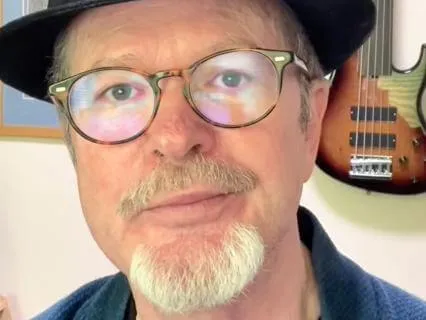
My name is Nico.
I'm a Tokyo-based mental health counselor and content creator for Insight Timer.
In these little video snippets,
I will be introducing you to various aspects of Agnes.
Acceptance and communion therapy.
To help you to understand some of these.
Key elements.
Of the modality.
And how it differs from conventional forms of therapy that you may have been used to.
As a bit of background.
Act was developed by Dr.
Stephen Hayes.
A psychologist based in the USA.
He found that after trying to use traditional cognitive behavioral therapy or CBT to treat his own panic attacks,
That the process only seemed to.
.
.
Reinforce its situation and make it worse.
So much so that he began avoiding public speaking,
Social situations,
And shriveled further into his private isolation.
Nothing seemed to work.
In desperation he stopped trying to fix or escape the anxiety.
And decided instead to completely surrender to the experience.
He realized through this approach.
That the fight itself was the problem.
And by treating anxiety as its enemy.
That he was.
Trapped in an endless cycle of psychological war with himself.
The second powerful lesson to come out of this experience.
Was that he realized that you can actually move with the pain.
He discovered that you could actively experience the terror and destabilization of a panic attack.
And still choose how to behave.
Over the years,
Dr.
Hayes and his colleagues developed a series of choice based.
Strategies.
That allows change to occur even in a state of imbalance and imperfection.
By the late 1980s,
This worked.
Solidified into six core processes of act known as the hexaflex.
Acceptance.
Cognitive diffusion.
Being present.
Self as context,
Values and committed action.
We will be looking at each one of those in the next Coming Up Activites.
In the next Act Byte,
We will look at the power of acceptance.
And illustrate how this can work in our lives using metaphor as a tool.
See you there.