Hello everyone,
Welcome.
This is the beginning of several weeks.
Our focus on the Sundays for a while is nourishing ourselves.
There's so many different ways that we do that.
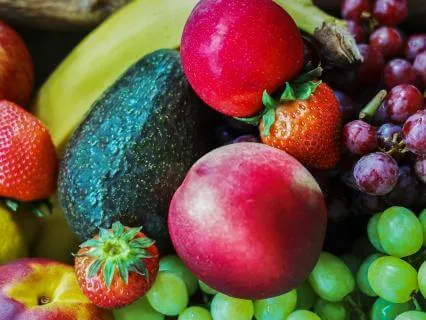
One of the obvious things that comes to mind is food and eating.
There's also other forms of pleasure,
Art,
Creativity and moving our body,
Being in nature,
Relationships,
Social relationships with other people,
With other beings.
So that's what we're doing today is we're starting with food.
Bring up some ideas and see what that feels like for us.
I'm weaving in some Ayurveda as well,
Which is a sister science to meditation,
And Dhinacharya in particular.
You don't need to know the Sanskrit word,
But it's the way we shape our days.
We'll bring in nervous system safety,
Of course,
As we always do.
What are some of the elements around the types of food that we eat?
What are our ideal conditions?
And so we'll work with that over several weeks as well.
Our body can't digest food very well when we're in a threat response.
When we have to move into action to protect ourselves,
Fight or flight,
All the blood rushes to our arms and legs because that's what we need for protection.
We don't have any left for our digestive system.
Our parasympathetic nervous system,
The one that calms us,
That's something that can come into play in terms of coming back into nervous system regulation.
So our heart rate settles,
Our body starts to feel safer.
But when we're stressed,
Hypervigilant,
Which most often has nothing to do with needing blood in our arms and legs to physically fight or flight,
Then we have this chronic condition where our stress is affecting our digestion.
It's also affecting when we eat,
How we eat,
Are we mindful,
Are we aware as we're eating?
Many people,
Including me,
Have done mindfulness and awareness practice around eating for decades,
And not every single meal for sure.
It can be approached with ease and patience and gentleness,
Or it can be another way our inner critic gets to criticize us.
So we have a culture for most of us in our families,
As well as our wider culture,
Where there's a lot of shaming and control around eating,
The kind of food,
How we treat ourselves,
Food is also very associated with social events and culture inclusion or exclusion.
So we have memories associated with certain kinds of foods.
Some of them have more ease in them than others.
Some of them have a lot of more negative associations.
Most people in our culture have some trauma around food and eating.
As we're doing this,
We're going to take it slow and we're going to work with patience and kindness.
That's always what helps is patience and kindness.
We'll take our time.
Remember to breathe.
Check in with your body and notice how you feel as you're doing this.
So let's start with the regular eating patterns.
What is your usual environment when you eat?
It might be 30% in my car,
10% walking around the house.
Every once in a while,
I sit down to eat a meal at a table,
Whatever it is.
There's so many things that affect us.
A lot of people are very busy.
If you have small children,
You might be feeding them and you don't really have a chance to sit down and really digest your meal.
If you bring to mind several recent needles,
What's your usual pattern?
So where are you?
What's around you?
Are you sitting,
Moving?
In a car there.
A lot of people eat with a screen in front of us,
Especially people who live alone.
And are you alone?
Are you with other people?
And if you are with other people,
Is that a happy thing?
Is it a stressful thing?
What comes to mind for you?
There's not a right or wrong here.
We're just looking,
What are my usual conditions around food and eating?
And most of us are probably gonna be thinking,
Well,
You know,
There are a few things that I could work with.
Maybe change this one habit that would help.
How often do you eat in a calmer environment?
And then how often do you when you're on the run or you're stressed?
So 20,
80,
50,
50.
It's a general idea.
And then what is one thing that you could change that would be relatively easy?
So maybe if you are in your car a lot,
Grabbing something,
Fast food,
Eating as you're driving,
Maybe you could just pull over and park for a few minutes.
It doesn't have to be a dramatic change.
Maybe you could stop at a park and eat outdoors,
Or join a friend,
Or sit down at a table.
So what is one thing that you might feel inspired to say,
You know,
If I change that one thing,
It would shift things a bit.
I think with this kind of thing,
The temptation is to try to change 10 things at once.
Oh my gosh,
Yeah,
I'm always in my car or I'm always using a screen.
I'm going to put the screen away.
I'm never going to,
You know,
So we need to stay away from that kind of all or nothing thinking.
Just one thing and then kind of park that in the back of your mind.
I have a practice insight timer on three minute body scan before eating.
It just runs through a few different things.
So if you were to imagine that you're going to eat in a few minutes,
Bring to mind some food,
One of the things that we could check in with is what sensations do we notice right now?
And is it hunger in our stomach or is it something else?
There's a lot of comfort that can be found in food.
Sometimes food can regulate us if we're feeling really hypervigilant,
We can kind of settle a little.
Sometimes if we're feeling really scared,
Something sweet like ice cream can make us feel better,
Can soothe us,
Help us feel safer.
So when we're gonna eat something,
It's helpful to check in.
Feel your feet,
Feel your seat,
Feel your stomach,
Your heart.
What are the thoughts in your mind?
Notice your breath.
Let's just stay with this for 30 seconds.
See what comes up.
This has a feeling of,
If I was to actually do that,
I think it would actually change a lot about what I eat.
How I eat,
What is the environment.
This is where the nervous system comes in,
And it might be saying something like,
Not in words,
But energetically.
Yeah,
But if I do this,
How am I going to protect myself?
If I have food habits that I've just kind of fallen into them,
Those are a little bit easier to change.
But if we have ways of eating that are meant to soothe our nervous system,
Help us come back into regulation,
Help us feel safer,
Those are a little bit harder to work with because the answer isn't the pattern that we're in.
The answer is why are we in the pattern?
So as you were just sitting there for the last couple of minutes,
If you feel resistance to doing this,
If you think about,
Yeah,
I'm gonna do this one meal every day for a while,
And there's something holding you back.
That could be what it is.
It could be some kind of a nervous system issue which we will work with.
Again,
To bring forward what's going on without shaming ourselves.
These patterns have developed over our lifetime.
And when we're working with them,
We need to be careful that we're not judging ourselves or that we're not shaming ourselves.
We need to be careful about that.
Let me think about a specific food now.
So if we're talking about foods that make us feel safer,
One of the ways that I dealt with a lot of trauma when I was a teenager,
Our freezer was beside my bedroom in the basement and there was always ice cream in the freezer and I didn't have another person to turn to,
But I always had ice cream to turn to.
So I have a lot of associations.
Ice cream is soothing.
I would feel a sensation in my throat,
Kind of an uneasiness in my throat and in my body and this smooth sweet ice cream would soothe that too.
So that by the time I finished eating some ice cream,
I wasn't as agitated.
I didn't feel as lonely or as sad or whatever was going on.
I felt safer,
More ease.
Ice cream can be considered a good food in terms of it's really helped me over my lifetime.
It can be considered a bad food in terms of we're not supposed to eat so much ice cream.
We're not supposed to need that kind of comfort.
So when you bring a specific food to mind,
What's on your good food and bad food lists?
Ice cream might be one,
Cake or greasy hamburgers.
And what do you have on your good list?
What do you have on your bad?
Two or three on each one.
Most people would say,
Well salads,
I should eat more salad.
Healthy food of some kind is on our good list.
High sugar,
High fat,
High salt,
Potato chips,
Whatever your food is.
So we're not talking about nutritional value here.
Clearly many foods have more nutrition and clearly some foods are harmful to our body.
How do you separate those into those two lists,
Good foods,
Bad foods?
And now,
Whichever food,
Doesn't matter which list it's on,
Let's just do a little visualization around the food.
Imagine the taste,
The smell,
The texture of the food.
Is it warm and moist and soothing?
Is it cool?
Is it crunchy?
Is it salty?
Is it sweet?
Remember the taste.
If you have some food like that around right now,
You could certainly just have some.
But bring it forward with a lot of detail.
What's it like when you imagine eating that food?
Do you get a feeling of relief?
What does it feel like in your stomach?
What's happening in your heart,
Your energy.
It's just food is like,
Oh yeah,
I love this kind of food.
And then what thoughts come into your mind about the food.
Our minds are very associative.
So if you're thinking about cinnamon buns,
You might be thinking about coming home and the house is full of that beautiful smell and you're all sitting around the table eating the cinnamon buns.
And that might be a good thing.
It might not be.
Or maybe you sneak one away and eat it in your room later.
There's a lot of associated thoughts.
Let yourself see that.
We'll witness these for a minute.
Sometimes you might even be thinking,
I don't dare think about it because if I do,
I'll go buy some and eat a bunch.
Especially if you've had eating disorders like binge eating and I can't stop once I start eating something,
You might not even want to go there at all.
But you could pick a little bit more neutral food too.
It doesn't have to be one of your big activators.
A lot of these foods are from childhood or earlier in life.
We have a lot of experience with them.
They really work.
We're really tired,
We eat some sugar,
Or we have a coffee or whatever it is,
We get a feeling of energy.
We're going to move into a reverse inquiry where we say something that we are not sure it's true and then we just see what our body's response is and what are our objections.
So if you were to say,
This food nourishes me.
This food nourishes me.
And then just notice your response.
Could be this food nourishes my body.
Is that true?
This food nourishes my heart.
If you're noticing any endocritic activity,
See if you can let that go to the background.
We're just exploring.
We have a lot of associations with good food,
Bad food,
Foods that we ate as a child or in our culture that are very familiar and nourishing.
Some of them we have harmful or negative associations with.
Oftentimes it's mixed.
Food is just a collection of nutrients on one level,
But on another level,
It's much more than that.
It's our social activities,
Our celebrations,
Some food we only eat at certain times of the year,
Certain holidays.
This food nourishes me.
That'd be an interesting thing perhaps to keep working with a little bit over the next while.
When you think about eating something and when you're sitting looking at your plate,
What would your response be to that?
So imagine if you were holding a plate of food now.
Maybe you've prepared some food,
You're sitting at a table.
This could be something that you do once a day,
Once in a while.
Some people do this every meal.
Imagine that you're sitting looking at your food and let yourself take in the colors,
The textures.
Take some deep breaths.
Notice the smell.
And if you regularly practice grace or prayer before meals,
You could do that in your mind right now.
I grew up in a family that never said grace except maybe at Christmas and never prayed.
That was not something we did around food,
So it's a habit that I've been trying to develop more.
And one of the things that I'll often do now is just pick up my plate of food and either go outside or look outside.
And say thank you,
Earth Mother.
I'm grateful for the plants and animals.
For the sunshine,
Water,
And soil,
And for the hands who harvested and prepared this food that I'm about to eat.
Many people will have their own version.
And then I'll often add something else.
And I'm thankful for.
Sometimes I'm thankful for my digestive system.
I'm thankful to have enough food to nourish my body.
I'm thankful to be in a calm,
Peaceful environment.
Let's take a moment to see what comes up for you if you were to imagine now you've got your food.
Maybe it's a favorite food,
A holiday meal,
Or just food that you're going to enjoy.
And let yourself go through some kind of gratitude connecting with your food.
Take a few breaths.
Notice if there's any shaming going on.
You might have been raised in a family where you always said grace or expressed gratitude,
And you haven't been doing that.
Or you might have,
Like me,
Just never had that experience,
So it's not something that comes naturally.
Let yourself appreciate what you are doing right now.
As you're sitting with this,
Coming back to what is one thing that you might be inspired to do,
Some awareness practice that you might be inspired to do today or this week or over the next few weeks.
We all know that awareness while we're eating is helpful.
It raises our satisfaction.
Our eyes take in the beautiful colors.
When we chew longer,
When we're eating with awareness,
We're noticing when we're full,
So it prevents overeating.
But also,
It might improve our choices around what we eat,
Where we eat.
So if we're going to eat something that we're a little bit disgusted by,
If we actually think about it and then we bring awareness to it,
Then we might decide,
You know,
I'm not going to eat that.
I know it's fast,
I know it's handy,
But eating a Snickers chocolate bar isn't really lunch.
I'm going to do a little better.
Or eating a fast food meal isn't really healthy.
I'm going to try something different.
So when we bring our attention to our eating,
Part of the reason we're doing it is because we want to change.
But part of it also is it's difficult sometimes to think about it can seem really big and it is because we eat several times a day.
We also have a lot of routines around for eating.
Many people have financial considerations.
Well,
I'd love to eat organic,
But I can't afford that as much as I'd like to.
All of the different elements around this.
So a few times a week or for a few different meals,
You might try what we've been just doing.
So checking in with before you make the meal,
What would I like to eat?
What's available to me that I could eat?
If time is an issue and you're usually eating on the run,
Maybe you could try to schedule in some time to make a meal or to do something different or get a different kind of takeout,
But bring it home where you could sit with it or however that might be.
And then to check in with your body.
Let yourself notice.
Yeah,
Right now I'm not really actually hungry.
Maybe I'll just have a glass of water and then I'll check back in half an hour.
We take a few breaths.
Breathing before we eat is really helpful.
It could be just,
We look at and we smell,
We breathe in,
We breathe in the scent of the food,
As well through our eyes,
We're looking at the colors,
The smells,
Our saliva starts to get going if it's something we want to eat.
Even then,
Then we would pause for a moment and express gratitude.
Thank you,
Mother Earth,
For the food,
The plants and animals,
The people whose hands prepared it,
Brought it here,
And for my digestive system,
Or for the beautiful view I see as I'm eating,
Or my circumstances are quiet so I can actually sit and enjoy this meal.
And then to eat without distractions.
Not every meal.
But when you feel like it,
It just is an experiment.
So for me,
Sometimes I'll just take my plate and go sit outside,
This time of year anyway.
It's hard for me to turn off the screen sometimes because I'm sitting at my desk,
Which is also my table.
And sometimes we get kind of bored and we want some kind of stimulation or we want some comfort.
There's a lot of different things going on.
What would it be like to eat a meal without distractions?
So just eating.
And then if you want to try that,
That's great.
If not,
If you think,
Yeah,
I will,
And it doesn't happen,
We can always come back to it.
We've heard you before,
There's a lot of trauma things going on in the background and sometimes it's not comfortable to look too closely that we might have to kind of work around the edges a little bit.
And then when you're finished,
Just say,
I feel satisfied and nourished by this meal.
And see what that feels like.
Let yourself consider that.
Being careful not to go all or nothing,
Being careful not to shame yourself.
We're just experimenting.
One idea too,
With Ayurveda and other traditions,
There's a lot of people that have the midday meal is the main meal.
The sun is strongest at midday,
Our digestion is strongest.
We're moving around,
So unless you're working midnight shifts or something,
That's the time where we're moving around,
Our body is using fuel,
And we're ready to take it in,
And then we might have a nap or a siesta after the midday meal.
But our energy holds steadier through the day.
We don't have as much late evening cravings if we have a solid meal at noon.
We sleep better too.
We're not digesting a heavy meal.
In Ayurveda,
They talk about you should really be eating before the sun goes down.
In the winter,
We can't maybe do that as easily,
But 5,
6,
7 o'clock instead of 8 or 9 o'clock.
And to have enough of a meal that we're not going to need to eat a bunch later on.
That's one way that we could work with this too.
The rhythm of our day,
If we have a heavier meal at midday,
Is more in sync with nature.
And also a lot of people are at work during that time and it's not as conducive.
Maybe there's some room there for some change on a weekend or something.
What are you inspired to take forward?
Maybe there's one thing,
Like I never said grace,
I'm gonna work on the gratitude part.
Or maybe I'm going to just take a moment.
I might not do the whole meal without distractions,
But maybe I'll pause at the beginning and look at the food and smell the food and take a few breaths.
Anything that we do,
No matter how small.
Be kind with ourselves,
Be patient.
These habits are big,
They're hard to change.
And then we can go from there.