Welcome to Zen Stories for Sleep Time,
Volume 5.
My name is Helen and I'm so grateful to be sharing.
Another batch of Zen Tales with you.
We begin where we always begin,
With a breath.
Simply feel it.
Notice how it's entering notice it's leaving.
And with each exhale,
Imagine releasing a small feather.
That is light.
And so easily carries away the weight of the day.
Thoughts about what happened.
Plans for what will be.
Let them all simply drift.
Today we are turning to the smallest creatures to be our teachers,
The birds and the insects.
And in Zen these creatures appear often because they live without the constant hum of self-reference.
You know,
A sparrow does not wonder if it is sparrowing correctly.
A cricket doesn't regret yesterday.
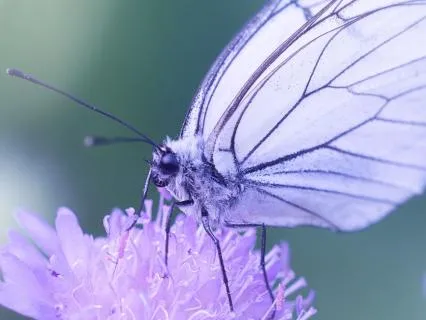
The butterfly does not worry about tomorrow's flight.
They all move through the world.
Just as it meets them.
Responding.
Brainstain.
Rising when they need to.
So the stories that follow include old tales from Zen traditions,
Along with new stories from the same spirit.
And at the end of each tail we'll pause together.
I will offer a quiet question for you to contemplate on if you wish.
And then we will be together.
In a minute or so of quiet,
Of integrating the wisdom received,
Before moving on to the next tale.
Of course,
As is always with stories,
There's nothing to remember or to solve or hold on to.
Simply listen.
Just as if you were lying in a meadow on a beautiful evening listening to those small voices of the world around you.
Taking in a long slow breath now.
As we invite in the world of wings.
And we allow the stories.
To begin.
Chapter 1 The cricket who asked why.
This is a traditional Zen story.
And often told in Japanese monasteries.
In a quiet temple garden.
They loved a cricket.
He was a small brown cricket.
Unremarkable in appearance.
But he had a mind that never stopped questioning.
Every evening as the sun set and the monks began their meditation.
Cricket would begin his sound.
Check.
Chip.
Steady as a heartbeat.
Now one night,
A young monk came to the garden.
Troubled by a koan his master had given him.
The Quran was this.
What was your face before your parents were born?
The young monk had meditated on it for weeks.
But had no answer.
And his mind was spinning in circles.
Hearing the cricket's song,
The young monk grew irritated.
Even that cricket,
He murmured.
Knows its purpose.
It chirps.
It is content.
I,
I cannot find the answer to my question.
Why must I suffer so?
To his surprise.
The cricket stopped chirping.
And then he spoke.
Not in words,
But in a way that the monk understood.
You have a question.
Cricket said.
So do I.
As you might imagine,
The monk was startled.
What question could a cricket have?
The cricket was silent for a moment and then he said.
I ask.
Why do I chirp?
Is it to call others?
Is it to mark my territory?
Is it because the evening air moves through me in a certain way?
I have asked this question every night of my life.
The young monk felt a flash of recognition.
Have you found the answer?
" he asked.
The cricket began to chirp again softly.
I have found that the asking itself is the chip.
The question and the song are the same thing.
I do not need to stop asking in order to sing.
And I do not need to stop singing in order to ask.
Christians keep me alive and the song keeps me present.
The young monk sat in the garden listening to the cricket's steady chirp.
And for the rest of the time.
Stopped trying to answer his colon.
You just hold it.
Like a small warm stone in his hand.
And in the holding,
Something happened.
Something open.
Cricket chipped on.
Asking,
It's an answerable question.
And singing.
Its unending song.
This story may invite us to reconsider our relationship with Christians.
What is the question?
That you have been contemplating recently.
Maybe one that's been troubling you.
Maybe it's been with you for a long time.
Or maybe it's a question.
That has recently arisen.
Now,
Can you hold it without needing to answer it?
And you let it be like the cricket song.
Just part of the night.
Not a problem to be fixed.
Chapter 2 The Swallow Who Built Her Net This is an original story about a bird and a monk.
It was once a swallow who decided to build her nest beneath the eaves of a small Zen temple.
She chose her spot with care.
Making sure it was protected from the wind and rain.
And close to the garden where insects were plentiful.
Day after day,
She flew back and forth.
Carrying bits of mud,
Straw and grass in her small beak.
She wove them together with patience and precision.
A young monk who lived in the temple watched her every day.
She was amazed by her dedication.
She worked from dawn until dusk.
It is stopping.
At a race day.
He admired her.
Began to think of her as a model of effort.
Only I could meditate with such a single-minded focus,
He thought.
One morning,
Strong wind blew through the valley.
The swallow's nest,
Not yet finished,
Was knocked from its perch.
It fell to the ground.
And came apart.
All those days of work.
In an instant.
The young monk expected the swallow to despair.
He expected her to circle and cry out.
Instead.
Swallow landed on a nearby branch.
Till to the head.
And looked at the broken nest for a long moment.
And then,
She flew to a patch of mud.
Gathered afresh,
Be cool.
And began again.
And the way she worked was with the same calm attention.
She had shown before.
The young monk ran to his master.
Master,
He said.
The Swallow lost everything she built.
And she has just started over.
As if nothing happened.
Can she do that?
Master who was sweeping the temple steps at the time.
It did not look happy.
But he did reply.
The swallow was never attached to the nest,
He said.
It was only attached to building it.
The nest was never hers to keep.
The building.
Is hers to do.
So when the nest falls,
Building continues.
This is the difference between work and possession.
Swallow workers.
Humans want to possess.
The young monk stood in the silence,
Watching the swallow,
Carrying more mud to her neck.
He realized she was not working for a result.
She was working because working was what she did.
Nest would come.
And gold.
The bolding.
Was eternal.
As you rest here now,
Feel the difference between doing something and holding onto something.
Now ask yourself quietly,
What nest am I clutching?
That I could rather simply keep building.
Chapter 3 the end,
And the grain of sand.
This is another original story which involves an ant,
A monster and a student.
Zen Master was walking with his young student along a dusty path.
The student was confused from a teaching that had been sitting with him for days.
Master,
He said.
I try so hard to understand the teaching.
But in doing so I feel so small.
Compared to the great masters of the past,
I am nothing.
Compared to the vast universe,
I am less than a grain of sand.
How can someone so small ever find worth?
The master did not answer immediately.
After a time,
He stopped walking.
Then he knelt down beside the pot.
He pointed to the ground.
Look,
See.
Student look.
And there in the dust.
Was an end.
Tiny black ant.
Carrying a grain of sand.
That was nearly as large as its own body.
Oh,
The ant was struggling,
Moving slowly.
But it did not stop.
Climbed over small pebbles,
Walked around larger ones.
Kept moving.
Steady determination.
The student watched for a long moment.
When he looked up at his master.
ERs.
An ant is carrying sand.
I don't understand.
Master replied.
The ant does not compare itself to the mountain.
It does not measure its strength against the wind.
Or the rain.
It simply carries its grain of sand.
The grain is enough.
Carrying is enough.
The end is not small.
It is exactly the size it needs to be to do what it is doing.
You ask how someone so small can find peace.
Piece has nothing to do with the size.
A mountain is no more peaceful than an ant.
This is not about how much you can hold.
It is about holding what you have.
With your whole being.
The ant holds its grain.
Hold your breath.
That is enough.
The student looked back at the ant.
It had reached a small crack in the path,
And was carefully lowering its grain of sand into the crack.
Bolding.
Something unseen.
It turned.
And began to walk back for another grain.
The student felt something loosen in his chest.
He realised he had been trying to hold,
Understand the whole universe.
And yet the ant was teaching him right before his eyes.
To simply hold.
And no.
And trust.
One grain.
And you raced into the knowing and the trust right now that You are exactly where you need to be.
And that you breathe.
Just like the grain of sand.
Is enough.
As we slip into our minute of contemplation.
You might like to repeat this mantra for yourself.
This moment.
Is enough.
This moment.
Is whole.
This moment is enough.
This moment.
It's home.
Chapter 4 The Silent Nightingale.
This is a traditional Zen story sometimes told as a koan.
There once was an emperor who loved the song of the nightingale.
He had heard that in a distant forest there lived a nightingale whose song was so beautiful It could cure illness.
And bring peace to the most troubled heart.
The emperor sent his courtiers to find this bird and bring it to the palace.
While the courtiers searched for many days.
And finally,
In a deep,
Quiet grove.
They found the Nightingale.
It was small.
And brown.
Quite unremarkable to look at.
But when it opened its beak and sang,
Courtiers with.
The song felt like water flowing over stones.
Like the gentle wind through bamboo.
Or the first light of dawn.
They brought the bird back to the palace in a golden cage.
In the early evening,
The Emperor would have the Nightingale brought to his chambers.
A bird would sing.
And the Emperor would feel his worries dissolved.
He slept better than he had in years.
And over time he became dependent on the sun.
He could not imagine falling asleep without it.
One night,
A traveling merchant presented the Emperor with a mechanical nightingale.
Clockwork bird.
Have it in June.
Wound by a key.
Win one.
Sang a perfect song.
Beautiful song.
Note for note,
Exactly like the real Nightingale.
The emperor was delighted.
He could have the song whenever he wanted.
Without needing to care for a living creature.
He released the real Nightingale,
Which flew to a window.
Disappeared.
To the dock.
The mechanical bird sang every night.
Something was missing.
The Emperor began to notice.
That the song,
Although perfect,
Did not move him.
The way the real birdsong has.
While it was correct,
It had no life in it.
Slowly The Emperor's sleep grew troubled again.
And these worries return.
He fell ill.
No doctor could help him.
As he lay in his bed too weak to even wind the mechanical bird.
He heard something.
At his window.
A soft sound.
A real sound.
Open these eyes.
The Nightingale.
Had returned.
The small brown bird perched on the windowsill.
Looked at the emperor with kind eyes.
And began to sing.
This time.
The sun was different.
It was softer.
Slower.
It was simply.
The bird being itself.
Offering its voice to the darkness.
The emperor felt tears run down his cheeks.
He realized that the song he had loved.
Was not just in the notes.
It was the life.
Within the sun.
The mechanical bird had the same notes.
No life.
The real bird's song changed each time because the bird was alive.
Responding to the moment.
Singing not for the emperor but because singing was what Nightingales do.
Over time,
The Emperor recovered.
And he never caged the bird again.
He left his window open every night.
Sometimes the nightingale came.
Sometimes it did not.
Either way.
The Emperor Slept.
Because now he understood that.
Peace was not a song that could be captured.
AIDS.
Is a presence.
To be welcomed.
As you reflect on this teaching about control and surrender.
And you ask yourself.
What would it feel like?
To stop demanding peace.
Or stop demanding.
And you fill in the blank.
And simply be open.
Open and trusting.
And welcoming.
To what does arise for you.
Chapter 5 the butterfly dream.
This is one of the most famous stories in all of Zen.
Attributed to the ancient Chinese philosopher,
Chuang Tzu.
Once many centuries ago.
The sage,
Chuang Tsa,
Fell asleep beneath a plum tree.
And in his sleep he dreamed a most vivid dream.
ETrimmed.
That he was a butterfly.
A butterfly thinking.
About being something.
Not a butterfly remembering that it had once been something else.
No,
In the dream,
He was something.
A butterfly.
A butterfly drifting on warm air,
Floating from flower to flower.
Drinking nectar.
Feeling the sun on delicate wings.
Did not think.
He did not worry.
He did not plan.
He was utterly and completely lost.
A butterfly.
Living a butterfly's life.
And then?
The dream ended.
Chuang Za woke up.
He sat beneath the plum tree,
Blinking in the afternoon light.
And for a long moment,
He did not know who he was.
He looked at his hands.
They were human hands.
He felt his body.
A man's body.
At the feeling of being a butterfly.
That lightness.
Freedom.
The utter absence of self.
Was still so real,
So close.
He sat for a while feeling confused.
And then he started to love.
A great joyful laugh that echoed through the garden.
His students,
Hearing him laugh,
Came running.
Master,
They said,
Why are you laughing?
Zhuangzi looked at them with bright eyes.
Oh,
I was just dreaming,
He said.
That I was a butterfly.
And now I am awake.
I have a question.
What question,
Master?
Is smile.
How do I know?
That I am not now a butterfly.
Dreaming.
That he is a man.
The students stood in silence.
Question had no answer.
It was not meant to have an answer.
It was meant to open a door.
A door between what we think is real and what might be real.
Between the solid self we believe ourselves to be.
And the fluid.
Mysterious awareness.
That dreams.
Butterflies.
And humans alike.
The story is not a riddle to be solved.
Rather an invitation to you.
Loosen your grip on what you think you are.
You are not just the person who worries,
Who plans,
Who struggles.
You are also the awareness in which all of that appears.
An awareness as light,
As free,
As a butterfly.
As you relax further.
Feel the boundaries of yourself beginning to soften.
And let these questions boat around you.
Who is the one breathing?
Who is the one listening?
Who is the one dreaming of being awake?
Now as our time gently comes to a close.
Let us rest with the small teachers who have visited with us.
You have listened to a cricket.
Who taught that Christians can be sons.
You have watched a swallow rebuild her nest without clutching it.
You have walked beside an ant carrying her single grain of sand.
And heard a nightingale whose song could not be caged.
And then you have dreamed with Chong Tsa of being a butterfly.
These small creatures simply show what is already true.
Peace is here in the small things.
In the brain.
In the stillness between thoughts.
And in the quiet presence that has been with you all along.
Feel the rise and fall of your gentle breath.
Knowing.
It is simply breathing here with you right now.
As the world is quiet,
The birds are sleeping.
And the insects that finish their songs.
Now it is your turn.
May you rest as deeply as the cricket beneath the garden stone.
May you dream as lightly as the butterfly on the summer air.
And then may you wake as gently as the nightingale at first light.
Good night,
My friend.
Sweet dreams.