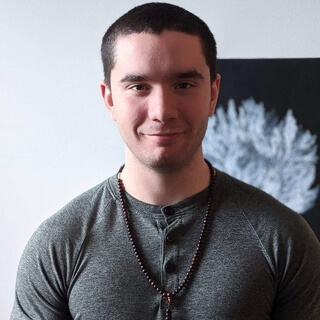
Hello and welcome to today's Dharma talk on a style of Vipassana meditation most recently made popular by the venerable Mahasi Sayadaw,
Who was a master and teacher in the Theravada school of Buddhism.
The style called noting or labeling insight meditation,
While this style has been made popular again by Mahasi Sayadaw,
Has been contained in the teachings of Buddhism since the time of the Buddha.
We can see this in places like the Abhidhidhamma,
If I'm not mistaken,
And most definitely in texts like the Vasudhimagga by Buddhaghosa some thousand years later in around 500 CE.
I was going to make this a guided meditation but found it much too difficult to balance the needed information and the practice of meditation itself in a timely manner.
So I hope you'll take this information and practice it as best you can,
Or use it as you will.
Much of what I will teach here was taught originally by Mahasi Sayadaw and is contained in his book,
Which is one of my favorite Dharma books,
Practical Insight Meditation,
And can also be found in his much longer book,
Manual of Insight,
But seeing as the book is somewhat hard to come by,
I hope this talk is able to express to you the radically simple method of insight meditation which transformed my practice and many of my teachers' practices.
It begins by noting the rising and falling of the abdomen,
Making the mental note of rising when the abdomen rises,
And falling for its downward movement,
Not repeating these words verbally or thinking of them as words,
Just noting the rising and falling,
As well as not being concerned with the form of the abdomen,
Not dwelling on controlling it,
Simply noting it as it comes and goes without resistance.
You will find this quite difficult to do at first,
As with any discipline in life worth doing.
Our body,
Mind,
And ever-chaotically vibrating nature wants us to do,
To go and be distracted by the past,
Future,
And every number of things in between,
Never finding itself in the moment except perhaps by accident.
And when that happens,
It can freak people out.
I once,
Early on,
When I began practicing intensively,
Crossed a marker insight stage called the arising and passing away,
That can be confused for a much later stage,
While getting gas for my car.
In it,
It was as if the confines of my consciousness expanded out beyond this skin-encapsulated ego and was about a 100-foot sphere around me.
It came and went in about five minutes,
But still,
People who have no knowledge of the paths or insight states or interaction with this reality that we now perceive breaking down would be freaked out,
I think.
While you are occupied with the rising and falling of the abdomen,
All sorts of things will rear their heads,
Whether it be bodily sensations,
Thoughts,
Moods,
Mind states,
Or any array of mental activity or physical sensation,
Things like your intentions for meditation,
Your idea of what you should be doing or how far you should be along in meditation.
Interesting ideas in general,
Memories,
The wildest of imaginings and even complete absorption into those things are very likely to occur between the simple mental noting of the rising and falling of the breath.
The mind is a lovely servant,
But is such a terrible master,
Which will try to pull us in every direction until we properly yoke it.
These things,
No matter where they come from or why they come about,
Cannot be ignored,
At least they carry us away from the matter at hand.
Whenever anything comes up,
No matter what it is,
Make a note of it,
Just as you are noting the rising and falling of the breath.
When you feel a sensation in your knee,
Know that you have felt it and make the mental note knee or sensation if you don't want to be so focused on thinking up specific words.
When you get good at this,
You will find that you can't even use a general term because you are noting too quickly.
In that case,
Simply mentally note with a single syllable.
I use the mental note da,
Which is an old word for that in Sanskrit,
I think.
If you find yourself imagining,
Make the note imagining.
If you find yourself thinking,
Make the note thinking.
If you find yourself in reflection,
Intending,
Or wandering away from the rising and falling of the abdomen,
Make the mental notes reflecting,
Intending,
And wandering.
Not only should you note those things which are physically and mentally present,
But when imagining or a memory comes up or a hallucination arises,
You should note the particular aspects of it that arise as well.
This isn't to say you should try and note the whole spectrum of awareness at the start,
But build up noting more and more things through the Sixth Sense faculties or one,
Depending on your point of view.
But that's a discussion for another day.
All of this,
Watching them rise and fall,
Come and go,
Appearing from nowhere and going to nowhere,
Just like that.
If you find yourself in a memory imagining eating,
Note eating.
If you find yourself getting flustered or angry,
Note angry.
If a vision of light,
Color,
Or anything out of the ordinary phenomena arises,
Just note seeing,
Or light,
Not being drawn away by it,
But continuing to be anchored to the rising and falling of the abdomen.
All these things are simply mind generations,
At least I think,
Though some scholars and practitioners may have a better idea or be able to go more deeply into what exactly these things are,
Which are trying to keep you from piercing into the direct here,
Now,
This,
That is just here and now,
And is this that is beyond any concept,
Symbol,
Or attachment that we might lay on top of it.
Note these arisings in awareness until they disappear,
No matter what it is,
And continue noting the rising and falling of the abdomen.
Continue this as best you can without slackening in attention.
You can add another layer to the rising and falling of the abdomen by noting the intention of the abdomen to rise and fall.
The hair's breath length between the rising and falling is the intention that you can notice.
If your intention has reached the point of sharpness or finitude where you can see this,
The moment it arises,
Note intending,
Followed by noting the rising and falling of the breath.
This intending can be used in all aspects of the meditative practice.
If you find yourself needing to swallow saliva,
A way to keep focus and attention is to note the intending to swallow and then note the swallowing.
If you find your knee becomes incredibly uncomfortable or find that you are slackening in your posture,
Notice the intending to move and then the movement itself,
Whether it be straightening,
Shifting or anything you wish to do.
One thing that I have found that is not mentioned in some of the classical teachings on noting,
Or perhaps it is and I'm merely unaware of them,
Is the addition of noting phenomena which are continually present as the rising and falling of the breath.
Things I have found can keep the mind focused and investigative.
These are things like noting the feeling of your body against the floor,
Noting the feeling of the air on your skin,
Noting the space which you are in,
Noticing your heartbeat,
Noting whether you are warm or cold or neither,
And if you can,
Noting the echo of your noting,
But that can take some practice.
Now I'm no master,
But have found that adding these into your cycle of notation can keep the mind crisp,
Investigative and concentrated.
Now this is all for on the cushion practice.
You can take these same theories and expand them out into your life if you find you have the will,
Time or way to do them or wish to engage with them on a retreat practice.
You can start as soon as you get up noting the breath and then doing the practice throughout your day as you get better noting the intention to do something before you do it.
For example,
Noting that you are tired or stiff upon awakening,
Noting you are hot or cold,
Noting groggy,
Noting walking,
Stretching,
Picking up,
Stopping,
Swallowing,
Turning,
Riding,
And on top of all of these things noting the intention to do them as well and noting the stopping of doing them as well.
So you may note the intention to walk,
The walking and the stopping of the walking.
You can do this infinitely to engage more and more into the practice.
You can even just pick a particular activity to engage in noting meditation throughout your day like eating or walking or drinking,
Taking just a moment to engage in that insight practice to bring back closer to this baseless center point of here and now,
Just this beyond any distraction.
Mahasi Sayadaw in his book Practical Insight Meditation goes much further in depth on how to do this and even extends it into some more advanced forms of noting practice for people who are further along the path than others or for those whose concentration faculty has been honed.
The manual of insight goes even further into it,
Going into other aspects of the insight path as well.
But as it stands,
It's just that simple.
If you continually practice this and do so with good effort and discipline,
You will find you are noting more and more phenomena and leaving out less and less.
You can really get this going and be cycling through many notations per breath in the later stages of practice.
So there you have it,
This radically simple style of Vipassana meditation that changed my practice.
I'm considering making a 30-day course covering the classical insight path of meditation,
Going over each of the stages and showing both the dark and light sides of this practice and of the path.
If you would be interested in this or have questions over this short Dharma lecture,
Let me know.
I'd be happy to hear from you and the Insight team would as well.
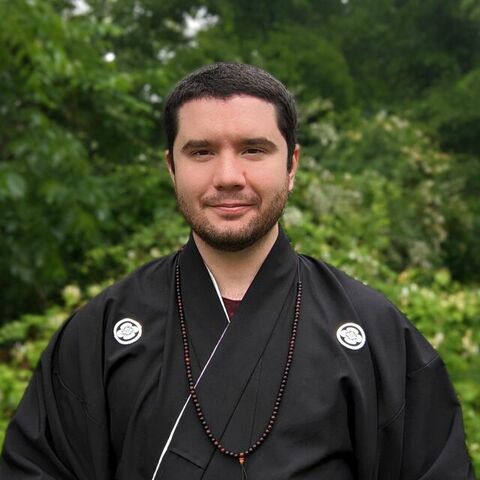
This is Silas Day.
I hope you enjoyed this short talk on insight meditation and have a great day.