memberplus
The Healing Power Of Your Own Touch: Reconnecting With Your Body
curso de 6 días

The Healing Power Of Your Own Touch: Reconnecting With Your Body

Por Teresa McLean

Comienza el Día 1
Lo que aprenderás
Many people feel disconnected from their body after experiences of stress, trauma, or sensory overwhelm. This course explores how gentle, supportive touch can help restore body awareness, calm the nervous system, and reconnect you with your body’s natural capacity for self-healing. Long before we learn techniques or seek professional care, humans instinctively use touch to comfort the body. A child who falls places their hand on the hurt. A loved one offers a steady hand on the shoulder. The body understands contact as reassurance and safety. But over time, many of us learn to override the signals our body sends. We push through discomfort, avoid vulnerable areas, or disconnect from sensation altogether. In this course, we gently return to something simple and powerful: the wisdom of our own touch. Drawing on decades of hands-on healing work and nervous system awareness, Teresa McLean offers a grounded exploration of how compassionate contact can help the body feel safe again. Together we explore: • why the body sometimes stops communicating clearly • how trauma and stress can occupy the body’s healing resources • how gentle touch can calm the nervous system • why sensitive and neurodivergent people often experience body signals more intensely • how to slowly relearn the language of your body This course is not about fixing yourself. It is about remembering that your body already carries deep intelligence — and learning how to listen again.
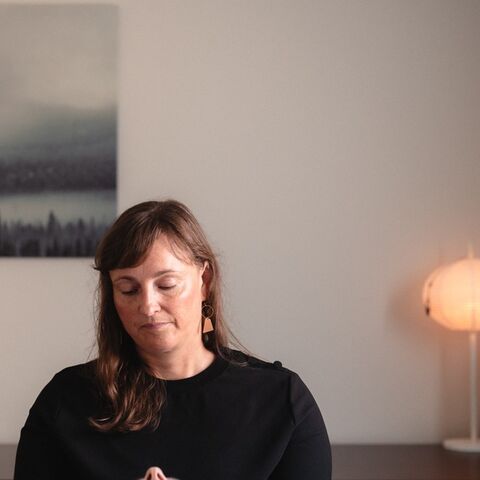
Teresa McLean is a registered massage therapist with more than 25 years of experience working hands-on with people to support relaxation, nervous system regulation, and reconnection with the body. She is also a Reiki Master and meditation teacher, and her work brings together body-based therapeutic practice with contemplative awareness and...

Lección 1
The Wisdom Of Touch
From a very young age, humans instinctively use touch to comfort and soothe the body. When a child falls, they immediately place their hands on the injury or reach for someone they trust. But as we grow older, many of us lose this instinct. We learn to avoid injured areas, override discomfort, or disconnect from the signals our body is sending. In this opening lesson, we explore why the body responds so deeply to touch and how reconnecting with this simple instinct can help restore a sense of safety and communication within ourselves. You’ll also be guided through a gentle practice that begins reintroducing the body to supportive, compassionate contact.
Lección 2
Why We Stop Listening To The Body
Many people assume that when they feel disconnected from their body, something has gone wrong. But often the opposite is true. Disconnection can be a very intelligent response to experiences that felt overwhelming, painful, or confusing. When the body carries too much sensory or emotional information, the nervous system sometimes learns to reduce awareness as a way of protecting us. In this lesson, we explore why so many people gradually stop listening to the signals their bodies send. We also introduce the idea that reconnection happens slowly, through safety and curiosity rather than force. You’ll be guided through a simple practice that helps restore a gentle sense of contact with the body without needing to analyze or interpret every sensation.
Lección 3
How Gentle Touch Calms The Nervous System
Touch is one of the most powerful ways the body understands safety. From infancy onward, gentle contact helps regulate breathing, heart rate, and emotional states. Even simple gestures — like resting a hand on the chest or holding a shoulder — can signal reassurance to the nervous system. In this lesson, we explore how compassionate touch can help the body shift out of protective states and return to a sense of calm and balance. You’ll learn why the nervous system responds so strongly to supportive contact and how small, intentional moments of touch can help restore safety within the body. A short guided practice will introduce a simple technique for using your own hands to help your system settle and regulate.
Lección 4
Reconnecting With Guarded Or Painful Areas
When the body experiences injury, chronic pain, or emotional stress, it sometimes learns to guard certain areas. Muscles tighten, awareness decreases, and we may instinctively avoid touching places that feel vulnerable. While this response is protective, long periods of disconnection can make those areas feel even more distant from our awareness. In this lesson, we explore how to gently reintroduce supportive contact to parts of the body that may feel tense, guarded, or difficult to connect with. You’ll learn how to approach these areas with patience and curiosity rather than pressure or force. A guided practice will demonstrate how to place your hands near sensitive areas in a way that communicates safety and respect for the body’s pace.
Lección 5
Offering Supportive Touch To Others
Touch can also be a powerful way to offer comfort and reassurance to the people we care about. A calm, steady hand on a shoulder or back can help communicate safety when words are not enough. In this lesson, we explore how to offer supportive touch to loved ones in a way that is respectful, attuned, and grounded in consent. You’ll learn simple ways to provide comforting contact while remaining aware of your own boundaries and energy. A brief practice will help you explore how presence and intention can shape the quality of touch you offer.
Lección 6
Trusting The Body’s Wisdom Again
Throughout this course, we’ve explored how gentle attention and compassionate touch can help restore communication with the body. In this final lesson, we bring these ideas together and reflect on the body’s natural capacity for healing and adaptation. Even when life experiences have led us to disconnect from our body’s signals, the intelligence of the body remains present beneath the surface. You’ll be guided through a closing practice that invites your body to experience supportive contact, steady breathing, and a sense of internal safety. This lesson is an opportunity to integrate what you’ve learned and carry these simple practices forward into everyday life.

Teresa McLean's Collection

Trusted by 35 million people. It's free.

Insight Timer

Get the app