Welcome,
Allow yourselves to settle and arrive.
So this is a test.
We don't actually know,
We don't know if the microphone is functioning.
We are having a technical difficulty.
And so you might not be hearing anything from the YouTube recording right now,
The live stream.
I take responsibility and ask for your forgiveness from the Institute of holiness.
I'm actually physically,
As you can see,
In a hotel room.
I'm outside of Detroit,
Michigan,
Visiting my mother,
Who is actually beginning to transition.
She is dying.
And so we're working from essentially from the Wi Fi of a hotel room.
And the the microphone does not seem to be working.
I'm not sure if it's still working.
We're doing our best here.
So if it doesn't,
We will upload a video later on.
And I asked for your patience.
So welcome.
Hopefully you've had a chance to settle and arrive.
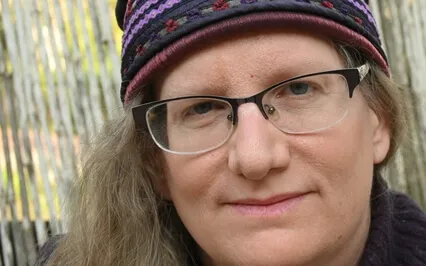
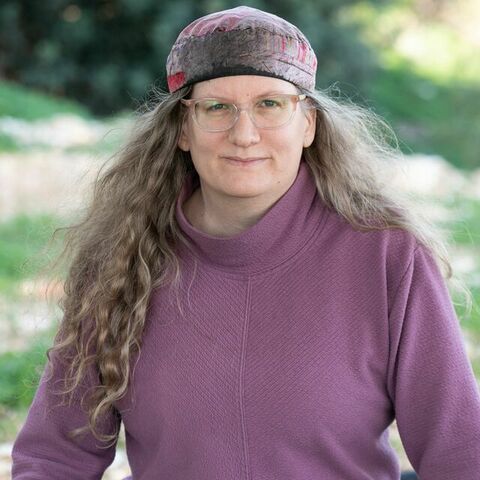
I'm Rabbi Hasu Rios Steinbauer,
The founder and director of the Institute for holiness Kehilat Musar.
Delighted to have you.
And this is our 55th sitting together,
Which is quite a blessing and a miracle.
We spent this whole year together,
Spending a mostly Sundays at 1230 Eastern Standard Times of really looking at the weekly Torah portion,
The Hebrew Bible from the practice and lens of Musar mindfulness,
Which is our specialty here at the Mahonda Kadusha,
The Institute for holiness Kehilat Musar.
So we're really bringing the synergy,
Right,
Of the wisdom of the Dharma of the Buddha,
Theravada,
Vipassana,
Buddhism,
And also Musar in the Jewish tradition and practice and law.
And I'm just delighted to be here with you.
It is quite an honor and blessing to spend this last in Torah portion together.
So we are entering the Vezot Habracha.
And this is what's beautiful and important about this is this is the first time Moshe Rabinow blesses our ancestors.
Let me say that again.
It's the first time he blesses them,
Where he's kind to them and compassionate towards them,
Where he has a kind word to say.
There's no more admonishing.
There's no more telling them what they did wrong or potentially cursing them or setting them up for murder or some other violent situation causing harm and suffering.
And so he is on his way of transitioning towards death.
And he has a blessing for our ancestor and even for us.
So basically,
Before we jump in fully,
We always have our Kavanah,
Our intentions for today's practice.
Now I can't share screen with you either today like I normally do for those of you have vision and our visual learners where we normally lift up the Kavanah,
The intentions for today's practice.
So we're going to do it from memory today together,
Which we should be able to do after fifty five sittings.
Right.
Yeah.
Please do give me a thumbs up if you actually can hear me for any of you watching this.
Because I apologize that we can't get you on Zoom is just not functioning.
So as I said,
If you can't hear on the YouTube channel,
We will go ahead and upload the video later.
So our Kavanah,
Our intentions is basically threefold is radical.
It is.
This is for the benefit of others.
And this is also the benefits for our relationship with the divine and that we're doing this.
We're sitting and learning and having our mindfulness meditation so that we can be of service to others and the divine.
But more important,
Bringing God's good,
Bringing God's good to others in the world,
Which is so badly needed at this moment.
Right.
So that those are our Kavanah,
Our intentions for today as we enter the Zol Tabra Ha.
So this is the Torah portion that is at the very end of Deuteronomy,
Of the Vareen that we cover and do together.
It is now Sunday,
October 16th,
2022.
And this was the Torah portion yesterday on Shabbat.
And it is the 21st Tishrei we are about to enter Shemini Atzera,
The eighth day of gathering festival at the end of the festival of Sukkot and also entering Simchat Torah and soon the celebration of the Torah.
And this really is an appropriate time to receive blessings coming out of everything we experienced from Rosh Hashanah,
The Yom Kippur.
And so now we're going to move into a summary before we hone in.
OK,
So basically Moshe gives a bracha,
A blessing to each shevet,
To each tribe of Bnei Yisrael.
And he emphasizes that God gave the Torah as a marasha,
An inheritance.
That's an interpretation because there's other commentary who believe that marasha may have more to do with one's relationship to the Torah as an engaged,
Soon to be spouse.
I prefer to see it as an inheritance.
There's a lovely commentary that it's a type of inheritance,
Like any inheritance that you can gain access to at any point,
At any point in your life that is yours to return to,
To own,
Even if you really fall off the derrick,
If you fall off the path and go a different way,
That it is yours and it's there.
And I love the commentary also,
I think coming from the Rashbam and the Rambam,
That it's a type of inheritance that you have to do a little bit of work for,
In the sense to get the lessons of the Torah,
We have to learn and practice together.
So may me merit that.
So in honor of meriting,
What we need to do today is this session that was last week is sponsored by Susan Matsu's father,
May his memory be for blessing and also in,
And not in memory,
But in honor of my own Ima,
As she gained strength to either cross over now when she's ready or in the coming time.
And so we'll all hold her and honor the sponsorship in her honor and also in memory of Susan's Abba,
Her father.
So the last thing that Moshe says to the people is,
Ashrecha Yisrael,
Right?
You are so fortunate.
And I want us to hold onto that,
Especially when we enter our mindfulness meditation.
We're so fortunate to receive this national narrative,
This personal narrative of our ancestors passed on to us.
It gives us such guidance,
Such strength,
Such purpose,
Knowing who we are and we are so fortunate.
And so that's what Moshe is reminding us and reminding our ancestors,
So fortunate.
May we walk around as a practice saying to ourselves,
We're so fortunate.
It's awakening to the good and giving thanks,
Which is what we practiced last week,
The hakara tatov,
Recognizing the good.
So bring that with you as we move on into our practice.
So Moshe climbs the mountain of Har Nevo.
He gets to see the land.
He doesn't get to enter the land physically.
Everybody enters with his eyes and his spirit,
Right?
And Moshe is reminded by Hashem that he will not enter the land himself.
And it is God himself or herself,
However you view the Divine,
That buries Moshe.
And so we see in our tradition is this is a great act of chesed.
We're told that the Torah opens with chesed and closes.
So what does it open with?
Well,
When Adam and Chava,
Adam,
Eve are being expelled from the garden as either consequence or punishment of their behavior,
God closed them.
They were naked and God closed them before they leave.
And that's seen as an act of chesed,
Of loving kindness.
And particularly in Jewish tradition,
Chesed means that the person's not necessarily worthy,
Meaning their current behavior.
And so you're not doing the act because of their behavior or who they are right in that moment,
Right?
You're doing it because that is the right thing to do,
Obligation,
And also because the person's created in the image and likeness of the Divine.
And you do acts of chesed,
Whether someone deserves it or not.
And so this is what Hashem,
God,
Is demonstrating with Adam and Chava that they should be closed in that moment before they head out.
And here it closes with God burying Moshe.
And as you recall,
God was angry at Moshe,
Right?
God was disappointed in Moshe.
God didn't like Moshe's behavior.
Mostly people interpret it as hitting the rock,
But it's not hitting the rock,
Right?
It is that he attributes the water coming from the rock from him,
From Moshe himself,
From Moshe and Aharon.
And that attribution to Moshe to himself is the thing is the wrong thing.
It's not honoring God,
Right?
And so what we have here is a case at the beginning of the Torah and now at the end where God was disappointed in his beloved creation's behavior,
Angry,
And still does act of kindness,
Does something that's obligatory that we should do regardless,
Which is close,
Right?
Close the naked and bury,
Honor them.
And so I want us to keep that in mind.
It's like,
Where can we stretch ourselves into our own practice of we can do chesed,
Loving kindness for someone,
I would say on purpose,
Someone who's not deserving of it,
Right?
And that's the stretch.
That's the practice.
That's the bechira point,
The choice point.
Where can you go either way,
Right?
So we'll keep that in mind as we move through this.
And finally,
In summary,
Moshe dies,
Is not buried actually in the mountain,
But in the valley.
And no one knows where his burial place is.
We could talk about that for a while,
But that's not where I want to focus.
And then finally,
B'nai Yisrael crying and mourn over him for 30 days.
Yehoshua takes over as the leader of B'nai Yisrael.
And the final pesukim of this Torah says that there's never will be again or never was,
In the sense,
A navi,
A prophet like Moshe who knew Hashem face to face,
Who knew God.
Okay.
And so the thing that I feel,
I always feel very sad in this parasha because if you listen to the verses,
Chapter 34,
5,
6,
There's something really kind of haunting and sad about it.
It says,
So Moshe,
The servant of God died there in the land of Moab at God's command.
He dies because of God's command.
He doesn't die because of old age or some other reason.
Right.
And may we all merit the wisdom and strength to be able to die at God's command when it is our time.
And then it goes on to say,
God buried him in the valley in the land of Moab near Beit Peor,
And no one knows his burial place to this day.
I always feel very sad by that.
I mean,
Commentators will say it's for a reason because had people known where he was buried,
They would maybe come to worship that location or even him as a God.
And they always have some real concrete reason.
But for me,
There's a sadness in not knowing where our beloved ancestors buried to be able to visit and pay honor.
And what that must have been like for also his wife and his children.
If we go back to see Pora and his children,
Right,
Gershom and his other son has just lost his name.
That's like for them,
Right?
So we never hear of them again.
We never see them.
They're missing.
They're an iboud.
And there's a sadness there.
There's a.
.
.
Yeah.
So just to honor that,
To honor that moment that that family,
Because he was a human being,
He was a person too,
Right?
That family doesn't have even access to mourning him,
Right,
In that moment in place.
And so just to honor that,
Right?
So I just want to continue with just saying that what we're going to focus on today,
Which is if you read this and study this ahead of time,
You will know that he blesses every shevet,
Every tribe,
Every.
.
.
Except for Shimon,
Right?
There's one excluded in this whole experience.
Is it Shimon?
I think it's Shimon.
Yes,
It is Shimon.
And so he blesses each one.
He compares some of them to animals,
Which historians and anthropologists say is tied to strength,
That when you're comparing someone and their name to an animal,
That that's the intention of it.
And so it's important to look at each of these blessings.
But in particular,
What I want to focus on today is the blessing of Levi,
The tribe of Levi,
Which is so significantly different from all the others.
First of all,
It's much longer than the others.
It's also addressed in the masculine singular as of speaking to a person instead of the tribe.
And there's a huge difference.
Boshe sees Levi versus how our beloved ancestor and patriarch,
Yaakov,
Saw Levi.
So if you recall back to Yaakov,
He had his sons,
Levi and Shimon.
They are biologically related fully to their sister Dina,
Who is raped by the prince and Shechem and is a reaction to this violation.
Their sister,
Honey,
Dents all the men and boys of this town to undergo circumcision.
And they wait for them to be at their greatest vulnerability and pain as a military strategy.
And they enter and they murder all the boys and men.
And the act is so over the top,
According to our modern perspective,
To murder a whole village in response to what one man did.
Now,
Of course,
From the Middle Eastern and near respected,
This known that if you if your leader.
And you're seen as like you might not be individually guilty,
But all are responsible.
I think we understand that concept even today.
But when Yaakov is giving the final blessings,
If you want to call blessings on his death bed,
We're dealing with a lot of people dying in these stories.
He doesn't want anything to do with Shimon and Levi.
He found their behavior to be abhorrent and not in alignment with his values at all,
That they did that,
The terminology that he uses is that they are basically angry and full of rage and that that may they be scattered among nations in that wish for them to be scattered is really about that their anger then will be diffused.
They won't be a whole group of people all angry like that.
They will be diffused among the people.
And he does not want their wise counsel.
He does not consider them one in which he's going to turn to.
And it's really alarming then that all of a sudden you get Moshe on his death bed in a sense,
Providing Levi with the blessing,
A very long blessing.
And basically they're honored with the covenant.
They're honored with priesthood that they are going to be considered our teachers,
That they're going to be able to offer incense and that which on the altar.
And that in a sense,
There's this real sense that Moshe feels and God that they've proved themselves.
They proved their loyalty.
They've proved that their behavior is upright and worth it because they were willing to kill,
To murder their own brethren,
Other Levites in response to what they did at the Golden Calf.
So this is a type of archetype of the type of tribe and a person who is violent,
Who is angry,
Who is zealous,
Who is willing to murder in response to what they see is right and what they think God wants of them.
And this is not someone that our ancestor Yaakov and that same behavior,
Like I'm sure Shimon and Levi felt they were doing what God would expect and want.
Like they're very language is we're supposed to let our daughter just be a zona,
A prostitute.
Like they have a real sense of right and wrong,
That moral compass.
And they're going to go ahead and act on that.
Okay.
So first we want to honor that there's a great intention there.
There's a great intention to know right from wrong,
To know that it was wrong,
That Dina was right to know that the Golden Calf was not what God wanted or what Moshe wanted.
And that even that was not life affirming for the people long-term.
And there's great intention to want to fix that and be on the right side and the right path.
Right.
And so we want to honor Levi and even Shimon's intention,
What's behind it.
But at the same time,
We need to look at the impact.
The impact is that they were violent,
That they caused harm and suffering.
It caused harm and suffering to many boys and men and the actual village during the time of Dina.
And then the Levites cause harm and suffering from murdering their own brethren in the desert.
And then even more so Pinchas later on another Levite who will murder the Israelite who has intercourse with a Moabite inside the tent in response to kind of worshipping her God.
All this behavior,
This zealousness,
The right,
The zealotry,
Which we call zerizut,
The middah,
Right,
Of alacrity.
When it's balanced,
When it takes in the wise counsel of others,
When it considers others,
When it takes in the wise counsel of not causing harm and suffering can be a beautiful thing because you're really in alignment with what's right and wrong in your relationship with the divine.
But when you don't take the wise counsel of anyone else,
Shimon and Levi never consulted Yaakov or any of the other brothers as far as we know.
Didn't even ask Dina for her consent if she wanted this.
She wanted them to murder every boy and man in response to what the prince did to her,
Which is awful.
I acknowledge that.
Okay.
They didn't take any wise counsel,
Really.
You know,
They were commanded by Moshe with the golden calf in the desert to just go and murder their brethren.
Pinchas most certainly did not take wise counsel of anyone.
He heard basically the command from God,
From Hashem,
That they are supposed to act and stop this kind of idol worship that was happening,
What was considered a voduzarad,
This kind of foreign service or worship.
So all those people caused harm and suffering.
And so that's the impact.
And it's troubling and challenging for us today in this final parasha that our beloved ancestor Moshe is blessing now this shevet,
This tribe Levi,
When we clearly have our ancestor Yaakov,
Who basically curses them in a sense.
It curses maybe too strong,
But basically says,
I don't want to have anything to do with you.
And so what our challenge and our practice of most mindfulness today is,
Is where is the middle ground?
Where is the golden mean?
Where is the gray?
Where we don't have to reject either.
We can learn about the intention that was there for them and honor that,
That maybe Yaakov even couldn't really honor and see the,
The intention to essentially love and protect their sister and,
And her honor and her dignity and even their own rights,
Especially in that patriarchal culture.
And at the same time,
Honor the impact that so many were murdered and hurt by their hands that the tribal levy and including levy the person.
And so we want to honor both Moshe's blessing and Yaakov's aversion.
And so for us to do that today we want to exalt ourselves in practice that shows our loyalty shows our,
Our zealousness in the sense that it's balanced for taking wise counsel we're acting from our moral compass.
So we want to reflect on this.
What does this mean for us today?
And not act out harm and suffering,
Right?
What is the impact of our mindfulness that we can bring to this today where we do serve in a modified tempered manner and one with consideration of wise discernment.
So and also just to honor the loss that's there,
Right?
Because if we don't honor this,
We're going to be missing out on a population to honor that the same zest,
Right?
If we want to call it that and celebration of levy,
Right?
Of that,
That person who knows what's right or wrong and they act on it and they're there,
You know,
Supporting God.
That's us.
That's not our path.
And so there is there something missing?
Will we miss something?
Perhaps yes.
But I think we gain far more in a sense we gain the freedom that comes with insight and to know that you're living upright path on this path towards holiness.
So with that,
We are going to move into our guided mindfulness meditation together.
If you are in a seated position like me,
Bring yourself up right.
Dignified created in the likeness and the image of the divine.
If you need to assume one of the other postures,
Which is walking or standing or even lying down,
Please do so and allow your hands to rest wherever is comfortable.
If you have this and are ready and feel comfortable,
Please close your eyes or lowering your gaze.
And we'll begin with three deep cleansing breaths as usual inhalation,
The gift of oxygen exhalation,
Beginning to let go of any tension in the body.
Inhalation gift of arriving exhalation and inhalation settling coming to stillness as we exhale and bring ourselves to this present moment.
Bringing yourself the gift of being here together.
Noticing what is here for you right here and right now.
Any strong sensations in the body calling for your loving attention.
Really honor them.
No need to push away.
You can even use the practice of mental loading,
Saying to yourself,
This is a pleasant sensation.
This is unpleasant.
This is neutral.
Become you awake to what is here for you right here and right now.
You move from your toes,
Up your legs,
Through your core,
All the way up to your beautiful head.
Noticing any strong emotions associated with sensations in the body.
Noticing that they arise.
Bringing your loving breath to them.
Notice how they change.
Everything arises.
Everything passes.
Noticing if you're having monkey mind today or maybe you're having sloth and twerper,
You're a little tired.
You're nodding off.
Maybe there's boredom there.
For others,
There can be real sense of thoughts jumping everywhere.
You're in the past,
You're in the future,
You're planning,
You're going over the storytelling you're doing about something that happened in the past.
Already noting,
Befriending yourself,
Being that witness.
What is here for you?
Observing all.
No need to try to change what is here for you.
No considering that it is wrong and needs to be changed or be different.
So much of our ancestors experience in the past 40 years in the desert was about aversion and attachment.
Attachment to not liking the situation,
Not seeing that it would change,
Not seeing the good before them,
That they were being carried and held by God,
Hashem,
The whole way.
Or attachment to what was the food,
The reliability of waking up as a slave and knowing what your role is and what you are to do.
No needing to question,
No responsibility,
No expectation.
You are simply a vessel to perform labor.
And in that being a vessel is a certain freedom of passivity,
Responsibility,
Of freedom.
Attachment to what was,
To the storytelling that we say that life in Egypt was better.
Think about in your own life,
Where do you say life in Egypt was better?
What are you attached to?
What is the storytelling?
Where is the grass greener on the other side?
Awakening to any aversion in your life.
What are you avoiding?
What are you complaining about?
What are you wishing or wanting to be different that you think life would be better or easier?
Noticing that these are all states.
They only become strong and definitive when we attach ourselves to them.
If we simply just note them,
This is aversion arising.
This is attachment.
Then we're not caught up in the cycle of them.
We have the freedom of distance,
Of insight.
So much of the stimuli in the world,
Whether it was slavery or being taken through 40 years of the desert,
All our stimuli that we can react to or not.
We can get caught up in our reactivity,
Our storytelling.
We can make the stimuli worse.
We can make our experience of it worse.
Viktor Frankl,
I'm sure you've heard before,
Says that between the stimuli and our response is where this freedom lies,
Right?
Is our only power.
Is our choice to respond or react.
Similarly we say in most our practice that there's a space between the match and the fuse.
We have to breathe into that.
Be present for it.
That is our practice so that we can receive the aversion of our parents who may tell us that they don't want our counsel,
That they don't want our anger,
That they wish that we were dispersed,
That we can hear it.
Maybe we can even learn from it and that we can hear the blessing of our other ancestor who thinks that our zealousness and all of our choleric vitality that we bring is full of loving intention to serve,
Not seeing the full picture of us.
Sometimes the blessing is not so helpful in our long-term practice of transformation to serve the divine and others.
Be careful in your practice of menuchat nefesh,
Equanimity,
That you don't seek only the good news and blessing and that disturb you if you don't.
In this week's practice,
May we bring our mindful,
Compassionate,
Loving attention to our own aversion or attachment.
Do we wish to hold on to the festival sukkot,
Remain in that sukkah one day longer?
Do we have aversion to it ending?
Do we have aversion to starting this cycle all over again?
Maybe we have aversion that vezot habracha is signifying that we have come to the end of this Torah cycle for the year.
And how did you practice?
What did you get out of it?
What did you give?
As we close this meditation today,
You may slowly open your eyes if they've been closed and meet us back in this shared Zoom space,
Shared live streaming that hopefully you can hear me.
If not,
I promise a new video will be up in the next 48 hours.
Thank you for your patience.
Thank you for joining us.
We will meet on Sunday at 1230 Eastern Standard Time to start this cycle all over again to enter in the beginning.
Bereshit,
Genesis.
I encourage you to offer your yearly donations,
Sadaqah,
Dana,
To the Institute for Holiness to support us in what we offer to the world and in your practice.
You can find all the information you need on our website,
Kehilatmusar.
Com.
Thank you for your practice.
Thank you for joining today.
We'll see you next time.
Hello.
Thank you.