Welcome,
Go ahead and allow yourself to settle.
We'll begin in just a minute.
The light,
Very delighted to have you begin soon.
If you're just arriving now,
Please allow yourself to settle,
Leave your day behind,
Come to the presence together.
We will begin shortly.
Delighted to have you.
We are about to begin.
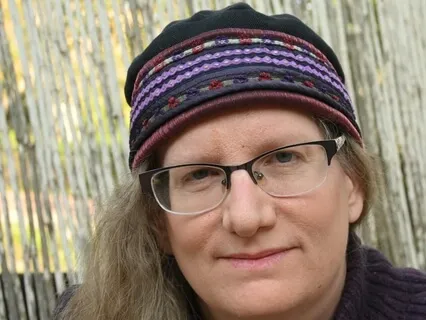
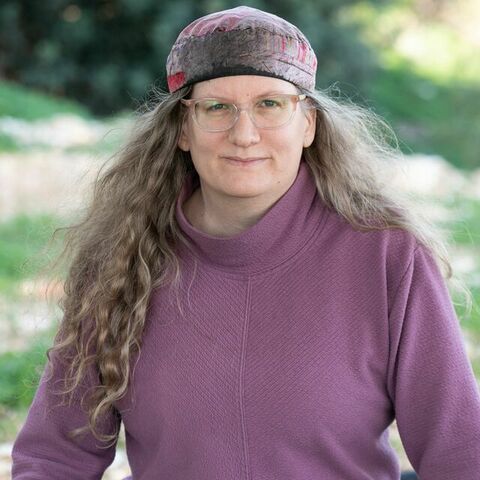
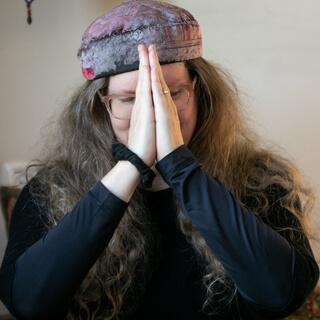
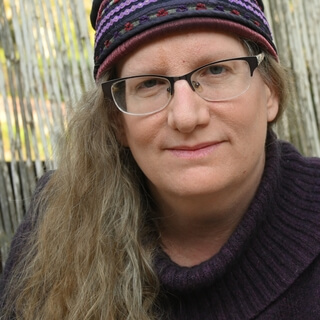
I am Rabbi Hasi Oriel Steinmauer,
The founding director of the Institute for Holiness Kehillat Mosar.
We're here based in the Galil in Israel and we're dedicated to Mosar mindfulness,
The practice of the Jewish tradition of Mosar and insight meditation and gaining the wisdom and the guidance from both.
We're delighted to have you.
Thank you for joining today.
We are in the middle of our 40 days Elul practice,
Mosar mindfulness.
It is our ancestors tradition to take this time from the new moon of the Jewish Hebrew month of Elul.
All the way until Rosh Hashanah Yom Kippur,
The New Year and the Day of Atonement,
To spend time doing self-reflection,
Introspection,
Really doing a process of tikkun hamidot,
Of repairing what we can,
Taking responsibility,
Doing teshuva,
Returning,
And this really kind of purification in the sense of really becoming aware of where our work is so that we can become fully present.
So we're delighted to have you.
Thank you for joining.
So before we begin,
I want to say that we have received a sponsorship for today's teaching in honor of the Institute for Holiness,
Kihilab Mosar.
It is an anonymous sponsorship and we're delighted and thankful for the sponsorship and donation.
Thank you so much.
All your donations are kindly welcome to support this work as this is a free will offering.
You may be in touch with us,
Should you like to go ahead and offer a sponsorship or donation in honor or memory of someone.
So we're going to jump into our usual kavanah that we always do together,
Our intention for today's practice.
And I'm going to share screen with you to do this.
Okay.
So before you,
You have our intentions.
We're now open to three kavanah that we say,
And we can do this practice daily before any of our words,
Thoughts,
And deeds of caring for the self,
Which this practice is,
This half hour that you're dedicating to your practice.
It's also an act that it's going to be for others,
Because that's why we do this work.
And it's really about strengthening our relationship with the Almighty,
With the divine.
So we say,
This is something I am doing to strengthen my own soul in order to be a benefit to others in the future.
And then we also say,
Starting right here in the second paragraph,
This is something that I'm doing to strengthen my relationship to others,
So I can be a better conduit of God's good to others when they need me.
And finally,
To strengthen our relationship with the divine,
We say in the bottom paragraph here,
This is something I'm doing to strengthen my relationship with the Creator,
So I can be a better conduit of God's good to others when they need me.
And that is our intention,
Our kavanah today.
We are on day 25 of Elul,
Delighted to be here together and practice.
And our text today,
As you might recall,
We are in the fourth week together of this practice where we started off really looking at self-forgiveness in the first week.
In the second week,
It was looking at forgiveness of an other that was close to us and an easy,
Calm relationship.
And the third week was looking at anyone that was a neutral person that was more of an acquaintance,
Someone that we weren't close to,
But that we would see maybe from time to time,
That either caused us suffering or we cause them suffering during the year,
Either by being impatient or angry or who knows what might have transpired.
This fourth week is the more difficult week usually in the practice.
And that is where we are looking at a difficult relationship.
It's one that we don't have anything traumatic because we don't want to engage in practice where we might need actually the help of a therapist.
This is more a relationship where we can still manage it,
But it has tension.
There's discomfort there.
And that is usually,
As I said,
More challenging to practice around because not only do we often put up guards around our heart,
So therefore it's hard to forgive that person.
We often tell ourselves excuses not to engage in changing or seeing the relationship differently.
So we use our moves,
Our mindfulness to see what needs those are unbalanced that are not allowing us to have a more healthy relationship and also using mindfulness to wake up to what is arising within us,
What's actually happening in the relationship and being able to move from unpleasant to neutral perhaps or neutral to pleasant.
So I went to go pull up this text to share with you as I usually do.
And I of course couldn't find the file in time.
And so I don't want to take time away from our learning together.
But this is a key Musar text.
It comes from my beloved colleague and friend,
Rabbi Neha Berger.
It's his new book called the widen your tent thoughts on life,
Integrity and joy.
And he really based his work on Raph Shimon Shkob introduction to Shari Yosha and a rabbi Shkob has this amazing mission statement for us as Jews.
And I would apply it to non Jews also,
Because we all have a purpose to you'll hear what the mission statement is,
And you'll see how it applies to all of humanity.
But in particular,
If I were going to tell you,
We Jews have a mission statement,
You might think,
What's that?
So I will share a little with you here short teaching.
It will not have already the Italy,
We are your search baron number itself.
Mom,
The mood of it may govern me to the higher or lambda tab to a no she ha ya a dear ha fats.
Blessed shall be the creator and exalted should be the maker who created us in God's image and the likeness of God's structure and planted eternal life at the mass.
Now,
This is the key part.
This is the mission statement here.
She a dear fat snow,
So that it'll be our greatest desire.
Lay hey,
T,
Em,
Zoo latino.
So that we are greatest our desire should be to be a benefit to others,
To individuals,
To the masses now into the future.
So what this means is a Rob Mika comes to say that this,
This,
This word,
This terminology,
Leh-hey-tive,
To,
To bring good to cause good to benefit others is special and Raphshy Munchkolb's lexicon.
And it means to bring God's good to others.
And that's pretty profound.
If you take,
It sounds very simple,
But imagine after you wake up,
You've done your mode on the,
Or your mode on me and you're sitting there and you think,
What is my purpose today?
What's my intention?
Like I've been on you realize,
Oh,
I'm,
I'm here to bring God's good to others and you,
And you then work and think of how I might do that and actually develop a plan and at least try to do one deed that day.
Think about how that would affect and change the world.
And this is what we do in our Musa practice.
This is what we are trying to share and become together and really take on as our mission statement.
So what does this have to do during the 40 days of their law,
Which really leads into 10 days of Tishrei or Shoshana's Kamiyanas.
And it's for us to really keep in mind that we are bringing God's good to others.
That includes us and that self care and this practice that we're doing.
And so we're going to keep that in mind,
This mission statement.
And I want you to hold onto it over the Shabbat also,
Where we really,
Again,
Let go of Moshe Rabbeinu who will leave us in this parasha,
The Shabbat again,
And really just think and really internalize how to live out this.
This is part of the practice.
So we're going to move into a guided meditation right now with some silence,
I will lead you.
If you have any trauma,
Any back pain,
Anything that's sitting down is not going to be the right form of meditation for you,
Then take care of yourself,
Know your needs,
Stand up,
Secure yourself next to a chair for a standing meditation.
If you need to do a walking meditation,
That's fine.
Or you can lie down also,
But just keep your eyes open so you remain awake and alert.
You don't want to fall asleep on us.
For those of you that can sit,
I invite you to bring yourself to an upright position,
Standing or sitting tall from the sit bones,
Grounded in your chair,
Really having your feet solid on the ground.
Why?
We want to be rooted.
We want to feel ourselves in the chair or on the zafu,
On the sitting meditation cushion,
And our feet also for sitting in a chair so that we feel that we are being held and cradled by God's earth and that we are between heaven and earth right now.
So we are sitting,
You may put your hands resting on your lap or on your heart,
And take three deep cleansing breaths,
Allowing yourself to arrive.
This is where we want to allow our breath to bring us to ease.
You may close your eyes if you feel safe or lower your gaze,
Using the breath as your anchor to keep you in the present moment.
As the breath slows down where we want the in breath and the out breath to be the same length,
Inviting a sense of calm and kindness and compassion in today's practice.
From time to time,
You will hear me fall silent to allow us to practice in some silence.
Do not think that I've gone away if you are new to meditation.
I will return.
This is it.
This is our last day of the fourth week.
We will meet again on next Sunday before Rosh Hashanah,
The Jewish New Year begins on Monday evening.
So if we haven't taken responsibility yet and apologize for hurting this person that we have this more difficult or unpleasant relationship,
This is it.
This is the time after this practice today to bring God's good and reach out and do your best.
And if you must forgive them,
Even if they haven't asked for it,
This is where we work on forgiving.
Letting go whatever we're clinging to in our hearts.
In the Torah Moshe is about to die this Shabbat again,
A noble and tragic death.
Our beloved leader has been on this journey with us.
We've been on with them and been a Israel,
The children of Israel through the desert.
And then we will feel a void of Torah after the death of Moshe from the time of Rosh Hashanah through the holidays all the way through Simchat Torah.
We will feel a void.
And there are not being a Torah portion each week in the sense,
Not until we reach Bereshit in creation again,
This beginning which our teacher Joseph Goldstein always says,
Simply begin again in our meditation practice.
And this is what we Jews do again and again every year after the high holidays in Simchat Torah,
We simply begin again.
And now we do this over and over and our practice with our breath.
When the thoughts travel and take us away,
When any sensation in the body calls for our attention,
Maybe it's emotions that we are getting stuck in clinging to ideas.
We simply awaken to that moment that we have gone off and we simply begin again and bring ourselves back to my voice back to the anchor of your breath.
And in this story of the Torah is a lesson for us that sometimes a death needs to happen,
A little death inside of letting go of how we once related to this person,
To others that we might have difficult relationships with.
We might need a little death of our assumptions about them,
A little death of our opinions about them,
A little death of what we expect from them.
This is part of forgiveness,
A little death of whatever we hold on to of how we're relating in ways that are not in alignment with our values,
Of a form of clinging,
Whether it be in our heads,
Allowing this person or what the hurt they've caused us to take up free rent in our hearts.
We have to have a noble yet tragic little death,
A letting go.
It is only then that something new can birth just as bearish sheet as creation begins after the void of Torah during the month of Tishrei.
We instinctively and intuitively know this,
But it's hard to let go.
We often feel safer,
Safer in the known and what is old are unhealthy patterns of our behaviors.
Soon on Monday evening will be Yom HaRata Orlam,
The day the world is born,
Its birthday comes before us,
The new year,
The head of the year Rosh Hashanah.
Allow yourself to be born into something new.
Today our practice and our meditation is to recognize and allow whatever we are still clinging to,
Whatever unhealthy behavior we are still behaving,
Still acting out from,
Still reacting.
And we investigate now one small manageable way that we can actually practice,
That we can participate in with God's help and opening some small way,
A shift in our being in relationship with this person,
Maybe how we treat them.
Maybe we take a deep breath or a sip of water before we speak back to them.
Maybe we create a space between the match and the fuse.
Maybe it'll be in how we take responsibility or in how we forgive and let go.
For some of us this will sound scary or hard and it may be.
All change is and change is happening all the time as we learn in our mindfulness practice.
What is here now passes.
And that is why we actually do this together in kahila and community and the vad and the sangha.
We take refuge in one another and each other.
Our moose,
Our mindfulness and our Torah and in God and Hashem.
My beloved colleague and teacher,
Josh Faglesen,
The executive director of the Institute for Jewish Virtuality based in the United States shares a story about his own ima,
His mother who taught about something called inverse paranoid or paranoia.
So usually in paranoia,
The person experiences the world is out to get them.
But the inverse paranoid experiences the world as it is out to be kind to them.
And that is part of developing this I and to have that we've been talking about now for four weeks,
Developing this good eye to give the benefit of the doubt,
Even to ourselves,
To develop this kindness,
This compassion,
This space before we react,
To be able to respond with wisdom,
Discernment.
So today,
We work in our meditation,
We can even bring a smile to our face,
As that will bring more ease,
More alertness.
As we engage in inverse paranoia,
Experiencing the world that is out to be kind to us.
Facing the world each day as such,
We can begin to feel an opening of the better and our heart.
We might even begin to see this person that we struggle with that has these moments of unpleasantness.
Maybe we can even come to neutrality,
If not pleasantness from time to time.
In Psalm 23,
The Tehillim,
It shares about letting goodness and kindness pursue me all the days of my life,
That I may dwell in the house of the Lord.
Well,
We know from our mindfulness practice that we only can do this one first with calmness,
But being awake,
Present to the moment.
And then we will realize that we dwell among the Lord every minute.
And what a gift that is to awaken to the good and give thanks.
We are cultivating this capacity right now.
Moving from unpleasant to neutral,
Neutral to pleasant,
Awakening to the good and giving thanks.
One day at a time,
If we continue this practice,
It will begin to soften.
It will begin to transform relationships.
We are going to move to silent meditation together now.
And you will hear me ring the bells when it is time to join in together.
You will hear me go on mute now.
You will hear me ring the bells now.
You will hear me ring the bells now.
You will hear me ring the bells now.
You will hear me ring the bells now.
You will hear me ring the bells now.
You will hear me ring the bells now.
You will hear me ring the bells now.
If your mind has wandered,
Your thoughts taking you to the future planning,
Or thinking about something in the past,
Gently bring them back to my voice and your breath to the present moment.
Maybe it's strong emotions.
Maybe this practice is evoking something in you.
You can just gently ask yourself,
Can I be with this?
And if it's too strong for you,
You just bring yourself to your breath.
You can even gently open your eyes.
As we begin to come to a conclusion in our practice today.
When you are ready,
Gently,
Softly open your eyes.
Join us back in this virtual room together and community.
Honor yourself and your practice,
Honor God for bringing this practice to us,
Honor our ancestors who brought this to us.
Thank you.
Thank you for joining today and being here and dedicating yourself care so that you may be a conduit to bring God's good to others.
Always close with our forgiveness prayer during these 40 days and little practice of most our mindfulness.
We Jews traditionally say this every night before going to sleep.
It's very important,
Especially now as we are mindful of slikha,
Of forgiveness,
Really letting go.
So we share together and we say the first paragraph here,
Starting with haremi,
Which you have in the Hebrew.
Be in touch if you want a copy of this.
If you don't own a Jewish siddur,
A prayer book,
I'd be delighted to share this with you.
I hereby forgive anyone who has angered me or provoked me or sinned against me physically or financially or by failing to give me due respect or in any other manner relating to me,
Involuntarily or willingly,
Inadvertently or deliberately,
Whether in were or deed or even a lack of order.
Let no one incur punishment because of me.
Allow me to forgive them.
Allow them to forgive me.
Allow all of us to open our hearts more to practice more kindness,
Compassion.
I'm so delighted that you joined us today from wherever you're coming,
Whether it's live stream on Facebook or YouTube or LinkedIn or here on Zoom.
Thank you so much for today's practice.
And we do not meet tomorrow,
Friday or Saturday because it is my Sabbath and I don't use the computer or technology on Shabbat.
But we will meet,
Bezrat Hashem,
God willing,
On Sunday at the same time,
1.
30 PM Eastern Standard Time,
10.
30 AM Pacific Standard Time,
And of course here in Israel,
Whether Haifa Yerushalayim,
8.
30 PM.
So thank you again.
I look forward to practicing and learning together on Yom Rishon on Sunday.
Take care of yourselves.
Thank you again.