.
.
You're welcome if you're in the United States or Canada or all over the world,
Anywhere in Africa and Australia,
Whoever is joining us.
Thank you.
We are live streaming,
You're welcome to join us on zoom,
Facebook,
On LinkedIn and also YouTube.
We began our practice yesterday called the 40 days of a little practice.
A little is the Hebrew Jewish month,
Right before Rosh Hashanah,
The Jewish New Year,
And the before the Day of Atonement Yom Kippur.
It's a practice in Jewish practice to have before the 40 days before Yom Kippur to prepare oneself for that season,
For sikhut,
For forgiveness,
For akhriut,
For taking responsibility.
And when we do this by gathering in kahilah and community and avad and asanga,
We take refuge in each other and musar and torah and God.
And we sit in silence together to prepare ourselves.
It's a form of tahirut,
Of purifying our souls,
And we are souls.
So I'm delighted to have you here.
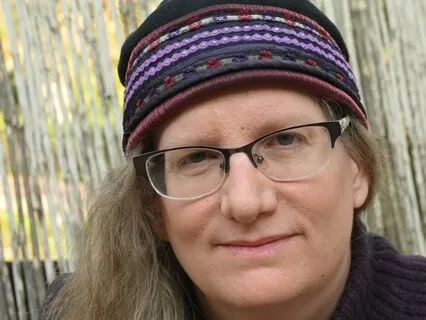
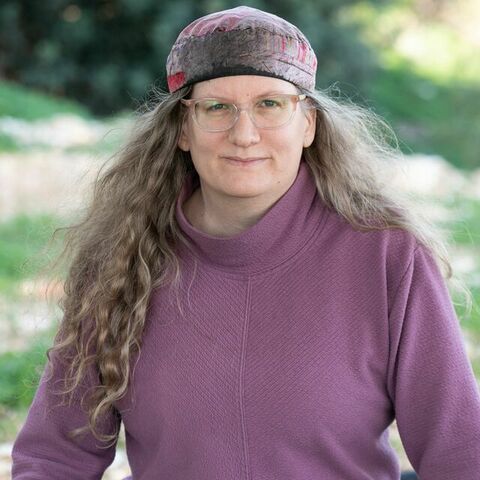
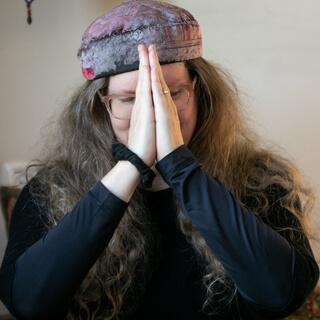
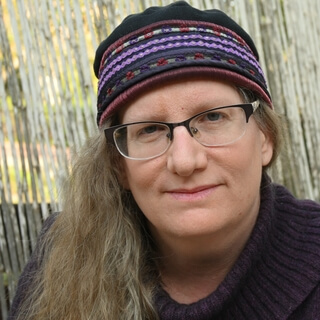
I am Rabbi Hasio Uriah Steinbauer,
I'm the founder and director of the Institute for holiness,
Kahilah musar.
We dedicate our lives and practice to musar mindfulness,
Where we engage in daily practice of the Jewish ethical moral refinement practice of musar,
And also of insight mindfulness meditation,
Including the wisdom from Buddhism and also Judaism to refine our souls to be on a path of awareness,
Wisdom,
And transformation.
Thank you for joining us.
So,
As we began yesterday I did a short teaching.
And then I led us in a guided and then silent meditation together,
And that's how we'll spend our half hour together.
Every day except for Friday evening my time,
And Saturday evening because that is my Sabbath,
The Shabbat.
And even this coming yon rishon Sunday.
I will also not be streaming live because I'm leading a musar workshop on a zoom and you're all welcome to it is listed on our website at kahilah musar on Facebook.
So with that,
I'm going to begin with one of my favorite teachers,
Rabbi Alan Lou Zikra was a chronon the He teaches us that in exactly one month from yesterday,
Two days ago,
The beginning of a low one revolution of the moon.
We all stand before God.
But he says something very,
You have to be very mindful you have to pay attention to this language and I'm looking at his wonderful book called in.
This is real.
And you are completely unprepared.
Aren't we all.
That is living in the present moment is just being here,
Because life is just so full of that full catastrophe living of being unprepared.
But it goes on to say something very important that we have to be mindful of.
He says,
Standing in the light of God.
You could see a great deal more than you ordinarily might,
But this is pay attention here.
Only to the degree that you are awake.
Only to the degree that you are awake that you are here in the present moment.
Only in proportion to the time and energy,
You have devoted to preparing for this encounter.
We can deduce from this if we are not awake.
If we are not mindful.
If we have not spent the time and energy devoted to prepare for this encounter between us and the divine.
And we will miss it.
We will miss it.
We will not be awake to it.
And this is true for anyone who has a daily practice of mindfulness and most are.
We know that if we're not awake.
We miss life.
We aren't here.
We can't be of service to others,
And to God,
Because we're not here.
So together today,
And this whole 40 days practice of a little,
We are working on being together in the present moment,
So that we can actually spend this time and energy devoted to preparing for this encounter.
Part of this encounter is between you and me,
And this could heal others community.
We just experienced the divine and each other.
So it goes on to say that in the matter Moshe proclaimed,
Every person must prepare him or herself for 30 days beforehand with repentance and prayer and charity,
Which we know those to be in to shuva and to feel and sadaka in the Hebrew.
And for the day that he or she will appear in judgment before God,
Before God and Rosh Hashanah.
So this is what he has to offer us.
Okay.
And it's like every person scrutinize their actions to view in mending them.
There's always the opportunity to simply begin again to do to shuva to return to turn around to return.
So,
It says,
Let him or her exclude him or herself for one hour every day and examine themselves.
That's pretty profound.
Most of us don't have that hour today.
Blessed you for spending this half hour with me.
I'm very grateful.
We know in our Musa practice that we keep it short and simple two minutes in the morning chatting our morning affirmation,
Then just paying attention throughout the day until we get to our evening journal called fishbone Hanefesh at accounting of the soul journal.
And that's when we record our words,
Thoughts and deeds of how we treated ourselves,
Others and God,
And that alone is part of this amazing examining ourselves that we do daily every day,
Not just during the 40 days of their little.
It gets a little intensified during a little that's why we're doing this together.
So,
Rather high in the V.
The Azul I also said during a low one should devote less time to study,
Which is a big thing in Judaism.
So much is considered the highest meets that in to study Torah.
So for a rabbi to come and say,
You need to spend less time studying pretty significant.
You need to spend less time to study and more time to fix periods of introspection and self evaluation.
It's profound.
As,
As you know,
In our muscle practice we do that daily.
But here we're given special dispensation within our tradition to spend this time doing this.
So,
Finally,
As I shared with you yesterday,
We know from the kav ha Yashar that many men in his time observed silence,
Silence between the advent of allure and Rosh Hashanah to affect the purification of their souls.
Why silence?
Why do you think silence?
Take a minute,
If you're able and share with me in the comment box where you're from.
Why do you think silence.
What does silence help us to.
Thank you for joining us I love to see your comments.
Where you're coming from your kavana,
Your intention for today together.
Silence is so key.
We do it as a daily practice.
It allows us to be present,
Allows us to really be embodied to feel the sensations of the body,
The thoughts of the mind,
To begin to see that we are not our thoughts.
And that any unpleasant,
Uncomfortable and even painful sensation in the body will pass to that this too shall pass.
We build such amazing soul inspired spiritual muscle to be able to withstand much.
And that's so key to those of us called upon to bring God's good to the world,
To others.
That's what we're doing today.
Part of our most our mindfulness practice is obviously to move away from unwise,
Useless and habitual acts.
Let me say that again.
We are here to move away from unwise,
Useless and habitual acts.
We only begin to realize we're behaving that way by having this mindfulness,
Paying attention to our behavior daily,
Recording it,
Noticing patterns over time that,
Wow,
I'm really behaving from a very habitual reaction instead of responding wisely with discernment,
With compassion,
Which is where we want to be and where we're headed.
So we are engaging in self honor practice this week,
Why self honor.
Rabbi Wolby and Ali Shor,
Great Musar teacher,
Passed away not too long ago.
He was really the bridge from all of our Musar masters from the time before the Shoah,
The Holocaust.
And God forbid,
Those who were murdered and passed away.
He was one of those who survived and continued Musar teaching and practice.
He says that honor is an essential way to recognize God.
So when we begin to really practice kavod,
Honor as a mida,
As a soul trait in our Musar practice,
We learn that it is simultaneously a state of awareness and a deed.
First,
By recognizing that we are so created in the image of God,
We honor ourselves.
If we cannot honor ourselves,
We cannot honor others.
So what does that have to do with the court with forgiveness?
If we don't honor ourselves,
We're not going to honor somebody else enough to take responsibility and apologize.
So it's key.
Okay.
Honor is an external behavior as well as a state of awareness,
Compelled by the reality of an internal holiness appropriate to it.
Beautiful quote.
And with that,
We're going to move into our practice.
After the practice,
I'm going to lead us in what we're going to do daily,
Which is what we started yesterday.
So please find yourself in a comfortable upright position.
If it is difficult for you to sit,
Please stand with a chair next to you to keep you safe.
If you're standing,
I don't advise to shut the eyes,
Just lower your gaze.
You can lie down also if you're someone that lives with chronic pain.
Keep your eyes open while you lie down so you stay present and awake.
The rest of us can sit with our feet really grounded to the earth.
We are between heaven and earth,
Upright,
Dignified,
Created in the image of God.
You can let your hands rest in your lap or gently put them on your heart.
Take a deep breath.
Three cleansing breaths.
Let yourself settle.
Shut your eyes if you feel safe.
Let your eyes lower your gaze.
Scientific studies show self-compassion,
Self-honor as a practice,
Builds emotional resilience and moves us to the care system of our brains,
Where we care for ourselves and others more readily.
Honor in the form of self-compassion promotes health-related behaviors like sticking to healthy diets,
Exercising,
And seeking needed medical treatment.
Today,
We will practice it using our phrases from yesterday,
Where we are really going to invite in right now our wish of kindness,
Honor,
And goodwill to ourselves.
We want to open to kindness.
Whatever feelings arise,
We honor them and welcome them.
Take a few moments to relax.
Let go of any tension in the body or mind.
Relaxing your head,
Your scalp,
And your forehead,
And your eyes,
Your neck,
And your shoulders,
Your chest and belly,
Down to your sit bones,
Down through your legs to your feet.
Invite a smile.
It relaxes our nervous system and brings honor and even joy.
Sends a message of ease and safety.
Today,
We will accept whatever arises.
Any thoughts,
Fantasies,
Dreaming,
Just simply noted.
Bring yourself back to your breath.
From time to time,
I will go silent.
No more than 30 to 45 seconds during the guided part.
You can trust that I will speak again.
If you happen to wander to sensations in the body,
Just bring yourself back to your phrases and to your breath.
Invite your kavanah,
Your intention to honor and hold any difficult or pleasant feelings and sensations in the body with care,
Compassion,
And understanding.
We are in a shared human experience.
We will now repeat our phrases.
May I be safe.
Repeat after me.
May I be kind to myself.
May I accept myself just as I am.
May I honor myself.
Open to whatever arises with kindness,
Acceptance,
And honor.
The mind will wander,
That is its job.
Just bring yourself back to your phrases,
To your intention.
May I be safe.
May I be kind to myself.
May I accept myself just as I am.
May I honor myself.
We will now move into silent meditation together.
You may return to your phrases or your breath as your anchor.
Should your mind take you off on a journey.
Simply just notice.
Simply begin again.
Just take a moment and let's Both.
Keep speaking Web Wizards.
.
.
.
.
.
.
.
.
.
.
.
.
.
.
.
.
.
.
.