Welcome to everyone who is slowly joining us.
Delighted to have you.
We're going to begin in one minute as we live stream this to several different locations.
Just settle in and get yourself comfortable.
We will begin shortly.
Thank you for your patience.
Okay.
Good to see all of you.
Welcome.
I'm going to actually control I'm going to try to set up so that the speaker that is being in front is my window because for me it's not showing.
It's interesting because I listed a speaker but I'm wondering if this is where I'm learning all the technology.
Here we go.
Perfect.
Anyway,
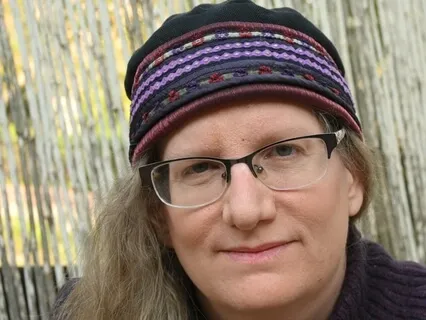
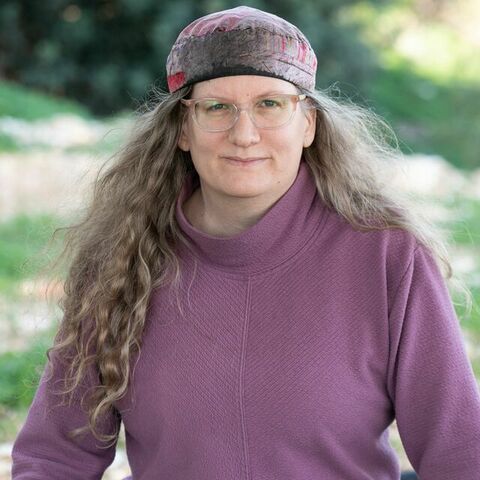
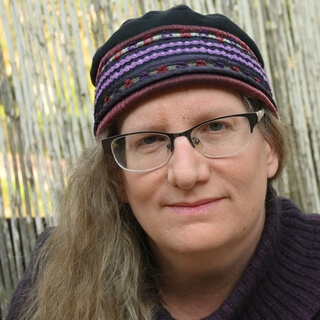
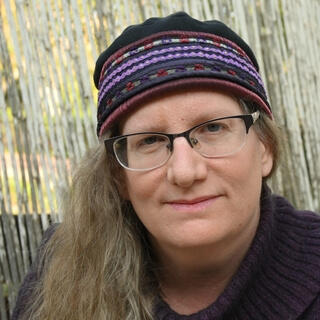
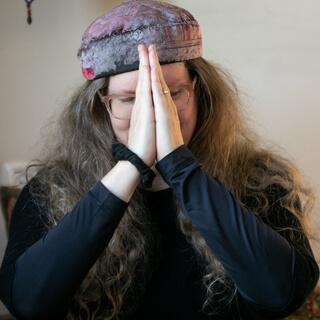
I am rather happy or real Steinbauer.
I am the founder and the director of the Institute for holiness.
Kehlak Musar.
I,
As I said,
Am so excited that you've taken time to honor your own practice and to engage with us here.
And we're going to begin actually with a short text that I want to share with you.
And let me share screen.
Make sure I have it.
Thank you for your patience.
Let's see if I can pull it up here.
It might not be the right one.
And might have to stop share and restart again.
So as if you've been sitting with us for the past three days,
We are in the 40 days a little practice of most our mindfulness.
It is the Hebrew Jewish month of a rule where we engage in daily practice of silence,
Reflection,
Awareness,
Wisdom building,
Transformation,
All leading to what we call to shuva in Hebrew,
A form of returning and repentance that leads us to the new year Rosh Hashanah and Yom Kippur,
The day of atonement.
And so I'm pulling up a text in front of you,
Because we've been engaging in self honor,
And self compassion.
We do this foundationally in most our practice because without self honor,
We cannot honor others properly.
It's imbalanced as a personality trait as a need.
So here we have honor,
Respect and dignity,
And love are due to each and every human being.
Not because of the greatness of their achievements,
But because they are home to a soul that is inherently holding.
Nobody created his or her own soul.
Everyone has been gifted with a rarefied essence.
Let that settle in.
It's just beautiful.
Just beautiful.
That comes from Rabbi of Voloh from 1749 to 1821.
He was one of the forerunners of the most our movement,
And really holds that honor of all people should be not only an internalized aspect of ourselves,
But also in our deeds of how we behave toward others simply because they are so created by God in the image of God.
So with that,
We're going to hold that in our practice together today.
Share one more thing with you before we go into our guided and silent meditation together.
So meditation practices,
Of course,
Range across a whole number of different practices.
But the main two forms that we do in Musar,
In particular during the month of Elul,
Is a mindfulness kind of insight meditation of just noting.
But then there's also in the 40 days of a practice of not only observing what is going on with our thoughts and with our bodily sensations,
But also to note very clearly if there are thoughts and bodily sensations that keep coming up the same ones.
See it as a gift from God as part of our spiritual curriculum when the same thing keeps arising.
It's there for us to honor.
It's there for us to pay attention.
It's actually kind of knocking on our door and saying,
I need you to pay attention to me.
I need your love.
I need your compassion.
I need you to honor this.
All right.
So this is what we're going to be paying attention to as we go into today's practice because as we're moving forward on this week of self honor,
And our first week of the Elul practice,
Is we need to start moving into self-forgiveness that only can come with self honor being balanced.
And also,
You want to be able to gently and lovingly be able to pay attention to what is calling your attention for you to work on balancing that right during this month of Elul.
So the final thing I want to share with you is that meditation also helps us see something larger than ourselves.
This gathering right now with all of us,
It's very important that we see that we're not alone because we're not.
We have people from all over the world gathering right now who've committed to this time together and this practice.
Just like we are,
We experience a connection to one another in a very immediate way.
We're all breathing.
We're sitting,
We're under the canopy of the divine together in this practice,
In a heartfelt embodied way.
We inhabit ourselves more deeply and awaken to something much more vast during this time together.
So with that,
We are going to enter into a longer sit together.
I will guide you at the beginning when you hear moments of silence of 30 seconds to 45,
Just know that my voice will come back.
And then I will let you know when we're moving into silence where you will use your anchor as your breath as your anchor or your phrases that we will move through.
If you're new to meditation,
Be kind to yourself,
Understand that the thoughts will move,
They'll move to thinking of the past,
They'll move to fantasizing of the future.
You'll get caught up in being achy or bored or super excited.
The whole range of emotions come up when we're meditating.
And that's okay.
We honor all of them and we just the practice is simply begin again.
Bring yourself back to the present moment to the practice.
All right,
With that,
Please make yourself comfortable.
Now anyone with chronic pain,
Feel free to lie down with your eyes open so you stay awake and aware or stand with a chair next to you so that you feel safe.
You do not need to sit for meditation.
All right,
If you are sitting,
I want your feet grounded.
It's very important,
Especially for beginners,
Which we all should be beginners in the sense of having beginner mind,
But you want to be rooted.
And you want to feel that you're you're feeling something underneath your feet.
And I always encourage putting your hand on your heart.
You want to be in your sits bones and upright position dignified created in the image of God,
Knowing that you are between heaven and earth.
Take three deep cleansing breaths.
As I said over the past few days,
We sit in silence,
Especially during these 40 days a little practice because our people have had a long tradition of sitting in silence for part of each day preparing for the high holidays.
It's a way of being with oneself to purify,
To find where one has work to do.
To be able to take responsibility to seek forgiveness.
Now,
We're going to just do a short body scan just to become more embodied.
You're going to start at the top of the head and notice your scalp feels tight,
Maybe the back of the head,
The neck.
Scan down to your forehead and eyes.
Feel any tension there,
Just note it.
And your shoulders down to your upper back,
Down to your lower back.
Feeling the breath move in and out of the lungs as they expand.
Down to your sit bones and your thighs.
So much life and vitality flowing through us with each breath.
To your knees,
To your calves,
Down to your feet.
Allow yourself to arrive.
Open to whatever bodily feelings arise.
Today,
You will note you will bear witness to your thoughts and your bodily sensations.
We will note what thoughts and bodily sensations pull our attention away from our anchor.
That moment,
That moment that we have our thoughts pull us away,
We suddenly become awake to what is going on inside.
And it is a gift.
We see ourselves more clearly.
And very importantly,
For the 40 days Elul practice of Musa mindfulness,
We come to see that which we've been ignoring.
If you've noticed the pattern for over the past three days of practice together,
Gently and kindly recognize it and allow it.
You'll note it with a beginner's mind with non-judgmental curiosity.
This is interesting.
I'm having this thought again.
Or there's that same aching feeling in the same spot of my body.
Simply note it,
Bring yourself back to your breath.
Close your eyes if you feel safe and comfortable,
Or lower your gaze if you haven't already.
Whatever feelings arise,
Allow.
We take these moments to fully relax any tension,
To note what's happening in our bodies.
For some of us,
As I begin to tell you that our practice is one of honoring the self.
Kavod bivrit.
It is a divine quality where we see our value and our worth simply because we are created in the image of God,
Nothing more and nothing less.
When you hear these words,
Note whatever sensations arise in the body,
Any thoughts that arise.
For some of you,
This may be challenging or unpleasant.
It may trigger feelings or thoughts of unkindness.
Simply note it with kindness and acceptance.
We have set our intention,
Our kavanah today to honor and hold any difficult feelings that arise with care,
Compassion,
And understanding.
Notice if this comes easily to you.
Notice if there's a calm when you smile and think of honoring yourself with self compassion.
It may come easy to you to love yourself and honor yourself.
Allow that to and bring yourself back to your anchor.
Others of us may not feel that it comes so easily.
We recognize that.
Allow it.
Honor it.
Know that you are not alone.
All of us from time to time,
Do not honor ourselves,
Do not forgive ourselves to not practice self compassion.
This is a shared human experience.
Jew,
Non Jew,
Religious,
Not religious,
All of us engaging in this beautiful practice.
And when I ask you to repeat these phrases,
Note what you feel in your body and where.
May I be safe.
You can say it silently after me,
Or out loud to yourself.
May I be kind to myself.
May I accept myself just as I am.
May I forgive myself.
May I honor myself.
In your bodily sensations and in the felt sense of this experience.
Note what most wants your attention.
What is most difficult for you that you are believing in this moment?
What emotions does this bring up?
Perhaps fear,
Perhaps anger,
Perhaps grief.
It is a practice to say those gently out loud,
Whatever emotions you're having.
Nervousness,
Nervousness.
Where do you feel these emotions inside?
Gently note them with your non judgmental curiosity.
What is your felt sense of these emotions?
As sensations,
Perhaps raw,
Hot,
Sore,
Empty,
Squeezed,
Light,
Open,
Breathing.
What do I notice when I assume the facial expressions and bodily posture that best reflect these feelings and emotions?
We allow all of this with as much as we can.
Note that you are not alone.
You can call on your divine source on Hashem,
On God to carry this with you.
You can call on your Vahad,
On your Kehila,
On your community,
On your Sanda.
Take refuge in the teachings and the Musa and the Torah in your community and God.
Whatever arises,
May I be safe.
Repeat after me.
May I be kind to myself.
May I accept myself just as I am.
May I forgive myself.
May I honor myself.
Meeting all that comes with kindness,
Acceptance.
If you have a hurting part of you right now,
A vulnerable part,
If it could communicate to you,
What would it express?
What words or feelings or images?
What does this part need from you?
How does it want you to be with it?
As we move into investigating and nurturing what is going on,
What is alive and real for us,
For great in this moment,
If you are able,
Bring a gentle smile to your face,
Knowing that whatever is arising,
If it is unpleasant,
This too shall pass.
This practice together as a lifesaver.
Honor yourself for committing the time to be here to practice it.
We move into silent meditation.
I will ring my bells when you know it is time to come out.
Anybody who had the opportunity to have a comfort to carry out their daily work life Thank you.
Thank you.
Thank you.
Thank you.
Thank you.
Thank you.
Thank you.
I'm going to gently and lovingly pull you out of your meditation instead of the bells.
When you are ready,
Open your eyes and come back into the sacred space together.
Here I was one of those moments.
Shalom.
Thank you.
I thought I had my bells in front of me.
I have small children.
One of them took them and I smiled and thought to myself,
When life hands you lemons,
You make lemonade.
So there was my bell for you.
My voice to pull you out.
As usual,
We will move to closing together to share our practice of forgiveness.
We recite this prayer or one in our own words that really speaks to us during Elul of really forgiving and letting go.
And this is a practice that traditionally Jews recite every night before bed,
This small first paragraph.
And I want all of us to take this on daily before you go to bed.
We're going to recite it together now.
Well,
Before you go to bed,
Just if you have a mezuzah,
Leave your suffering of yourself and that you clause to others on the mezuzah and then come and recite with me.
I hereby forgive anyone who has angered me or provoked me or sinned against me.
Physically or financially.
By failing to give me due respect or in any other matter related to me,
Involuntarily or willingly,
Inadvertently or deliberately,
Whether in word or deed,
Let no one incur punishment because of me.
As I said before,
I always like to say,
May I forgive them fully when they know that I have forgiven them when I take the responsibility to make sure they know I forgive them.
And may they forgive themselves.
They let it go that they've hurt me or caused me suffering.
And now in our own practice,
Because we're practicing forgiving ourselves this week.
May we forgive ourselves,
Which is hard to do.
It's really hard to do full forgiveness and not go.
Salaam,
Peace to all of you.
Thank you.
If you've benefited from this practice today,
We have a practice in the Buddhist tradition that is also in the Jewish tradition taken the Jewish meditation of dana,
Of giving freely.
Any amount is lovingly accepted.
You can be in touch with us at kihilatmusar.
Com or any of the announcements show different ways to give.
We also accept sponsorships for any day sitting in memory of someone or an honor someone.
I thank you all for honoring your practice and yourself.
We will not be meeting tomorrow night,
My time,
Or even Saturday night,
Because it is my Sabbath it is Shabbat.
And I don't use the computer or go on.
And more so just this Sunday.
I also will not be leading because you all are warmly welcome to a moose our workshop that I'm leading for a synagogue called a death Israel in the United States.
And that information is on our Facebook page of key Latin star.
It is free of charge,
All are welcome Jews non Jews beginners advanced.
I promise it will be a joyful time we will engage in practice,
Because we say you only know and learn will start by doing will sign.
Bless you all.
Thank you.
Honor your practice on yourself.
God bless you all.