Okay,
We are ready to begin.
Welcome.
Such a joy to be with you all again.
Thank you for dedicating time to your practice and choosing to be here during this 40 days Elul practice of Musa mindfulness.
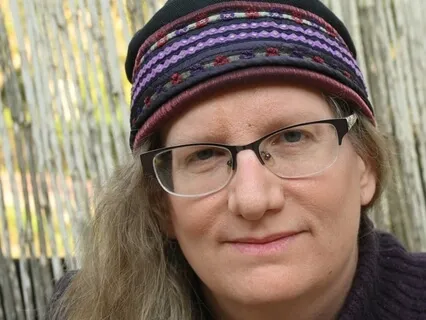
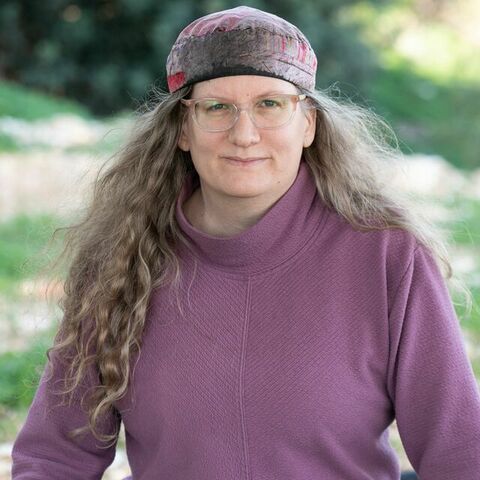
I am Rabbi Hasi Oriel Steinbauer,
The founder and director of the Institute for Holiness Kehilat Musar based in Israel,
But we teach online to all over the world.
So welcome to all of you.
If you're coming in from Facebook,
LinkedIn,
YouTube,
Or on Zoom,
Welcome.
Delighted to have you.
Feel free to settle.
Take yourselves a minute to share in any comment or chat box where you're coming from and what your kavanah,
What your intention is for today.
I ask that you please put yourself on mute during the session if you're joining us through the Zoom.
And we are going to begin.
So for those of us who don't know who we are and what we do,
We offer Musar as a daily Jewish spiritual discipline that looks to do character refinement through what we call midot character traits.
And we do that through a whole number of practices and modalities.
As I said,
It is daily.
And we offer that in groups as individual kavuta sessions,
Also one-on-one and in consultations,
As well as offering sittings like this.
And as I said,
Consultations and be in touch with us.
We're delighted to have you.
We're always running groups and you can join one if you wish.
So today is our third day of our practice in Elul.
And I'm going to share a little bit with you about the most prominent feature of the month of Elul is actually the sounding of the shofar.
And for those of you who don't know what that is,
We use Jews below shofar from a ram's horn usually each morning to cause an awakening.
And there are basically three reasons,
Primary reasons given for this practice.
But the one I want to just mention and discuss today is the one that has the source,
The famous phrase that's often heard at weddings.
And it's from Song of Songs.
Ani le dodi ve dodi li,
Meaning I am my beloved and my beloved is mine.
And if you've sat with us not to the past two days,
You know that we have been engaging in self-honor and a self-compassion practice.
And so really it's about self-love that we want to be able to have this very strong foundation of loving the self.
Otherwise we can't actually be of service to others.
And we most certainly cannot take full responsibility during Elul when we need to,
When we cause suffering.
So what's key about this is in the first letters of the alef lamed,
Vav lamed of each of the Hebrew word form an acrostic that formed the word Elul.
And from this,
We gather that the period extending from the beginning of Elul through Yom Kippur,
A total of 40 days,
Is a time ripe to become beloved by God and loved to ourselves.
So the shofar alerts us to that loving relationship.
So many Jews don't have access to hearing the shofar in the morning.
Now you can find many,
Many places that are blowing the shofar online during live stream,
Which is a blessing.
It's one of the blessings of this technology.
So if you have a chance,
I highly advise it.
As I said,
It's in every day during the month of Elul.
But for some of us,
The sound of the shofar is actually maybe not necessarily something we need for awakening.
This is why we sit and do our Musa mindfulness practice,
Because the sitting is an awakening,
As is our cheshbon hanafesh journal,
What we engage in together during our Musa practice to really look at our words,
Thoughts,
And deeds as they relate to us and how we treat others and our relationship with God.
So I want to share with you that part of this awakening that's happening in Elul is something that we all of tradition and the Rambi has really advised and make it clear that we must do this awakening.
We must do this work during the month of Elul.
And so we set a time,
A side time each day to look at ourselves,
To engage in self-evaluation,
Self-judgment,
Of course,
With compassion and nurturing.
And that we engage in cheshbon hanafesh,
Literally a spiritual accounting.
And so often people say,
Well,
How do I do that?
Well,
This is the Musa practice.
This is what we do every day.
And it's just a little bit intensified during Elul.
So I want to remind us all of why we are offering this every single day for the 40 days Elul practice.
So as you might recall from the teaching yesterday,
Rabbi Moshe Ben Avraham,
He was well known as the Matei Moshe from 1550 to 1606 from a Galician rabbi.
He says that every person must prepare themselves during this period before they receive the judgments.
Okay.
And the judgment today,
As much as some people still,
Of course,
Believe that there is the day of reckoning that we come to,
It is a self-judgment that we want to become our best selves.
So in that light of that,
We're going to move into a silent meditation together.
Rabbi will guide us first.
And if you'll recall,
It was around by Svi Hirche Gadanover from 1648 to 1712 recorded that during his time,
Many observed silence from the start of Elul all the way through Rosh Hashanah,
For Zphardim,
All the way through Yom Kippur to affect this purification,
To affect this internal viewing in order to learn more about ourselves and to become the finest versions of ourselves.
So with that,
I would like you to sit in a comfortable position.
I want you to,
If you need to stand,
Please do so.
Again,
I always advise next to a chair.
If you need to lie down,
If you have chronic pain issues,
Feel free to do so.
Keep your eyes open so that you'll remain awake with us.
For those sitting,
I want you to root your feet into the ground,
Become one with the earth.
We are between heaven and earth and the upright dignified position as that you are a child created in the image of God and allow three deep cleansing breaths.
Shut your eyes if you feel safe and comfortable.
Otherwise lower your gaze and I will guide you now.
Begin with a short body scan.
This is to check in your embodied experience,
Sensations in the body,
What you're feeling right now,
Any tension in your head and your neck,
Maybe tingling down your back,
Maybe butterflies in your stomach,
Whatever you may be feeling.
Scan down into your sit bones,
Into your thighs,
Down to your lower legs,
To your feet.
We continue with our self honor,
Self compassion practice.
Allow yourself to settle,
To be fully present using your breath as your anchor.
It is normal in mindfulness meditation for your thoughts to go to the past or to fantasize about the future.
Simply note it and bring yourself back to the present moment.
Allow your breath to settle into a healthy normal pattern.
Today we are going to begin to notice if we're having reoccurring thoughts or sensations in the body.
Often if we have reoccurring thoughts,
It is something that is trying to grab our attention that we tend to ignore with self compassion,
With acceptance,
With understanding,
With honor.
We will allow it.
We will recognize whatever is arising for us in this moment and we will allow it and we will note it so that after our meditation we could begin a Heshbon Hanafesh journal on accounting of the soul and note what thoughts keep arising for me during my meditation.
What bodily sensations keep calling for my loving attention?
We simply note it at this stage.
Herbert Benson identifies as a fundamental gesture of meditation,
The relaxation response.
According to Benson,
All the brain waves,
Changes and the physiological effects that come off and associate with meditation are set off precisely at that moment when we come to realize that our mind has been carried away,
Away from what our object of concentration is right now and we resolve to gently bring it back.
For us,
As we are in this group,
In this vad,
In this community,
In the kehila together in our practice,
We want to invite kindness,
Honor and goodwill,
Whatever feelings arise.
We want to invite a smile to our face as the smile invites a releasing of our nervous system.
It sends a loving message to our brain that we can be at ease and safety now in our bodily sensations.
From time to time,
I will go silent and you can trust that I will come and guide you again.
I will lead you through a few more minutes of guided meditation and then we will go into silence together,
Building more and more minutes each day as part of our Elul practice.
For some of you,
You might have unpleasant feelings.
Something painful might arise.
That too is welcome.
Today we set our Kavanah,
Our intention to honor and hold any difficult sensations or feelings in the body with care,
Compassion and understanding.
Know deeply inside that you are not alone.
You are with Jews and non-Jews from all over who have chosen to take this time and dedicate to their practice to self-care.
Part of kavod,
Of honor in the Musa tradition is about self-care.
If we don't care for the self,
We cannot care for others.
This is our time to care for ourselves,
Honor ourselves.
This is the shared human experience.
We will now repeat these phrases.
I will say them and then you gently say them to yourselves either out loud or quietly with him.
May I be safe.
May I be kind to myself.
May I accept myself just as I am.
May I have the strength and courage in this community to begin to forgive myself during this month of Elul.
Please mute yourself if you're not.
Thank you so much.
We ask that everyone mute themselves during the meditation.
May you breathe in the attention,
The wish for yourself that you honor yourself,
That you believe that you are enough because you are enough.
You are a holy soul created in the image of God.
We begin the phrases again.
May I be safe.
May I be kind to myself.
May I accept myself just as I am.
And today we add,
May I have the courage and the strength to forgive myself as part of our Elul practice.
Open to whatever bodily feelings arise,
Meeting whatever you experience with kindness,
With acceptance,
With honor.
When the mind wanders and it will,
That is part of the practice,
You simply bring it back to your phrases.
If the practice of evoking these phrases evokes strong feelings or emotions,
You can always bring yourself back to your anchor of your breath with self-compassion.
May I be safe.
May I be kind to myself.
May I accept myself just as I am.
May I forgive myself.
May I honor myself.
Allow yourself to take in any honor and self-forgiveness.
If no feelings arise,
Honor that you have taken this time and appreciate your efforts and attention you brought to your practice.
We will now move into silence together in your meditation.
You will hear my bells when it is time to come out and join the sacred community on whatever medium you are meeting with us.
How did we do?
When?
.
.
.
.
.
.
.
.
.
.
.
.
.
.
.
.