Hi,
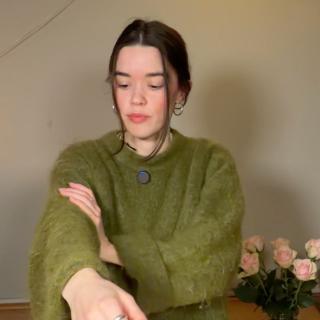
I'm Miriam Amavi and we're going to do a somatic practice for the nervous system now,
Which is a really wonderful balm for our nervous system.
It soothes our nervous system.
It shows safety to our nervous system because we can't relax and feel fully capable and alive if our nervous system doesn't feel safe.
And through these exercises,
We are also building our stress capacity and our resilience.
So the more we do these types of practices,
The safer and the more open we feel in the world and the better our body can handle and also discharge stress.
So you can see this practice as a sort of nervous system hygiene practice that you can do again and again.
Because with repetition,
It can unfold all of its magic because the more we do it,
The more our nervous system associates these practices and exercises with safety on top of the safety that these exercises give us anyways.
So you don't need anything.
You can do this on a couch.
You can do this on the chair.
You can even do parts of it lying down if that feels most comfortable for you.
You can also just sit down on a yoga mat as I am.
And we're going to start with our hands,
Bringing them to our arms and doing the havening motion.
If you've done other practices on my profile,
You might know this one.
Do with myself or everything just feels a little much.
Because this brings our nervous system back into the sense of,
Okay,
I'm here.
And when we're stressed,
Everything is happening in our brain and in the future,
In the past.
And with doing this.
We're containing all of that,
Bringing our attention back into the body,
And the soothing touch also signals safety to our nervous system.
And here I just want you to notice the sensations that you're generating.
How does it feel to rub over your arms like this?
You can also sway from side to side if that's available for you.
And just really take a moment and arrive here.
You may have a stressful day ahead or.
.
.
Behind you.
There may be a lot of things going on in your mind or a lot of worries.
Sadness,
Whatever,
And just notice whatever is there.
Perhaps you can notice a lot of pressure that you put on yourself.
Maybe there is the sense of urgency.
Maybe you clicked on this practice to make something go away.
But for this moment,
Can you just be with what is here?
Maybe there is fear or sadness.
Sense of hopelessness.
And we don't want to fix anything in this moment.
We just want to take this moment to give all of us to not rush through our lives,
But just meet ourselves where we are at.
And to give safety to what needs soothing and safety and attention,
To attune to ourselves.
In a really kind and compassionate way because this the best thing that we can do for our nervous system.
And now you can start with the body washing and just gently,
As if you're under the shower and having some soap,
Just really.
.
.
Gently wash your arms.
And while you're doing this,
You can just notice the sound that this is creating.
Perhaps The sound reminds you of something.
To me,
It reminds me of the sea.
You can also come up to your shoulder and to your armpit.
Perhaps you just tap a little bit on your armpit because this is not a place that we touch often.
So this gives our nervous system or our brain novel sensations.
And novel sensations make the brain curious and bring it back into the present because it wants to know what's going on here.
And you can come to your other arm.
And here you can notice The textures.
Maybe you feel the texture of your clothes or even your skin.
And without judging it,
We just want to notice it.
What's the quality of this texture?
Is it smooth or bumpy?
It's soft.
Is it cool or is it warm?
And you can come up to your shoulder.
And once again to your armpit.
Maybe tap here,
Maybe rub,
Whatever feels good.
This is also really about attuning to what feels good in your body.
If you want to change any of these movements you can.
Can also come down to the side of your body.
And then to your torso,
Rub over your torso and see if you want to do strokes from side to side or if your belly feels better doing little circles.
Just see what your body asks for right now.
Notice if you have to take a spontaneous deep breath or a sigh.
If you want to just let it out and just sigh or like that,
Make noises,
You can.
Maybe flutter the lips.
This all helps kind of.
Get back into the body and discharge the stress that we might be carrying because often in our daily lives we keep it zipped up and we try to be professional and try to be normal.
Our body just sometimes wants to let things out,
Wants to make like a like that.
You know,
I'm so annoyed.
This is so annoying kind of noise.
And you can just let yourself do this in somatic practices.
And now you can come to your leg.
And if you like,
You can also just pat down your legs gently or give your legs a massage and just see where it feels most nourishing to rub or to massage on your legs.
And also notice the temperature here.
And you can come to your feet and just gently.
.
.
Massage your feet.
And our feet do so much for us.
They carry us everywhere.
And then you can come to the other leg and you can do this all in your own time if you need a little longer on one leg just Do whatever feels good.
And once again,
You can just notice the sounds that this is creating.
Maybe pat your legs and see what's on that.
Is like Maybe this reminds you of something.
And then you can come to your feet.
Just gently Either just wash your feet like you did with your body or.
.
.
Give your feet a little massage and just see what your body asks for because.
.
.
This is a really great way to attune to our bodies and build trust with our bodies,
That our bodies know that when there is,
I can knead.
We are going to attune to it.
Listen to it.
And now we're going to do a little vagus nerve massage because our vagus nerve is one of the most important nerves of our parasympathetic nervous system.
And that's the nervous system that helps us come back into rest and digest and kind of feel good and discharge stress.
So what you're going to do is take your fingertips and just gently rub down the sides of your throat like this because the vagus nerve runs down.
The sides of your throat.
And when we externally stimulate it like this,
We help the vagus nerve send these signals of safety to our brain.
And then you can bring your fingertips to the center of your eyebrows or in the center between your eyebrows and then just do little circles here.
And see if you take a spontaneous deep breath or sigh or even a yawn.
These are all signs that your nervous system is kind of.
.
.
Coming into the ventral vagal mode,
So the rest and digest mode.
You can also do little strokes over your eyebrows like this.
Just with gentle pressure.
Then you can take your fingers and come to the.
.
.
Outer folds of your nose and just kind of gently do little circles here.
This might feel a little weird or look a little funny.
But this is always a great one for me.
For you,
It might be other points.
Noticing the releases that you have.
We don't need to force these releases.
They are automatic.
You can massage your ears now.
And it doesn't mean that if you don't have like yawning or sighing or anything like that,
That you're doing it wrong.
Your nervous system is still responding and sometimes we're so stressed or feeling so unsafe,
Basically,
If we feel chronically unsafe or are in a really unsafe kind of.
.
.
Phase or where we feel unsafe.
It can take a while until our nervous system feels safe enough to actually release and discharge stress.
So you're still doing a wonderful thing for your nervous system.
You can also massage the skin in front or behind the ears.
Just really make it your own and see what feels nice here.
Notice the response in your body.
If you can.
.
.
Feel the sense of settling.
And now we want to release some tension from the neck because We're all on the screen so much.
We're all kind of hunched over like this.
And when we're tense or when we feel anxious or stressed,
Our body kind of tenses up anyways.
This is like a protective response,
Like a armoring.
And we want to release that armoring,
Which we do with these exercises,
But now we want to release it from the neck.
And for this,
You can take your right hand,
Bring it to the side of your throat and just gently with gentle pressure,
Just really gently take your skin.
And pull it backwards.
You can just sit upright.
Already noticing my nervous system kind of taking this deeper breath.
And just gently hold it like this for like 30 seconds.
You can even turn your head a little to the left if that feels good.
And working with a skin like this is a really great way of working with the nervous system because the nervous system hates when we do things with force or we try to stretch ourselves and really try to stretch into the pain because then our nervous system or our body braces even more you can let go of the skin take it again and just gently pull it forward maybe gently turn your head to the right Just gently hold it like this.
So what we want to do instead Just gently work with the skin,
Pulling it like this.
And through this gentleness,
The nervous system is way more likely to release and to just kind of let go of that tension.
Do this type of shearing any place in your body.
I also love to do it on the stomach.
I can do a different video about this if you like.
And then you can release and just turn your head to the right.
Notice how that feels.
For me,
It feels really open.
And to the left and it feels way more restricted for me.
So now we're gonna even it out.
So you're gonna take your left hand,
Bring it to the left side of your throat and just gently pull the skin backwards and maybe turn your head to the right.
This is not supposed to be uncomfortable.
If any of these exercises feel uncomfortable for you in any way,
Just skip out on them and join us in the next one.
Or just do less,
Whatever feels right in your body.
And you can let go,
Take the skin again and pull it forwards and turn your head a little to the left.
And.
.
.
Kind of sitting an exercise out that doesn't feel good in our bodies is actually the best thing that we can do for our nervous system in this moment because once again,
If we try to force,
If we try to do it with tension,
We're actually doing the opposite of what we want to do here in these somatic exercises.
Because when we try to do it with force,
We're signaling danger once again and then our body just cannot release.
So just,
You know,
Give yourself what you need.
Sigh Notice your releases.
Notice what it feels like to take this moment for you.
And then you can let your hand go and once again turn your head to the right and turn your head to the left.
I have way more range of motion in my neck now.
Feels so much better.
You can take little neck circles if you like.
Change direction.
Gently come back to the center.
And now we're going to do one more exercise for the vagus nerve.
And for this,
You just sit up straight and then you tilt your head to the right.
So your right ear comes closer to your right shoulder.
We're not trying to do this.
We're just trying to be upright and just.
.
.
Voluntarily lower your right ear to your right shoulder and then with your eyes you look up into your upper left corner And you don't need to be competitive with yourself here.
Just do it gently.
This is not supposed to be uncomfortable.
If you feel dizzy or anything else,
Just come back into the center and just.
.
.
Wait this one out.
And just notice if you have any releases,
How this feels.
Perhaps it's a little uncomfortable.
Sometimes a little bit of irritability can come up here.
That's totally normal.
And then close your eyes,
Bring your head back into the center.
And just notice what that felt like.
And then you can tilt your left ear to your left shoulder.
It up straight.
With a straight spine and then look up to the right corner,
Upper right corner.
Just notice how that feels in your body.
What we're doing here is helping our cranial nerves to receive more blood flow and when that is the case Our nervous system kind of receives this message of safety.
Everything is flowing smoothly.
Notice your releases.
If you have any,
Just.
.
.
Let them happen.
If they don't,
That's okay too.
Then close your eyes,
Bring your head back to the center.
And just notice how that feels now.
You can take a little intuitive movements here,
Stretches,
You know,
If you want to get up and stretch,
That's okay too,
But you can also just take this moment.
Just mobilize your spine.
This is mobilizing the dorsal vagal complex,
Which is kind of the shutdown and immobilization kind of complex.
So we're just waking up the body here and just kind of.
.
.
Doing some intuitive movements,
Attuning to what our body is asking for.
You can even stretch your legs.
Do any type of twists and turns and just kind of without thinking about how it looks just doing what feels good here.
This is really what somatic exercises are about.
Is not What am I doing right?
What am I supposed to do?
It's about what does this feel like in my body and how can I attune to what my body needs here?
If you feel like you have a lot of excess energy,
You can also shake here.
Shake your arms,
Shake your legs,
Shake your body.
And then once you're done with your intuitive movement,
You can just come back into a comfortable seat.
And just take your right hand underneath your left shoulder,
Your left hand on your right shoulder.
Just hold yourself like this.
This is called the containment hug.
And this helps us Kind of bring everything back in,
Make our body feel held.
And just feel now what is here within you.
How do you feel differently?
As opposed to the beginning of this practice.
Is there any change?
There doesn't have to be.
I feel a little more alive in my body a little more settled.
A little more embodied.
I feel like I'm.
.
.
Kind of living in my body more rather than my head.
And just notice if there's something within you that wants to be known.
Perhaps a need.
Desire.
You can gently rock yourself like this.
Perhaps an emotion.
Just gently witness it.
And tell it,
I'm here.
I see you.
You're doing so well.
And then you can take one more deep breath in and out.
Let it all go.
I'm so grateful that you took this moment for you.
And please come back to this practice as a nervous system hygiene to signal safety to your nervous system so it can regulate.
And if you enjoyed this practice,
You can always check out my other practices and courses on my Inside Timer profile to deepen your nervous system regulation and somatic work.
And please leave a review or if you have any requests for practices,
Leave them in the review as well so I can see them.
And I'm sending you lots of love.
I'm Mira Mamavi.
Bye bye.