Knowing Ourselves And Transcending Ourselves - Advanced Course - by Stephen Fulder

COURSE

Knowing Ourselves And Transcending Ourselves - Advanced Course

With Stephen Fulder

There is no question more engaging, universal and mysterious than the question: 'Who Am I?' This is not a theoretical question. Ignorance concerning who I really am, and the assumption that we are subjects separate from an external world against which we struggle, leads us to live automatically. We see ourselves in a shifting unreliable world to which we respond with our needs, desires, aversions and attachments. As soon as we start to question and explore who or what we are, a new landscape is revealed and our life can get dramatically more deep and interesting. We find ourselves in a world of paradox, mystery, and yet unimagined freedom. 'Who is in charge of my life?' 'What in me is changing and what is constant?' 'Which of the many voices within me can I rely on?' 'How can I let go of the sense of separation between me and the world?' 'How much can I change things?' ‘What is the experience of the limitless?’ Buddhist practice to discover the self and what is beyond helps us peel off layers of conditioning and beliefs and live more wisely, more lightly and more freely. We are actually more transparent than we first thought. This is the insight into anatta, non-self, and sunyata, emptiness. It removes the veil or filter through which we usually view the world, which then appears meaningful, joyful, and unlimited. In this course, we will explore these questions concerning self and world, by means of talks, meditations, and exercises. Please note: This track may include some explicit language.


Meet your Teacher
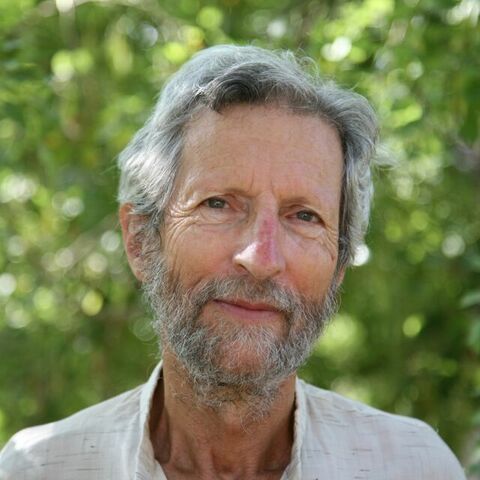
Stephen Fulder has been practising Buddhist practice for 40 years and teaching thousands of people in courses, groups and retreats for about 30 years. He is the founder and senior teacher of the Israel Insight Society, Israel's primary meditation and dharma organisation. He has done a number of teaching tours in the US and the UK, and his recent books include The Five Powers and What's Beyond Mindfulness: Waking Up To This Precious Life. Stephen was born in London, educated at Oxford University and has a Ph.D. He has been engaged with peace and ecological work for many years on the front lines in the Middle East.

read more

8 Days

363 students

5.0 stars

69 min / day

Authenticity

English


Lesson 1

The Subject Is The Subject

We arrive at each moment with a longing for change, release and liberation, and this often translates into changing our circumstances. But a profound change can happen if we see how life is limitless, free and impersonal, and yet become fully aware of how we reconstruct our familiar selves all the time. The self is the operating principle, the primary construction, the dominant filter through which we perceive the world. Yet at the same time, it is transparent and a kaleidoscope. In this class, we will show how we can witness this self in operation, and also how it can drop away and we experience life living itself through us.

read more

Lesson 2

Being Somebody Is Hard Work. How Can We Reduce The Struggle

The First Noble Truth of the Buddha expresses the potential pain arising from embodiment. Yet if we open our eyes to the truth of our experience at the moment, such as the thoughts that are passing through us right now, everything appears more dynamic and free, and we don't have to take it all personally. In this class, we will explore ways in which we can let go of the need to struggle with what happens, and our automatic reactions and responses. We will see how the truth frees us of the habits, labels, and beliefs about ourselves that we have built over a long time.

read more

Lesson 3

Falling Apart Yet Waking Up

Here we will introduce and explain key Buddhist teachings on the way our experiences are not solid but composed of many elements or 'aggregates' which, as the Buddha said, are like bubbles. The usual definitions, labels, self-descriptions, summaries and narratives with which we regard ourselves, can be deconstructed and challenged. In their place, we can experience life beyond the story.

read more

Lesson 4

How Do We Make Choices? Is It Like Trying To Control The Wind?

The self arises as a need to control and predict, so as to be protected and happy. Buddhist psychology gives a very clear and insightful teaching on exactly how this happens within our experience, and how trying to control is a quixotic illusion. We explore how the self arises as a response to conditions, and how we can let go and dance with uncontrollable circumstances. With less sense of the self in charge, we witness how things happen by themselves, and choices in life become easier as we are guided by life.

read more

Lesson 5

The Paradox Of Myself

In a traditional image, a person is like a temporary whirlpool in the ocean, that has the illusion that it is separate. What is it that creates that illusion and if we dissolve it, can we find ourselves part of the ocean again, Nirvana? Our awareness knows both formal and formless. We experience ourselves as existence packaged into a person. In that case, as the Buddha said, the self both does and does not exist, depending on the point of view. In this class, we will explore how we can watch the self as it arises and also the still spaces where there is no self or separation.

read more

Lesson 6

The World and Me Create Each Other

In normal consciousness we don't see the seer, we see the world from it. Which means duality: two sides to every experience. With a bigger and more inclusive awareness, the observer and the observing will be within and part of the world. As part of everything, the self is like a swarm or a community. It is not definable using normal descriptions. This is why the Buddha said an enlightened person is unfindable. You can't pin them down. In this class, we will explore ways of seeing that go beyond the usual boundaries and descriptions. The 'One Taste', to use a Mahayana phrase, of the unlimited.

read more

Lesson 7

The Lights Are On But There Is No-One At Home

Emptiness may not be a helpful Buddhist term as it tends to make it a concept, that is, another thing. Besides, being empty of self means being full of everything else. It is more helpful to explore the signs of being beyond the self, such as the sense that life is looking out of our eyes at itself, or an enduring stillness even within everyday life, or the sense that awareness is unlimited and we merge with everything. One classical quality which we will explore in this class is equanimity, in which we are not disturbable by pleasant and unpleasant occurrences because there is more space within, i.e. less of a self that can be disturbed.

read more

Lesson 8

Actions Without An Actor

Our actions are usually driven by need and will, and go with constant assessment of success or failure. What does an action feel like coming from Anatta, non-self? If we dive into the moment with mindful awareness, we can discover how actions happen by themselves, how the sense of agency drops away, and how everything occurs more spontaneously. There may be light intentions that direct our way, but very little interest in measuring outcomes. This is the essence of upaya, skilful action, driven by the great compassionate heart and awakened awareness of the Bodhisattva. Our actions become free and easy, without struggle or effort, as we respond to the calls of life.

read more


Trusted by 34 million people. It's free.

Insight Timer

Get the app