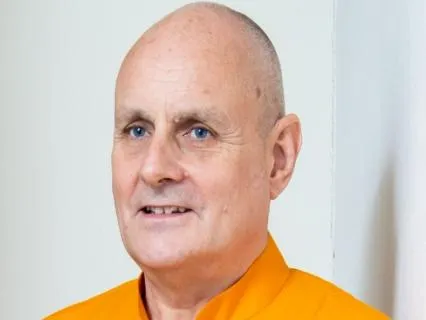
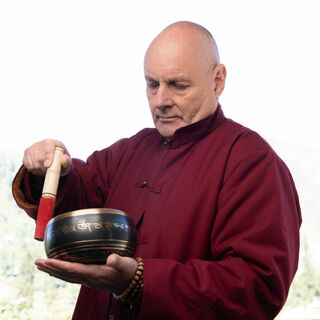
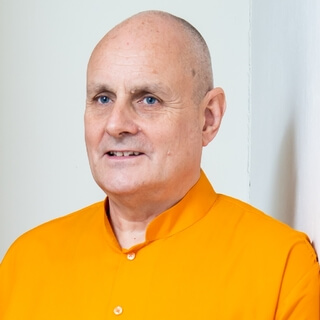
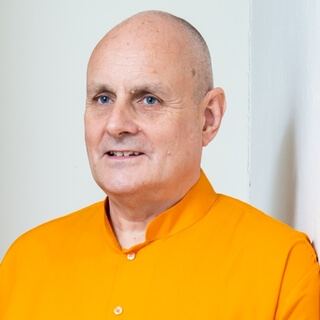
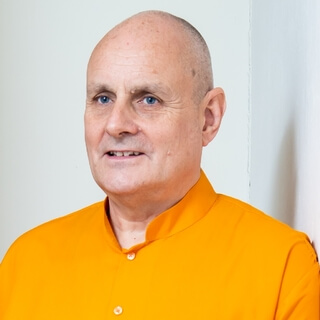
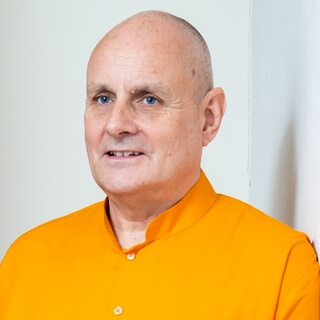
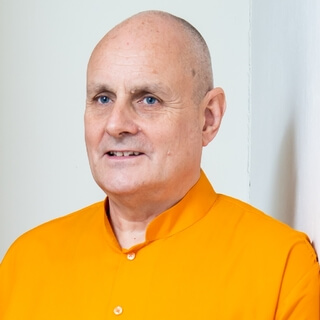
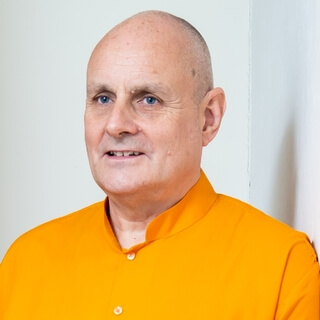
My name's Conley Eshirapge.
And this is a Buddhism guide video.
And in this video,
I want to talk about starting a meditation practice.
Lots of people contact me about meditation.
And they want to know,
How can they start to practice?
And how long will it take?
And it seems difficult.
And where is their third eye?
And where are all the chakras?
So before they even start doing the meditation practice.
They've got themselves totally confused So today I want to introduce a simple meditation practice to you which just focuses on the breath.
Which means we can do anywhere we don't have to go into a temple or a shrine room or have special incense burning scented candles or anything like that.
We can do this meditation practice wherever we want.
So let's start with the basics.
So you can sit on the floor with your legs crossed.
If that's comfortable for you.
If that isn't comfortable,
It's okay to sit on a chair.
Now this chair has to be unarmed.
Because if the chair is on,
Then it becomes uncomfortable.
So an unarmed chair.
So sit on there with your feet firmly on the ground.
This is so you're stable and you don't rock backwards or forwards.
Or you can lay on your back if you lay on your back make sure you lay out flat and with your arms laying down by your side and your legs together So that's the start.
So then our back has to be straight.
Now,
The reason for this is because if we're leaning forward too much,
Then the air finds it really difficult to get right down.
And if we lean back too much,
Then it won't be very long before we fall asleep.
So we keep our backs straight.
Not rigid.
Just straight and the air can flow up and down up and down without any obstruction.
And then He dropped the shortcut.
By dropping your shoulders,
You're already letting go of any tension or anxiety or whatever you're holding in your shoulders at the moment.
So just relax the shoulders.
And then lightly close your eyes.
Now,
The reason we close our eyes is because our eyes are very sensitive.
So if something moves over here,
And we're meditating,
Then straight away.
We look at what's moving.
We get distracted.
So we lightly close our eyes and this stops any sort of distraction.
So then we're ready to start meditating.
We're sitting comfortably.
Our back is straight.
Our shoulders are dropped.
Our eyes are lightly closed so now we just bring our awareness to the breath coming in and going now.
Coming in.
And going out.
There is no need to follow it all the way down.
All we have to do is just watch it coming in.
And going out.
Coming in.
And going out.
Now,
When we first start meditating,
Even that,
Just watching the breath coming in and going out can be quite difficult.
So we can count the breaths in.
I'm breathing in.
One.
And breathing out.
I'm breathing in too.
I'm breathing out too.
So you mentally say this to yourself until you get to 10 and then you start again.
All of that so far sounds easy.
When you're doing this,
When you're watching the breath coming in and the breath going out,
Breath coming in,
The breath going out,
Then thoughts will come.
You know,
This is a natural process.
People get stuck at this point and they try it one or two days and they just think,
No,
I can't meditate.
Thoughts keep coming.
Well,
Thoughts are natural.
So don't try to control them.
Don't try to suppress them.
Don't even engage with them.
Just let the thoughts come.
And then go.
So if you see that you're thinking and you're not watching the breath coming in and out anymore,
Then just let that thought go.
Label it thought.
And then bring your awareness back to breathing in.
And breathing out.
If another thought comes,
It's okay.
Don't panic.
Let it go.
Label it thought.
And come back to breathing in and breathing out.
So when you get distracted by thought,
You have to start back at 1 again.
So,
Breathing in,
One.
Breathing out one.
Breathing in too.
Breathing out through.
Oops.
I'm thinking.
Let's all go.
Label it thought.
Start again and breathing in one And breathing in,
Breathing out one So by doing this,
We're actually teaching ourselves how to be calm.
How to come relaxed.
How to become patient because every time a thought comes that's the time we need our patience so meditation is also teaching us how to be patient So I would say when you first start doing meditation,
Don't do it for more than like 10 minutes.
Because if you say,
So,
Oh,
Yes,
I'm meditating,
I'm meditating,
And I try to do one hour.
Okay,
Maybe the first day you'll do one hour.
And maybe even the second day you can do one hour.
But then after that.
Then you think,
Oh,
I don't have time today to do one hour.
Maybe I'll do it tomorrow or then the next day and then the next day.
And then your practice is already finished.
So don't set yourself impossible goals.
Just try to do 10 minutes every day for at least 21 days.
Then after 21 days,
You can increase it to 15,
20 minutes.
The length of time is not the most important thing.
The most important thing.
Is that you do it regularly it is much better to do ten minutes every day than to do one hour once a week.
You'll get more benefit.
What we're trying to do in meditation is train this monkey mind to sit still.
And just to concentrate on one thing.
So we need to constantly keep trying the meditation practice.
If we're only going to do it once a week,
The mind is never going to sit still.
It's never going to learn what you want it to do.
So,
In this meditation practice,
We're training the mind.
We're training the mind to just sit quietly and watch the breath come in.
And watch the breath go out.
10 minutes a day.
Every day for 21 days,
It becomes a habit.
It becomes something that you want to do.
Excellent.
So don't try to overdo it.
Just 10 minutes a day.
So when should you do these 10 minutes?
You know,
The best time is in the morning.
When you first get up,
Before you engage with the day,
Before you read the newspaper or listen to the news or talk to other people or generally get involved in what's happening that day.
So you meditate before then because that means your mind is already calm.
You've come out of bed.
You're calm.
You sit down.
You're calm.
You start your day.
You'll come.
So I would suggest if you're going to do it,
Do it in the mornings.
If you can't do it in the mornings,
Then the evening is also fine.
But do it before you go to bed.
But remember,
When you do it in the evening,
You've got everything on your mind that's happened during the day.
So it is far easier to do 10 minutes first thing in the morning.
Don't try to overdo it.
Just.
.
.
Sit down.
Comfortable,
Back straight,
Shoulders drop.
Eyes lightly closed,
Watching the breath coming in,
Watching the breath go out.
And then that's meditation and if during the day you're feeling a little tense then wherever you are just sit down lightly close your eyes and watch the breath coming in and coming out and do that for a minute or two and you'll find that your mind will become calm.
And your body will become relaxed.
The breath is the bridge between the mind and the body.
When the breath is slow,
The mind will become calm.
The body will become relaxed.
So I wish you well with your meditation practice.
Thank you so much for listening to this video.