
The Triangle Of Mindful Awareness
With Lama Yeshe RabgyeAwareness is about sustaining a moment-by-moment focus of our thoughts, feelings, bodily sensations, and the surrounding environment. This is achieved by paying attention to whatever is occurring in the present moment in a compassionate and supportive way. Not trying to add or take anything away, just experiencing whatever is happening, be it good or not so good. It is impossible to remain fully aware 24/7, so we need to learn skills that allow us to keep returning to the here and now. This course will give you those skills. Each session you will learn new practices to add to your awareness toolbox, such as helping you deal with strong emotions, body sensations and thoughts. Being fully aware will help you reduce worry, stress, and anxiety. It will also help you be less reactive and more responsive and strengthen your emotional and psychological wellbeing.
Reduce stress, worry and anxiety by bringing awareness to your thoughts, feelings, and body.
About this course
Awareness is about sustaining a moment-by-moment focus of our thoughts, feelings, bodily sensations, and the surrounding environment. This is achieved by paying attention to whatever is occurring in the present moment in a compassionate and supportive way. Not trying to add or take anything away, just experiencing whatever is happening, be it good or not so good. It is impossible to remain fully aware 24/7, so we need to learn skills that allow us to keep returning to the here and now. This course will give you those skills. Each session you will learn new practices to add to your awareness toolbox, such as helping you deal with strong emotions, body sensations and thoughts. Being fully aware will help you reduce worry, stress, and anxiety. It will also help you be less reactive and more responsive and strengthen your emotional and psychological wellbeing.
Meet your Teacher

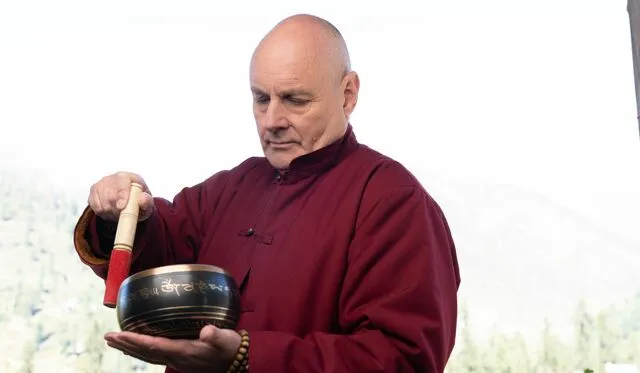
Yeshe Rabgye is a Buddhist Monk from England. He teaches Mindfulness, Buddhist philosophy, meditation, and Sound Therapy in various countries around the world. He studied Buddhist Philosophy and meditation in a monastery in Nepal. Although he learned from the great Tibetan Buddhist masters, his Western background forced him to question some difficult elements of the teachings, in particular, to distinguish those teachings that were essential aspects of the path from those that were mere cultural embellishments. He spent several years in a monastery in the foothills of the Himalayas teaching young monks basic Buddhist philosophy and meditation. He now offers teachings freely to all in a manner that is unpretentious and clear. He does not demand students to blindly accept what he says, but instead invites them to examine their own minds and experiences to discover the validity of Gautama Buddha’s teachings. Using everyday examples, he has the ability to bring the teachings alive, particularly to a younger audience seeking to make Buddhism relevant in their lives. His approachable manner has attracted many students who appreciate his sense of humour and practical advice.