Welcome to this practice session.
We're going to introduce silent meditation here in a few simple steps.
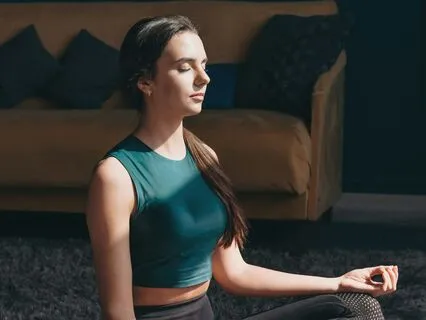
Very firstly I want to invite you to find a very comfortable position.
You can lay down if you want to or you can sit.
I'm going to assume that you're sitting.
If it's possible for you I invite you to sit without resting your back against something.
If you sit up straight without support you will tend to be a little bit more alert and that's what we want.
At the same time you don't want to be stressed or bracing yourself.
You want to have a kind of alert posture but also relaxed.
So you can maybe if you want to take a bit of a deeper inhalation and then when you exhale you can relax your shoulders down,
Relax your face and really allow yourself to enjoy your seated position.
And just know for this practice that you can do over and over again that you can really remember to relax especially your face.
I recommend also if you're wearing glasses to take them off.
Make sure that the back of your neck is a little bit elongated towards the ceiling but not your chin too much to your chest.
You want to have a lift in your spine but also space in your throat to breathe.
Now you can have your eyes open if you want to.
That's a great way to meditate.
You can also close them.
What I typically do is I have a soft unfocused gaze.
Something like a meter or three feet away from me towards the floor.
And again just allow yourself maybe take another deep inhalation.
If possible breathe through your nose.
And when you exhale relax down,
Enjoy.
And enjoyment is really important.
So really allow yourself to enjoy the meditation.
And also we're going to go into the silence in a minute.
And when the distraction comes that's great because if you are noticing that you're distracted that means you're meditating.
We all get distracted.
People who meditate for 25 years also get distracted.
It's completely part of the game and what makes it less horrible is to kind of be patient and be compassionate with yourself.
Now what we're going to do,
We're going to sit for just one minute in complete silence.
And what I want you to do is simply notice your breath.
Wherever that might be easy for you.
Maybe you can feel the steady airflow going in and out of your nostrils or maybe for you your chest,
Your belly moving with your in and out breath.
So what I want you to do is just for one minute in silence notice those movements or those sensations.
Don't think about it but just feel it.
I'm going to also use the bell.
You can kind of listen to the bell and follow the bell into silence.
So here comes the bell and just for one minute simply notice your breath.
There we go.
Very good.
Now we're going to do the same thing for two minutes.
So if you need to stretch or make any strange faces,
You know,
Do whatever you want to to kind of relax yourself more.
And then we're going to go for another bell.
Same invitation,
Just notice your breath.
If you get distracted that's totally fine,
Just come back to the breath.
And again follow the bell into the silence.
And then for just two minutes let's simply notice breathing.
Very good.
The next thing I want you to do,
We're going to do the same thing.
Just noticing the breath but also noticing thoughts.
So already you probably have noticed a few distractions in the first two little sessions that we did right now,
Just now.
But now I want you to pay attention to your breathing and see if you can notice when you are noticing a thought.
So the idea of meditation is really not to stop meditating.
Some people in the history of the world have managed that but it's not really something we can accomplish.
So it's not something we're aiming for.
Much more important is that we are noticing thinking.
And this is important because when we notice thinking we're no longer identified with it.
Typically we are kind of in a trance with our thoughts and sort of identified with our thinking because it's unconscious.
So the moment we can notice,
Hey that's a thought,
We're actually disidentifying and becoming more and more the witness that is witnessing the thoughts.
And that is where freedom is.
That is kind of the big aim of meditation.
But there are more stages that one can go to according to different schools of meditation.
But for most of us simply witnessing breath and thought is most of the practice.
So again here just for one minute when you hear the bell just follow the bell into the silence.
Notice your breathing and notice any thoughts that come.
That's all we do.
So go ahead now and follow the bell.
Very good.
Now we're going to do a bit of a longer sit.
Doing exactly the same.
So we're going to do five minutes.
And again I want to invite you to follow the bell into the silence.
And just for the duration of the five minutes simply notice your breathing.
And additionally if you notice that there's a thought don't engage the thought.
Thinking is not a problem.
There's nothing wrong with thinking.
It's just something that your brain does and just notice it.
The last thing I want to tell you about how to meditate and especially how to meditate in silence is that you don't really have to have any specific mindset or attitude or whatever.
It's just however you are right now.
That's what you do.
You observe whatever is present in your mind.
Maybe surrounding sounds.
We're just present.
And the way to remain present is to simply notice breathing and notice thinking.
You might of course also notice maybe sensations in your body.
Maybe there's a pain or maybe there's some temperature happening or some quivering.
Whatever it might be.
That's great too.
Just notice.
So now for five minutes follow the bell again into silence and enjoy noticing.
And then the end of the practice will also be marked by a bell.
And that'll be the end of the entire practice.
I hope you enjoy the silence.