
Library
The largest free library in the world. Free. No Ads. No AI.
Events
The world’s top experts, live every day
Retreats
Get away with a Teacher
Browse retreatsJoin thousands
Explore a Challenge
A Very Simple Guide To Set Up A Meditation Practice
With Nondual Communication“In the beginner’s mind there are many possibilities, but in the expert’s there are few” ― Shunryu Suzuki I wanted here to offer a simple way of beginning a practice for absolute novices and especially to bring playfulness, kindness, and even lightness to something that can seem daunting at first. This course is based on years of learning with teachers varying from Zen Buddhism, nondual tantra, vipassana, mindfulness meditation, and Iyengar yoga, as well as my own evolving insights and experience. What you will get: the basics about intention, posture, obstacles, and technique clearly and compassionately. What I suggest: try out several beginner's courses and keep what works for you. Because there are as many roads to enlightenment as there are humans, and your true Self is the real guru; if something resonates, this is your inner teacher saying 'yes, this'. Trust yourself. With that said, I invite you to come along with me for a few VERY simple steps on a path that is, of course, yours truly. INVITATION Please ask me any question that comes up during this course (or after!) No questions are stupid or weird to me, PRACTICE INSTRUCTION Here is a very simple meditation instruction that you can follow to begin meditating, as a reference during this course: 1. If possible, turn your phone to airplane mode for the duration of the meditation, and avoid any other such distractions 2. Preferably sit on a cushion, knees below your waistline (or chair/couch if needed e.g. knee issues) - you should sit comfortably 3. Sit with your back straight, neck long, and chin slightly tucked in - you want to be firm, yet relaxed 4. Briefly bring to memory why you want to meditate, or what/who inspires you 5. Relax your body as much as possible, and remember to enjoy this time with yourself, if possible 6. With eyes open: look either straight ahead or to the floor with a soft unfocused gaze - or: with eyes closed. In both cases: relax your eyes 7. Then, simply follow the sensations of your breathing for the duration of the sit. Don't actively change your breathing, rather just observe it 8. When thoughts come, let them be, no need to change them, judge them, interact, or 'stop' them; just try to keep attention on breathing 9. When you notice you're distracted: good! This noticing is exactly the purpose! More so than 'not being distracted' 10. Gently, with compassion, keep coming back to the breath. You want to practice with patience and compassion Image: Taylor Brandon
Enjoy the first steps of your own contemplative practice with ease & kindness
About this course
“In the beginner’s mind there are many possibilities, but in the expert’s there are few” ― Shunryu Suzuki I wanted here to offer a simple way of beginning a practice for absolute novices and especially to bring playfulness, kindness, and even lightness to something that can seem daunting at first. This course is based on years of learning with teachers varying from Zen Buddhism, nondual tantra, vipassana, mindfulness meditation, and Iyengar yoga, as well as my own evolving insights and experience. What you will get: the basics about intention, posture, obstacles, and technique clearly and compassionately. What I suggest: try out several beginner's courses and keep what works for you. Because there are as many roads to enlightenment as there are humans, and your true Self is the real guru; if something resonates, this is your inner teacher saying 'yes, this'. Trust yourself. With that said, I invite you to come along with me for a few VERY simple steps on a path that is, of course, yours truly. INVITATION Please ask me any question that comes up during this course (or after!) No questions are stupid or weird to me, PRACTICE INSTRUCTION Here is a very simple meditation instruction that you can follow to begin meditating, as a reference during this course: 1. If possible, turn your phone to airplane mode for the duration of the meditation, and avoid any other such distractions 2. Preferably sit on a cushion, knees below your waistline (or chair/couch if needed e.g. knee issues) - you should sit comfortably 3. Sit with your back straight, neck long, and chin slightly tucked in - you want to be firm, yet relaxed 4. Briefly bring to memory why you want to meditate, or what/who inspires you 5. Relax your body as much as possible, and remember to enjoy this time with yourself, if possible 6. With eyes open: look either straight ahead or to the floor with a soft unfocused gaze - or: with eyes closed. In both cases: relax your eyes 7. Then, simply follow the sensations of your breathing for the duration of the sit. Don't actively change your breathing, rather just observe it 8. When thoughts come, let them be, no need to change them, judge them, interact, or 'stop' them; just try to keep attention on breathing 9. When you notice you're distracted: good! This noticing is exactly the purpose! More so than 'not being distracted' 10. Gently, with compassion, keep coming back to the breath. You want to practice with patience and compassion Image: Taylor Brandon
Meet your Teacher
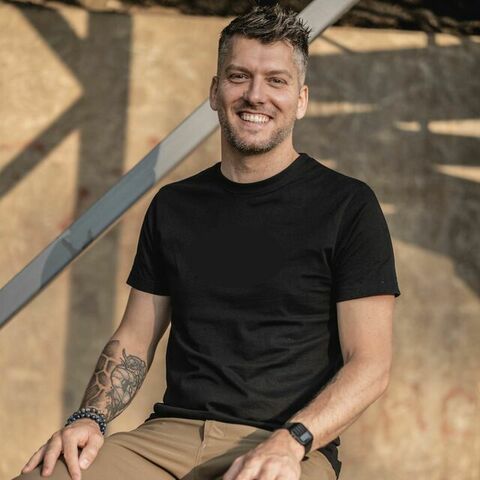
Hans van Veen is a parent, Aletheia Method Transformational Coach, and communication trainer, as well as a certification candidate with the Center for Nonviolent Communication. His work is rooted in Nonviolent Communication and enriched by Nondual Tantra, Zen, Vipassana, and other contemplative practices. He supports parents, groups, couples, and individuals in cultivating empathy, self-acceptance, and authentic connection.