The world’s largest free audio library for everyday wellbeing
Energy & Subtle-Body
Jigam is a seated Korean energy-sensing meditation in which attention rests in the space between the raised palms to notice subtle sensations such as warmth, tingling, or a magnetic pull, while the outer senses are deliberately quieted so that inner perception can sharpen.
Last Updated
3 Jul 2026
We are still reviewing this page. Our research team checks every technique page for accuracy and evidence quality before final release. Details may change as that review completes. The evidence badge shows our current reading of the published research.
RECOMMENDED DOSE
No direct dose-response literature exists for Jigam energy-sensing meditation. This short, frequent starting dose reflects general practice conventions for seated meditation, where a brief daily habit is easier to sustain than a long occasional one. No direct dose evidence; editorial synthesis.
No direct dose-response literature exists for Jigam. Once the basic attentional skill of sensing subtle body sensation is comfortable, a moderate daily session is a reasonable next step, consistent with general meditation practice conventions. No direct dose evidence; editorial synthesis.
No direct dose-response literature exists for Jigam. This maintenance-level dose is an editorial extrapolation for experienced practitioners and should be adjusted to comfort and available time. No direct dose evidence; editorial synthesis.
Session length
Session length: 5–10 minutes
5
MIN
How long each individual practice session should last from start to finish.
Frequency
Frequency: 4–6 days
4
DAYS
The number of days per week to fit a session into your routine.
Session length
Session length: 15–20 minutes
15
MIN
How long each individual practice session should last from start to finish.
Frequency
Frequency: 7 days
7
DAYS
The number of days per week to fit a session into your routine.
Session length
Session length: 25–30 minutes
25
MIN
How long each individual practice session should last from start to finish.
Frequency
Frequency: 7 days
7
DAYS
The number of days per week to fit a session into your routine.
About this card. No direct dose-response studies were found for Jigam energy-sensing meditation; these durations and frequencies are conservative editorial starting points, not evidence-derived prescriptions. These recommendations are not a substitute for personalised guidance from a qualified practitioner.
Quick answers to what people most often ask. Each card links to the deeper section below.
evidence
No clinical trials have tested Jigam directly, so evidence is borrowed from related practices. Meta-analyses of Qigong show improved physical ability in older adults, and mindfulness and meditation programs moderately reduce anxiety and perceived stress. Mood findings are mixed, and the subtle-energy sensations central to Jigam have never been measured.
good for
Jigam suits adults who feel keyed-up, tense, or mentally scattered and want a still, seated practice to settle into. Steady palm-focused attention gives a busy mind one simple thing to rest on. It is not a substitute for care when anxiety, low mood, trauma, or dissociation is severe.
Read moresafety
Most healthy adults can practise Jigam safely; it is still and seated with no strenuous movement, and related gentle energy practices like Qigong report no significant adverse events. People with trauma history, dissociation, or acute anxiety should keep sessions short and seek trauma-informed guidance, since inward focus can feel activating. Those with low blood pressure should stand slowly.
Read morehow it works
Jigam works by giving attention a single subtle target, the faint sensation between the palms, so the mind stops jumping to worries. As outer senses quiet and breathing slows, the body leans toward its rest-and-recovery system, which eases tension and lengthens the breath. These effects are inferred from meditation and slow-breathing research, not measured in Jigam.
Read moreJigam is a Korean energy-sensing meditation that rests attention in the space between the raised palms to notice subtle sensations like warmth or tingling, quieting the outer senses to sharpen inner perception.
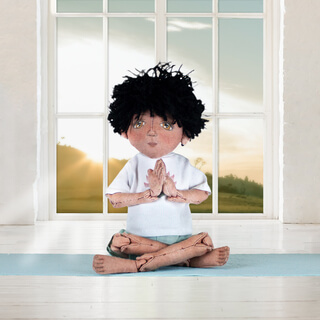
You sit with a straight spine and palms resting up on the knees, then slowly raise your hands to chest height with the palms facing each other about 15 to 30 centimetres apart. Attention stays in the gap between the palms until subtle sensations arrive, warmth, tingling, pressure, or a faint magnetic pull, and awareness then widens to sense that flow through the rest of the body. Sessions are still and quiet, with no strenuous movement, and the sensitivity usually builds over repeated practice rather than arriving in one sitting.
Jigam attends outward, to the felt field between and around the hands, which sets it apart from inward body-scan or breath-focused meditations. It is one practice within Ilchi Lee's Body & Brain system and is distinct from Qigong, Reiki, or Yoga Nidra, even though those related energy and meditation practices supply most of its indirect evidence.
Not to be confused with
Reiki
Reiki has a practitioner channel energy toward a recipient, often through light touch or hovering hands; Jigam is self-directed, with the practitioner sensing their own Ki between their own palms, no healer and no treatment claim involved.
Body scan meditation
A body scan moves attention through internal bodily sensations like breath, heartbeat, or muscle tension, an inward interoceptive focus; Jigam instead attends to perceived energy in the space between and around the hands, an outward-facing, subtle-energy awareness.
Qigong and Tai Chi
These energy traditions are practiced mostly through flowing, standing movement; Jigam is a static, seated meditation with no choreography, sharing the Ki framework but not the physical exercise.
Jigam appears to work by giving attention a single, subtle target, the faint sensation in the gap between the palms, so the mind stops jumping to worries. Researchers call this focused attention, and neuroimaging of meditators links it to brain networks tied to concentration and to calming the nervous system, though these findings come from meditation broadly, not from Jigam specifically (Cahn & Polich, 2006), (Lazar et al., 2000). As the outer senses quiet and breathing slows, the body tilts toward parasympathetic activity, the rest-and-recovery branch of the nervous system that eases tension and lengthens the breath. That shift is inferred from slow-breathing research in healthy adults rather than measured in this practice itself (Tapas et al., 2009).
As the palm-sensing focus quiets outside distraction and breathing settles into a slow rhythm, the body's rest-and-recovery branch of the nervous system becomes more active, a shift practitioners often feel as tension loosening, the breath lengthening, and a steadier sense of calm (Tapas et al., 2009).
Scattered, spiraling thoughts have somewhere to rest when attention settles on the narrow space between the palms. Holding awareness on that single sensory target is what researchers call focused attention, and neuroimaging of meditators shows it engaging brain networks tied to attention and to calming the nervous system (Cahn & Polich, 2006), (Lazar et al., 2000). That evidence comes from meditation in general, not from Jigam specifically.
That keyed-up, on-alert feeling can start to ease as the quiet, slow-breathing focus of Jigam shifts the body toward its rest-and-recovery mode (Tapas et al., 2009), drawing on the same attention and calming brain networks that meditation studies have mapped (Cahn & Polich, 2006), (Lazar et al., 2000). In the body this often shows up as breathing slowing, shoulders dropping, and a sense of mental urgency loosening.
In related slow-breathing and meditation studies, the body shifts toward rest: heart rate and blood pressure fall, and brain activity tilts toward alpha waves, the slower rhythm that grows more prominent when the mind is awake but calm (Tapas et al., 2009), (Shashikiran et al., 2022). During Jigam this may feel like the chest settling, the breath lengthening, and a quiet, unhurried alertness. Because these changes were measured in adjacent practices and not in Jigam itself, the direction is a reasonable expectation rather than a confirmed effect, and one study of experienced practitioners found heart-rate variability, a common marker of that rest response, did not differ between breathing techniques (Varun et al., 2022).
When you feel alert but unhurried, awake and quiet rather than straining to focus, the brain tends to produce more alpha waves, the slower rhythm that grows stronger when the mind is relaxed but not sleepy. One randomized study of a related guided meditation measured this rise (Shashikiran et al., 2022), and practitioners often experience it as a settled, effortless kind of attention.
During palm-sensing practice, many people feel the body grow heavier, the breath ease, and a sense of mental urgency loosen its grip. That is the rise of parasympathetic tone, the nervous system's rest-and-recovery branch; the shift is inferred from studies of related slow-breathing meditation rather than measured in Jigam directly (Tapas et al., 2009).
When you feel braced or on alert even while trying to rest, that is the sympathetic nervous system, the fight-or-flight branch that speeds heart rate and primes the body to react. During related seated meditation practices it tends to quiet, so the shoulders and jaw loosen and the pulse slows; because Jigam itself has not been measured, this settling is expected from adjacent practices rather than confirmed for this technique (Shashikiran et al., 2022).
When you settle into stillness, the pulse often softens and the chest feels like it is downshifting toward calm. That slowing comes as the parasympathetic nervous system, the body's rest-and-recovery branch, takes stronger control of the heart's pace, an effect measured in related slow-breathing and meditation research rather than in Jigam itself (Tapas et al., 2009).
Holding attention on the faint warmth or tingling between the palms leans on the anterior cingulate cortex, a brain region that tracks where attention goes and helps steady the body's stress response. Related focused-attention and meditative-breathing practices show increased activity here, though Jigam itself has not been brain-imaged (Shashikiran et al., 2022), (Twal et al., 2016); you may notice yourself catching the drift sooner and returning to the sensation with less effort.
Emerging evidence to date supports Jigam only indirectly, so its benefits are inferred from related practices rather than proven for this technique. Moderate evidence from a meta-analysis of Qigong in 1,282 older adults with depressive symptoms, frailty, or chronic illness shows improved physical function, with a standardized mean difference of about 1.0 versus active control, a large effect, meaning the average Qigong participant ended up more physically able than roughly 84 percent of comparison participants (Chang et al., 2019). Meditation and mindfulness practices carry moderate evidence for reduced anxiety and perceived stress in general adult and student samples (Elmarie et al., 2015), (Nidhi et al., 2006). Not yet supported: any trial of Jigam itself, effects on mood remain mixed, and the subtle-energy sensations central to the practice have no biomarker confirmation.
No randomized trials have tested Jigam directly, so what we know is borrowed from closely related practices that share its focused attention and quiet breathing. Reviews of Qigong in older adults report improved physical and functional ability, meditation and mindfulness studies show reduced anxiety and perceived stress, and small physiological studies record rising alpha-wave activity and parasympathetic drops in blood pressure (Chang et al., 2019), (Nidhi et al., 2006), (Elmarie et al., 2015), (Shashikiran et al., 2022), (Tapas et al., 2009). The main limitation is directness: none of these participants practised Jigam, mood findings are mixed, and the subtle-energy component has never been measured, so the research reads as suggestive of calming and attentional effects rather than confirmation for this method.
1
Meta-analyses
0
RCTs
1
Systematic reviews
0
Observational
10
Pilot
Studied populations
The effectiveness of mindfulness based programs in reducing stress experienced by nurses in adult hospital settings: a systematic review of quantitative evidence protocol.
2015
Finding: This systematic review looked at mindfulness-based programs and found they consistently helped lower perceived stress, including in a pooled analysis of seven studies with healthy adults that showed a clear drop in stress compared with people who didn't practise. For anyone drawn to Jigam, the takeaway is encouraging but indirect: present-moment attention practices like these can ease the everyday sense of feeling overwhelmed. Keep in mind that the review reported the direction of benefit without publishing the size of the effect, and it studied mindfulness broadly rather than Jigam specifically, so it points to the promise of this family of practices rather than proving Jigam's own results.
See full citation in referencesEffect of yoga based lifestyle intervention on state and trait anxiety.
2006
Finding: In this study, a short yoga-based lifestyle program noticeably lowered both immediate, situational anxiety and longer-standing, trait-level anxiety after just 10 days of practice, suggesting that even a brief, structured mind-body routine can start to settle a busy nervous system quickly. For someone considering an energy-sensing practice like Jigam, it's a reason for cautious optimism: the broader family of meditation and yoga techniques it belongs to has been linked to calmer, less anxious states. That said, this trial looked at a yoga-based program rather than Jigam itself, and the published results describe the direction of change without detailing how large the effect was, so the findings speak to the modality in general and not to this specific technique.
See full citation in referencesJigam comes from Korean energy traditions and was formalized within the Body & Brain system, formerly Dahn Yoga, developed by Ilchi Lee in 1985. Its name, translating as "stopping emotions from the five senses," reflects a worldview in which Ki, or vital life energy, is held to flow within and around the body and to be sensed and cultivated. These roots help explain the practice's form, the raised hands and the deliberate quieting of the outer senses, rather than proving any clinical effect (Bloomfield et al., 1974).
For most healthy adults, Jigam is a low-risk practice. It is seated and still, with no strenuous movement, and in studies of related gentle energy practices like Qigong, participants tolerated sessions well with no significant adverse events reported (Chang et al., 2019), (Chang et al., 2017). That safety signal is reassuring but indirect, since it comes from an adjacent tradition rather than from Jigam itself. A few situations still call for mild caution. Turning attention inward toward subtle sensation can occasionally surface unexpected emotion, a practice-informed caution rather than a measured harm. And people who tend to feel spacey or detached may find that sustained energetic focus quietly ramps up alertness instead of settling it; keeping early sessions short usually keeps this manageable.
Approach Jigam with extra care if you have a trauma history, tend toward dissociation or feeling detached from the body, or are managing acute anxiety. For some people, prolonged inward and energetic attention can feel activating rather than calming. This is a practice-informed caution, not an evidence-documented harm. If you have low blood pressure, you may feel briefly lightheaded when standing after a long, still session, which comes from the physiology of sitting quietly and eases if you rise slowly. In any of these situations, shorter sessions and guidance from an experienced, trauma-informed teacher let you gauge how the practice feels before you extend it.
Turning attention inward toward subtle sensation, then sustaining that energetic focus, can feel activating rather than settling for people with a trauma history or who tend to feel detached from the body. Keep early sessions to five to ten minutes, have a grounding option ready, and practise with an experienced, trauma-informed teacher. Treat Jigam as a complement to, not a replacement for, professional care when anxiety, low mood, trauma, or dissociation is significant. This is a practice-informed caution rather than a measured harm; studies of related gentle energy practices report good tolerability, but that safety signal is indirect and was not measured in these populations.
| Technique | Best for | Use with care | Evidence strength | Distinction |
|---|---|---|---|---|
| Qigong | Gentle physical activity and functional fitness, especially for older adults who want movement alongside energy work. | If you want a fully still, low-exertion practice or have limited mobility, Qigong's standing movement may be more than you need. | moderate EVIDENCE | Qigong is a moving energy practice built from flowing postures and coordinated breath, while Jigam is still and seated, holding attention in the narrow gap between the palms. Both work within a Ki or Qi framework, but Qigong adds gentle physical exercise. A meta-analysis in older adults with depressive symptoms, frailty, or chronic illness found Qigong improved physical and functional ability, though mood effects were mixed and not statistically conclusive. |
| Focused-attention and mindfulness meditation | Building general attentional steadiness and lowering stress with a large, well-studied research base and no equipment. |
It's Ki, the Korean tradition's term for vital life energy, sensed between the palms as warmth, tingling, magnetic pull, or pressure. Within Jigam's worldview Ki is real and perceptible, but it is a meaning-system concept rather than a measured physical quantity, and the sensations may simply be ordinary somatosensory perception.
+
The energy Jigam works with is called Ki, the Korean word for vital life energy that this tradition holds to flow inside and around the body. In practice, people notice it as faint warmth, tingling, a sense of pressure, or a gentle magnetic pull in the space between the raised palms. Ki belongs to a Korean energy worldview formalised in Ilchi Lee's Body & Brain system, and the subtle-energy component has never been measured or biomarker-confirmed. The sensations are genuine felt experiences, but they may reflect ordinary body perception rather than a proven physical field.
The sensations are real; the explanation is open. Warmth, tingling, or a magnetic pull between the palms are genuine felt experiences that focused attention can heighten. Whether they reflect a measurable Ki energy is unconfirmed, and no study has measured it in Jigam.
+
The sensations are real; what causes them is where certainty ends. Concentrating on the narrow gap between the palms while quieting the outer senses can genuinely produce warmth, tingling, pressure, or a faint magnetic pull, all of which fit ordinary somatosensory and attentional perception. In the practice's Korean energy tradition these are interpreted as sensing Ki, or vital life energy, but that is a meaning-system concept rather than a measured physical quantity, and no research has directly examined Jigam or confirmed such energy with any biomarker. So the experience is real while the "energy" interpretation stays unproven, not disproven.
A Korean energy-sensing meditation whose name is glossed as 'stopping emotions from the five senses.' The practitioner quiets outer sensory input and holds attention in the gap between the palms to notice subtle sensations like warmth or tingling.
The Korean term for vital life energy, held within this tradition to flow inside and around the body and to be perceptible as warmth, tingling, magnetic pull, or pressure. It is a meaning-system concept, not a measured physical quantity.
The practice of sensing perceived energetic flows or presence in and around the body, distinct from noticing ordinary sensations like heartbeat or breath. In Jigam it shows up as a felt sense of energy between the hands.
Steadying attention on one clear target, here the space between the palms, so it stops jumping to worries and distractions. Practitioners tend to feel this as fewer spiraling thoughts and an easier sense of staying present.
Focused-attention regulation in which attention is selectively sustained on a chosen sensory target to reduce mind-wandering and attentional shifting.
Attention to the outer world through the senses, as opposed to inward body signals. Jigam is unusual among energy practices in directing this outward awareness to the perceived field between and around the hands.
The perception and conscious processing of environmental stimuli received through external sensory modalities, distinct from interoceptive sensing of internal body states.
A rise in activity in the body's rest-and-recovery branch of the nervous system, which slows the heart and eases tension. It is felt as the body settling, breath lengthening, and muscular holding starting to loosen.
Increased activity in the parasympathetic branch of the autonomic nervous system, largely via vagal pathways, shifting physiology away from sympathetic arousal toward restorative states.
Botha Elmarie, Gwin Teri, Purpora Christina (2015). The effectiveness of mindfulness based programs in reducing stress experienced by nurses in adult hospital settings: a systematic review of quantitative evidence protocol.. https://doi.org/10.11124/jbisrir-2015-2380
Focus sharpens and the mind feels less scattered as activity rises in the prefrontal cortex, the region behind the forehead that directs attention and steadies self-regulation. In related meditation practices this shows up alongside more relaxed alpha-wave brain activity (Shashikiran et al., 2022); Jigam itself has not been directly imaged, so for this practice the shift is expected rather than confirmed.
Outcomes measured
| Outcome | Effect size | 95% CI | N | Comparator | Source |
|---|---|---|---|---|---|
| physical ability | SMD = 1.0 | — | — | active control / usual care | Chang et al., 2019 |
| salivary IL-1β, IL-8, MCP-1 | reported significant; p<0.05 | — | — | attention control | Twal et al., 2016 |
The research is useful for setting expectations, but study methods and participant groups vary. Read the findings as general guidance rather than a promise about any single session, and not a replacement for clinical care.
Effect of yoga nidra on the brain activity in individuals with migraine
n = 60
Finding: In a trial with 60 migraine patients, one group practised Yoga Nidra, a guided relaxation meditation, while the other simply rested lying down; only the meditation group showed a rise in alpha brain waves, the pattern the brain settles into during calm, restful wakefulness, whereas the resting group showed no such shift. That points to the meditation actively tipping the nervous system toward its "rest and recover" mode rather than just passive downtime. This is the kind of relaxed brain state energy-sensing practices like Jigam aim to cultivate, though the study looked at a different technique in a small group of people living with migraines, so it hints at a shared mechanism rather than proving Jigam itself produces these brain changes.
reported narratively
Immediate autonomic changes during right nostril breathing and left nostril breathing in regular yoga practitioners.
2022
Finding: In a small study of 20 experienced yoga practitioners, both right-nostril and left-nostril breathing raised heart-rate variability, a marker of a flexible, well-regulated nervous system, and shifted the body toward its "rest and recover" mode. But the two breathing directions produced no meaningful difference from each other, so the calming effect seems to come from the breathing itself rather than which nostril leads. For anyone drawn to these practices, that is a useful reality check: focused breathwork may steady the nervous system, but claims that one specific nostril pattern does something the other cannot are not supported here. Keep in mind the group was small and already highly trained, and the study measured only immediate, in-session changes.
See full citation in referencesImmediate effect of slow pace bhastrika pranayama on blood pressure and heart rate.
n = 39
Finding: In this small study of 39 healthy adults, just five minutes of slow breathing at about six breaths a minute measurably lowered blood pressure and slightly slowed heart rate. When participants first took a drug that blocks the body's rest-and-digest pathway, that calming effect disappeared, pointing to the vagus nerve as the route through which quiet, slow breathing settles the nervous system. This helps explain why the still, quiet-breathing posture used in Jigam may leave you feeling calmer, though the study tested a specific breathing exercise rather than Jigam itself, measured only the immediate response, and involved a small group of healthy young adults.
reported narratively
Physical and Psychological Health Outcomes of Qigong Exercise in Older Adults: A Systematic Review and Meta-Analysis
2019
Finding: This review pooled trials of Qigong, a Chinese energy practice in the same broad family as Jigam, in over 1,200 older adults living with frailty, chronic illness, or low mood, and found a large improvement in physical ability compared with usual care or an active comparison, meaning practitioners moved and functioned noticeably better in daily life. Effects on mood, balance, and overall functioning leaned in the same direction but were not strong enough to be conclusive, so this is not a reliable route to lifting depression. Across these trials no significant adverse events came up, suggesting these gentle movements are generally well tolerated in older adults. Keep in mind the results come from Qigong rather than Jigam itself, so they point to what the wider energy-practice family may offer rather than proving benefits for this specific technique.
SMD = 1.0
Effect of Practicing Meditation, Pranayama, and Yoga on the Mental Health of Female Undergraduate Medical Students: An Interventional Study.
2022
Finding: In this study of 105 medical students, a program built around meditation, breathing practice, and yoga lowered anxiety, depression, and anger over the course of the intervention, with each practice contributing to the improvement. For someone drawn to energy-sensing meditation, this points to the broader calming effect that mind-body practices tend to offer, rather than proof for this specific technique. Keep in mind the finding comes from one student group and reports the direction of change without the numbers behind it, so it speaks to meditation's general benefits more than to any precise result you can expect.
See full citation in referencesMeditation states and traits: EEG, ERP, and neuroimaging studies.
2006
Finding: This review of brain-activity studies in meditators found that regular practice slows electrical rhythms in the brain and increases the slower theta and alpha patterns linked to a relaxed, settled state, with the strongest shifts in more experienced practitioners. It also found that meditation changes how attention is allocated and engages brain regions tied to focus and to calming the nervous system, which helps explain why an energy-sensing practice like Jigam may steady both attention and body. Keep in mind these findings come from meditation research broadly rather than from Jigam practitioners specifically, so they point to a plausible mechanism rather than a direct measurement of this technique.
See full citation in referencesFeasibility and Acceptability of <i>Qigong</i> Exercise in Community-Dwelling Older Adults in the United States
2017
Finding: In an 8-week program, community-dwelling older adults in the United States took up a gentle qigong movement practice and stuck with it, reporting no harmful effects and finding the sessions easy to accept as part of their routine. For anyone curious about trying a gentle energy-based practice, this is an early sign that these slow, low-impact movements are comfortable and well tolerated, even later in life. Keep in mind this was a small exploratory study designed to test whether the program was doable rather than to prove specific health benefits, and it looked at qigong rather than Jigam directly.
See full citation in referencesYogic breathing when compared to attention control reduces the levels of pro-inflammatory biomarkers in saliva: a pilot randomized controlled trial
2016
Finding: In a small pilot trial, 20 healthy adults were split into two groups, and those who practised yogic breathing showed lower levels of several inflammation-related markers in their saliva (IL-1β, IL-8, and MCP-1) than the comparison group, while several other markers didn't change. That points to one plausible way contemplative breathing may quiet the body's stress-driven inflammation, giving a mechanism-level hint behind why these practices can feel restorative. Keep in mind this was a very small study, and it tested a yogic breathing technique rather than Jigam itself, so it can't tell us how Jigam specifically affects the body.
reported significant; p<0.05
Functional brain mapping of the relaxation response and meditation
2000
Finding: Using brain scans of people practising a simple relaxation-style meditation, this study found heightened activity in regions that govern focused attention and the body's automatic calming responses, including the prefrontal cortex and the anterior cingulate. In plain terms, settling into a meditative state appears to engage the same brain networks you rely on to hold your attention steady and to shift your nervous system toward calm, which lines up with how a sensing practice like Jigam is thought to work. Keep in mind that these scans were done with general meditators rather than Jigam practitioners specifically, so the results point to a shared underlying mechanism rather than proof about this exact technique.
See full citation in referencesPeople who tend to feel spacey or detached during inward focus may find that sustained energetic attention quietly ramps up alertness instead of settling it. Keeping early sessions short usually keeps this manageable, and opening the eyes, feeling the feet on the floor and the hands on the knees, and shifting to ordinary sights and sounds helps re-ground when needed. This is a practice-informed caution, not an evidence-documented harm.
Quieting the outer senses and attending to subtle sensation can occasionally surface unexpected emotion. If strong feeling arises, ease the effort, open your eyes, and ground your attention in the room until you feel settled; a trauma-informed teacher can help if this happens often. This is a practice-informed caution rather than a measured adverse event.
Because Jigam is a still, seated practice, sitting quietly for a long stretch can leave some people, especially those who tend toward low blood pressure, feeling briefly lightheaded on standing. Close gently, take a few easy breaths, and rise slowly rather than springing up; if dizziness is frequent or strong, keep sessions shorter and check with your clinician. This is a physiology-inferred caution, not an effect measured in any study of Jigam.
Jigam is best approached as a quiet, seated practice in a space where you will not be interrupted, letting attention rest lightly on subtle sensation rather than straining to produce it. A sensible starting format is a short session of five to ten minutes with a grounding option ready in case inward focus feels activating, extending the length only once you know how the practice tends to feel for you.
Sit with a straight but relaxed spine and rest your palms up on your knees, in a quiet space where you will not be interrupted, so the body feels supported before attention turns inward.
Begin with sessions of five to ten minutes, especially in the first few weeks, and lengthen them only once you know how the inward, energy-sensing focus tends to feel for you.
Raise your hands to chest height about a hand's width apart and rest awareness gently in the space between the palms, letting sensations like warmth or tingling come and go. If you notice yourself straining to make something happen, soften the effort rather than pushing.
If unexpected emotion, a racing feeling, or a spacey, detached sense arises, open your eyes, feel your feet on the floor and your hands on your knees, and shift attention to ordinary sights and sounds until you feel settled.
Finish with a few easy breaths and bring your attention back to the room before you move, and rise gradually after long sessions to avoid brief lightheadedness.
If you have a trauma history, tend to dissociate, or live with a significant mental-health or cardiovascular condition, practise with an experienced, trauma-informed teacher and check with your clinician. Treat this practice as a complement to professional care, not a replacement for it.
This information is educational and is not medical advice. This practice is not a substitute for professional care and should not replace prescribed medication or treatment for any medical or mental-health condition. If you are managing a health condition or taking medication, talk with a qualified health professional before changing your practice. If you are in distress or crisis, seek professional support.
| Focused-attention and mindfulness meditation rest attention on the breath, a sound, or present-moment experience, whereas Jigam anchors on a felt sensation in the space between the palms. The underlying moves overlap, steadying attention and quieting the body's alert state, but Jigam's target is an outward, between-the-hands sensation rather than the breath. Meditation and mindfulness programs have a larger, more established literature for lowering anxiety and perceived stress. |
| Slow-paced breathing (pranayama) | Quickly downshifting a racing heart or keyed-up feeling when you want a direct, breath-led route to calm. | Forceful or rapid breathing styles can feel dizzying; choose gentle, slow-paced breathing if you are prone to lightheadedness. | emerging EVIDENCE | Slow, paced breathing directly regulates the breath rhythm to tilt the body toward rest and recovery, whereas Jigam leaves breathing largely unforced and centers attention on palm sensation. In small studies of healthy volunteers, minutes of slow-paced breathing lowered blood pressure and heart rate through vagal, rest-and-digest pathways, an effect that disappeared under a nerve-blocking drug. Jigam is thought to reach a similar settling more indirectly, through stillness rather than a set breathing pace. |
Unproven for Jigam specifically, but not debunked. No randomized trials have tested Jigam directly, so what we know is borrowed from related practices like Qigong and meditation that suggest calming and attentional effects rather than confirming them for this method (Chang et al., 2019), (Elmarie et al., 2015).
+
Unproven for Jigam specifically. No clinical trials have studied Jigam itself, so every finding here is carried over from adjacent practices: meditation and mindfulness programs show moderate evidence for lower anxiety and perceived stress, and Qigong has improved physical function in older adults (Nidhi et al., 2006), (Sunita et al., 2022), (Elmarie et al., 2015), (Chang et al., 2019). Read this as suggestive rather than settled. Mood effects across these practices are mixed, one study found heart-rate variability did not differ between breathing techniques, and the subtle-energy sensations central to Jigam have never been measured (Chang et al., 2019), (Varun et al., 2022). It is a reasonable guide to what the practice may offer, not proof of a specific result or a treatment for any condition.
Probably, but this is inferred from related practices rather than measured in Jigam itself. Focused attention paired with quiet breathing can shift the body toward parasympathetic activity, its rest-and-recovery branch, in slow-breathing and meditation studies (Tapas et al., 2009), so a calming shift is a reasonable expectation for Jigam.
+
Probably, though the evidence is indirect and not definitive for this technique. In adjacent research, meditation engages brain networks tied to attention and to settling the nervous system (Cahn & Polich, 2006), (Lazar et al., 2000), and slow, quiet breathing can shift the body toward parasympathetic activity, the rest-and-recovery branch that eases tension and slows the heart (Tapas et al., 2009). The picture is mixed, though: one study of experienced practitioners found that heart-rate variability, a common marker of that rest response, did not differ between breathing techniques (Varun et al., 2022). No study has measured these changes during Jigam itself, so treat the calming effect as plausible rather than confirmed.
That's normal. Sensitivity to the subtle warmth, tingling, or magnetic pull between the palms tends to build with repetition rather than arriving all at once, so an early session that feels like little more than sitting with your hands raised is a common starting point, not a sign you're doing it wrong.
+
That's normal, and a blank first session is a common experience. In Jigam, the faint palm sensations usually become noticeable gradually as attention settles and you keep practising, so early attempts often feel like little more than sitting quietly with the hands raised. Keep the attention light rather than straining to force a sensation, and let repetition do the work over several sessions. Not everyone perceives these sensations the same way, and their presence or absence is a matter of felt experience rather than a measured energy field.
Start short: about five to ten minutes in the first weeks is a sensible beginning for an unfamiliar inward practice. Keep your attention light rather than forced, and lengthen sessions only once you know how the energy-sensing focus tends to feel for you. This is practical starting guidance, not an evidence-tested dose.
+
Start short. Around five to ten minutes suits the early weeks, because Jigam turns attention inward and the subtle palm sensations tend to build gradually with repetition rather than arriving all at once. Rest awareness gently in the space between the palms, and extend the session only after you have a feel for how the practice affects you. No trial has tested how long a Jigam session should be, so treat this as reasonable practice-informed guidance rather than an evidence-based dose-response finding.
Use care. Jigam is low-risk for most healthy adults, but if you have a trauma history, tend to dissociate, or feel acutely anxious, sustained inward and energetic focus can feel activating rather than settling. Keep sessions short, have a grounding option ready, and work with a trauma-informed teacher. This is a practice-informed caution, not a documented harm.
+
Use care. Studies of related gentle energy practices like Qigong report that participants generally tolerate sessions well with no significant adverse events, but that safety signal is indirect and was not measured in people with trauma or dissociation (Chang et al., 2019), (Chang et al., 2017). Turning attention inward toward subtle sensation can occasionally surface unexpected emotion or a spacey, detached feeling, so the safe approach is practical: keep early sessions to five to ten minutes, open your eyes and feel your feet on the floor if you feel destabilised, and practise with an experienced, trauma-informed teacher. Treat Jigam as a complement to, not a replacement for, professional care when anxiety, low mood, trauma, or dissociation is significant.
Occasionally, yes. After a long, still seated session some people, especially those with low blood pressure, may feel briefly lightheaded when they stand up. Rising slowly usually settles it. This is a physiology-inferred caution, not a documented harm from Jigam itself.
+
Occasionally, yes. Because Jigam is a still, seated practice, sitting quietly for a long stretch can leave some people feeling briefly lightheaded on standing, particularly those who tend toward low blood pressure. This is a physiology-inferred caution rather than an effect measured in any study of Jigam, so treat it as a practical expectation, not a proven side effect. The simple fix is to close gently, take a few easy breaths, and rise slowly rather than springing up; if dizziness is frequent or strong, keep sessions shorter and check with your clinician.
The main difference is movement: Jigam is a still, seated meditation that holds attention in the gap between raised palms, while Qigong is a moving practice built from flowing postures and coordinated breath. Both work within a Ki or Qi energy framework, but Qigong adds gentle physical exercise.
+
The main difference is movement. Jigam is still and seated, resting attention on subtle sensations like warmth or tingling between the palms, whereas Qigong uses flowing standing postures with coordinated breathing. The research also differs: a meta-analysis of Qigong in older adults found improved physical and functional ability, though mood effects were mixed and not statistically conclusive (Chang et al., 2019), while Jigam itself has no direct trials and shares that support only indirectly.
A slower brain rhythm that becomes more prominent when the mind is awake but calm rather than concentrating hard. It corresponds to a settled, unhurried alertness that feels present without strain.
EEG oscillatory activity in the roughly 8-12 Hz band, associated with relaxed wakefulness and reduced cortical processing load.
The modern practice system founded by Ilchi Lee in 1985 in which Jigam is taught, drawing on SunDo-related Korean energy traditions.
Findings drawn from studying similar practices, such as Qigong, meditation, and slow breathing, rather than Jigam itself. It can suggest how a practice may work but does not confirm effects for the specific technique.
Harold H. Bloomfield, Michael Peter Cain, Dennis T. Jaffe (1974). TM*: discovering inner energy and overcoming stress.
Cited in: Roots and tradition
H. C. Shashikiran, Prashanth Shetty, R. Akshay, Avani Venugopal, Shivaprasad Shetty (2022). Effect of yoga nidra on the brain activity in individuals with migraine. https://doi.org/10.4103/ym.ym_35_22
Cited in: Research, What happens in the body
Malhotra Varun, Srivastava Ragini, Parasuraman Poovarasan, Javed Danish, Wakode Santosh, Thakare Avinash (2022). Immediate autonomic changes during right nostril breathing and left nostril breathing in regular yoga practitioners.. https://doi.org/10.4103/jehp.jehp_343_22
Cited in: Research, What happens in the body
Pramanik Tapas, Sharma Hari Om, Mishra Suchita, Mishra Anurag, Prajapati Rajesh, Singh Smriti (2009). Immediate effect of slow pace bhastrika pranayama on blood pressure and heart rate.. https://doi.org/10.1089/acm.2008.0440
Cited in: How it works, Research, What happens in the body
Pei‐Shiun Chang, Tish Knobf, Byeongsang Oh, Marjorie Funk (2019). Physical and Psychological Health Outcomes of Qigong Exercise in Older Adults: A Systematic Review and Meta-Analysis. https://doi.org/10.1142/s0192415x19500149
Cited in: Benefits, Research, Use with care
Sunita, Lata Manju, Mondal Himel, Kumar Manish, Kapoor Raj, Gandhi Asha (2022). Effect of Practicing Meditation, Pranayama, and Yoga on the Mental Health of Female Undergraduate Medical Students: An Interventional Study.. https://doi.org/10.7759/cureus.28915
Cited in: Benefits
B. Rael Cahn, John Polich (2006). Meditation states and traits: EEG, ERP, and neuroimaging studies.. https://doi.org/10.1037/0033-2909.132.2.180
Cited in: How it works
Pei‐Shiun Chang, M. Tish Knobf, Marjorie Funk, Byeongsang Oh (2017). Feasibility and Acceptability of <i>Qigong</i> Exercise in Community-Dwelling Older Adults in the United States. https://doi.org/10.1089/acm.2017.0096
Cited in: Use with care
Waleed O. Twal, Amy E. Wahlquist, Sundaravadivel Balasubramanian (2016). Yogic breathing when compared to attention control reduces the levels of pro-inflammatory biomarkers in saliva: a pilot randomized controlled trial. https://doi.org/10.1186/s12906-016-1286-7
Cited in: What happens in the body
Sara W. Lazar, George Bush, Randy L. Gollub, Gregory L. Fricchione, Gurucharan Khalsa, Herbert Benson (2000). Functional brain mapping of the relaxation response and meditation. https://doi.org/10.1097/00001756-200005150-00042
Cited in: How it works
Explore guided sessions to deepen your Jigam (Energy Sensing Meditation) technique.
Editorially curated. Tracks are not themselves clinically studied; evidence on the page applies to Jigam (Energy Sensing Meditation) as a technique.
Beginner content for Jigam (Energy Sensing Meditation)

★ 4.8
·
Guided
·
9 min
Catie Fenn
How hard is Jigam (Energy Sensing Meditation)?
Jigam follows the modality defaults, but the live row clearly deserves base effort 3 because the task is subtle-signal tracking.
3
Mental Effort
3 / 4
▾Emotional Depth
1 / 4
▾Physical Intensity
1 / 4
▾Prior Knowledge
2 / 4
▾