The world’s largest free audio library for everyday wellbeing
Energy & Subtle-Body
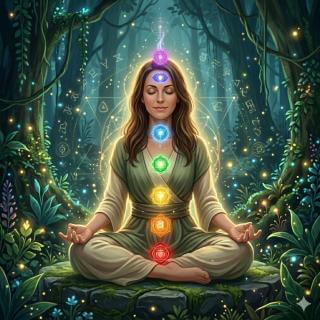
Chakra balancing is an energy practice that works with seven perceived energy centers along the body, using attention, breath, and visualization to restore a felt sense of balance and wellbeing (Rajput et al., 2024).
Last Updated
3 Jul 2026
We are still reviewing this page. Our research team checks every technique page for accuracy and evidence quality before final release. Details may change as that review completes. The evidence badge shows our current reading of the published research.
RECOMMENDED DOSE
No direct dose-response literature exists for this technique. A short, gentle introductory session a few times a week helps build familiarity without strain. No direct dose evidence; editorial synthesis.
No direct dose-response literature exists for this technique. A moderate session length practiced most days reflects general conventions for guided meditation and energy-focused practices. No direct dose evidence; editorial synthesis.
No direct dose-response literature exists for this technique. A longer daily practice suits established practitioners seeking a consistent routine, based on general meditation practice conventions. No direct dose evidence; editorial synthesis.
Session length
Session length: 5–10 minutes
5
MIN
How long each individual practice session should last from start to finish.
Frequency
Frequency: 3–4 days
3
DAYS
The number of days per week to fit a session into your routine.
Session length
Session length: 15–20 minutes
15
MIN
How long each individual practice session should last from start to finish.
Frequency
Frequency: 5 days
5
DAYS
The number of days per week to fit a session into your routine.
Session length
Session length: 25–30 minutes
25
MIN
How long each individual practice session should last from start to finish.
Frequency
Frequency: 7 days
7
DAYS
The number of days per week to fit a session into your routine.
About this card. No direct dose-response literature exists for Chakra Balancing; these recommendations are based on general practice conventions for meditation and energy-focused practices and should be treated as starting points only. These recommendations are not a substitute for personalised guidance from a qualified practitioner.
Quick answers to what people most often ask. Each card links to the deeper section below.
evidence
One small randomized trial found that adding Pranic Chakra Balancing to physical therapy reduced chronic muscle pain and improved range of motion more than physical therapy alone in 60 competitive Indian classical dancers at eight weeks. The energy centers themselves are not scientifically established, and no effect sizes were reported.
Read moregood for
Adults wanting a structured way to slow down, attend to the body, and feel more settled may find chakra balancing helpful, especially those drawn to yogic traditions who find the seven-center map meaningful. The only clinical group studied was dancers with chronic muscle pain, tested alongside physical therapy, not as standalone treatment.
Read moresafety
Most healthy adults can practise chakra balancing with low risk, treating it as support for wellbeing rather than treatment. Sustained inward attention can occasionally surface strong emotion or a floaty, disoriented feeling, which usually eases once you pause and open your eyes. People with trauma histories should take particular care and proceed slowly.
Read morehow it works
Chakra balancing moves attention in a deliberate sequence along the body's seven perceived energy centers, which practitioners describe as warmth or flow travelling through the torso. The slow breathing and sustained inward focus may engage the body's rest-and-recovery system, easing tension in the shoulders and jaw. Circulating actual energy remains a traditional belief, not a demonstrated process.
Read moreChakra balancing is a practice that works with seven perceived energy centers along the body, using focused attention, breath, and visualization to support a felt sense of physical, emotional, and spiritual balance.
A session moves through two phases: sensing and correcting. You first scan the seven centers along the torso and head, noticing where each feels open, heavy, depleted, or overactive, then bring focused attention, slow breath, and imagery of warmth or flow to steady each one in turn. Unlike a fixed ascending meditation, the order follows what you feel rather than a set sequence. It is practiced both as self-care and as a practitioner-guided session.
Chakra balancing differs from sequential chakra meditation, which follows a set ascending order regardless of what is sensed; balancing instead responds to which centers feel out of balance. It is not a medical treatment, and the energy centers it works with are a traditional construct rather than scientifically established anatomy. It is best used to complement, not replace, care for diagnosed conditions.
Not to be confused with
Sequential chakra meditation
Sequential chakra meditation always ascends through the centers in a fixed order. Chakra balancing is diagnostic first, sensing which centers feel off and treating only those, so the two are close cousins rather than the same practice.
Kundalini awakening
Kundalini practices aim to rouse and raise a powerful energy up the spine and can produce intense experiences. Chakra balancing is gentler and restorative, aiming to even out perceived energy across centers rather than to awaken or move a strong current.
Medical or clinical diagnosis
The sensing step in chakra balancing is a subjective, tradition-based read of felt energy, not a medical assessment. It does not diagnose or treat any physical or mental-health condition, and the existence of chakras is not scientifically established.
Chakra balancing is thought to work by moving attention in a deliberate sequence along the body's perceived energy centers, which practitioners often describe as warmth or flow travelling through the torso as focus shifts from one center to the next (Rajput et al., 2024). The slow breathing and sustained inward attention it shares with other relaxation practices may engage the parasympathetic nervous system, the body's rest-and-recovery branch, felt as tension easing in the shoulders and jaw and breathing gradually slowing (Vaisravanath, 2025). These stay hypotheses rather than measured pathways, and the notion that an actual energy is being circulated is a traditional belief, not a demonstrated process (Rajput et al., 2024).
In chakra balancing you move attention in a slow, deliberate sequence along the body's perceived energy centers, which practitioners often describe as warmth or a soft current travelling through the torso as focus shifts from one center to the next. This directed attention is the corrective step, guiding focus toward centers that feel depleted or overactive; the idea that it circulates an actual energy stays a traditional belief rather than a measured process (Rajput et al., 2024).
A warm, tingling, or heavy feeling in one part of the body is what practitioners call subtle energy awareness, the perception they rely on to sense which center feels depleted or overactive. Chakra balancing treats building this sensitivity as its starting point, though what is being sensed is described in traditional energy terms rather than measured physiology (Rajput et al., 2024).
As attention settles inward and the breath slows, you may feel tension easing in the shoulders and jaw, breathing deepening, and a busy mind quieting. That settling reflects the parasympathetic nervous system, the body's rest-and-recovery branch, which researchers think this practice may engage, though for now that stays a hypothesis rather than a directly measured finding (Vaisravanath, 2025).
When the nervous system feels stuck in high alert or flattened into shutdown, autonomic balancing is the flexibility it's missing: the ability to move smoothly between activation and rest. The slow breathing and steady inward attention in chakra balancing are proposed to support that shift, though researchers call this a hypothesis rather than something they have measured directly (Vaisravanath, 2025).
The body tends to ease gradually as muscle tension lets go, though this is inferred from related relaxation practices rather than measured directly during chakra balancing itself. In the one relevant trial, adding the practice to physical therapy brought greater pain reduction and better range of motion for dancers with chronic muscle pain than physical therapy alone at eight weeks (Vaisravanath, 2025). Practitioners commonly notice the shoulders dropping, the jaw loosening, and held areas of the body feeling softer as attention turns inward, even though resting muscle tone was not itself recorded.
As attention settles, the shoulders often drop, the jaw loosens, and held areas of the body feel softer. This is resting muscle tension easing, the baseline tightness muscles hold when you are not actively using them, and it is inferred from the slow breathing and sustained inward attention Chakra Balancing shares with other relaxation methods rather than measured directly (Vaisravanath, 2025).
The tight, braced feeling of muscles that won't let go may ease during Chakra Balancing, though this is inferred from related findings rather than measured directly. In one trial with classical dancers who had chronic muscle pain, adding the practice to physical therapy brought more pain relief and better range of motion, how far a joint moves comfortably, than physical therapy alone (Vaisravanath, 2025).
Limited, early evidence supports chakra balancing only as an add-on for chronic muscle pain. In a single small trial, combining it with physical therapy eased pain more than physical therapy alone for competitive Indian classical dancers with myofascial pain syndrome (Vaisravanath, 2025). The commonly described benefits for anxiety, stress, and emotional balance have not been directly tested; any signal there comes indirectly from broader yoga practices rather than chakra balancing specifically. Not yet supported: large trials, standalone use, long-term follow-up, and any claim that the practice treats a diagnosed condition or that the energy centers it works with are scientifically established (Rajput et al., 2024).
One small randomized trial is the strongest direct evidence: adding Pranic Chakra Balancing to physical therapy reduced chronic muscle pain more than physical therapy alone in 60 competitive Indian classical dancers, with significantly greater pain relief at eight weeks (Vaisravanath, 2025). That trial did not report effect sizes, studied a narrow group, and bundled the energy work with physical therapy, so the practice's own contribution cannot be separated out. Beyond it, the idea that clearing blockages in the body's energy centers restores balance stays a belief framework rather than a measured effect, and the existence of chakras is not scientifically established (Rajput et al., 2024).
0
Meta-analyses
0
RCTs
0
Systematic reviews
0
Observational
2
Pilot
Studied populations
Outcomes measured
Exploring Chakra Balancing Practices in Software Applications
2024
Finding: This peer-reviewed literature review traces chakra balancing back to ancient Indian yoga and Ayurveda, describing seven main energy centers along the body's central channel that practitioners work with to support physical, emotional, and spiritual well-being. It also lays out the traditional belief behind the practice: that easing perceived blockages in these centers restores a sense of balance and vitality. Importantly, the same review is candid that the existence and function of chakras are not scientifically established and remain debated, with proposed links to the nervous and hormonal systems described as speculative. So if you explore chakra balancing, treat it as a reflective, tradition-based practice rather than a medically proven one.
See full citation in referencesEfficacy of Integrated Pranic Chakra Balancing and Physical Therapy Manual Modalities on Myofascial Pain Syndromes and Energetic Depletion in Competitive Indian Classical Dancers
n = 60
Finding: In a trial of 60 competitive Indian classical dancers (ages 18–35) living with chronic muscle pain, the group that added Pranic Chakra Balancing to their hands-on physical therapy saw greater pain relief and better range of motion at eight weeks than those who did physical therapy alone, and they also reported feeling less physically and mentally depleted. For a practitioner, this hints that pairing an energy practice with conventional bodywork may help you recover and move more freely, though the two treatments were combined, so we can't tell how much the chakra balancing itself contributed. The researchers suggested it may help muscles relax and the nervous system rebound faster, but that idea was a proposal rather than something the study directly measured, and the findings come from a single small trial in one specialized group.
Chakra balancing draws on ancient Indian yogic and tantric traditions, where each of the seven centers is understood to govern a domain of life, from security at the root to spiritual connection at the crown, and it was later popularized in the West through the Theosophical Society and the New Age movement (Rajput et al., 2024). These roots help explain the practice's form, its scanning-and-correcting sequence and the language of energy flow, rather than proving any clinical effect. In much of Western practice the same chakra map is adopted as a psychological and self-development framework.
For most healthy adults, chakra balancing is a low-risk practice, best used as support for general wellbeing rather than as a treatment for a medical or mental-health condition, since its benefits are not scientifically established (Rajput et al., 2024). There is one practice-informed caution, mild rather than trial-measured: sustained inward attention on the body can occasionally surface strong emotion or a floaty, disoriented feeling, which usually eases once you pause and open your eyes. And because the only clinical trial so far tested the practice added to physical therapy in a narrow group of dancers rather than on its own (Vaisravanath, 2025), chakra balancing belongs alongside your existing care, not in place of it.
People with trauma histories should take particular care, since focused interoceptive attention, tuning closely into internal body sensations, can sometimes stir up unprocessed material. This is a practice-informed caution rather than a measured risk, and a slow, supported approach helps. Anyone managing a diagnosed condition such as ongoing pain, anxiety, or a mood disorder should keep working with their clinician and treat chakra balancing as a complement to that care, because there is no evidence it works as a standalone treatment for the general population (Vaisravanath, 2025).
Focused interoceptive attention, tuning closely into internal body sensations, can sometimes stir up unprocessed material for people with a trauma history. This is a practice-informed caution rather than a measured risk, and no study has tested chakra balancing specifically for trauma-related effects. A slow, supported approach helps: sit or lie somewhere safe, keep sessions short, and pause, open your eyes, and feel your feet on the floor if things feel overwhelming. Keep working with a qualified professional; chakra balancing does not treat trauma.
| Technique | Best for | Use with care | Evidence strength | Distinction |
|---|---|---|---|---|
| Sequential chakra meditation | Beginners who want a predictable, repeatable route through the chakra system without needing to first judge which centers feel off. | emerging EVIDENCE | Both practices work through the seven centers, but sequential chakra meditation follows a fixed ascending order from root to crown regardless of what the body reports. Chakra balancing instead begins by sensing which centers feel depleted, overactive, or blocked, then directs attention and breath only where imbalance is felt, so the order is guided by felt experience rather than a set pattern. | |
| Reiki and hands-on energy healing | People who prefer a passive, practitioner-led session and hands-on contact over doing their own inward scanning. | emerging EVIDENCE | Reiki is practitioner-delivered: a trained giver places or hovers hands to channel energy toward a mostly passive recipient. Chakra balancing is usually self-directed, with the practitioner doing their own sensing, breathing, and visualization, though it can also be guided. The active ingredient in chakra balancing is the person's own sustained inward attention rather than energy received from another. |
Chakra balancing works with seven perceived energy centers along the body, using attention, breath, and visualization to restore a felt sense of balance (Rajput et al., 2024). Unlike plain meditation, it adds a sensing-and-correcting step, though the energy centers themselves are not scientifically established (Rajput et al., 2024).
+
Chakra balancing scans the seven perceived energy centers along the torso and head, senses which feel depleted, overactive, or blocked, then directs attention, slow breath, and visualization to steady each in turn (Rajput et al., 2024). That diagnostic-and-corrective layer, set within a yogic energy framework, is what sets it apart from general meditation, which simply rests attention without labelling regions as energy centers or trying to correct them. The chakras it works with are a traditional construct rather than a scientifically established feature of the body (Rajput et al., 2024).
Not in a scientifically established sense. Chakras are a traditional yogic and tantric construct rather than a confirmed anatomical feature, and their existence remains debated (Rajput et al., 2024). You may genuinely feel warmth or tingling during practice, but that isn't proof of a measured energy center.
+
Not as a proven physical structure. Chakras come from ancient Indian yogic and tantric traditions as seven perceived energy centers along the body, and chakra balancing works with them to support a felt sense of wellbeing (Rajput et al., 2024). Their existence and function have not been scientifically established and are still debated, so the framework is best understood as a traditional belief system. The warmth, tingling, or openness people notice is a real subjective experience, but it does not demonstrate that an actual energy or energy center has been measured (Rajput et al., 2024).
One of seven energy centers traditionally mapped along the torso and head, each linked in yogic tradition to a life domain such as security, creativity, power, love, or expression. Their existence is a traditional idea rather than a scientifically established anatomical feature.
In yogic tradition, the channels along which vital energy is said to flow; they are the pathways chakra practices imagine attention travelling as it moves between centers.
The vital life-energy described in yogic and other Eastern traditions, thought to circulate through the body. It is a traditional concept rather than a measured physical quantity.
A perceived flow or presence of non-ordinary energy within and around the body that practitioners report sensing as warmth, tingling, or heaviness. It has not been confirmed as a measurable signal.
The sense of your own internal body signals, such as heartbeat, breath, warmth, or muscle tension. Chakra balancing leans on this felt awareness to notice where the body seems open or held.
Visceral afferent processing supporting detection and interpretation of internal bodily states, associated with insular and anterior cingulate activity.
The rest-and-recovery branch of the nervous system. When it becomes more active, heart rate slows, breathing eases, and the body settles out of fight-or-flight into a calmer, more restful state.
The parasympathetic division of the autonomic nervous system, acting largely via vagal pathways to lower heart rate and promote recovery.
The nervous system's ability to shift smoothly between activation and rest rather than staying stuck in high alert or shutdown, often felt as being more resilient and less wired.
Sympathovagal balance and adaptive autonomic responsiveness, sometimes indexed by heart-rate variability.
G. S. Rajput, Mubeen Khan, Tanmay Jain, Tanmay Khandelwal, U. Sharma (2024). Exploring Chakra Balancing Practices in Software Applications. https://doi.org/10.1109/acroset62108.2024.10743620
Cited in: Benefits, How it works, Research, Roots and tradition, Use with care, What it is
| Outcome | Effect size | 95% CI | N | Comparator | Source |
|---|---|---|---|---|---|
| pain reduction at 8 weeks | reported significant; p<0.001 | — | — | standard physical therapy alone | Vaisravanath, 2025 |
The research is useful for setting expectations, but study methods and participant groups vary. Treat the findings as general guidance rather than a promise about any single session, and not a replacement for clinical care.
reported narratively
Sustained inward attention on the body can occasionally surface strong emotion or a floaty, disoriented feeling. This is a mild, practice-informed caution rather than a trial-measured risk, and it usually eases once you pause, open your eyes, ground through your feet, and breathe normally for a moment. Keep an exit available and move at a pace you can tolerate; if difficult feeling keeps recurring after sessions, check in with a qualified health or mental-health professional.
For most healthy adults chakra balancing is low-risk, but it is best used as support for general wellbeing rather than as a treatment. Its benefits are not scientifically established, and the only clinical trial tested it added to physical therapy in a narrow group of dancers rather than on its own. Anyone managing a diagnosed condition such as ongoing pain, anxiety, or a mood disorder should keep working with their clinician and treat chakra balancing as a complement to that care, not a replacement for it.
Chakra balancing sits most comfortably as gentle support for your general wellbeing, kept alongside any existing care rather than in place of it. It is best approached somewhere quiet and comfortable where you can slow down and tune inward at a pace that feels manageable to you, without forcing any particular sensation or state. Because sustained inward attention can occasionally surface strong emotion or a floaty feeling, give yourself permission to pause whenever you need to.
If you are being treated for pain, anxiety, trauma, or another condition, use chakra balancing alongside that care rather than as a substitute for it. The one clinical trial tested it only as an add-on to physical therapy, so treat it as a complement, not a standalone treatment.
Sit or lie somewhere quiet and comfortable so the body feels held. Let the shoulders drop and the jaw loosen before you begin, giving yourself a minute to arrive rather than starting mid-rush.
Bring attention to one body region at a time and let the breath stay slow and easy. There is no need to force a sensation or reach any particular state; move gently from one center to the next as focus travels through the torso and head.
If strong emotion or a floaty, disoriented feeling arises, it is fine to stop at any point: open your eyes, feel your feet on the floor, and return to ordinary activity. You never have to push through discomfort to complete the practice.
Take a few normal breaths, notice the room around you, and give yourself a moment to feel fully present again before standing or moving on. A slow return helps the body settle rather than jolting straight back into activity.
If difficult emotion or unsettling sensation does not settle after a session, or keeps recurring, check in with a qualified health or mental-health professional. Chakra balancing is not a treatment for emotional distress.
This information is educational and is not medical advice. This practice is not a substitute for professional care and should not replace prescribed medication or treatment for any medical or mental-health condition. If you are managing a health condition or taking medication, talk with a qualified health professional before changing your practice. If you are in distress or crisis, seek professional support.
| Body scan meditation | Readers who want the same inward, sensation-tracking attention within a secular, widely studied mindfulness format. | EVIDENCE | Body scan meditation moves attention sequentially through the body much like chakra balancing, but it simply observes whatever sensation is present without labelling regions as energy centers or trying to correct an imbalance. Chakra balancing adds a diagnostic-and-corrective layer and a yogic energy framework on top of that same interoceptive attention, so the felt skill overlaps while the meaning system differs. |

Only in a limited, early sense. One small trial found that adding chakra balancing to physical therapy eased chronic muscle pain more than physical therapy alone in 60 dancers, but the practice's own contribution can't be isolated and its wider benefits are untested (Vaisravanath, 2025).
+
Only in a limited, early sense. The evidence is suggestive rather than established. In a single small randomized trial, adding chakra balancing to physical therapy reduced chronic muscle pain more than physical therapy alone at eight weeks in 60 competitive Indian classical dancers (Vaisravanath, 2025). That trial bundled the energy work with physical therapy, so its independent effect cannot be separated, and researchers' ideas about muscle relaxation and nervous-system recovery remain a hypothesis (Vaisravanath, 2025). The commonly claimed benefits for anxiety, stress, and emotional balance have not been directly tested, and the existence of chakras remains scientifically unproven (Rajput et al., 2024).
Not directly proven. Chakra balancing's calming effects on anxiety and stress have not been tested as outcomes in any trial; the one clinical study looked at chronic muscle pain in dancers, not mood (Vaisravanath, 2025). Its slow breathing and inward attention may support the body's relaxation response, but that remains a hypothesis, not an established anxiety treatment.
+
Not directly proven. No trial has tested whether chakra balancing lowers anxiety or stress as measured outcomes, so its widely claimed calming benefits are unconfirmed; any signal there comes indirectly from broader yoga practices rather than chakra balancing itself. The single clinical trial studied added pain relief for dancers with chronic muscle pain, not mood (Vaisravanath, 2025). The slow breathing and sustained inward attention it shares with relaxation practices may support nervous-system recovery, but this stays a hypothesis rather than a measured effect, and chakra function is not scientifically established (Rajput et al., 2024). Treat it as general wellbeing support, not a treatment for diagnosed anxiety.
Most likely because directing sustained attention along the body's perceived centers, paired with slow breathing, heightens interoceptive awareness, your felt sense of internal body signals, so ordinary sensations like warmth or tingling become more noticeable (Rajput et al., 2024). This is a felt-sense explanation, not a measured pathway.
+
The warmth and tingling are best understood as commonly reported subjective sensations rather than proof that energy is moving. Moving attention deliberately along the perceived centers, together with the slow breathing the practice shares with other relaxation methods, may engage the parasympathetic branch of the nervous system, which governs rest and recovery, and sharpen interoceptive attention, so familiar body signals feel more vivid (Vaisravanath, 2025). These remain hypotheses, not demonstrated physiological pathways, and the idea that an actual energy is circulating is a traditional belief rather than an established process (Rajput et al., 2024).
Use care. Chakra balancing is generally low-risk, but if you have a trauma history, its focused interoceptive attention, closely tuning into internal body sensations, can sometimes surface unprocessed material or a floaty, disoriented feeling. Keep sessions short and paced, keep an exit available, and keep working with your clinician.
+
Use care. This is a practice-informed caution rather than a trial-measured risk: no study has tested chakra balancing specifically for trauma-related effects, so it should not be read as an evidence-based contraindication. Because turning attention inward on the body can occasionally stir strong emotion, a paced, supported approach helps, sit or lie somewhere safe, go slowly, and pause, open your eyes, and feel your feet on the floor if things feel overwhelming. Chakra balancing does not treat trauma; keep it as a complement to care from a qualified professional, not a substitute for it.
Pause and reorient. If strong emotion surfaces, stop, open your eyes, feel your feet on the floor, and take a few slow, normal breaths before finishing. If the distress lingers or keeps returning, check in with a qualified health or mental-health professional.
+
Pause and reorient. Sustained inward attention on the body can occasionally stir up strong feeling or a floaty, disoriented sense; this is a mild, practice-informed caution rather than a trial-measured risk, and it usually eases once you stop, open your eyes, ground through your feet, and breathe normally for a moment. Keep an exit available and move at a pace you can tolerate. People with trauma histories should take extra care, since tuning closely into internal sensations can surface unprocessed material. Chakra balancing is not a treatment for emotional distress; if difficult feeling keeps recurring, work with a qualified professional.
Start simply: sit or lie somewhere quiet and comfortable, let your shoulders and jaw soften, then bring slow breath and attention to one body region at a time at a pace you can tolerate. Keep an exit available, reorient before finishing, and treat it as general self-care rather than a treatment, keeping any existing clinical care in place.
+
Begin in a supported position, then move attention gently through the perceived energy centers along the torso and head, using slow breath and unforced focus on one area at a time (Rajput et al., 2024). There is no need to force a sensation or reach a particular state; if strong emotion or a floaty, disoriented feeling arises, pause, open your eyes, and feel your feet on the floor. Take a few normal breaths to reorient before you stand. Chakra balancing is best used as low-risk self-care alongside, not instead of, care from your clinician, since its only clinical test was as an add-on to physical therapy in a narrow group (Vaisravanath, 2025).
The main difference is framing. Both move attention through the body in sequence, but a body scan simply observes whatever sensation is there in a secular frame, while chakra balancing adds a diagnostic-and-corrective layer and a yogic energy map, sensing which of seven centers feel off and directing breath to steady them (Rajput et al., 2024). No head-to-head trial has compared them, so neither can be called more effective.
+
The core distinction is structural, not proven benefit. A body scan tracks physical sensation as it arises without labelling regions or trying to change anything; chakra balancing works with seven perceived energy centers and adds a step of sensing imbalance and directing attention to correct it (Rajput et al., 2024). The felt skill, sustained inward attention, overlaps closely, but the meaning systems differ. No study has directly compared the two, and because the existence of chakras is not scientifically established, we cannot say one delivers more benefit than the other (Rajput et al., 2024).
No. Chakra balancing should sit alongside clinical care, not replace it. The only trial tested it added to physical therapy for chronic muscle pain, and there is no evidence it works on its own or treats a diagnosed condition (Vaisravanath, 2025), (Rajput et al., 2024).
+
No. Keep working with your clinician and treat chakra balancing as a complement to existing care rather than a substitute for it. The single small trial added it to physical therapy for chronic muscle pain in a narrow group of dancers and cannot show it works standalone (Vaisravanath, 2025). There is no evidence it treats a diagnosed pain or mental-health condition, and the existence of chakras has not been scientifically confirmed (Rajput et al., 2024). If pain, anxiety, trauma, or mood symptoms are significant, seek qualified professional support.
A long-lasting muscle pain condition involving tender, tight bands in muscle and its surrounding connective tissue. It was the focus of the one clinical trial that tested a chakra balancing protocol added to physical therapy.
A chronic pain disorder characterised by myofascial trigger points and taut bands within skeletal muscle and associated fascia, producing localised and referred pain.
Explore guided sessions to deepen your Chakra Balancing technique.
Editorially curated. Tracks are not themselves clinically studied; evidence on the page applies to Chakra Balancing as a technique.
Beginner content for Chakra Balancing

★ 4.8
·
Guided
·
39 min
Trena Barnes
How hard is Chakra Balancing?
Chakra Balancing stays at 3 because it asks for real energetic assessment rather than one repeated visualization.
3
Mental Effort
3 / 4
▾Emotional Depth
2 / 4
▾Physical Intensity
1 / 4
▾Prior Knowledge
3 / 4
▾