The world’s largest free audio library for everyday wellbeing
Coaching & Behavior Change
Affirmation meditation is a practice that pairs a calm, focused meditative state with the deliberate repetition of chosen present-tense, first-person self-statements, phrased to reframe limiting beliefs and strengthen a desired self-concept.
Last Updated
3 Jul 2026
We are still reviewing this page. Our research team checks every technique page for accuracy and evidence quality before final release. Details may change as that review completes. The evidence badge shows our current reading of the published research.
RECOMMENDED DOSE
No direct dose evidence; editorial synthesis. A short, low-commitment start helps build a sustainable habit for people new to affirmation meditation.
No direct dose evidence; editorial synthesis. A moderate step up in duration and near-daily frequency reflects common meditation practice conventions once a routine is established.
No direct dose evidence; editorial synthesis. A longer daily practice suits experienced practitioners seeking a maintenance-level routine.
Session length
Session length: 5–10 minutes
5
MIN
How long each individual practice session should last from start to finish.
Frequency
Frequency: 3–4 days
3
DAYS
The number of days per week to fit a session into your routine.
Session length
Session length: 10–20 minutes
10
MIN
How long each individual practice session should last from start to finish.
Frequency
Frequency: 5–6 days
5
DAYS
The number of days per week to fit a session into your routine.
Session length
Session length: 20–30 minutes
20
MIN
How long each individual practice session should last from start to finish.
Frequency
Frequency: 7 days
7
DAYS
The number of days per week to fit a session into your routine.
About this card. No direct dose-response literature exists for affirmation meditation. These recommendations are based on general practice conventions for meditation and should be treated as starting points only. These recommendations are not a substitute for personalised guidance from a qualified practitioner.
Quick answers to what people most often ask. Each card links to the deeper section below.
evidence
Direct evidence is thin: one small qualitative study reported first-grade children felt calmer and more focused after practising, with no comparison group. Stronger findings come from related meditation research, where a meta-analysis in women with breast cancer showed small reductions in anxiety, depression, and stress versus usual care.
good for
Affirmation meditation suits adults dealing with everyday stress, a harsh self-critical inner voice, or low confidence, and it has been used with children in classrooms to support focus and calm. It offers gentle, supportive settling rather than a cure, and is not a substitute for professional care for anxiety, low mood, or trauma.
Read moresafety
Most healthy adults can practise affirmation meditation with low risk. Anyone living with diagnosed anxiety, depression, or a trauma history should treat it as a companion to professional care, not a replacement. It should not replace medical management of physical conditions like high blood pressure, and statements that feel untrue can create friction rather than calm.
Read morehow it works
Affirmation meditation appears to work mainly through cognitive reappraisal—deliberately restating what a thought means so it carries less emotional weight, turning "I can't" into "I am capable." Repeating steadier statements in a settled state may also ease the wired, on-alert feeling stress leaves behind, so the body loosens while the mind reframes. These pathways are plausible rather than measured.
Read moreA meditative practice in which you settle into relaxed focus and repeat chosen present-tense, first-person self-statements, such as "I am capable," to loosen limiting beliefs and strengthen a desired self-image.
A session begins by settling into relaxed, focused attention, then moves into slow, deliberate repetition of a small set of self-statements phrased in the present tense and first person. Each line typically reframes a specific limiting belief, so "I'm not enough" becomes "I am worthy," and the same statements are rehearsed consistently across sessions rather than improvised on the spot. Some practitioners add mirror work or spoken self-talk. The distinguishing feature is believable repetition held in a calm, receptive state, which sets it apart from casual positive thinking.
Affirmation meditation sits within a coaching and self-image framework as a general affirmation practice for strengthening self-concept. It is distinct from Self-Affirmation Practice in clinical psychology, which follows a specific protocol grounded in Steele's self-affirmation theory. It is also more than casual positive thinking, since the repetition is deliberate, believable, and held within a meditative state. It is a self-care support, not a treatment for diagnosed anxiety, depression, or trauma.
Not to be confused with
Casual positive thinking
Affirmation meditation is not the same as casually telling yourself things will be fine. It pairs a settled, relaxed state with deliberate, present-tense statements rehearsed consistently over time, whereas casual positive thinking is passing and unstructured.
Self-Affirmation Practice (Steele's values-affirmation protocol)
A related but distinct practice grounded specifically in Steele's self-affirmation theory, which uses structured reflection on core values studied in psychology. Affirmation meditation here is the general coaching-style practice for self-image, not that theory-driven protocol.
Manifestation and law-of-attraction affirmations
Affirmation meditation aims to reframe self-belief and settle the nervous system, not to attract external outcomes or events. It makes no claim that repeating statements changes circumstances beyond your own thoughts and responses.
Affirmation meditation appears to work mainly through cognitive reappraisal, the act of deliberately restating what a thought means so it carries less emotional weight, turning "I can't" into "I am capable" so the same situation stings less (Gross, 2002). Repeating those lines in a settled state may also ease overall physiological arousal, the wired, on-alert feeling that stress leaves behind, so the body loosens while the mind reframes. This link to emotion regulation comes from research on emotion regulation broadly rather than affirmation meditation specifically, so treat it as a plausible pathway, not a measured one.
Repeating steady, self-reassuring statements may help the body ease out of a revved-up state, softening the wired, on-alert feeling that stress leaves behind. This settling is linked to better emotion regulation, though the effect on physical arousal itself has mostly been studied in related practices rather than in affirmation meditation directly (Gross, 2002).
A harsh self-judgment can lose some of its grip when you deliberately restate it as something kinder and truer. Affirmation meditation may work partly through cognitive reappraisal, the practice of reframing what a thought means so it carries less emotional weight, a strategy linked in research to steadier emotion regulation (Gross, 2002).
No study has directly measured what affirmation meditation does inside the body, so its physical effects are inferred from closely related practices rather than confirmed here (Gross, 2002). The proposed change involves prefrontal-amygdala circuitry, the network linking the brain's decision-making regions to its threat-detection centre, which sets how strongly an emotional reaction fires; when it engages, a charged thought tends to arrive with less heat. Practitioners often describe muscles loosening, breathing slowing, and a sense of urgency quieting, though whether affirmation meditation itself reliably lowers physical arousal has mostly been studied in other meditation practices, not this one.
A harsh or self-critical thought still shows up, but it lands with less charge, leaving a little more room to choose how you respond instead of reacting on reflex. That felt shift is thought to involve the circuitry that links the brain's decision-making regions to its threat-detection centre, though it has not been measured directly during affirmation meditation and is inferred from related emotion-regulation research (Gross, 2002).
Limited–Emerging evidence to date supports affirmation meditation, and most of it is indirect. Directly, one small qualitative study reported that first-grade children felt calmer and more focused after practising, with no comparison group or effect sizes (Tyas et al., 2025). Moderate evidence from related mindfulness meditation shows small reductions in anxiety, depression, and stress in women with breast cancer (Haller et al., 2017), and clinical guidelines list meditation as a supportive option for stress and mood (Greenlee et al., 2017). Not yet supported: large trials of affirmation meditation itself, long-term follow-up, or any claim that it treats a diagnosed condition or reliably lowers blood pressure (Hafner, 1982).
The clearest numbers come from related meditation research rather than affirmation meditation itself. A meta-analysis of mindfulness in women with breast cancer found small reductions in anxiety versus usual care, a standardized mean difference (Hedges' g) of -0.28, meaning the average participant ended up less anxious than roughly six in ten people who received usual care alone, with similar small effects for depression and stress (Haller et al., 2017). Direct study of affirmation meditation is thin, resting on one small qualitative report that described calmer, more focused first-grade children with no comparison group (Tyas et al., 2025). The main limit is directness: these findings describe meditation broadly and can suggest, but not confirm, what affirmation meditation does on its own.
1
Meta-analyses
0
RCTs
0
Systematic reviews
0
Observational
6
Pilot
Studied populations
Analysis of Positive Affirmation Meditation Habit on Learning Focus in elementary school
2025
Finding: In a small classroom study, first-grade children who practised positive affirmation meditation were described by observers as calmer, more focused, and less easily distracted during lessons than children who did not take part. The takeaway for a curious practitioner is modest but encouraging: repeating positive affirmations may help settle attention, at least in a young school setting. This was a descriptive, observation-based study with no comparison numbers and only a handful of children, so the results are an early signal rather than proof, and they do not tell us how the practice affects teenagers or adults.
reported narratively
Clinical practice guidelines on the evidence‐based use of integrative therapies during and after breast cancer treatment
2017
Finding: After reviewing studies published between 1990 and 2015, the Society for Integrative Oncology issued clinical practice guidelines recommending meditation to help ease anxiety and stress, lift low mood, and improve overall quality of life for people going through breast cancer treatment. For someone drawn to a calming practice during a hard stretch, this points to meditation as a supportive tool that reputable oncology experts endorse alongside standard care. Two things are worth keeping in mind: the guidelines back meditation broadly rather than affirmation meditation specifically, and they reflect an expert recommendation drawn from many studies rather than a single measured effect size.
reported narratively
Affirmation meditation draws on three overlapping streams: Emile Coué's early autosuggestion work in the 1920s, Norman Vincent Peale's positive-thinking tradition, and self-affirmation theory from social psychology. These roots help explain the practice's form, its deliberate, present-tense, first-person repetition held in a calm state, not its clinical effects. The coaching framing of "reprogramming" self-image comes from this self-improvement lineage rather than from clinical trials.
For most healthy adults, affirmation meditation is low-risk, a quiet few minutes spent with steadier, kinder self-talk. A few situations call for care rather than alarm. High-quality research on this specific technique is still limited, and much of what we know is borrowed from related meditation practices, so it is best treated as everyday self-support rather than a treatment for diagnosed anxiety, depression, or trauma (Tyas et al., 2025). Some people also notice that repeating statements which feel untrue creates friction instead of calm, so wording you can actually believe tends to settle more easily than a phrase that provokes inner argument.
Anyone living with diagnosed anxiety, depression, or a trauma history should treat affirmation meditation as a companion to professional care, not a substitute, and check in with a clinician if symptoms persist or worsen. People moving through low self-esteem or a raw life transition may find that statements clashing sharply with how they feel land as friction rather than comfort, so gentler, more believable wording is worth choosing. The practice is also not a treatment for physical conditions: one small controlled trial found meditation lowered blood pressure no more than no treatment, so it should sit alongside, never replace, medical management of conditions such as high blood pressure (Hafner, 1982).
High-quality research on affirmation meditation itself is still limited, and much of what we know is borrowed from related meditation practices. Treat it as everyday self-support for steadier, kinder self-talk rather than a treatment for diagnosed anxiety, depression, or trauma.
If you live with diagnosed anxiety, depression, or a trauma history, use affirmation meditation as a companion to professional care, not a substitute. Check in with a clinician if symptoms persist or worsen, and reach out for support if difficult feelings deepen during practice.
| Technique | Best for | Use with care | Evidence strength | Distinction |
|---|---|---|---|---|
| Mindfulness meditation | Building steady, non-reactive awareness of thoughts and feelings rather than changing their content. | If active self-talk feels more grounding for you, open observation alone can leave a restless mind unanchored. | moderate EVIDENCE | Both are quiet, seated practices, but they point attention in opposite directions. Mindfulness meditation asks you to observe thoughts and sensations without changing them, noticing what arises and letting it pass. Affirmation meditation actively generates and repeats chosen self-statements to reshape belief. One cultivates non-judgmental awareness; the other cultivates a deliberate, kinder inner script. |
| Cognitive restructuring (CBT-style thought reframing) | Distressing or distorted beliefs that need structured, evidence-based examination, ideally with professional guidance. | Repeating a positive statement without testing it can feel hollow if the underlying belief has not been examined. |
No. Affirmation meditation is more structured than casual positive thinking: it pairs a settled, relaxed state with deliberate, present-tense, first-person self-statements rehearsed consistently over time, rather than a passing hopeful thought.
+
No. Affirmation meditation is more deliberate than casually telling yourself things will be fine: it pairs a calm, focused meditative state with the repetition of chosen present-tense statements such as "I am capable," drawing on autosuggestion and self-affirmation traditions to reframe a limiting belief. That describes how the practice is defined and framed, not proof that it works better. High-quality research on affirmation meditation specifically is still limited, and much of the support comes from related meditation practices (Tyas et al., 2025).
Not fully true, but reachable. Wording you can half-believe ("I am learning to trust myself") tends to settle more easily than statements that clash sharply with how you feel now ("I am completely fearless"), which can create friction rather than ease. This is practice-informed guidance, not a tested rule.
+
Not fully true, but believable. No direct trial has tested whether how strongly you believe an affirmation changes its effect for affirmation meditation specifically, so this is practice-informed guidance rather than a measured finding (Tyas et al., 2025). In practice, statements that feel reachable, like "I am learning to trust myself," tend to settle more easily than ones that clash sharply with your current self-image, which can provoke inner argument instead of calm. If a line feels hollow, soften the wording toward something you can partly accept rather than forcing a statement you fully reject.
Deliberately changing the meaning you give a thought or situation so it carries less emotional weight, for example restating "I can't" as "I am capable." In the body it can feel like a charged thought losing some of its heat, leaving a little more room to respond rather than react.
An antecedent-focused emotion-regulation strategy in which reframing the interpretation of a stimulus down-regulates the resulting emotional and physiological response.
Easing an over-activated nervous system down from a revved-up state toward a calmer baseline. It tends to feel like muscles loosening, breathing slowing, and the sense of urgency in the body quieting.
Autonomic deactivation and cortical inhibition, involving reduced sympathetic tone, cortisol output, and muscle tension.
Gradually revising the personal story you tell about who you are, reworking how past events, present circumstances, and future hopes connect. It can show up as a steadier, less self-critical sense of identity over time.
Deliberate reconstruction of narrative identity through autobiographical reasoning, shifting how self-relevant events are interpreted and linked.
The brain network linking decision-making regions of the prefrontal cortex to the amygdala, the threat-detection centre, which sets how strongly an emotional reaction fires. When it engages, a difficult thought can arrive with less heat and feel easier to steady.
Emotion-regulation circuitry characterised by ventrolateral PFC activation, reduced amygdala reactivity, and enhanced prefrontal-amygdala connectivity; inferred rather than directly measured for this technique.
An early self-improvement idea, associated with Emile Coue in the 1920s, that repeating a chosen statement to yourself can gradually influence belief and behaviour. It is one of the historical roots of modern affirmation practice.
Yohana Yesi Kusumaning Tyas, Andreas Erwin Prasetya, Agustina Tri Tresnaning Tyas, A. Tyas (2025). Analysis of Positive Affirmation Meditation Habit on Learning Focus in elementary school. https://doi.org/10.51276/edu.v6i1.576
Cited in: Benefits, Research, Use with care
Heather Greenlee, Melissa J. DuPont‐Reyes, Lynda G. Balneaves, Linda E. Carlson, Misha Cohen, Gary Deng (2017). Clinical practice guidelines on the evidence‐based use of integrative therapies during and after breast cancer treatment. https://doi.org/10.3322/caac.21397
Outcomes measured
| Outcome | Effect size | 95% CI | N | Comparator | Source |
|---|---|---|---|---|---|
| anxiety | SMD (Hedges' g) = -0.28 | 95% CI -0.39 to -0.16 | 1,709 | usual care | Haller et al., 2017 |
| depression | SMD (Hedges' g) = -0.34 | 95% CI -0.46 to -0.21 | — | usual care | Haller et al., 2017 |
| stress | SMD (Hedges' g) = -0.33 | 95% CI -0.61 to -0.05 | — | usual care | Haller et al., 2017 |
The research is useful for setting expectations, but study methods and participant groups vary widely. Treat the findings as general guidance rather than a promise about any single session, and not as a replacement for clinical care.
Integrative Review of Research Related to Meditation, Spirituality, and the Elderly
2005
Finding: Drawing on 25 years of research, this review found that meditation and related spiritual practices can be taught across the lifespan, including to older adults and even people living with dementia, and that regular practice was linked to social and emotional benefits, especially for those living in isolation. For an older reader or a caregiver, this suggests these practices stay accessible later in life and may help someone feel more connected and emotionally steady. Keep in mind this is a broad summary of the wider meditation field rather than a test of affirmation meditation specifically, and because it pools many descriptive studies rather than a single controlled trial, it points to promise rather than proof.
See full citation in referencesEmotion regulation: Affective, cognitive, and social consequences
2002
Finding: This emotion-regulation research compared two ways of handling difficult feelings and found that reappraisal, changing how you interpret a situation early on, more effectively lowers both the intensity of negative emotion and its outward expression than trying to suppress feelings after they arise. For anyone drawn to affirmation meditation, that matters because the practice leans on the same skill: reframing limiting self-beliefs rather than pushing feelings down. Keep in mind this study looked at emotion regulation in general, not affirmation meditation specifically, so it points to why the reframing approach is plausible rather than proving affirmations themselves produce these effects.
See full citation in referencesMindfulness-based interventions for women with breast cancer: an updated systematic review and meta-analysis
n = 1,709
Finding: This review pooled 10 trials with 1,709 women living with breast cancer and found that structured mindfulness programmes (MBSR and MBCT) produced small but real improvements in anxiety, depression, stress, fatigue, sleep, and overall quality of life compared with usual care, with anxiety, mood, and stress each easing by a modest margin. In practical terms, the practices seemed to take a little of the edge off distress, though the changes were small enough that their day-to-day impact stayed uncertain. Two limits matter here: the study looked at mindfulness meditation rather than affirmation meditation, so the results don't directly speak to affirmation practice, and the benefits fell below the level researchers consider clearly meaningful in a clinical setting.
SMD (Hedges' g) = -0.28
Psychological treatment of essential hypertension: A controlled comparison of meditation and meditation plus biofeedback
n = 21
Finding: In a small trial with 21 adults who had high blood pressure, people were split into three groups: meditation training, meditation plus biofeedback, or no treatment at all. Blood pressure dropped in both meditation groups, but the fall was no bigger than in the group that did nothing, and practising more often didn't lead to lower readings. Because this study was tiny, dated, and tested general meditation rather than affirmation practice specifically, it's a useful caution: meditation-style practices may be worth trying for how they feel, but this research gives no solid grounds to expect them to lower blood pressure on their own.
reported narratively
Outcomes of religious and spiritual adaptations to psychotherapy: A meta-analytic review
n = 31
Finding: Across 31 outcome studies published between 1984 and 2005, therapies that draw on a person's spiritual beliefs and values produced a moderate average benefit for people struggling with problems like depression, anxiety, stress and eating concerns. In practical terms, working with meaning and personal values, rather than symptoms alone, appears to help many people feel measurably better. One important caveat: this research looked at a broad family of spiritually informed therapies rather than affirmation meditation specifically, so it points to the general promise of values-based practices rather than proving results for this technique on its own.
random-effects weighted average effect size = 0.56
Repeating a statement that clashes sharply with how you currently feel can create friction instead of calm. Choose wording you can actually believe, soften a line that provokes inner argument, and pause if a session stops feeling supportive.
When self-esteem is low or you are moving through a difficult life transition, statements that clash with how you feel can land as friction rather than comfort. Favour gentler, more believable wording, and keep sessions short so it is easy to stop if the practice stops helping.
Affirmation meditation is not a treatment for physical conditions. One small controlled trial found meditation lowered blood pressure no more than no treatment, so it should sit alongside, never replace, medical management of conditions such as high blood pressure.
Affirmation meditation asks for just a few quiet minutes with kinder self-talk, and it settles most easily when you approach it gently rather than treating it as a fix for anything. A sensible starting point is a short, regular sitting built around wording you can actually believe, kept beside professional care rather than in place of it. Let it stay light and supportive, easy to soften or pause whenever a phrase brings friction instead of ease.
Pick statements that feel reachable rather than a stretch, such as "I am learning to trust myself" over "I am completely fearless." Phrasing that feels true settles more easily than phrasing that provokes inner argument.
Take a few slow breaths and let your shoulders and jaw soften before you begin, so the repetition lands from a calmer, more receptive state rather than a tense one.
A few quiet minutes practised consistently is more sustainable than occasional long sessions, and a short session makes it easy to stop if the practice stops feeling helpful.
If a statement brings up resistance, self-criticism, or distress instead of ease, pause, soften the wording, or set it aside. The practice should feel supportive, not like something you are pushing against.
Let affirmation meditation sit beside professional help for anxiety, low mood, or trauma, and reach out to a qualified professional if difficult feelings persist or deepen.
Affirmation meditation is not a substitute for medical care, so keep managing any diagnosed condition with your healthcare team and let them know what practices you are using.
This information is educational and is not medical advice. This practice is not a substitute for professional care and should not replace prescribed medication or treatment for any medical or mental-health condition. If you are managing a health condition or taking medication, talk with a qualified health professional before changing your practice. If you are in distress or crisis, seek professional support.
| moderate EVIDENCE |
| Both work by changing the meaning of a thought, the process of cognitive reappraisal, but the setting differs. Cognitive restructuring in therapy examines the evidence for and against a belief and builds a balanced alternative, usually with a clinician. Affirmation meditation repeats an already-chosen positive statement in a relaxed state, without the structured examination step. |
| Loving-kindness and self-compassion meditation | Cultivating warmth, compassion, and connection toward yourself and others rather than reshaping specific beliefs. | EVIDENCE | Both nurture a warmer relationship with yourself, but through different words. Loving-kindness meditation repeats wishes of goodwill, such as "may I be safe, may I be at ease," extended toward yourself and others. Affirmation meditation repeats identity statements such as "I am capable" or "I am worthy." One cultivates warmth and connection; the other rebuilds self-concept. |

Honestly, the direct science is weak. Evidence specifically on affirmation meditation rests on one small study, so its benefits are suggestive rather than proven (Tyas et al., 2025). Related meditation research shows small benefits for stress and anxiety, but that is indirect support, not proof this technique works on its own (Haller et al., 2017).
+
The direct research is thin. One small qualitative report described calmer, more focused children with no comparison group, so it can suggest but not confirm what affirmation meditation does on its own (Tyas et al., 2025). Most support is drawn from related meditation and mindfulness studies, which show small reductions in anxiety, depression, and stress (standardized mean differences around -0.28 to -0.34) and appear in some clinical guidelines as supportive options (Haller et al., 2017), (Greenlee et al., 2017). Physical outcomes are mixed: one controlled trial found meditation lowered blood pressure no more than no treatment (Hafner, 1982). The honest read is that the practice is promising and plausible, but not established, and not a proven treatment for any diagnosed condition.
No, it should not be relied on for this. Affirmation meditation is not a treatment for high blood pressure; one small controlled trial found meditation lowered blood pressure no more than no treatment, so keep managing any diagnosed condition with your healthcare team (Hafner, 1982).
+
No, affirmation meditation should not be used to lower blood pressure. The only relevant controlled evidence is one small trial of 21 adults in which meditation reduced blood pressure no more than receiving no treatment, and high-quality research on this specific technique remains limited (Hafner, 1982), (Tyas et al., 2025). Treat it as gentle everyday self-support for stress and self-talk, not a physical remedy, and do not let it replace medical management of hypertension.
Possibly, though this is a plausible pathway rather than a measured one. Repeating affirmations in a settled state may ease overall physiological arousal, the wired, on-alert feeling stress leaves behind, while the mind reframes a thought (Gross, 2002).
+
Possibly. Repeating affirmations while relaxed appears to work mainly through cognitive reappraisal, deliberately restating what a thought means so it carries less emotional weight, and that reframing is linked to steadier emotion regulation and a calmer body (Gross, 2002). That link comes from broad emotion-regulation research, though, not from studies that directly measured cortisol, muscle tension, or nervous-system activity during affirmation meditation itself. So treat any physical calming as a believable pathway that isn't yet confirmed for this specific practice, rather than a reliable effect you can count on.
This is common, and usually normal. Friction or self-criticism tends to surface when a statement clashes sharply with how you currently feel, when self-esteem is low, or during a raw life transition. Softening the wording to something believable, or pausing, usually helps more than pushing through (Tyas et al., 2025).
+
This happens often, and it is usually a normal reaction rather than a sign the practice is harmful. When an affirmation clashes with current self-belief, the mind can argue back, so a line like "I am completely confident" may provoke resistance while "I am learning to trust myself" settles more easily. This is a practice-informed observation rather than something a trial has measured, since high-quality research on affirmation meditation specifically is still limited (Tyas et al., 2025). Soften the wording, keep sessions short, and pause if it stops feeling supportive; if distress persists or deepens, reach out to a qualified professional.
Use it as a companion, not a substitute. For most healthy adults affirmation meditation is low-risk, but if you live with diagnosed anxiety or depression, treat it as everyday self-support alongside professional care and check in with a clinician if symptoms persist or worsen (Tyas et al., 2025).
+
Use it as a companion, not a substitute. This is a practice-informed caution rather than a safety finding: for most healthy adults affirmation meditation is a gentle, low-risk way to spend a few quiet minutes with kinder self-talk, but technique-specific evidence remains limited and much of what we know comes from related meditation research (Tyas et al., 2025). If you have diagnosed anxiety or depression, keep it beside professional care rather than in place of it, and reach out to a clinician if difficult feelings deepen. It is not a treatment for a diagnosed condition, and repeating statements that feel untrue can create friction, so choose believable wording and stop if a session stops feeling supportive.
Choose wording you can actually believe. Pick reachable statements like "I am learning to trust myself" over sweeping ones like "I am completely fearless," settle your body with a few slow breaths first, keep sessions short, and ease off any line that sparks resistance. This is practical guidance, not proof that phrasing changes outcomes (Tyas et al., 2025).
+
Choose wording you can actually believe. Statements that feel reachable tend to settle more easily than a stretch that provokes inner argument, so favour "I am learning to trust myself" over "I am completely fearless," and take a few slow breaths to soften before you begin. Keep sessions short and regular, and if a line brings up resistance or self-criticism rather than ease, soften it or set it aside. To be candid, high-quality research on affirmation meditation itself is still limited, so treat this as practice-informed rationale rather than evidence that any phrasing reliably produces change (Tyas et al., 2025).
They point attention in opposite directions. Mindfulness meditation observes thoughts and sensations without changing them, while affirmation meditation actively repeats chosen self-statements to reshape belief. Both are quiet seated practices; they are not the same thing, and no head-to-head trial compares them directly.
+
They differ in what you do with your thoughts. Mindfulness meditation cultivates non-judgmental awareness, noticing what arises and letting it pass, whereas affirmation meditation deliberately generates and repeats present-tense self-statements to build a kinder inner script. The research differs too: mindfulness meditation shows small, indirect benefits for stress, anxiety, and mood in studied populations (Haller et al., 2017), while direct research on affirmation meditation is still thin and rests largely on one small study (Tyas et al., 2025). No head-to-head comparison has been identified, so this is a difference in approach rather than proof that one works better.
A social-psychology framework proposing that reflecting on your core values or sense of worth can buffer the self against threat and stress. It informs affirmation practice but is a distinct research tradition.
A way researchers express the size of an effect on a common scale so results from different studies can be compared. Smaller values, such as around 0.3, indicate a modest but real difference; it is often reported as Hedges' g.
Cited in: Benefits
Deborah Lindberg (2005). Integrative Review of Research Related to Meditation, Spirituality, and the Elderly. https://doi.org/10.1016/j.gerinurse.2005.09.013
Cited in: Benefits
James J. Gross (2002). Emotion regulation: Affective, cognitive, and social consequences. https://doi.org/10.1017/s0048577201393198
Cited in: How it works, What happens in the body
Heidemarie Haller, María M. Winkler, Petra Klose, Gustav Dobos, Sherko Kümmel, Holger Cramer (2017). Mindfulness-based interventions for women with breast cancer: an updated systematic review and meta-analysis. https://doi.org/10.1080/0284186x.2017.1342862
R. Julian Hafner (1982). Psychological treatment of essential hypertension: A controlled comparison of meditation and meditation plus biofeedback. https://doi.org/10.1007/bf00998923
Cited in: Benefits, Research, Who should use care
Timothy B. Smith, Jeremy D. Bartz, P. Scott Richards (2007). Outcomes of religious and spiritual adaptations to psychotherapy: A meta-analytic review. https://doi.org/10.1080/10503300701250347
Cited in: Benefits
Editorially curated. Tracks are not themselves clinically studied; evidence on the page applies to Affirmation Meditation as a technique.
Explore guided sessions to deepen your Affirmation Meditation technique.
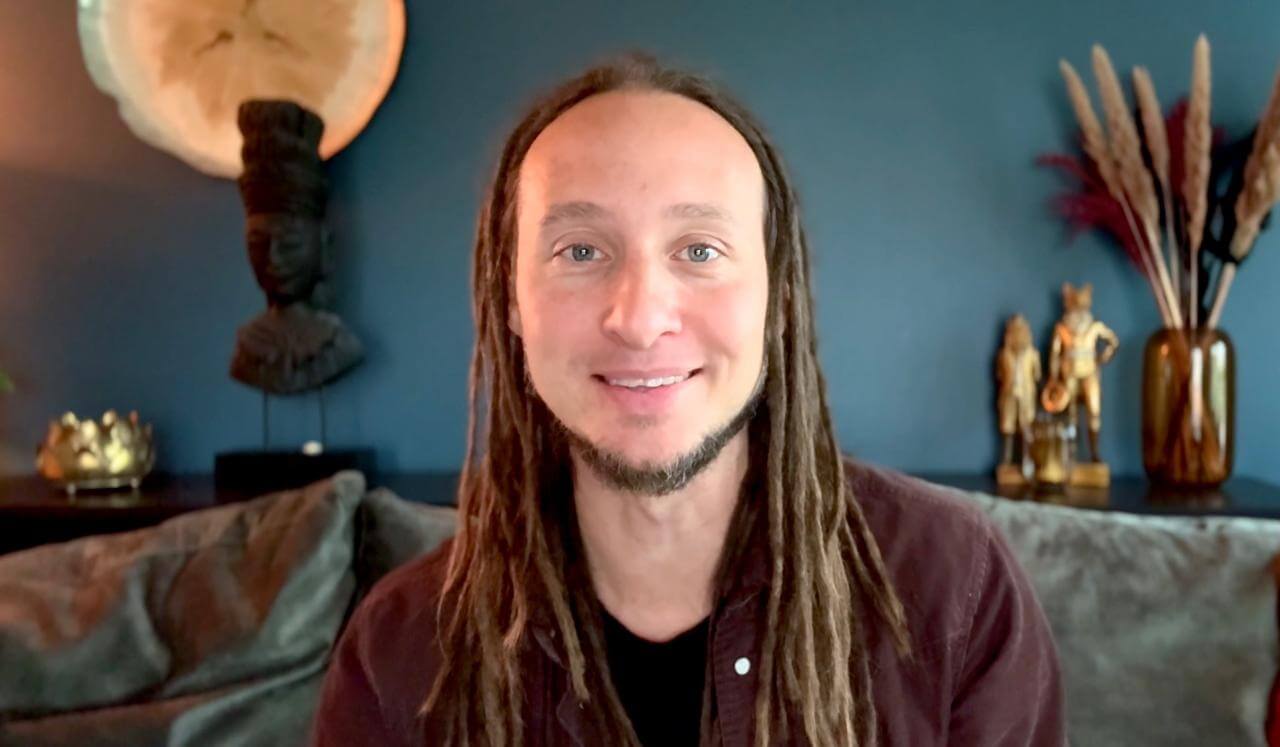
Beginner video for Affirmation Meditation

★ 4.8
·
Talks
·
2 min
Kenneth Soares
How hard is Affirmation Meditation?
Affirmation Meditation stays near the modality floor because it is a simple repetition-based self-support practice.
2
Mental Effort
2 / 4
▾Emotional Depth
1 / 4
▾Physical Intensity
1 / 4
▾Prior Knowledge
2 / 4
▾