Hi,
Thanks for pressing play on this track.
If you did,
There's a good chance anxiety is present for you right now.
So first,
Thank you for choosing this as a way to support yourself.
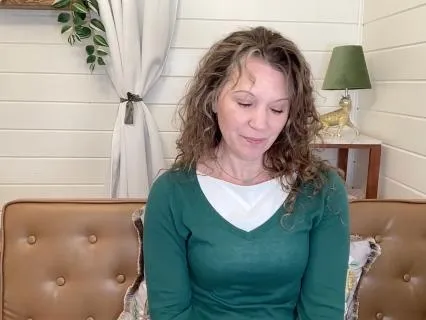
My name is Susan Guttridge.
I am a counselor in the Okanagan Valley of British Columbia,
And I am very glad to have you here.
Today,
I'll guide you through a few simple practices to help your nervous system begin to settle.
I'll share a bit of information along the way about why they work,
Because when something makes sense,
I believe it's a whole lot easier to stay with it.
And I'll share a few different approaches because what works for one person,
What helps,
Might feel quite different for somebody else.
You don't need to get it perfect.
Just follow along as best as you can and we'll move through this together.
Anxiety can feel so overwhelming at times.
Rather than focusing on all of the different ways that it can show up,
We'll simply work with what's here in this moment,
In your thoughts,
In your emotions,
And in your body.
Practices like this can be helpful in the moment.
But if anxiety has been showing up more frequently for you,
Please do consider reaching out to a counselor or somebody that you trust for additional supports.
At any point,
If this practice does not feel helpful,
Please press pause and bring your attention back to the room around you.
We'll actually try that together using the room as an anchor in just a moment.
Before we jump in,
Though,
I invite you to give the level of emotion you're feeling right now in this moment a number.
So thinking of a scale from 1 to 10,
Where 1 is neutral and calm,
And 10 is the most distressed that you've ever felt.
Check in with how your body is holding emotions.
So all those sensations that might be feeling intense right now.
What's your number?
All right.
Just noticing that without needing to try to change that number right now.
And we'll come back to it a little bit later.
All right.
Have a look around the space that you're in.
Let your gaze come to rest.
On a few things that are around you.
And if it's okay,
Just describing those things to yourself.
Perhaps their shape or color.
What do you notice around you in this moment?
Orienting to the room like this is a useful way to shift out of anxiety because it enables the brain to shift focus,
To begin to register this one present moment and that you are safe enough to pause.
So just noticing where you are,
Those things around you,
And taking a nice big breath in.
And out.
Before we go further into this practice,
I invite you to notice what anxiety has been trying to say to you.
To do this in a more containing way you might want to use a piece of paper to write down a few words no details no trying to figure anything out just acknowledging and capturing what feels most present right now Sometimes when anxiety feels heard,
It doesn't need to push quite so hard.
And if writing it down doesn't feel right,
Perhaps just simply naming it quietly to yourself.
This is what anxiety is trying to tell me,
I think.
Take a moment now to write or think of that.
And if you need to press pause to have a little bit more time,
Please go ahead and do that.
All right.
So we use the room around you and a couple of things that you can see as a way to anchor into the room.
We take a moment to write down the words of anxiety so we can kind of park it for now.
And we'll shift awareness now to our breath.
And so as you breathe in,
I invite you to quietly say to yourself,
I'm breathing in.
And with a slightly longer breath out,
Saying to yourself,
I am breathing out.
Not overthinking it,
Not trying to force the breath,
Just allowing your breath to move in.
And out.
So try that with me for a few breath cycles.
Breathing in.
I'm breathing in.
And breathing out.
I'm breathing out.
And breathing in.
I'm breathing out.
And now just saying those words to yourself as you keep breathing just like that.
Good.
Just like that.
Pairing the words,
I am breathing in on the inhale and I'm breathing out on the exhale,
Gives the mind something steady and rhythmic to focus on,
Helping to shift that inner dialogue away from thoughts that can entrench and perpetuate anxiety.
The slightly longer exhale signals to the nervous system that it's okay to start to settle.
So at any point when you catch yourself taking shallow breaths or holding your breath or getting caught up in the voice of anxiety,
Ruminating,
Bring your attention back to the simple rhythm of your breath flowing in,
Saying I'm breathing in.
And flowing out saying I'm breathing out.
And just checking in if your mind began to wander.
Or if any thoughts of anxiety try to lure you back in,
Just anchoring back to the sound of my voice and the room around you.
Reminding yourself that you have written down the words anxiety was trying to tell you and we've just parked it for now.
We're not ignoring it.
We've acknowledged it and we can let it rest.
So that you can settle your body.
Thoughts and emotions.
On that note,
I feel like it's important to share that anxiety can be something that we experience,
But it isn't who we are.
It's an emotional state moving through your system and our emotional state.
Can and do shift.
The very word emotion includes the word motion.
So in this practice,
We're noticing it and we're creating space for it to move and to shift.
And to lesson.
Alright.
So far,
We have anchored.
With the room around you.
We have steadied ourselves with our breath.
And so now we'll shift attention to our body because anxiety often gathers in the body.
Sometimes our muscles tighten.
And we brace ourselves,
Especially our abdomen.
So anxiety does gather in the body,
Even though we may not realize it in the moment.
So for this part of the practice,
We are going to gently tighten all of our muscles on purpose and then let them soften again.
And this contrast can really help the body to notice and to recognize that it had been holding tension and that now it's safe enough to release it,
Even if just by a few percentages.
So if it feels comfortable.
Tighten a few muscles in your body.
Perhaps you clench your fists.
Perhaps you raise your shoulders or tighten your abdomen or your legs or curl in your toes.
Just enough for you to notice the muscles becoming firm.
All right,
Tighten your muscles and.
.
.
Hold that tightness for a moment.
And one more breath in.
And exhaling out,
Release that tension.
Release your hands.
Your toes,
Your abdomen,
Let your shoulders drop back.
Just let all that tension release.
Notice what feels different Sometimes we need that contrast of tightening and releasing.
To further cue us to settle our muscles,
To shift tension at the physiological level.
If you feel up to it,
You might want to move your body a little bit more after having held it tight.
Movement can be a very powerful way to reassure our body that it no longer needs to stay braced.
You could stand up.
And shake your whole body off if you want.
Or from this place of sitting,
You might just roll your shoulders.
Back and forward a few times or you might want to shift your neck from side to side just in a way that feels comfortable for you.
You could also brush your hands from your shoulders down to your wrists.
Sometimes that little bit of movement can really help the nervous system release tension and complete the stress response.
Just tuning in,
Noticing what's there in your body.
If anything,
It feels slightly softer now.
So far in this practice,
We have anchored with the room around you.
We've steadied with our breath,
Saying on the inhale,
I'm breathing in.
And on the exhale,
I'm breathing out.
We've dropped into our bodies to notice and release tension.
And so now we will expand our attention back to the room around us to further anchor into the present moment using our senses.
So one more time,
I invite you to look around the space you're in,
Allowing your gaze to sweep the room and allow your eyes to come to rest on three different things that you see different than what you described earlier.
Taking a moment to just describe those things to yourself,
Either aloud or quietly in your mind.
What do you see?
And now.
.
.
I invite you to notice three sounds that you can hear.
Perhaps it's a distant sound,
Perhaps it's something a little bit closer.
What do you hear?
And now,
Shifting from your sense of sound,
Dropping further into your body,
I invite you to notice where does your body feel the most supported?
Perhaps it's your sit bones on the surface you're on or your back in the chair.
Or if you're sitting.
With your feet touching the floor,
Perhaps it's the sensation of your feet.
Grounded on the floor.
Or your hands rested comfortably in your lap.
Where do you feel those bits of comfort and support?
These small anchors help to bring your attention out of anxious thinking and back into the present moment.
So if you notice your thoughts tightening around an anxious thought,
Just noticing that,
Returning here,
Widening your attention again to the room around you,
Back to one of your senses.
When we notice anxiety ramping up,
Your nervous system may be simply trying to protect you.
Anxiety is part of the body's safety system.
Its job is to scan for possible danger and to prepare us to respond Sometimes,
Though,
That system becomes a little too sensitive and it can turn on the alarm even when we're not actually in danger.
It might be.
Reacting to a thought you had about the future.
Or a physiological shift in your body,
Or a reminder,
A memory from the past.
And when this happens,
The alarm can feel very,
Very convincing.
But just like any alarm system,
It can begin to settle again once safety has been acknowledged.
So with each deep breath.
With each moment of grounding.
Your brain can begin to see the bigger picture again.
And your nervous system begins to recognize that it can downregulate towards calm and safety and balance.
As we begin to approach the end of our time together today.
I invite you to take a moment to check in to notice anything in your body that might feel a little bit different.
A little bit more settled from when we started out together.
Does your breath feel a little easier?
Your muscles just a little softer.
Your thoughts may be a little quieter.
One way that we can measure this is by returning to that scale from 1 to 10 where 1 represents calm and neutral.
And 10 represents the most distress that you've felt.
And just checking in to see what your number is now.
Has it changed from when we started?
If your number is still a bit high,
That's okay.
But would you consider what small supportive action you could take after this?
Maybe moving your body with a short walk.
Reaching out for comfort or connection with somebody that you care about or a pet.
Or maybe taking a rest.
And even if anxiety is present,
Is it okay for you to acknowledge that it did shift even just slightly?
Because these small shifts are evidence that your nervous system is learning how to settle.
How to calm.
Every single time you pause and support your nervous system this way,
You strengthen your ability to move through anxiety with more steadiness and care.
And if you wrote something down earlier,
Perhaps on a piece of paper or on a note in your phone,
Acknowledging what anxiety was trying to tell you.
You might want to come back to that from this more settled place.
You might find that those words that you wrote feel a little different or are a little bit easier to look at.
However,
If it still feels big,
Consider leaving it until later,
Knowing that you've made a note,
You've parked it,
You've acknowledged it,
So anxiety doesn't need to keep rehearsing it,
And maybe come back to it later with somebody that you trust so that you don't have to carry it all on your own.
Thank you so much for taking this time to care for yourself,
To practice shifting emotion and regaining balance.
Please do come back to this practice as often as you need while you're building these skills or even just to feel supported.
I so appreciate having you here.
Thank you.