Thanks for tuning in for a bedtime story,
I am very pleased to have you here listening.
My name is Susan Guttridge and the story I have for you tonight is quite a special one.
It's called The Dragon Tamers,
Written by Edith Nesbitt,
And it was first published as part of her children's collection,
The Book of Dragons.
This story takes place in a quiet village,
Where a hard-working blacksmith comes across an unexpected visitor,
And the story weaves the tale of their unlikely connection,
The challenges they face,
And the quiet transformations that follow.
And just when you think you know how the story will end,
There's a twist that makes it quite unforgettable.
Alright,
Get comfortable in your bed,
Adjust your sheets or your blankets just right so that they feel like a cozy hug wrapping around you.
Relax your head onto your soft pillow,
Shift your body slightly as you need to get out to all the leftover wiggles and fidgets from your day.
Take a deep,
Slow breath in,
And at a pace that feels right for you,
Release it out,
Sinking ever so slightly deeper into your soft bed,
Letting your whole body relax.
And now,
With your breath slow and deep,
I'll start your story.
THE DRAGON-TIMERS by Edith Nisbet There once was an old,
Old castle.
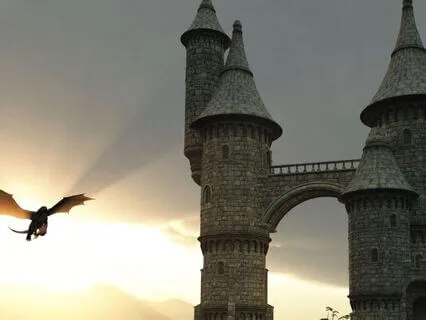
It was so old that its walls and towers and turrets and gateways and arches had crumbled to ruins.
And of all its old splendor,
There were only two little rooms left.
And it was here that John the blacksmith had set up his forge.
He was too poor to live in a proper house,
And no one asked any rent for the rooms in the ruin,
Because all the lords of the castle were gone.
So there John blew his bellows and hammered his irons and did all the work which came his way,
Which was not much,
Because most of the trade went to the mayor of the town,
Who was also a blacksmith in quite a large way of business,
And had his huge forge facing the square of the town,
And had twelve apprentices all hammering like a nest of woodpeckers,
And twelve journeymen to order the apprentices about,
And a patent forge,
And a self-acting hammer,
And electric bellows,
And all things handsome about him,
So that of course the townspeople,
Whenever they wanted a horseshoe or a shaft mended,
Went to the mayor.
And John the blacksmith struggled on as best he could,
With a few odd jobs from travelers and strangers,
Who did not know what a superior forge the mayor's was.
The two rooms were warm and weathertight,
But not very large,
So the blacksmith got into the way of keeping his old iron,
And his odds and ends,
And his firewood,
And his two penny worth of coal,
In the great dungeon down under the castle.
It was a fine dungeon indeed,
With a handsome vaulted roof,
And big iron rings,
Whose staples were built into the wall,
Very strong.
And at one end was a broken flight of wide steps,
Leading down,
No one knew where.
Even the lords of the castle in the good old times had never known where those steps led to.
No one had dared go.
The blacksmith had never dared go beyond the seventh step,
And no more have I,
So I know more than he did,
What was at the bottom of those stairs.
John the blacksmith had a wife and a little baby.
When his wife was not doing the housework,
She used to nurse the baby and cry,
Remembering the happy days when she lived with her father,
Who kept 17 cows,
And lived quite in the country,
And when John used to come courting her in the summer evenings,
As smart as smart,
With a posy in his buttonhole,
And now John's hair was getting grey,
And there was hardly ever enough to eat.
As for the baby,
It cried a good deal at odd times,
But at night,
When its mother had settled down to rest,
It would always begin to cry,
Quite as a matter of course,
So that she hardly got any rest at all.
This made her very tired.
The baby could make up for its bad nights during the day if it liked,
But the poor mother couldn't,
So whenever she had nothing to do,
She used to sit and cry,
Because she was tired out with work and worry.
One evening,
The blacksmith was busy with his forge.
He was making a goat shoe for the goat of a very rich lady,
Who wished to see how the goat liked being shoeed,
And also whether the shoe would come to 5 pence or 7 pence before she ordered the whole set.
This was the only order John had that week,
And as he worked,
His wife sat and nursed the baby,
Who for a wonder was not crying.
Presently over the noise of the bellows,
And over the clank of the iron,
There came another sound.
The blacksmith and his wife looked at each other.
I heard nothing,
Said he,
Neither did I,
Said she,
But the noise grew louder,
And the two were so anxious not to hear it,
That he hammered away at the goat shoe harder than he had ever hammered in his life,
And she began to sing to the baby,
A thing she had not had the heart to do for weeks.
But through the bellowing,
And the hammering,
And the singing,
The noise came louder and louder,
And the more they tried not to hear it,
The more they had to,
It was like the noise of some great creature purring,
Purring,
Purring,
And the reason they did not want to believe they really heard it was that it came from the great dungeon down below,
Where the old iron was,
And the firewood,
And the two penny worth of coal,
And the broken steps that went down into the dark and ended no one knew where.
It can't be anything in the dungeon,
Said the blacksmith wiping his face,
Why I shall have to go down there after more coals in a minute.
There isn't anything there of course,
How could there be,
Said his wife,
And they tried so hard to believe there could be nothing there,
That presently they very nearly did believe it.
Then the blacksmith took his shovel in one hand,
And his riveting hammer in the other,
And hung the old stable lantern on his little finger,
And went down to get the coals.
I am not taking the hammer because I think there is anything there,
Said he,
But it is handy for breaking the large lumps of coal.
I quite understand,
Said his wife,
Who had brought the coal home in her apron that very afternoon,
And knew that it was all coal dust.
So he went down the winding stairs to the dungeon,
And stood at the bottom of the steps,
Holding the lantern above his head,
Just to see that the dungeon really was empty as usual.
Half of it was empty as usual,
Except for the old iron,
And odds and ends,
And the firewood,
And the coals.
But the other side was not empty,
It was quite full,
And what it was full of was dragon.
It must have come up those nasty broken steps from goodness knows where,
Said the blacksmith to himself,
Trembling all over as he tried to creep back up the winding stairs.
But the dragon was too quick for him,
It put out a great claw and caught him by the pantleg,
And as it moved it rattled like a great bunch of keys,
Or like the sheet iron they make thunder out of in pantomimes.
No you don't,
Said the dragon in a spluttering voice.
Deary,
Deary me,
Said poor John,
Trembling more than ever in the claw of the dragon,
Here's a nice end for a respectable blacksmith.
The dragon seemed very much struck by this remark.
Do you mind saying that again?
Said he quite politely,
So John said again very distinctly,
Here is a nice end for a respectable blacksmith.
I didn't know,
Said the dragon,
Fancy now,
You are the very man I wanted.
So I understood you to say before,
Said John,
His teeth chattering.
Oh,
I don't mean what you mean,
Said the dragon,
But I should like you to do a job for me.
One of my wings has got some of the rivets out of it just above the joint,
Could you put that to rights?
I might,
Sir,
Said John politely,
For you must always be polite to a possible customer,
Even if he might be a dragon.
A master craftsman,
You are a master craftsman,
Of course,
Can see in a moment what's wrong,
The dragon went on,
Just come round here and feel my plates,
Will you?
John timidly went round when the dragon took his claw away,
And sure enough,
The dragon's off wing was hanging loose and all anyhow,
And several of the plates near the joint certainly wanted riveting.
The dragon seemed to be made almost entirely of iron armor,
A sort of tawny red rust color it was,
From damp no doubt,
And under it he seemed to be covered with something furry.
All the blacksmith welled up in John's heart,
And he felt more at ease,
You could certainly do with a rivet or two,
Sir,
He said,
In fact,
You want a great many,
Well then,
Get to work,
Said the dragon,
You mend my wing,
And then I'll go out and eat up all the town,
And if you make a really smart job of it,
I'll eat you last.
I don't like the job,
Sir,
Said John,
And that's the truth,
I know how easily accidents happen,
It's all fair and smooth,
And please rivet me,
And I'll eat you last,
And then you get to work,
And you give a gentleman a bit of a nip or a dig under his rivets,
And then it's fire and smoke,
And no apologies will meet the case.
Upon my word of honor as a dragon,
Said the other,
I know you wouldn't do it on purpose,
Sir,
Said John,
But any gentleman will give a jump and a sniff if he's been nipped,
And one of your sniffs would be enough for me,
Now if you would just let me fasten you up,
It would be so undignified,
Objected the dragon.
We always fasten a horse up,
Said John,
And he's the noble animal.
It's all very well,
Said the dragon,
But how do I know you'd untie me again when you'd riveted me,
Give me something in pledge,
What do you value most?
My hammer,
Said John,
A blacksmith is nothing without a hammer,
But you'd want that for riveting me,
You must think of something else,
And at once,
Or I'll eat you first.
At this moment,
The baby in the room above began to scream,
Its mother had been so quiet that it thought she had settled down for the night,
And that it was time to begin.
Whatever's that,
Said the dragon,
Starting so that every plate on his body rattled.
It's only the baby,
Said John.
What's that,
Asked the dragon,
Something you value?
Well,
Yes sir,
Rather,
Said the blacksmith.
Then bring it here,
Said the dragon,
And I'll take care of it,
Till you've done riveting me,
And you shall tie me up.
All right sir,
Said John,
But I ought to warn you,
Babies are poison to dragons,
So I don't deceive you,
It's all right to touch,
But don't you go putting it in your mouth,
I shouldn't like to see any harm come to a nice looking gentleman like you.
The dragon purred at this compliment,
And said,
All right,
I'll be careful,
Now go and fetch the thing,
Whatever it is.
So John ran up the steps as quickly as he could,
For he knew that if the dragon got impatient before it was fastened up,
It could heave up the roof of the dungeon with one heave of its back,
And all would come down in the ruins.
His wife was asleep in spite of the baby's cries,
And John picked up the baby and took it down and put it between the dragon's front paws.
You just purr to it sir,
He said,
And it'll be as good as gold.
And so the dragon purred,
And his purring pleased the baby so much that it left off crying.
Then John rummaged among the heap of old iron,
And found there were some heavy chains and a great collar that had been made in the days when men sang over their work and put their hearts into it,
So that the things they made were strong enough to bear the weight of a thousand years,
Let alone a dragon.
John fastened the dragon up with the collar and the chains,
And when he had padlocked them all on safely,
He set to work to find out how many rivets would be needed.
Six,
Eight,
Ten,
Twenty,
Forty,
Said he.
I haven't enough rivets in the shop.
If you excuse me sir,
I'll step round to another forge and get a few dozen.
I won't be but a minute.
And off he went,
Leaving the baby between the dragon's forepaws,
Laughing and crowing with pleasure at the very large purr of it.
John ran as hard as he could into the town,
And found the mayor and corporation.
There's a dragon in my dungeon,
He said.
I've chained him up,
Now come and help me get him out.
He took my baby away,
And he told them all about it.
But they all happened to have engagements for that evening,
So they praised John's cleverness and said they were quite content to leave the matter in his hands.
So John went home again,
And told his wife some of the tale.
You've given the baby to the dragon?
She cried.
Oh,
You unnatural parent.
Hush,
Said John,
And he told her some more.
Now,
He said,
I'm going down.
After I've been down,
You can go,
And if you keep your head,
The boy will be all right.
So down went the blacksmith,
And there was the dragon purring away with all his might to keep the baby quiet.
Hurry up,
Can't you,
He said.
I can't keep up this noise all night.
I'm very sorry,
Sir,
Said the blacksmith,
But all the shops are shut.
The job must wait till morning,
And don't you forget,
You've promised to take care of that baby.
You'll find it a little wearing,
I'm afraid.
Good night,
Sir.
The dragon had purred till he was quite out of breath,
And so he stopped,
And as soon as everything was quiet,
The baby thought everyone must have settled for the night,
And that it was time to begin to scream.
So it began.
Oh dear,
Said the dragon,
This is awful.
He patted the baby with his claw,
But it screamed more than ever,
And I'm so tired too,
Said the dragon.
I did so hope I should have a good night.
The baby went on screaming.
There'll be no peace for me after this,
Said the dragon.
It's enough to ruin one's nerves.
Hush then,
And he tried to quiet the baby as if it had been a young dragon,
But when he began to sing Hushabye Dragon,
The baby screamed more and more and more.
I can't keep it quiet,
Said the dragon,
And then suddenly he saw a woman sitting on the steps.
Here,
I say,
He said.
Do you know anything about babies?
I do,
A little,
Said the mother.
Then I wish you would take this one and let me get some sleep,
Said the dragon,
Yawning.
You can bring it back in the morning before the blacksmith comes.
So the mother picked up the baby and took it upstairs and told her husband,
And they went to bed happy,
For they had caught the dragon and saved the baby.
The next day,
John went down and explained carefully to the dragon exactly how matters stood,
And he got an iron gate with a grating to it and set it up at the foot of the steps,
And the dragon mewed furiously for days and days,
But when he found it was no good,
He was quiet.
So now John went to the mayor and said,
I've got the dragon and I've saved the town.
Noble preserver,
Cried the mayor,
We will gather a reward for you and crown you in public with a laurel wreath.
So the mayor put his name down for five pounds,
And the corporation each gave three,
And other people gave their gold coins and shillings and sixpence,
And while the reward was being collected,
The mayor ordered three poems at his own expense from the town poet to celebrate the occasion.
The poems were very much admired,
Especially by the mayor and corporation.
When the reward was finished,
There was a thousand pounds,
And a committee was formed to settle what should be done with it.
A third of it went to pay for a banquet to the mayor and corporation,
Another third was spent in buying a gold collar with a dragon on it for the mayor,
And gold medals with dragons on them for the corporation,
And what was left went in committee expenses,
So there was nothing left for the blacksmith except the laurel wreath,
And the knowledge that it really was he who had saved the town.
But,
After this,
Things did go a little better with the blacksmith.
To begin with,
The baby did not cry so much as it had before.
Then,
The rich lady who owned the goat was so touched by John's noble action that she ordered a complete set of shoes at two shillings and four pence,
And even made it up to two shillings and six pence in grateful recognition of his public-spirited conduct.
Then,
Tourists used to come in breaks from quite a long way off,
And pay two pence each to go down the steps and peep through the iron gating at the rusty dragon in the dungeon.
And it was three pence each per party if the blacksmith lit off a colored fire to see it by,
Which,
As the fire was extremely short,
Was two pence half penny clear profit every time.
And the blacksmith's wife used to provide teas at nine pence a head,
And all together things grew brighter week by week.
The baby,
Named John after his father,
And called Johnny for short,
Presently began to grow up.
He was great friends with Tina,
The daughter of the metalworker who lived nearly opposite.
She was a dear little girl,
With yellow pigtails and big blue eyes,
And she was never tired of hearing the story of how Johnny,
When he was a baby,
Had been minded by a real dragon.
The two children used to go together to peep through the iron gating at the dragon,
And sometimes they would hear him mew piteously,
And they would light a half penny worth of colored fire to look at him by.
And they grew older and wiser.
Now at last one day the mayor and corporation,
Hunting the hare in their golden crowns,
Came screaming back to the town gates with the news that a giant,
As big as a tin church,
Was coming over the marshes towards the town.
We're lost,
Said the mayor.
I'd give a thousand pounds to anyone who could keep that giant out of the town.
No one seemed to know what to do,
But Johnny and Tina were listening,
And they looked at each other,
And ran off as fast as their boots would carry them.
They ran through the forge and down the dungeon steps and knocked at the iron door.
Who's there?
Said the dragon.
It's only us,
Said the children.
And then the dragon was so dull from having been alone for ten years that he said,
Come in,
Dears.
You won't hurt us or breathe fire at us or anything,
Asked Tina,
And the dragon said,
Not for worlds.
So they went in and talked to him,
And told him what the weather was like outside,
And what there was in the papers,
And at last,
Johnny said,
There's a giant in the town.
He wants to eat you.
Does he?
Said the dragon,
Showing his teeth.
If only I were out of this.
If we let you loose,
You might manage to run away before he could catch you.
Yes,
I might,
Answered the dragon,
But then again,
I mightn't.
Why,
You'd never fight him?
Said Tina.
No,
Said the dragon.
I'm all for peace.
I am.
You let me out and you'll see.
So the children loosed the dragon from the chains and the collar,
And he broke down one end of the dungeon and went out,
Only pausing at the forge door to get the blacksmith to rivet his wing.
He met the giant at the gate of the town,
And the giant banged on the dragon with his club as if he were banging an iron foundry,
And the dragon behaved like a smelting works,
All fire and smoke.
It was a fearful sight,
And people watched it from a distance,
Falling with the shock of every bang,
But always getting up to look again.
At last the dragon won,
And the giant sneaked away across the marshes,
And the dragon,
Who was very tired,
Went home to sleep,
Announcing his intention of eating the town in the morning.
He went back into his old dungeon,
Because he was a stranger in the town,
And he did not know of any other respectable lodging.
Then Tina and Johnny went to the mayor and corporation and said,
The giant is settled,
Please give us the thousand pounds reward.
But the mayor said,
No,
No,
My boy,
It is not you who have settled the giant,
It is the dragon.
I suppose you have chained him up again?
When he comes to claim the reward,
He shall have it.
He isn't chained up yet,
Said Johnny.
Shall I send him to claim the reward?
But the mayor said he need not trouble,
And now he offered a thousand pounds to anyone who could get the dragon chained up again.
I don't trust you,
Said Johnny.
Look how you treated my father when he chained up the dragon.
But the people who were listening at the door interrupted and said that if Johnny could fasten up the dragon again,
They would turn the mayor out and let Johnny be mayor in his place,
For they had been dissatisfied with the mayor for some time and thought that they would like to have a change.
So Johnny said,
Done,
And off he went hand in hand with Tina,
And they called on all their little friends and said,
Will you help us save the town?
And the children all said,
Yes,
Of course we will.
What fun.
Well then,
Said Tina,
You must bring all your basins of bread and milk to the forge tomorrow at breakfast time.
And if I am ever mayor,
Said Johnny,
I will give a banquet,
And you shall be invited,
And we'll have nothing but sweets to eat from beginning to end.
All the children promised,
And next morning,
Tina and Johnny rolled the big washing tub down the winding stair.
What's that noise?
Asked the dragon.
It's only a big giant breathing,
Said Tina.
He's gone by now.
Then,
When all the town children brought their bread and milk,
Tina emptied it into the wash tub,
And when the tub was full,
Tina knocked at the iron door with the grating in it and said,
May we come in?
Oh,
Yes,
Said the dragon.
It's so very dull in here.
So they went in,
And with the help of nine other children,
They lifted the washing tub in,
And set it down by the dragon.
Then all the other children went away,
And Tina and Johnny sat down and cried.
What's this?
Asked the dragon.
And what's the matter?
This is bread and milk,
Said Johnny.
It's our breakfast,
All of it.
Well,
Said the dragon,
I don't see what you want with breakfast.
I'm going to eat everyone in town as soon as I've rested a little.
Dear Mr.
Dragon,
Said Tina,
I wish you wouldn't eat us.
How would you like to be eaten yourself?
Not at all,
The dragon confessed,
But nobody will eat me.
I don't know,
Said Johnny.
There's a giant.
I know.
I fought him.
Yes,
But there's another come now.
The one you fought was only this one's little boy.
This one is half as big again.
He's seven times as big,
Said Tina.
No,
Nine times,
Said Johnny.
He's bigger than the steeple.
Oh,
Dear,
Said the dragon.
I never expected this.
And the mayor has told him where you are,
Tina went on.
And he is coming to eat you as soon as he has sharpened his big knife.
The mayor told him you were a wild dragon,
But he didn't mind.
He said he only ate wild dragons with bread sauce.
Oh,
That's tiresome,
Said the dragon.
And I suppose this sloppy stuff in the tub is the bread sauce.
The children said it was.
Of course,
They added.
Bread sauce is only served with wild dragons.
Tame ones are served with applesauce and onion.
What a pity you're not a tame one.
He would never look at you then,
They said.
Goodbye,
Poor dragon.
We shall never see you again.
And now you'll know what it's like to be eaten.
And the children began to cry again.
Well,
But look here,
Said the dragon.
Couldn't you pretend I was a tame dragon?
Tell the giant I'm just a poor little timid,
Tame dragon that you keep as a pet.
He'd never believe it,
Said Johnny.
If you were our tame dragon,
You should be kept tied up,
You know.
We shouldn't like to risk losing such a dear,
Pretty pet.
Then the dragon begged them to fasten him up at once.
And they did so with the collar and the chains that were made years ago in the days when men sang over their work and made it strong enough to bear any strain.
And then the children went away and told the people what they had done.
And Johnny was made mayor and had a glorious feast,
Exactly as he said he would,
With nothing in it but sweet things.
This was all very well for Johnny and Tina.
But if you are kind children with feeling hearts,
You will perhaps feel sorry for the poor dragon,
Chained up in the dull dungeon,
With nothing to do but think over the shocking untruths that Johnny had told him.
When he thought of how he had been tricked,
The dragon began to weep,
And the large tears fell down over his rusty plates.
And presently he began to feel faint,
As people sometimes do when they've been crying,
Especially when they've not had anything to eat.
And then the dragon dried his eyes and looked about him,
And there he saw the tub of bread and milk.
So he thought,
If giants like this damn white stuff,
Perhaps I should like it too.
And he tasted a little,
And he liked it so much,
He ate it all up.
And the next time the tourists came,
And Johnny let off the colored fire,
The dragon said shyly,
Excuse my troubling you,
But could you bring me a little bit more bread and milk?
So Johnny arranged that people should go round with carts every day to collect the children's bread and milk for the dragon.
The children were fed at the town's expense on whatever they liked,
And they ate nothing but cake and buns and sweet things,
And they said the poor dragon was very welcome to their bread and milk.
Now when Johnny had been mayor for ten years or so,
He married Tina,
And on their wedding morning they went to see the dragon.
He had grown quite tame you see,
And his rusty plates had fallen off in places,
And underneath he was soft and furry to stroke,
So now they stroked him.
And he said,
I don't know how I could ever have liked eating anything but bread and milk,
I am a tame dragon now aren't I?
And when they said yes he was,
The dragon said,
I am so tame,
Won't you undo me?
And some people would have been afraid to trust him,
But Johnny and Tina were so happy on their wedding day that they could not believe any harm of anyone in the world.
So they loosed the chains,
And the dragon said,
Excuse me a moment,
There are one or two things I should like to fetch.
And he moved off to those mysterious steps,
And went down them,
Out of sight into the darkness.
And as he moved,
More and more of his rusty plates fell off.
And in a few minutes they heard him clanking up the steps,
He brought something in his mouth,
It was a bag of gold.
It's no good to me,
He said,
Perhaps you might find it come in useful.
And so they thanked him very kindly.
More where that came from,
He said,
And fetched more and more and more,
Till they told him to stop.
So now they were rich,
And so were their fathers and mothers.
Indeed,
Everyone was rich,
So there were no more poor people in the town.
And they all got rich without working,
Which is very wrong,
But the dragon had never been to school as you have,
So he knew no better.
And as the dragon came out of the dungeon,
Following Johnny and Tina into the bright golden blue of their wedding day,
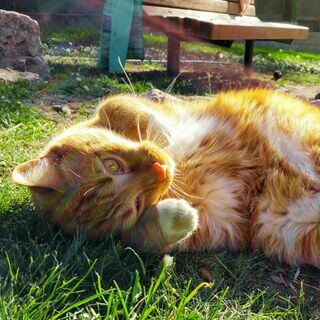
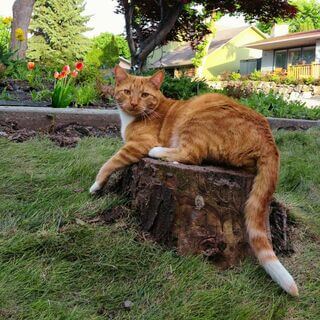
He blinked his eyes as a cat does in the sunshine,
And he shook himself,
And the last of his plates dropped off,
And his wings with them,
And he was just like a very,
Very large,
Extra-sized cat.
And from that day he grew furrier and furrier,
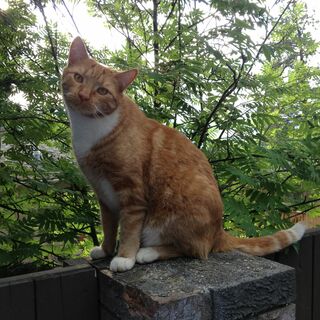
And he was the beginning of all cats.
Nothing of the dragon remained except the claws,
Which all cats have,
As you can easily ascertain.
And I hope you see now how important it is to feed your cat with bread and milk.
If you were to let it have nothing to eat but mice and birds,
It might grow larger and fiercer,
And scalier and taller,
And get wings,
And turn into the beginning of dragons,
And then there would be the whole bother over again.
And there you have the story of the Dragon Tamers by Edith Nesbitt.
I hope you come,
I hope you loved it as much as I do.
Thank you for listening,
And sweet dreams to you.
Be well.