So,
Well done on deciding to take some time to think about mindfulness and breathing as a way to help regulate your emotions.
As a way to help regulate your emotions.
So,
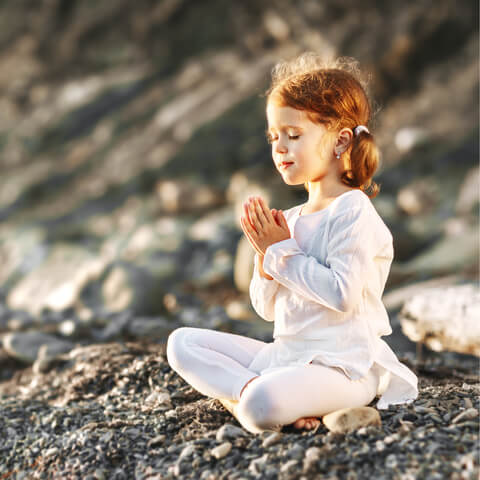
We'll begin by sitting comfortably,
Taking a few deep breaths,
Going to inhale deeply through the nose,
Fill your lungs with air,
And then slowly exhale,
Letting go of any tension or any stress that you feel.
Now as you breathe in,
Imagine that you're breathing in calmness and peace.
As you breathe out,
Imagine that you are releasing anger or frustration that you may have been feeling.
And as you focus on your breath,
Notice the physical sensations in your body.
Do you feel tense or tight?
Are you holding any stress in your shoulders or your jaw?
And as you next breathe in and breathe out,
Try to relax that tension that you feel.
And if you haven't already,
You can gently allow your eyes to close.
You need to remember that anger is a natural emotion,
And it's absolutely okay to feel angry sometimes.
But it's also important to learn how to manage anger in healthy ways.
So as you continue to breathe and to focus on your breath,
Try to visualize a peaceful scene in your mind.
This might be a favorite place in nature,
Or a calming image.
Maybe it's even another person.
Anything else that generally makes you feel peaceful and calm.
And as you visualize this peaceful place,
Allow yourself to fully relax.
To let go of any thinking or any emotion.
Imagine that that peaceful energy from your visualization is filling your body.
And it's taking the place of any anger or frustration you may have been feeling.
As you continue to breathe deeply,
Focusing on your peaceful visualization,
You can repeat a positive statement to yourself.
An affirmation like,
I am calm and I am in control of my emotions.
Or perhaps,
I choose to respond to situations with kindness and understanding.
Choose an affirmation that works for you,
And repeat it two or three times while focusing on your breathing.
So learning to recognize the signs of anger,
And using breathing techniques such as this to calm down,
Can be a very helpful tool.
Here are some other things you can try.
Can you identify the triggers?
Can you find the situations or events that generally trigger anger?
Is it a particular person,
Or a situation,
Or a specific thought or feeling?
Then you can try to recognize the signs.
Once you know what your triggers are,
You can pay attention to when those occur,
And recognize the physical and emotional signs of anger.
These might be an increased heart rate,
Speeded up breathing,
Perhaps clenching your fists or your jaw,
Generally feeling tense,
Agitated,
Or having negative thoughts.
Once you've established what your triggers for anger are,
And you begin to recognize the signs that you're getting angry,
The next thing to do would be to take a break.
You need to take a break from the situation or the person that is triggering you,
Otherwise your anger will take control of your reactions.
This might mean stepping away from the conversation,
Taking a walk,
Or finding a quiet space to sit and breathe.
If you're in a school setting,
It might be that you agree,
Assign,
Or pre-arrange a signal with a teacher,
And that they will recognize that you are trying to self-regulate and allow you to leave the room and calm down before you return.
Another thing you can very usefully do is to practice deeper breathing.
Once you've removed yourself from a triggering situation,
Start to practice that deeper breathing,
Taking in a low,
Deep breath through your nose,
Holding it for a second or two,
And then gently releasing it.
And as you release that breath,
You can let go of the tension and stress in your body.
So let's try that a couple of times.
Deep breath in through your nose,
Hold it for a couple of seconds,
And then release it.
And with it,
Release the tension,
Release the stress that you were feeling in your body.
Try that a couple more times on your own.
Another thing that you can usefully do is to use positive self-talk.
As you're breathing,
You can repeat a mantra or an affirmation as we did earlier.
I am calm and in control of my emotions.
Or I choose to respond to situations with kindness and understanding.
Or I know that I sometimes get angry,
But I'm able to move past this feeling.
Ultimately,
The goal of all of these techniques is to be able to return to the situation where you were triggered.
Once you've managed to calm down and you feel more in control of your emotions,
You can return and you can respond in a more calm and constructive way than you might have done had you still been feeling gripped by anger.
Let's spend some time just focusing on your breathing now.
The feeling of the breath coming into your body,
The feeling of the breath leaving your body.
Just for a minute or two,
Sit with that feeling of being aware of your breath.
And then whenever you're ready,
You can take one last deep breath in,
Release it and slowly open your eyes.
How do you feel now?
Remind yourself that you can choose to return to this feeling of peace and calm whenever you need to.
And don't forget,
Anger is a natural emotion and it's OK and even useful to feel angry sometimes.
But recognizing the signs of anger and using breathing techniques to regulate and to calm yourself down,
You can learn to respond to situations in a more positive and productive way.
Mindful breathing requires practice like anything else and the more often you return to this exercise and repeat it,
The more likely you are to be able to do it when you really need to.
Have a peaceful day.