Hello and welcome to the CalmCast,
A time to feel calm and think clearly.
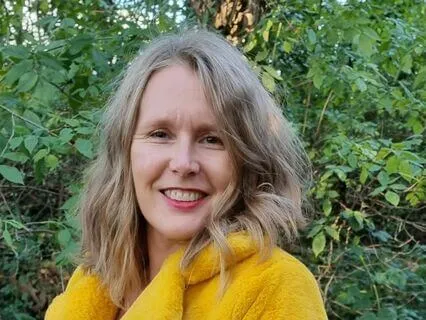
I'm Clare Downam,
The Queen of Calm,
A Transformational Life Coach.
I was a burnt out headteacher who finally made the journey to calm after years of trying and I want to prevent you from having to do the same.
The CalmCast is a series of short explorations,
Gently guiding you back to your natural state,
Which is calm and clarity.
Just listen like you would listen to music with an open mind and curiosity.
There's nothing else to do.
Now let's relax into today's episode.
Good morning.
Hello.
Welcome.
Good afternoon.
Good evening.
Depends where you are,
I suppose it's good morning where I'm when I'm recording this.
So today,
Resilience and what's really interesting,
I'm finding,
As I've already mentioned,
That the topics that have come up in the exploration of productivity are the same topics that come up when we're exploring our relationships.
Isn't that interesting that we are?
Well,
We're all we're all doing similar things in different aspects of our life.
So for some people who I work with,
They may be struggling with their relationships and and finding those difficult in some way.
And with some people I work with,
They're struggling around productivity.
But isn't it interesting that it's the same things that people are looking to experience more of or less of in their relationships as they are in productivity?
And I guess around lots of other things like,
You know,
Maybe habits,
Maybe anxiety,
Maybe stress.
You know,
I think the same things and the subject of resilience comes up so much.
It's not the first time I've spoken about resilience at all,
Because.
I know that if I picked up my phone right now and did a Google search for how do I build resilience or how do I have more resilience or,
You know,
Whatever such phrase you might think of.
You would find millions of hits,
Probably hundreds of millions,
Probably going on for a billion,
Maybe half a billion hits.
And that's because out there in the world of.
Self-development and,
You know,
Trying to bring trying to innocently bring ease to people's life.
There's an idea that resilience is a thing.
That we need to go outside of us to find that.
You have to have certain experiences or you have to go through some kind of training or.
Something has to happen out there in the world for you to be resilient.
And fundamentally,
That's not how I see it.
I think about title navigating relationship challenges with resilience,
Which it turns out is quite a tongue twister.
They're not tongue twisters when you write them down,
Are they?
When you try and say them,
They're a bit tongue twistery.
The first thing I want you to know about that is you're doing it already.
You're already navigating life with resilience all the time.
You can't really not be because you're still here.
You're still standing,
You're still doing,
You're still moving,
You're still carrying on.
If you've got to the point where you're listening to this.
Then you're still moving forward.
You might not be moving forward at the speed that you want to.
Or with the emotions you want to.
It might not feel as good as you want it to feel.
But resilience is this energy that you have access to,
That you are connected to,
That is just pulling you through life all the time.
And it's a good reminder for me today because I'm feeling a bit ropey.
I've been feeling rubbish for the last few days,
Like really tired.
My sleep is very off.
And so I need this reminder too today that I'm OK and I am still moving forward and I am still doing things and I am still,
You know,
Life is still holding me.
I think that's how I would see it.
And relationships do have things that happen in them that challenge us,
That look like difficulties.
You know,
We have disagreements with people.
We have friction.
I said fractions between us and other people.
You know,
We have this friction between us and other people sometimes.
We don't always get on with everybody.
It's an up and down journey.
If Sidney Banks said life is a contact sport,
Then he could have equally said relationships are a contact sport,
Couldn't he?
I don't know why this is an emotional one for me today,
Which is fine.
I don't have any issues with the emotion,
Apart from the fact I really do need to invest in some waterproof mascara.
Because I have it dribbling down my face now,
Which is fine if you're just listening to this.
It's not a problem,
Is it?
I can't see my dribbling mascara.
So how do you how can you see this?
Because I think it's all right me saying it.
But how can you see it?
Well,
The first thing is to see resilience for what it is.
That it doesn't have time constraints,
That it doesn't.
It isn't about how you're responding emotionally.
It isn't about any of that.
It's just while ever you're alive,
You are resilient.
You know,
We we wouldn't look at a child learning to walk who's falling down and getting up and crying and getting upset.
And they're dragging themselves up again and they're trying again.
And well,
They're getting frustrated because they're trying to tell you something and you don't understand it.
Because why don't you speak,
Baby?
There's a frustration that baby wants something and they know what they want and they can't tell you what they want.
And there's some frustration there.
But we wouldn't go,
Oh,
That baby's lacking in resilience because they're frustrated that they can't communicate.
Or they're crying because they've fallen while they're learning to walk.
We wouldn't say that,
Would we?
But why?
Why?
We say that about ourselves,
Don't we?
I don't think that we're going,
Oh,
We've completely given up.
So therefore we're not resilient.
We just don't think we're resilient because we don't think our behavior matches the idea we've got about what resilience looks like.
So when we have let's say we have a disagreement in the relationship.
First of all,
That's OK.
You're allowed to have a disagreement in your relationships.
And then we're upset about it.
Of course we are.
We're human.
It's OK.
But then when we're navigating from the feelings,
When we're understanding,
You know,
Somebody's done something.
We're upset about it.
We obviously want to get back to a settled place with that other person.
And so often from the place of upset,
We'll speak or we'll act or we'll try and make them be different or something.
But really,
That's the point at which we can bring some awareness to how we're feeling and to understand that the feeling is letting us know that our state of mind is off.
Not that there's anything wrong with us.
Not that there's anything wrong with them.
But just that in that moment,
There's an amber warning light for our state of mind.
And really,
That's the space where we can reconnect to that resilience.
We can reconnect to that innate well-being.
We can reconnect to calm and connection with the other person and our innate wisdom.
And it's from knowing what the feeling is telling us,
That the feeling is telling us about our state of mind.
And then it's an inside job,
Isn't it?
What to do next?
There's an observation of ourselves and noticing of how we are.
And then something occurs to do to take care of ourselves.
Something occurs to do to reconnect us to that resilience.
And that might be just a breath.
It might be not talking to that person for a little while.
So I had a disagreement with Bruce over the weekend.
I can't remember what it was about now because it's really not important.
But I just kind of potted.
We were doing some jobs around the house and I did a job that was a bit further away from him for a little while.
And then when I noticed that I felt calmer,
I still wanted to say something about what happened and explain why that particular phrase.
He said something to me,
I think.
Why those words particularly are words I would prefer he didn't use.
And there's the resilience,
Isn't there?
That was seeing that I was upset and then my system naturally brought me back to calm.
That's the bouncing back,
Isn't it?
And from that place of calm,
I could communicate what I wanted or I could let Bruce know what was going on and why I was so upset.
It's an awful lot simpler than we've been led to believe,
Isn't it?
This whole resilience thing.
Your ability to just bounce back from things is there and really all that you need is to see it in the moment.
To see that your state of mind is a bit wobbly and to know that it'll.
.
.
Like at the weekend,
I just potted around carrying on doing jobs.
I didn't really think about the thing that was going on.
I kind of put that to one side,
Really.
And after a while,
I just noticed I was calm and then it occurred to me to say something to Bruce.
So simple.
So much easier than all the hard work that's being taught out there about resilience.
You're just bouncing back all day,
Every day.
You're in a mood,
You're not in a mood.
You're upset about something,
You come around from it.
That system,
That resilient system is just working all the time.
There's not much to do,
Really.
In fact,
The less you can do,
The better.
When I say I'm the queen of calm,
What I'm saying is that I'm a person who doesn't care too much about that up and downing that happens because I know it's normal and natural.
So thank you so much for listening today.
I hope you found that helpful.
As usual,
There will be lives this week on Insight Time on various subjects.
There always are.
If you're in the month of August,
2023,
We'll be exploring relationships.
But if you check out my profile and you follow me,
You'll find that there's always something about the three principles being shared.
So come and join me.
Come and hop on the comments and join in with the conversation.
Because there's so much more in the lives,
You get to ask things and find out things.
Or try out some of my courses where,
Again,
There's a nice space for interaction in those too.
So thank you so much for listening.
Take care.
Lots of love.
Thank you so much for listening.
There's nothing to do now but bring some awareness to how this is working out in your life.
Listen regularly to experience longer and longer periods of calm.
This has been the Calmcast with Claire Downer,
Queen of Calm.
Take care and keep listening.