The world’s largest free audio library for everyday wellbeing
Breathwork
Kapalabhati is a fast yogic breathing practice of forceful, abdominally driven exhalations and passive inhalations, traditionally used as a cleansing technique to prepare the body and mind for meditation (Roj et al., 2025), (Dipak et al., 2022).
Last Updated
3 Jul 2026
We are still reviewing this page. Our research team checks every technique page for accuracy and evidence quality before final release. Details may change as that review completes. The evidence badge shows our current reading of the published research.
RECOMMENDED DOSE
Acute physiological studies of high-frequency yoga breathing used sessions as short as one minute, and traditional Hatha Yoga texts describe Kapalabhati as a short, regular daily practice. Beginning with brief 1–3 minute rounds once a day is a comfortable, well-supported starting point.
Traditional practice guidelines for Kapalabhati describe gradually increasing the number of daily rounds as tolerance builds. A daily 5–10 minute session reflects this progressive-rounds approach; exact minute counts are not fixed by controlled trials.
Randomised training studies of fast pranayama (which includes Kapalabhati) ran daily practice over 12 weeks, and a related yoga-breathing trial used roughly 20-minute sessions over 8 weeks. A committed 15–20 minute daily practice sustained for two to three months represents this longer-term, maintenance-level commitment; precise weekly frequency was not always reported.
Session length
Session length: 1–3 minutes
1
MIN
How long each individual practice session should last from start to finish.
Frequency
Frequency: 7 days
7
DAYS
The number of days per week to fit a session into your routine.
Session length
Session length: 5–10 minutes
5
MIN
How long each individual practice session should last from start to finish.
Frequency
Frequency: 7 days
7
DAYS
The number of days per week to fit a session into your routine.
Session length
Session length: 15–20 minutes
15
MIN
How long each individual practice session should last from start to finish.
Frequency
Frequency: 7 days
7
DAYS
The number of days per week to fit a session into your routine.
About this card. Evidence for Kapalabhati dosing is drawn partly from acute physiological studies and multi-week training trials and partly from traditional practice guidelines, so some figures are firmer than others. These recommendations are not a substitute for personalised guidance from a qualified practitioner.
Quick answers to what people most often ask. Each card links to the deeper section below.
evidence
Moderate evidence supports Kapalabhati, practised within fast-breathing routines, for improving lung function over about twelve weeks. Short sessions briefly raise alertness and may sharpen focus, dexterity, and perception, though these gains are short-lived and inconsistent. Most trials are small, run in healthy adults, and mechanisms remain unconfirmed by a systematic review.
good for
Kapalabhati suits people who want an energising, wake-up practice rather than a calming one: those seeking a short-term lift in alertness and focus, or stronger lung function over about twelve weeks. Studied mostly in healthy young adults, it is not a substitute for medical care and findings may not extend to older adults.
Read moresafety
Practised gently, Kapalabhati is well tolerated by most healthy adults. Take extra care and consult a clinician if you have fragile or previously collapsed lungs, uncontrolled high blood pressure, heart disease, glaucoma, or are pregnant. One case report links the practice to a spontaneous lung air leak. Stop if you feel chest pain or breathlessness.
Read morehow it works
Kapalabhati works mainly by shifting the body toward its sympathetic branch, the nervous system's energy-mobilising side, felt as a faster heartbeat and rising alertness. Rapid, forceful exhalations move air fast enough to briefly lower carbon dioxide in the blood, producing a light, tingly, wide-awake quality. Focusing on the strong pumping rhythm also pulls attention from circling thoughts.
Read moreKapalabhati is a fast yogic breathing practice of forceful exhalations and passive inhalations, used traditionally as a cleansing step before meditation.
Kapalabhati is practised seated and upright, using sharp abdominal contractions to drive quick, forceful exhalations while each inhalation is left passive and automatic, typically at about 60 to 120 exhalations per minute in timed rounds with rest between them. It is staged as a preparatory shatkarma before pranayama and meditation, and is also taught in Kundalini yoga as an energising technique.
Kapalabhati puts all the active work into a forceful exhalation, which sets it apart from Bhastrika, the bellows breath in which both the inhalation and exhalation are forced. It is a fast, arousing pranayama rather than a slow, calming one, so it is not a wind-down or relaxation practice. The shatkarma cleansing framing describes its traditional purpose, not a proven clinical detox effect.
Not to be confused with
Breath of Fire (Kundalini yoga)
Breath of Fire is often used as another name for Kapalabhati and the practices overlap closely, but the Kundalini version is typically a continuous, evenly paced rapid breath used to energise through a whole sequence, rather than the timed cleansing rounds of classical shatkarma Kapalabhati.
High-ventilation breathwork (e.g. Holotropic, conscious connected breathing)
These practices sustain fast, deep breathing for long stretches to deliberately provoke intense altered states, whereas Kapalabhati uses short timed rounds of sharp exhalations as a preparatory yogic technique. The intensity, duration, and intent are different.
Kapalabhati appears to work mainly by shifting the body toward its sympathetic branch, the part of the nervous system that mobilises energy and raises alertness, which practitioners feel as a faster heartbeat and a rising sense of readiness (Raghuraj et al., 1998). The rapid, forceful exhalations also move air quickly enough to briefly lower carbon dioxide in the blood, a change thought to contribute to the light, tingly, wide-awake quality of the practice. Holding attention on the strong pumping rhythm gives a busy mind one clear thing to track, which may pull focus away from circling thoughts. A 2025 systematic review proposes these pathways together rather than measuring them directly, so they are best read as a plausible working model rather than a settled account (Roj et al., 2025).
Within a few rounds, many people feel their heartbeat quicken and a bright, wide-awake energy rise. Kapalabhati's fast, forceful exhalations shift the body toward the sympathetic branch, the part of the nervous system that mobilises energy and raises alertness, which is part of why the practice wakes you up rather than winds you down (Roj et al., 2025), (Raghuraj et al., 1998).
Kapalabhati's fast, forceful exhalations tend to leave you feeling more awake and clear-headed, with a quicker heartbeat and a rising sense of readiness. That lift reflects arousal upregulation, a shift toward the sympathetic branch of the nervous system that mobilizes energy, though researchers are still mapping exactly how the breathing produces it (Roj et al., 2025).
The light, alert, sometimes tingly feeling many people notice during Kapalabhati may come partly from how its fast, forceful exhalations move air quickly and briefly lower carbon dioxide in the blood (Roj et al., 2025). Researchers propose this gas-balance shift rather than confirming it, so it is best read as one likely piece of how the practice works, not a settled fact.
When the breath pumps in a fast, steady rhythm, attention has one clear thing to track, and the mind often feels quieter and more single-pointed once that rhythm takes over. Researchers suggest this pulls focus away from circling thoughts and back toward the felt sensation of breathing, though it is a proposed explanation rather than a proven one (Roj et al., 2025).
As a round of Kapalabhati ends, the body tends to swing back toward rest and recovery: the breath slows on its own and a clearer, calmer alertness settles in. This rebound is parasympathetic activation, the branch of the nervous system that slows heart rate once effort stops, and researchers propose it works through brainstem and neurochemical pathways, though this is still a hypothesis rather than a confirmed finding (Roj et al., 2025), (Lalitha et al., 2020).
During the rounds, Kapalabhati shifts heart-rate variability toward a more activated pattern, with a drop in high-frequency power, the vagal signal of calm, and a rise in the LF/HF ratio, the body's signature of gearing up rather than winding down (Raghuraj et al., 1998), (Lalitha et al., 2020). Brain recordings show increased alpha and gamma activity, fast rhythms tied to relaxed alertness and focused processing, which many people feel as clear-headed, switched-on energy (Budhi et al., 2024). Fast, forceful exhalation clears carbon dioxide faster than the body makes it, so levels are expected to drop, often felt as tingling or mild light-headedness (Roj et al., 2025). In the minutes after a session, the same heart-rate-variability study found the pattern rebounding toward the calmer, rest-and-recovery parasympathetic side (Lalitha et al., 2020).
You may notice a settled, clear-headed alertness once the rapid breathing stops, calm but awake rather than sleepy. That matches a measured rise in alpha wave activity, the brain's rhythm of relaxed wakefulness, in the frontal and temporal regions during Kapalabhati compared with quiet breath awareness (Budhi et al., 2024), (Malhotra et al., 2022).
Many people feel a bright, switched-on clarity as the fast breathing ends, as if the mind is waking up. That tracks a rise in gamma wave activity, a fast brain rhythm tied to alert focus and higher-order thinking, which has been measured during and just after Kapalabhati (Budhi et al., 2024), (Malhotra et al., 2022).
In the minutes after fast breathing, many people feel sharper and more wide-awake. That fits what brain recordings show: a rise in gamma-band activity, the fast electrical rhythms tied to alertness and focused processing, during and just after Kapalabhati (Budhi et al., 2024). The change appears short-lived and has so far been measured in only a small group.
That quick lift of alertness and warmth some people notice after Kapalabhati points toward catecholamines, the body's fast-acting arousal chemicals like adrenaline. Studies haven't measured these directly, but the practice consistently shifts heart-rate variability toward a more sympathetic, activated pattern (Raghuraj et al., 1998), (Lalitha et al., 2020), so a brief rise is expected from that arousal, often felt as being more awake and energised right afterward.
That light, tingly, almost buzzy feeling some people notice during rapid breathing tracks a drop in arterial carbon dioxide, the gas that normally builds up between slower breaths. Kapalabhati's fast, forceful exhalations clear carbon dioxide faster than the body makes it, so levels are expected to fall during practice, a state called hypocapnia, based on how the breathing pattern works (Roj et al., 2025).

Moderate evidence supports Kapalabhati, practised within fast-pranayama routines, for better lung function over about twelve weeks (Dinesh et al., 2015), (Roj et al., 2025). Limited–Emerging evidence points to short-term gains in focus, fine-motor dexterity, and perceptual sharpness right after a session (Shirley et al., 2012), (Shirley et al., 2011), and to lower perceived stress after several weeks of practice, though it was studied alongside other fast techniques (Kumar et al., 2013). What is not yet supported: lasting cognitive gains, gains in physical power or strength, and any claim that it treats a diagnosed condition; some attention tasks even showed more errors afterward (Balaram, 2013), (Wooten et al., 2020).
If your breath feels shallow or effortful, Kapalabhati works the abdominal and breathing muscles that power a strong, forceful exhale. Over about twelve weeks, fast-breathing routines that include it have improved lung-function measures, like how forcefully and fully you can breathe out (Dinesh et al., 2015), (Roj et al., 2025), which many people notice as breath feeling fuller and less effortful.
Stress can feel like a mind that keeps circling and a body that can't put its restless energy down. Kapalabhati gives that busy attention a fast, physical breathing rhythm to hold onto, and several weeks of fast pranayama that included it were linked to lower perceived stress in young adults (Kumar et al., 2013), though it was practised alongside other rapid techniques rather than on its own.
Right after Kapalabhati, many people feel a bright, switched-on mental clarity, wide awake and sharp. In one small study of healthy young adults, that tracked with a rise in gamma brain waves, the fast rhythm linked to alert, focused processing, though the evidence is early and not yet a proven cognitive benefit (Budhi et al., 2024).
Right after a short round of Kapalabhati, attention can feel crisper, with fine hand movements and visual judgments a little quicker and more accurate. In studies, a brief practice sharpened finger dexterity and perceptual performance more than quiet breath awareness (Shirley et al., 2012), (Shirley et al., 2011), though the lift is short-lived and does not show up on every task (Budhi & Deepeshwar, 2024).
Kapalabhati consistently behaves as an energising practice: studies show it briefly tips the nervous system toward alertness during the rounds, then lets the body settle back toward calm afterward (Raghuraj et al., 1998), (Lalitha et al., 2020). A 12-week randomized trial found regular fast breathing can improve lung-function measures (Dinesh et al., 2015), and short sessions have sharpened some focus and dexterity tasks (Shirley et al., 2012). The main areas studied are autonomic arousal, brain activity, breathing capacity, and cognition. Most trials are small and short, run in healthy adults, and a systematic review still treats the underlying mechanisms as unconfirmed, so the benefits are described cautiously (Roj et al., 2025).
0
Meta-analyses
3
RCTs
1
Systematic reviews
0
Observational
13
Pilot
Studied populations
Yogic Bellows, Neural Sparks: Unravelling the Neurophysiological Mechanisms of <i>Kapalbhati</i> —A Systematic Review
2025
Finding: This review gathered four randomised trials of Kapalabhati, a fast yogic breathing practice of forceful exhalations and passive inhalations, and found that 12 weeks of fast-pranayama training that included it improved several measures of lung function in young, healthy volunteers, suggesting regular practice may build stronger, more efficient breathing. The authors also sketch a possible explanation, that the rapid breathing may act on brainstem circuits and stress-related brain chemistry tied to mood and focus, but they are clear this is still a hypothesis rather than an established fact. Keep in mind the evidence is thin and mixed: only four trials, mostly small and focused on young or yoga-experienced people, so Kapalabhati is best approached as a promising practice rather than a proven remedy.
See full citation in referencesStudy of immediate neurological and autonomic changes during kapalbhati pranayama in yoga practitioners
2022
Finding: In this study of healthy young adults, a session of Kapalabhati shifted the nervous system toward an alert, activated state rather than a relaxed one, with heart-rate patterns showing more sympathetic ("fight or flight") drive and less of the calming vagal activity during and right after practice. Brain-activity recordings also showed increased alpha and gamma waves, the kind of activation linked to alertness and focused processing, compared with simply watching the breath. Practically, this fits Kapalabhati's reputation as an energising technique that wakes you up rather than winds you down. Keep in mind the findings come from a small, short-term study in young, healthy participants, and the wider research on this practice is still limited and mixed, so treat these results as early signals rather than proof.
Kapalabhati comes from the Hatha Yoga tradition, where it is one of the shatkarmas, or cleansing practices, and is described in classical texts such as the Hatha Yoga Pradipika and Gheranda Samhita (Dipak et al., 2022). Its name means "skull-shining breath," and it was traditionally used to purify and prepare the body before pranayama and meditation, and is also taught in Kundalini yoga as an energising technique. These roots help explain the practice's form, its forceful, rhythmic, preparatory shaping, rather than proving any clinical effect.
Kapalabhati is well tolerated by most healthy adults when practised gently, and the forceful, fast pace should stay comfortable rather than pushed to a strain. One notable safety signal exists: a single medical case report described a spontaneous pneumothorax, a small air leak from the lung, in an otherwise healthy woman after the practice (Johnson et al., 2004). This is an evidence-backed risk, but it rests on one case, so it shows harm is possible without telling us how often it happens or exactly who is most vulnerable. Ease off and stop if you feel chest pain, sudden breathlessness, dizziness, or any sharp discomfort rather than pressing through.
Take extra care, and check with a clinician before practising, if you have fragile or previously collapsed lungs, uncontrolled high blood pressure, active heart disease, glaucoma, or are pregnant. Most of these cautions are practice-informed rather than drawn from trials in these groups: they reflect sensible prudence around a forceful, high-pressure breathing pattern, not documented harm. The lung-related caution is the one carrying a direct evidence signal, a single reported case of a spontaneous air leak after the practice (Johnson et al., 2004).
The forceful, high-pressure exhalations of Kapalabhati can strain the lungs. A single medical case report described a spontaneous pneumothorax, a small air leak from the lung, in an otherwise healthy woman after the practice. If you have fragile lungs, a history of collapsed lung, or any known lung condition, check with a clinician first, keep the pace gentle, never bear down hard, and stop immediately for chest pain or sudden breathlessness.
Kapalabhati briefly tips the body toward its alert, energy-mobilising sympathetic branch, raising heart rate and readiness during the rounds. Because trials skew toward young, healthy volunteers rather than people with heart or blood-pressure conditions, this caution is sensible prudence rather than documented harm. If you have uncontrolled high blood pressure or active heart disease, get individual clearance before practising and stop for chest pain, breathlessness, or light-headedness.
| Technique | Best for | Use with care | Evidence strength | Distinction |
|---|---|---|---|---|
| Bhastrika (Bellows Breath) | A vigorous, whole-breath energiser when you want strong effort on both the in-breath and the out-breath. | Like Kapalabhati, its forceful pace suits gentle, graded practice; ease off if you feel breathless or lightheaded. | moderate EVIDENCE | Bhastrika is the other fast pranayama Kapalabhati is most often paired with, but it drives both inhalation and exhalation forcefully, whereas Kapalabhati keeps the inhalation passive and puts all the effort into sharp abdominal exhalations. Both feel energising and activating rather than calming, and both are traditionally staged before meditation. |
| Breath Awareness | Settling attention, easing into stillness, or preparing for rest when you want calm rather than activation. | moderate EVIDENCE | Breath awareness simply watches the natural breath without changing it, so it is quiet and settling where Kapalabhati is fast, forceful, and stimulating. It is the calm comparator used in much of the Kapalabhati research, and it suits winding down rather than waking up. |
Kapalabhati means "skull-shining breath." It is a fast yogic cleansing technique, or shatkarma, of forceful, belly-driven exhalations with passive inhalations, traditionally used to prepare the body and mind for meditation (Roj et al., 2025), (Dipak et al., 2022).
+
Kapalabhati translates as "skull-shining breath," a name that reflects its traditional role rather than any proven clinical effect. In practice it is a fast pranayama of sharp, abdominally driven exhalations paired with passive inhalations, classed as a shatkarma, or cleansing technique, in the Hatha Yoga tradition (Roj et al., 2025). Classical texts such as the Hatha Yoga Pradipika and Gheranda Samhita describe it as a way to purify and ready the practitioner before pranayama and meditation (Dipak et al., 2022).
Energising. Kapalabhati is fundamentally a wake-up practice: during the rounds it shifts the nervous system toward its alert, energy-mobilising sympathetic branch, felt as a faster heartbeat and heightened alertness (Raghuraj et al., 1998). A calmer, rest-and-recovery rebound may follow in the minutes after a session, but the practice itself is not a calming one (Lalitha et al., 2020).
+
Energising. Unlike slow, settling breathwork, Kapalabhati tips the body toward its sympathetic branch, the alert, energy-mobilising part of the nervous system, which practitioners feel as a quicker heartbeat and rising wakefulness during the rounds (Raghuraj et al., 1998). In the minutes afterward, heart-rate-variability work shows the pattern rebounding toward the calmer parasympathetic side, so a settled feeling can arrive once you stop (Lalitha et al., 2020). Treat it as a wake-up technique rather than a wind-down alternative to slow pranayama or breath awareness.
The yogic practice of deliberately regulating the breath. Kapalabhati is one fast, forceful form of pranayama; other forms are slow and calming.
A set of traditional yogic cleansing practices meant to purify the body and steady the mind before meditation. Kapalabhati is classed as a shatkarma, framed as clearing impurities and readying the practitioner.
A shift toward the body's alert, energy-mobilising branch of the nervous system. It tends to feel like a faster heartbeat, sharper wakefulness, and a rising sense of readiness.
Increased sympathetic autonomic tone, reflected in higher LF power and LF/HF ratio with reduced HF power on heart-rate-variability analysis during practice.
The small beat-to-beat changes in the time between heartbeats, used as a window onto how the nervous system is balancing alertness and rest. Kapalabhati tips it toward alertness during the rounds and toward calm afterward.
Time- and frequency-domain measure of cardiac autonomic control; LF and LF/HF track sympathetic-leaning activity, HF and RMSSD track parasympathetic (vagal) activity.
A temporary drop in blood carbon dioxide caused by breathing out air faster than the body produces it. It is often felt as tingling in the hands or face, mild light-headedness, and a buzzy, alert quality.
Reduced arterial carbon dioxide from raised minute ventilation; inferred from Kapalabhati's ventilation pattern rather than directly measured in the cited studies.
Rhythms of electrical brain activity: alpha tracks a relaxed but wakeful state, and gamma tracks fast, alert, focused processing. Both have been measured to rise around Kapalabhati, fitting its clear-headed, switched-on after-feeling.
EEG spectral bands (alpha roughly 8-13 Hz; gamma above ~30 Hz); frontal/temporal alpha and frontal/temporal/occipital gamma power increased after Kapalabhati versus breath awareness.
Arjun Ram Roj, Harish Sharma, Megha Pundir, R. Rai, Sanjib Patra (2025). Yogic Bellows, Neural Sparks: Unravelling the Neurophysiological Mechanisms of <i>Kapalbhati</i> —A Systematic Review. https://doi.org/10.1177/09727531251340154
Cited in: Benefits, Faq, How it works, Research, Use with care, What happens in the body, What it is
Varun Malhotra, Danish Javed, Santosh Wakode, Rajay Bharshankar, Neha Soni, P. Bkynberg Porter (2022). Study of immediate neurological and autonomic changes during kapalbhati pranayama in yoga practitioners. https://doi.org/10.4103/jfmpc.jfmpc_1662_21
Outcomes measured
| Outcome | Effect size | 95% CI | N | Comparator | Source |
|---|---|---|---|---|---|
| RMSSD and HF n.u. changes | reported significant; p<0.04 (RMSSD), p<0.05 (HF n.u.) | — | 50 | — | Lalitha et al., 2020 |
| FEV1/FVC, PEFR, FEF25-75 improvement in fast pranayama group | reported significant; p<0.05 | — | 91 | slow pranayama and control groups | Dinesh et al., 2015 |
| finger dexterity and discrimination improvement | reported significant; p<0.001 | — | 140 | breath awareness | Shirley et al., 2012 |
| quality of life and pain improvement, slow vs fast pranayama | reported significant; p<0.0001 | — | 90 | fast pranayama (Kapalbhati) | Ganesh et al., 2015 |
| increased errors on DLST after Kapalabhati | reported significant; p<0.018 (KB1), p<0.041 (KB5) | — | 36 | — | Balaram, 2013 |
The research is small and heterogeneous: most studies enrol young, healthy adults or trained practitioners in single sessions, effects on cognition are mixed, and fast-pranayama trials often bundle Kapalabhati with other techniques so its specific contribution is hard to isolate. Some reported statistics are significance-only rather than full effect-size estimates, and long-term follow-up is largely absent.
Effect of kapalabhati on performance of six-letter cancellation and digit letter substitution task in adults.
n = 36
Finding: In a small study of 36 adults, a single round of Kapalabhati, tested at both one minute and five minutes, did not improve scores on two timed attention-and-accuracy tasks, and on one of them the number of mistakes actually rose sharply after both durations. So while this rapid breathing practice is often described as energising, it does not reliably sharpen every kind of focus, and immediately afterward it may leave you more error-prone on detailed mental work. Because this was a small, short-term test in people already training in breathwork, the results are best read as a caution against overselling its cognitive benefits rather than a final verdict.
reported significant; p<0.018 (KB1), p<0.041 (KB5)
Comparative Analysis of the Effects of Exercise and Kapalbhati Pranayama on Heart Rate Variability and Electroencephalogram Activity: Unveiling Physiological and Cognitive Insights.
2024
Finding: This study measured what happens to the heart and brain during Kapalabhati and found that the practice shifts the nervous system toward an alert, activated state, with heart-rate patterns showing more of the "revved-up" signal and less of the calming, restful one while people practised. In plain terms, Kapalabhati tends to be energising rather than relaxing in the moment, so it may suit you better as a wake-up or focusing practice than as a wind-down before sleep. Because the research looked at healthy adult practitioners over short practice sessions, these results describe the immediate effect of the technique rather than any longer-term change.
See full citation in referencesEffect of fast and slow pranayama on perceived stress and cardiovascular parameters in young health-care students.
n = 90
Finding: In a 12-week trial with 90 healthcare students, those who practised fast breathing exercises that included Kapalabhati reported meaningfully lower stress levels, on par with a group doing slow breathing. For someone weighing up this practice, that points to Kapalabhati as a workable option for taking the edge off day-to-day stress over several weeks. Worth knowing, though: the heart-related benefits, like a lower resting heart rate and blood pressure, showed up only in the slow-breathing group, not with the fast techniques, and because Kapalabhati was taught alongside other fast exercises, its effect on its own can't be pinned down here.
reported narratively
Immediate effect of <i>Kapalbhathi pranayama</i> on short term heart rate variability (HRV) in healthy volunteers
n = 50
Finding: In a controlled study of 50 healthy volunteers, just five minutes of Kapalabhati briefly pulled the nervous system into a more activated, alert state right after practice, with the calming vagal "rest" signals measurably dropping. Twenty minutes later, though, the balance had swung the other way, and the body settled into a calmer, more restful state than before. For a practitioner, this suggests Kapalabhati works as an energising practice in the moment, followed by a settling rebound once you rest afterward. Keep in mind this was a small, single-session study in healthy adults, so it captures the immediate response rather than long-term effects.
reported significant; p<0.04 (RMSSD), p<0.05 (HF n.u.)
Comparative effect of 12 weeks of slow and fast pranayama training on pulmonary function in young, healthy volunteers: A randomized controlled trial.
n = 91
Finding: In this 12-week controlled trial with young, healthy adults, those who practised fast pranayama, a set of vigorous breathing exercises that included Kapalabhati, showed measurable gains in how well their lungs moved air, including stronger forced-exhale and peak-flow readings, while people in the slower-breathing and no-practice groups saw no such change. For someone taking up this style of breathwork, that points to gradually more capable, efficient breathing over a few months of regular practice. Keep in mind the effect was seen only in healthy young volunteers, and Kapalabhati was taught alongside other fast techniques rather than on its own, so it isn't clear how much came from Kapalabhati alone, and this isn't a treatment for any lung condition.
reported significant; p<0.05
A Comparison of Practice Guidelines for Yoga Breathing from the Traditional Texts and PubMed-Indexed Research.
2022
Finding: This review compared how Kapalabhati (the "skull-shining breath" or "breath of fire") is described in classical Hatha Yoga texts like the Hatha Yoga Pradipika and Gheranda Samhita against how it appears in modern published research, and found that the practice is consistently defined as rapid, forceful exhalations driven by the belly with relaxed, passive inhalations, traditionally used as a cleansing technique. It also found that the recommended breathing speed differs between the old texts and contemporary studies, so what counts as "correct" pace varies depending on the source you follow. For someone learning the technique, this is useful grounding on what Kapalabhati actually is and where it comes from, but because the study focuses on comparing instructions rather than measuring health effects, it does not tell you what the practice will do for your body or mind.
See full citation in referencesFinger dexterity and visual discrimination following two yoga breathing practices.
n = 140
Finding: In a study of 140 adults enrolled in a stress-management program, a single round of Kapalabhati sharpened fine motor control and visual discrimination right after practice: finger dexterity improved by about 19 percent and errors dropped by roughly 41 percent, compared with smaller gains after quiet breath awareness. For someone at their desk or workbench, this suggests a few minutes of rapid breathing may leave your hands steadier and your eyes quicker to spot fine differences in the moments that follow. These were immediate, short-lived effects measured just after practice, so the study says nothing about lasting changes in focus or memory over weeks or months.
reported significant; p<0.001
The Influence of Kapalabhati on Working Memory and Phasic Heart Rate Variability.
2024
Finding: In this small study of 20 healthy young adults (average age about 24), a short bout of Kapalabhati improved working-memory accuracy while researchers simultaneously tracked shifts in heart-rate variability, a marker of how the nervous system responds moment to moment. Right after the fast-breathing practice the body showed an activating response, followed by a swing back toward a calmer, more restful state once participants had rested. For someone considering the practice, this hints that a few minutes of Kapalabhati may sharpen focus and mental accuracy in the moments afterward. Because the group was small and only immediate effects were measured, these results speak to what happens right after a session rather than any lasting change.
See full citation in referencesInfluence of High-frequency Yoga Breathing (Kapalabhati) on States Changes in Gamma Oscillation
n = 36
Finding: In this small trial, 36 healthy young adults (ages 18 to 25) were split evenly between practising Kapalabhati and a simple breath-awareness exercise, and brain-activity recordings showed that Kapalabhati produced greater alpha and gamma wave activity across the front, sides, and back of the brain, patterns linked with alertness and higher-order mental processing. In practical terms, this suggests a few minutes of the practice may leave you feeling more switched-on and mentally engaged right afterward. Because the study measured only immediate changes in a small group of young, healthy people, it tells us nothing about lasting effects on the brain or guaranteed improvements in thinking or memory.
reported narratively
Effects of high-frequency yoga breathing called kapalabhati compared with breath awareness on the degree of optical illusion perceived.
2011
Finding: In this trial, adults judged the classic Müller-Lyer optical illusion, the one where two lines of equal length look different because of the arrowheads on their ends, before and right after a short session of Kapalabhati. Immediately afterward they were less fooled by the illusion and sharper at telling shapes and sizes apart, and the shift was larger than after ordinary breath awareness. That points to a quick, measurable boost in visual and perceptual accuracy you might notice right after practising. Keep in mind these were immediate, in-the-moment effects in a small study, so it says nothing about whether such gains last or build up over time.
See full citation in referencesEffect of two selected yogic breathing techniques of heart rate variability.
n = 12
Finding: In this small study of 12 healthy men, a session of Kapalabhati shifted the balance of the nervous system toward its "activating" side, with heart-rate patterns showing a rise in alert, energising signals and a drop in the calming ones, while a slower breathing practice done for comparison produced no such change. For a practitioner, this points to Kapalabhati as an energising technique that briefly moves the body into a more alert, activated state rather than a relaxed one. Because the group was small and made up only of adult male volunteers, the finding is best read as an early snapshot of the immediate effect rather than a settled rule for everyone.
reported narratively
COMPARATIVE STUDY ON EFFECT OF SLOW AND FAST PHASED PRANAYAMA ON QUALITY OF LIFE AND PAIN IN PHYSIOTHERAPY GIRLS WITH PRIMARY DYSMENORRHOEA: RANDOMIZED CLINICAL TRIAL
n = 90
Finding: In this trial, 90 young women with painful periods were split into two breathing groups, and the ones practising slow, gentle breathing saw clearly greater improvement in menstrual pain and quality of life than the group doing fast Kapalabhati. In other words, for period-pain relief the slower techniques came out ahead of rapid Kapalabhati breathing, so if calming discomfort is your goal, a slower practice may serve you better here. Keep in mind this was a single study in a specific group, unmarried physiotherapy students aged 18 to 25 with primary period pain, so the results speak most directly to that situation rather than to Kapalabhati's effects in general.
reported significant; p<0.0001
Effect of Kapalabhati on blood urea, creatinine and tyrosine.
n = 12
Finding: In this early study, twelve healthy men had their blood chemistry measured after just one minute of Kapalabhati at a brisk 120 breaths per minute, and it showed a drop in blood urea alongside rises in creatinine and tyrosine. The researchers read these short-term shifts as a sign that the fast breathing changes how the body burns and processes certain compounds, though what that means for everyday practice is far from settled. This was a very small, uncontrolled test in one narrow group, so it points to Kapalabhati producing rapid biochemical changes rather than proving any lasting benefit, and it does not show that the practice cleanses or detoxifies the blood.
reported narratively
Yoga Breathing Techniques Have No Impact on Isokinetic and Isoinertial Power.
n = 32
Finding: In a controlled trial with 32 adults (15 men and 17 women), yoga breathing techniques including Kapalabhati produced no measurable improvement in lower-body power, whether used before or during the effort, compared with normal breathing. In practical terms, if your goal is a stronger jump or more explosive strength, this fast breathing practice is unlikely to give you an edge. It's worth valuing Kapalabhati for what it does offer rather than expecting it to boost athletic power, and since this was a single small study, it speaks only to power output and not to the technique's other potential benefits.
reported narratively
Kapalabhati pranayama: breath of fire or cause of pneumothorax? A case report.
n = 1
Finding: This case report describes a 29-year-old healthy woman who developed a spontaneous pneumothorax, a partially collapsed lung, after practising Kapalabhati pranayama ("breath of fire"), the forceful rapid breathing technique. It is a single case rather than a study of many people, so it can't tell us how often this happens, but it's a real reminder that pushing the breath to physiological extremes carries risk even for someone in good health. The practical takeaway: keep Kapalabhati gentle, don't force the breath, and stop right away if you notice chest pain or unusual breathlessness.
reported narratively
The forceful abdominal pumping of Kapalabhati raises internal pressure, which is a practical concern where eye pressure matters. This caution is practice-informed rather than drawn from trials in people with glaucoma. If you have glaucoma or raised eye pressure, ask your clinician before practising and favour a gentle, unforced pace.
The sharp, forceful abdominal contractions that drive Kapalabhati make it a practice to approach cautiously during pregnancy. This is practice-informed prudence around a high-intensity breathing pattern rather than documented harm in pregnancy. If you are pregnant, check with your clinician or a qualified teacher before practising and consider gentler breathing alternatives.
Kapalabhati is best approached gently, sitting tall in a settled position where the forceful pace feels comfortable rather than pushed to a strain. Beginners are well served by short rounds at a modest pace, letting the exhalation do the active work while the in-breath stays passive, and building intensity slowly over days and weeks rather than in a single session. Keep an eye on how you feel throughout and ease off at any sign of discomfort, giving yourself a quiet moment to let the breath settle afterward.
Sit upright with the spine tall and the belly free to move, and take a few easy breaths before you begin so the body feels settled rather than braced.
Begin with a short round at a modest pace and only a few dozen exhalations, letting intensity rise over days and weeks rather than forcing speed or force in a single session.
Make the exhalation the active, pumping movement and let the in-breath happen on its own. Never strain or bear down hard, the pattern linked to the rare risk of a lung air leak.
Pause immediately if you notice chest pain, sudden breathlessness, light-headedness, overwhelming tingling, or sharp discomfort, and return to normal breathing until the sensation clears.
After each round, sit quietly and breathe naturally for a minute or two, giving the heartbeat and breath time to slow and steady before standing or moving on.
This information is educational and is not medical advice. This practice is not a substitute for professional care and should not replace prescribed medication or treatment for any medical or mental-health condition. If you are managing a health condition or taking medication, talk with a qualified health professional before changing your practice. If you are in distress or crisis, seek professional support.
| Slow pranayama (slow-paced yogic breathing) | Lowering arousal and supporting cardiovascular calm, or easing pain and improving quality of life where a settling practice fits better. | moderate EVIDENCE | Slow pranayama works at a relaxed pace to calm the body and favour the rest-and-recovery branch of the nervous system, the opposite tempo to Kapalabhati's rapid, energising rounds. For calming and cardiovascular outcomes, the slower styles tend to have the edge. |
Partly real, partly overstated. Kapalabhati reliably produces a short-term energising lift, and regular fast-breathing practice may modestly improve lung function over about twelve weeks (Raghuraj et al., 1998), (Dinesh et al., 2015). But claims of lasting cognitive or strength gains are not supported, and the research is still limited and mixed (Roj et al., 2025).
+
Partly real, partly overstated. The most consistent effect is acute: it briefly tips the nervous system toward alertness, and over roughly twelve weeks fast pranayama that includes it may improve lung-function measures (Raghuraj et al., 1998), (Dinesh et al., 2015). Emerging evidence points to short-term gains in focus, dexterity, and lower perceived stress, though it is often bundled with other techniques (Shirley et al., 2012), (Kumar et al., 2013). What is not supported is lasting cognitive benefit or greater physical power, and some attention tasks even showed more errors afterward, so the honest read is suggestive, not settled (Balaram, 2013), (Wooten et al., 2020), (Roj et al., 2025).
Not smarter, but possibly briefly more focused. Small studies suggest a short session may sharpen focus, fine-motor dexterity, and perceptual sharpness right afterward, but this is early-stage evidence, not proof of lasting cognitive gains (Shirley et al., 2012), (Shirley et al., 2011).
+
Not smarter, but possibly briefly more focused. A short Kapalabhati session has, in small studies, improved finger dexterity, visual discrimination, and immediate perceptual performance versus quiet breath awareness, which fits its energising, alerting quality (Shirley et al., 2012), (Shirley et al., 2011). The findings are mixed, though: some attention and accuracy tasks showed no gain or even more errors afterward (Balaram, 2013). The research is still small, short, and mostly in healthy young adults, so treat this as a brief focus lift, not intelligence enhancement or a reliable cognitive treatment (Roj et al., 2025).
Most likely from a temporary dip in carbon dioxide. The fast, forceful exhalations blow off CO₂ faster than your body makes it, which can cause tingling in the hands or face and mild light-headedness. It is common and usually eases when you slow the pace (Roj et al., 2025).
+
The tingling most likely reflects transient hypocapnia, a short-lived drop in blood carbon dioxide when rapid exhalations clear CO₂ faster than the body produces it, which can also feel like a buzzy, wide-awake alertness as the practice tips you toward an activated state (Roj et al., 2025), (Raghuraj et al., 1998). This is inferred from the breathing pattern rather than directly measured in the cited studies, so it is best read as a plausible working model. It is common and generally benign, and easing the pace usually settles it, but stop if it feels overwhelming or comes with chest pain or breathlessness (Roj et al., 2025).
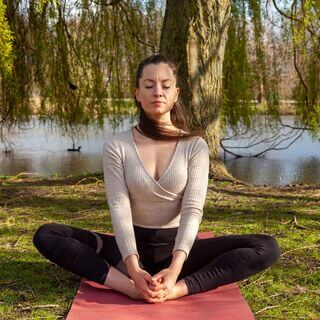
Use care. Kapalabhati is a forceful practice that briefly raises heart rate and shifts the nervous system toward its alerting, sympathetic branch, so if you have uncontrolled high blood pressure or active heart disease, check with a clinician before trying it and stop for chest pain, breathlessness, or dizziness (Raghuraj et al., 1998).
+
Use care. This caution is practice-informed prudence rather than proven harm: Kapalabhati briefly tips the body toward an alert, activated state with a faster heartbeat, and the studies to date skew toward young, healthy volunteers rather than people with heart or blood-pressure conditions (Raghuraj et al., 1998), (Roj et al., 2025). The one direct safety signal in the literature is a single case report of a spontaneous pneumothorax, a small air leak from the lung, which concerns the lungs rather than the heart (Johnson et al., 2004). This is not medical advice; if you have a cardiovascular condition, get individual clearance first and stop immediately for chest pain, sudden breathlessness, or light-headedness.

Start small: as general practice guidance, begin with one or two short rounds of roughly 20-30 gentle exhalations at a modest pace, resting between rounds, and build up gradually over days and weeks rather than forcing speed. Keep the inhalation passive, never bear down, and stop for chest pain, breathlessness, or dizziness (Johnson et al., 2004).
+
Start small and build gradually. Kapalabhati is a fast breathing practice of forceful exhalations with passive inhalations, so a sensible beginner starting point is one or two short rounds of only a few dozen exhalations at a modest pace, with a rest between rounds (Roj et al., 2025), (Dipak et al., 2022). These numbers are practice convention rather than a validated dose, since no trial defines an optimal beginner count, so treat them as general guidance and let intensity rise over weeks. Keep the out-breath the only active movement and never strain or bear down, the pattern linked to a rare reported lung air leak, and stop if you feel chest pain, sudden breathlessness, or light-headedness (Johnson et al., 2004).
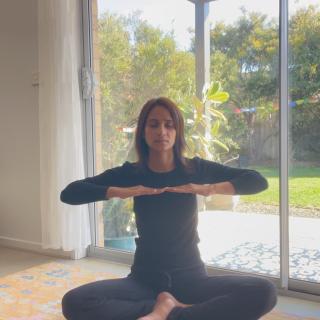
The main difference is where the effort goes: Kapalabhati puts all the active work into sharp abdominal exhalations while the inhalation stays passive, whereas Bhastrika, or bellows breath, forces both the in-breath and the out-breath (Roj et al., 2025). Both are fast, energising yogic breaths traditionally staged before meditation.
+
The main difference is which part of the breath is forced. Kapalabhati drives short, sharp exhalations through belly contractions and lets each inhale fall in on its own, while Bhastrika actively powers both the in-breath and the out-breath (Roj et al., 2025), (Dipak et al., 2022). Both feel brisk and activating rather than calming and are traditionally used as preparatory practices before meditation. If you are wondering which lifts physical performance, one trial comparing breathing techniques found no difference in power output between them, so neither is shown to boost strength (Wooten et al., 2020).
The ability to notice and read internal body signals such as breath movement, heartbeat, tension, or temperature. Rapid breathing draws attention inward, which can make these sensations easier to detect.
A breathing test that measures how forcefully and fully you can move air, used to gauge lung function. Fast-pranayama training that includes Kapalabhati has improved several of these measures over weeks.
Pulmonary function testing of parameters such as FEV1/FVC, peak expiratory flow (PEFR), and mid-expiratory flow (FEF25-75).
A leak of air from the lung into the surrounding chest space, which can cause sudden chest pain and breathlessness. A single case report has linked it to forceful Kapalabhati, which is why gentle practice matters.
Presence of air in the pleural cavity; reported here as barotrauma-related spontaneous pneumothorax in one case following the technique.
Cited in: Benefits, How it works, Research, What happens in the body
Pradhan Balaram (2013). Effect of kapalabhati on performance of six-letter cancellation and digit letter substitution task in adults.. https://doi.org/10.4103/0973-6131.113415
Malhotra V, Jiwane R, Cidral-Filho F J (2024). Comparative Analysis of the Effects of Exercise and Kapalbhati Pranayama on Heart Rate Variability and Electroencephalogram Activity: Unveiling Physiological and Cognitive Insights..
Cited in: Research, What happens in the body
Sharma Vivek Kumar, Trakroo Madanmohan, Subramaniam Velkumary, Rajajeyakumar M, Bhavanani Anand B, Sahai Ajit (2013). Effect of fast and slow pranayama on perceived stress and cardiovascular parameters in young health-care students.. https://doi.org/10.4103/0973-6131.113400
Cited in: Benefits, Comparison, Faq, Research
Shenbaga Lalitha, K. Maheshkumar, R. Shobana, C. Deepika (2020). Immediate effect of <i>Kapalbhathi pranayama</i> on short term heart rate variability (HRV) in healthy volunteers. https://doi.org/10.1515/jcim-2019-0331
Cited in: Faq, How it works, Research, What happens in the body
Dinesh T, Gaur Gs, Sharma Vk, Madanmohan T, Harichandra Kumar Kt, Bhavanani Ab (2015). Comparative effect of 12 weeks of slow and fast pranayama training on pulmonary function in young, healthy volunteers: A randomized controlled trial.. https://doi.org/10.4103/0973-6131.146051
Chetry Dipak, Telles Shirley, Mahadevan Jayaraman, Prasoon Kumari, Gandharva Kumar, Agrawal Mahavir (2022). A Comparison of Practice Guidelines for Yoga Breathing from the Traditional Texts and PubMed-Indexed Research.. https://doi.org/10.17761/2022-d-22-00024
Cited in: Faq, Roots and tradition, What it is
Telles Shirley, Singh Nilkamal, Balkrishna Acharya (2012). Finger dexterity and visual discrimination following two yoga breathing practices.. https://doi.org/10.4103/0973-6131.91710
Cited in: Benefits, Comparison, Faq, Research
Budhi Rana B, Singh Deepeshwar (2024). The Influence of Kapalabhati on Working Memory and Phasic Heart Rate Variability.. https://doi.org/10.7759/cureus.61027
Cited in: Benefits, Research, What happens in the body
Rana Bal Budhi, Deepeshwar Singh, Jeetu Goswami, N. K. Manjunath, Suhas Vinchurkar (2024). Influence of High-frequency Yoga Breathing (Kapalabhati) on States Changes in Gamma Oscillation. https://doi.org/10.4103/ijoy.ijoy_5_24
Cited in: Benefits, Comparison, How it works, Research, What happens in the body
Telles Shirley, Maharana Kanchan, Balrana Budhi, Balkrishna Acharya (2011). Effects of high-frequency yoga breathing called kapalabhati compared with breath awareness on the degree of optical illusion perceived.. https://doi.org/10.2466/02.20.22.pms.112.3.981-990
Raghuraj P, Ramakrishnan A G, Nagendra H R, Telles S (1998). Effect of two selected yogic breathing techniques of heart rate variability..
Cited in: Faq, How it works, Research, Use with care, What happens in the body
R Ganesh, Madhushree Pradeep Donde, Andrea Ramesh Hegde (2015). COMPARATIVE STUDY ON EFFECT OF SLOW AND FAST PHASED PRANAYAMA ON QUALITY OF LIFE AND PAIN IN PHYSIOTHERAPY GIRLS WITH PRIMARY DYSMENORRHOEA: RANDOMIZED CLINICAL TRIAL. https://doi.org/10.16965/ijpr.2015.115
Cited in: Comparison, Research
Desai B P, Gharote M L (1990). Effect of Kapalabhati on blood urea, creatinine and tyrosine..
Cited in: Research, What happens in the body
Wooten Savannah V, Cherup Nicholas, Mazzei Nicolle, Patel Shareen, Mooney Kiersten, Rafiq Ali (2020). Yoga Breathing Techniques Have No Impact on Isokinetic and Isoinertial Power.. https://doi.org/10.1519/jsc.0000000000002771
Cited in: Benefits, Comparison, Faq, Research
Johnson Derek B, Tierney Mathew J, Sadighi Parvis J (2004). Kapalabhati pranayama: breath of fire or cause of pneumothorax? A case report.. https://doi.org/10.1378/chest.125.5.1951
Cited in: Faq, Research, Use with care, Who should use care
Editorially curated. Tracks are not themselves clinically studied; evidence on the page applies to Kapalabhati as a technique.
Explore guided sessions to deepen your Kapalabhati technique.
Beginner content for Kapalabhati

★ 4.9
·
Guided
·
15 min
Emil Nylander
How hard is Kapalabhati?
Kapalabhati belongs at the intense end because the rapid abdominal expulsions make the technique physically demanding immediately, even before longer runtime compounds it.
4
Mental Effort
2 / 4
▾Emotional Depth
1 / 4
▾Physical Intensity
4 / 4
▾Prior Knowledge
3 / 4
▾